Leica Enthusiasts
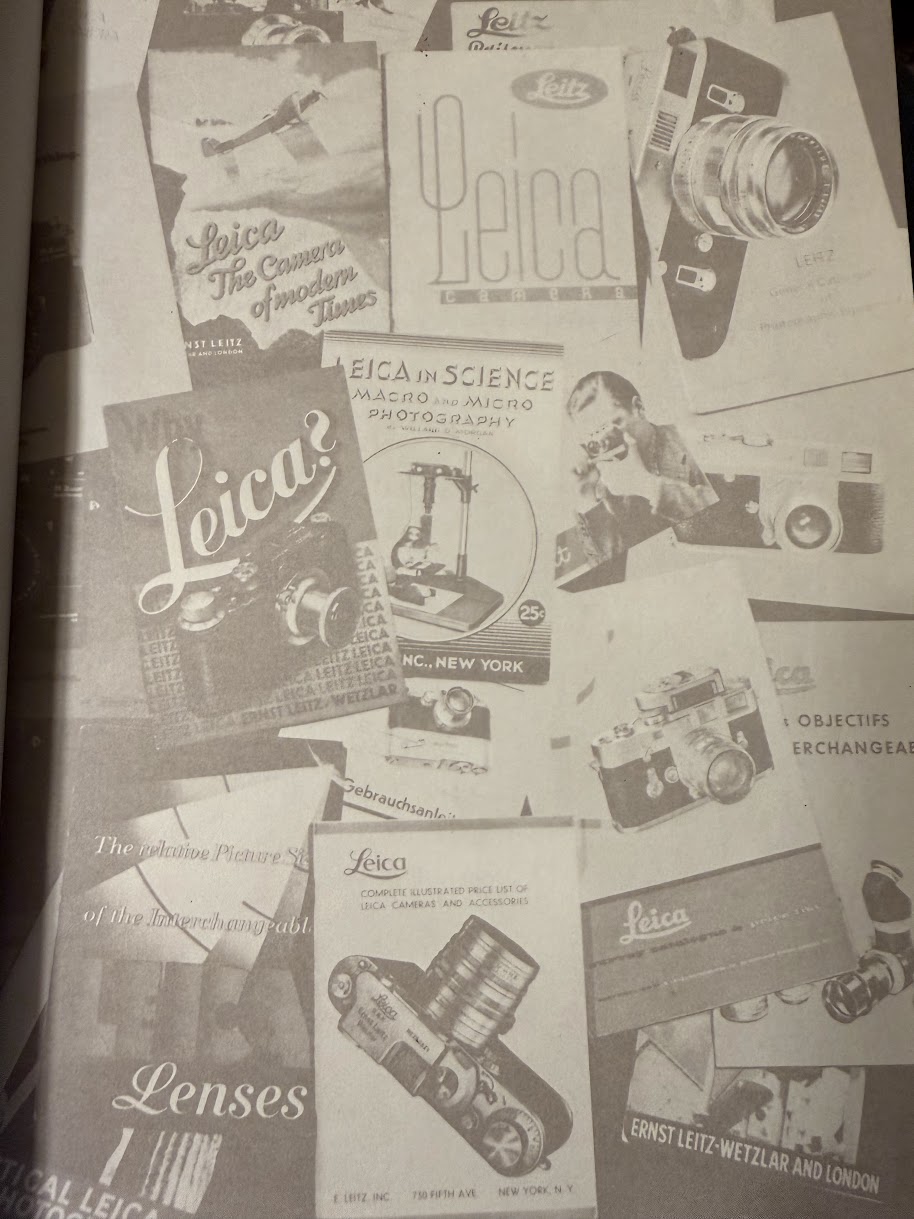
I recently read Leica Literature 1930–1960, written and compiled by prominent camera historian James L. Lager. Lager presents a lot of interesting information, but these were the highlights that were interesting to me: The Leica opened up entirely new fields of photography, Neither telephote sports photography nor action photography with the hand held camera had been heard of until the arrival of the Leica. Photo reportage is probably the most important area in which the Leica has been used and the one to which it owes most of its acclaim. The Leica is certainly regarded as an exceptional tool by reporters all over the world. It was the spirit at the Wetzlar factory a spirit of co-operation, of cross-fertilization and of the blending of ideal concept, practical demands and technical realization-which provided the vehicle for the development of the Leica system. It was this spirit, fostered by Ernst Leitz I, that enabled Oscar Barnack to develop what began as his personal hobby into a great technical achievement. Before the Second World War Leitz were the undisputed leaders in every field of 35mm photography. Although the Leica was not the first 35mm camera, it was the first 35mm system camera-the first with a coupled rangefinder and interchangeable lens (if only by two months, the runner-up being the Contax) and the first with a stereo lens. Today, some critics allege that the Leitz company is lagging behind other firms that its designers no longer set new trends but copy others. But the Leitz designers, like all good designers, will only take up-and improve - someone else's idea if it is a good one. It is worth remarking briefly here on a few post-war Leitz achievements.