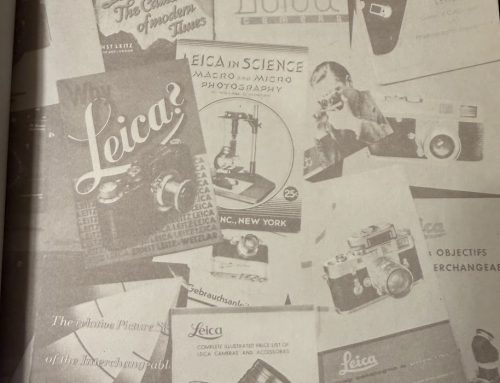
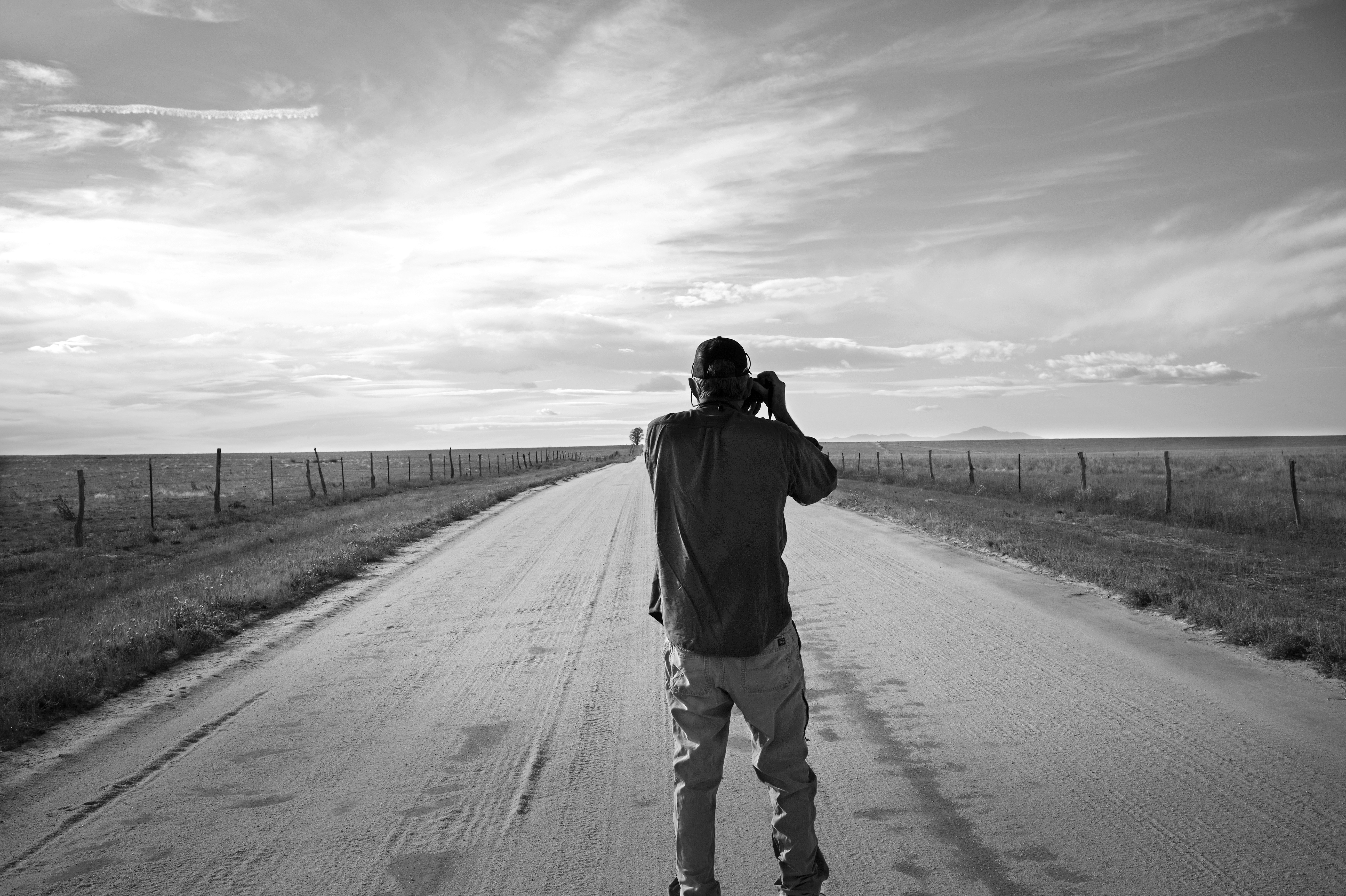
Leica just announced a new campaign, “The Art of Leica.” Leica had a beautiful announcement from which we excerpted below, which sums up what we love about Leica photography:
Photography captures far more than just a moment in time. Every image reveals our true perception of the world. Photography is careful observation of people. It is the patience, attention and respect that we show to every subject. It is about being present while others pass by. It is not relying on observational skills alone. It is having unwavering trust in your imagination. Yet remaining open to whatever happens. Time and time again. Looking more closely than others do. That is the art of photography. We invest the same level of care that the Leica community applies to its photography in each of our cameras and lenses: patience, attention to detail and respect for every part of the process. We focus on precision and craftsmanship so that the camera disappears in your hand and your view remains unobstructed. Looking more closely than others do.
As Leica looks at making the M12 (which probably won’t be called that) as the M has been a rangefinder camera from the start and the 2026 version is probably featuring a hybrid vision system blending a traditional optical rangefinder with electronic viewfinder (EVF) capabilities, along with a completely new sensor, among other “upgrades.” Whether the “new M” is still a rangefinder or not (although it will surely accept M-lenses, otherwise what’s the point, might as well just get a Q), is up for debate, and either way there will be complainers and some that are ecstatic about the switch.
There is a curious idea in modern life that newer is somehow better. Every year brings something new—another innovation, another improvement, another thing we’re told we can’t live without. But time has a way of sorting things out. The things that last usually last for a reason. They have earned their place by proving, year after year, that they simply work. In short, timeless, which the M has surely been (at least up until now, even with the switch from analog or film to digital, it’s still a rangefinder—whether you love them or hate them, that’s what makes an M an M—and if you hate them, there is already the M EV1, which is an electronic viewfinder with manual focus, now does anyone really want that without autofocusing?) Well, it turns out that there’s a non-insignificant cohort of Leica fans who wear glasses, have vision impairments, or simply wish for an easier experience with an M-style camera. That’s why the M EV1 exists.

The rangefinder – The heart of every Leica M camera
The rangefinder provides an exceptionally bright view with excellent contrast, and it lets you see beyond the actual frame of your final image. This gives you a wider view of the scene, and puts you in full control when focussing and exposing. The M6 uses a mechanical rangefinder with 0.72x viewfinder magnification, handcrafted from over 100 individual parts. The aperture and exposure time can be precisely determined thanks to selective exposure metering through the lens, and the light balance displayed in the lower part of the viewfinder. Focusing is done using a superimposed image method or split image method. Both are ideal for focusing quickly with extreme precision, even in poor lighting conditions.
See more, react better. The rangefinder technology in the M6 lets you see beyond the picture frame, so you can assess the exactly right moment to release the shutter. Illuminated framelines highlight the image field for six focal lengths, arranged in pairs for 28 and 90 mm, 35 and 135 mm, as well as 50 and 75 mm. After attaching a lens, the corresponding focal length automatically appears in the viewfinder as framelines. In addition, all other framelines can be displayed in the rangefinder using the field selector. This allows you to select the appropriate focal length for your subject before releasing the shutter – and to capture your image at the decisive moment.
M cameras have not only been capturing iconic images for decades, they have become icons themselves. Simple elegance, absolute reliability and high-quality materials combine in the iconic design that defines every M camera. Design that stands the test of time. For instance, thanks to the highly scratch-resistant lacquer, solid brass top cap and robust leatherette that is used for the M6. In addition, the anti-reflective coating of the glass surfaces, prevents disruption from scattered light.
Trends come and go, but real values stand the test of time, as they are passed on from generation to generation. Leica cameras and lenses are a testament to the traditional values of durability, reliability and quality. They represent real, tangible quality, achieved through high-grade materials and solid mechanics. Leica has always manufactured its precision tools by hand, developing mechanical and optical masterpieces that are second to none, constantly setting new standards. Genuine, tangible quality “Made in Germany” – with the sole purpose of giving you maximum freedom in your photography at all times.