Capturing the Chase: Why ISO and Camera Choice Matter Afield
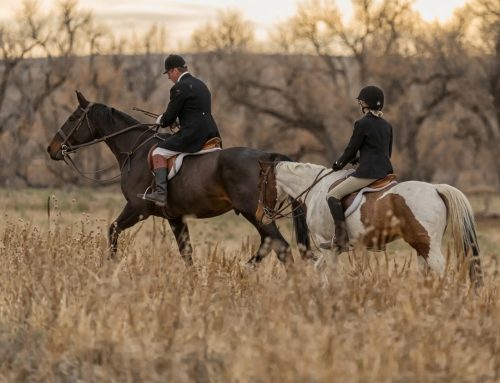
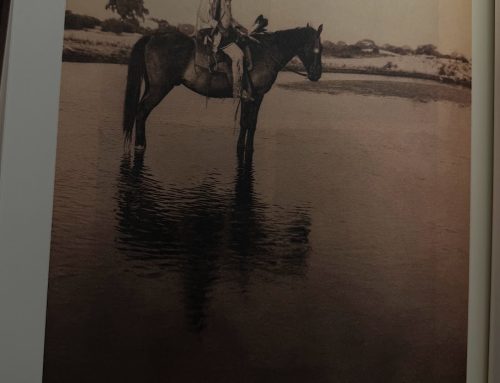
There is a distinct magic to a morning spent along the Sporting Road. Whether you are galloping a thoroughbred down a polo field, watching a well-trained bird dog lock onto a point in the crisp autumn brush, or following the fast-paced action of a foxhunt, the world around you suddenly stands still. As sporting enthusiasts, when we are not participating in these sporting days afield, we often try to use the remainder of our time afield to freeze these fleeting, high-octane moments with a camera. As my friend Stephen Collector, a lifetime professional photographer and avid sportsman, says, “A frustrating day of fishing can many times be redeemed with a camera.”
The Myth of “Fixing it in Post”
A common misconception in modern digital photography is that ISO is an afterthought or that it’s like a bucket setting, as long as you are close enough it doesn’t really matter. And, with advanced editing software, it is tempting to think you can shoot at a low ISO to keep your image clean, underexpose the shot in the field, and simply brighten the shadows later on your computer. If you are shooting sports with a flagship action camera like the Nikon D5, this workflow is a recipe for ruined images. The Nikon D5 is not an “ISO-invariant” sensor. It is engineered specifically to handle low-light and high-speed action in real-time. If you pull up heavy shadows from an underexposed file shot at a low ISO, you will introduce severe, destructive read noise. To capture the crisp textures of a galloping horse or a bird taking flight, you must get your exposure right in the camera, at the moment you pull the trigger.
Freezing Action When the Light Fails
Outdoor sports demand incredibly fast shutter speeds—typically 1/1000s to 1/4000s—to perfectly freeze motion. For polo, we often use 1/128000. Even on a bright day, a shutter speed that fast severely restricts the amount of light entering your lens. The moment clouds roll over or players move into deep stadium shadows, your ISO becomes your most critical tool.
Fortunately, cameras like the D5 are built for this. They sacrifice a bit of dynamic range at base ISO (like ISO 100) so they can deliver exceptionally clean, noise-free images at ISO 1600, 3200, or even 6400+. Professional photographers generally find that image quality, dynamic range, and color fidelity remain sharp and clean up to ISO 12,800 or 25,600 before noise reduction becomes strictly necessary. For the ultimate field workflow, use Manual Mode with Auto ISO turned on. Fix your fast shutter speed, open your aperture wide (like f/2.8 or f/4), and let the camera dynamically scale the ISO as the action moves between light and shadow.
Two Different Worlds: Nikon D5 vs. Leica M-E
Choosing the right tool for the job changes your entire experience afield. Comparing a heavy-duty sports DSLR like the Nikon D5 to a traditional rangefinder like the Leica M-E highlights two completely opposite philosophies of photography.
- The Nikon D5 (The Speed Demon): Boasts a staggering native maximum ISO of 102,400, a lightning-fast 153-point autofocus system, and a blistering 12 frames per second burst rate. It is designed to track a fast-moving subject and guarantee you catch the peak of the action. However, the effective ISO is about 25,600 max.
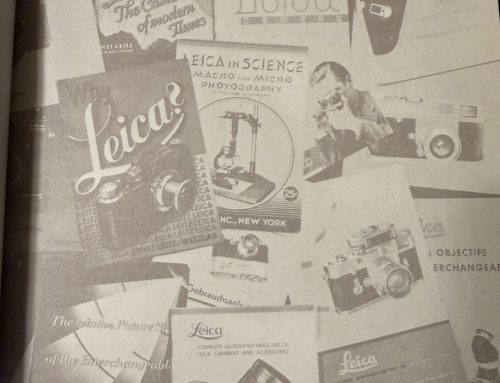
- The Leica M-E (The Deliberate Art): Whether looking at the classic Typ 220 (with its low ISO 2500 ceiling) or the Typ 240, a Leica rangefinder features zero autofocus and a slow 2-to-3 frames per second burst rate. Past ISO 1600, the images take on a grainy, filmic quality. So the effective ISO is about 800 max.
Why we starting making f-stop settings and then ISO on the Leica, then shutter speed (I know it’s unusual but hear me out…)
With better cameras, though, the risks of selecting the wrong ISO are lower. That said, here’s a general guideline.
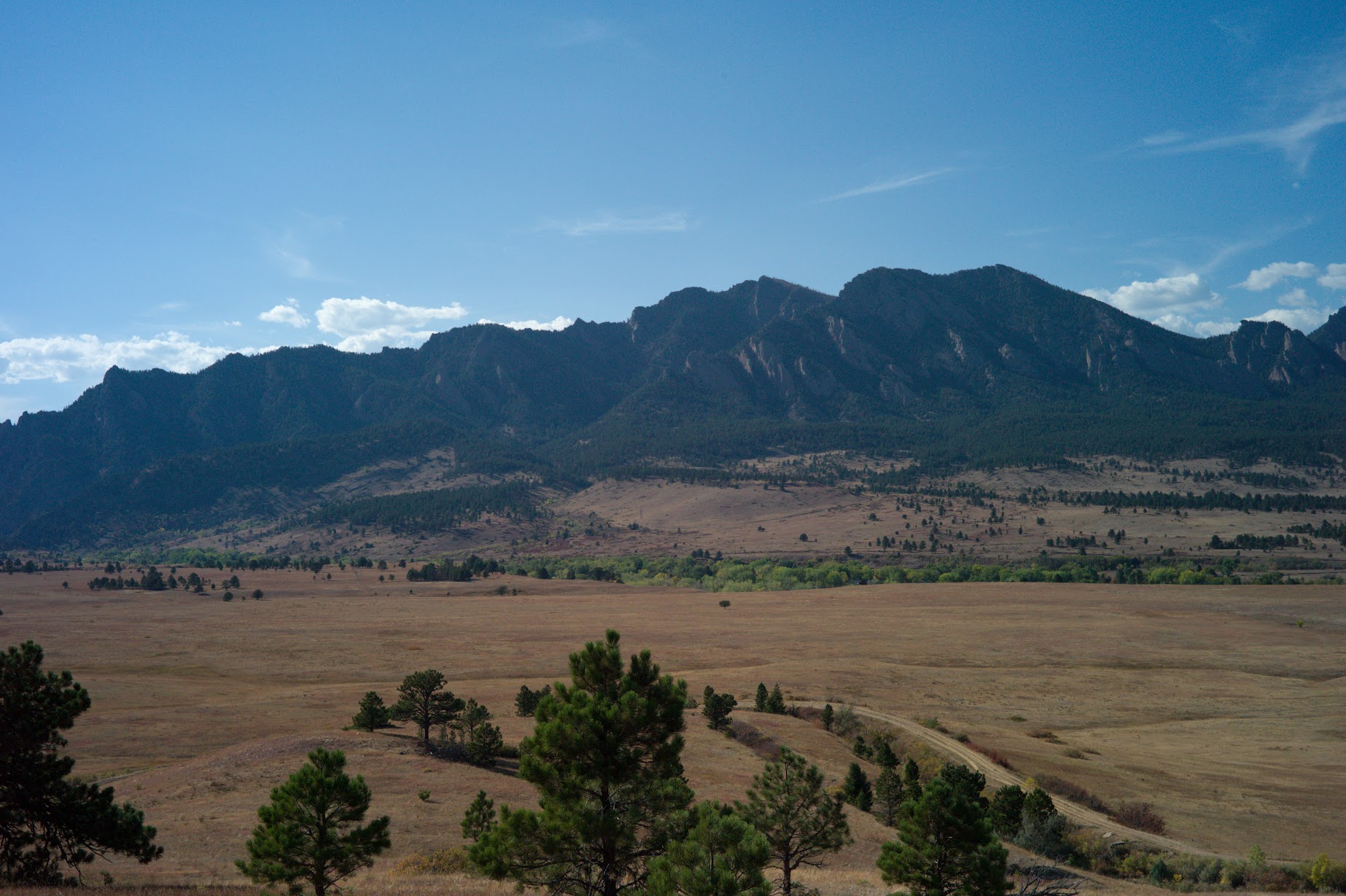
- ISO 100: Use this for sunny, outdoor settings. Don’t rely on this setting if there isn’t enough light. If you’re in Colorado, where there are 300 days of sunshine, this is a favorite starting point for landscapes on bright days.
- ISO 400: In this range, we’re talking cloudy days with imperfect light. You could also use this for indoor settings if the light is very good. You’ll have less light entering the camera, but also less noise.
- ISO 800: Use this for indoor settings with less amount of light. Once you’ve hit 800, you’re starting to risk noise entering your picture, so proceed with caution!
- ISO 1600, ISO 3200, ISO 6400+: This is for pictures in the dusk and evening, where light is imperfect. Or for sports, and you can forget about this setting on a Leica M, it goes to 2500, but anything over 800 has severe noise and you probably want to switch to a different camera for these types of shots. We love the Nikon D5 which is a workhorse for sports photography.
But when shooting sports or fast action on the Nikon D5
On the Nikon (and most cameras), the ISO should be the very last element you lock in. Because action photography requires absolute control over freezing motion and depth of field, you should start by setting your Shutter Speed and Aperture first, and let the ISO adapt to those choices. The most effective, industry-standard workflow for setting up a Nikon D5 for sports involves these sequential steps:
Step 1: Set Your Shutter Speed First (The Priority)
Your absolute priority in sports is preventing motion blur. On your D5’s mode dial, switch to Manual (M) or Shutter Priority (S).
- Dial in a minimum of 1/1000s for slower field sports.
- Move up to 1/2000s or 1/4000s for fast-moving subjects like motorsports, track, or galloping horses.
Step 2: Set Your Aperture Wide Open
Next, set your lens aperture to its widest available setting (usually f/2.8 or f/4 on professional sports telephotos). This serves two purposes: it isolates your athlete from a distracting background, and it lets the maximum amount of physical light reach the D5 sensor.
Step 3: Let Auto ISO Do the Rest
Once your shutter speed is fast enough to freeze the action and your aperture is set, turn Auto ISO ON.
Because you are using a Nikon D5—which features an incredibly powerful sensor explicitly tuned to handle high ISOs beautifully—you can confidently let the camera handle the lighting changes. As players sprint from bright sunlight into deep stadium or grandstand shadows, the D5 will instantly adjust the ISO up or down to maintain your exact shutter speed.
When Should You Set ISO Manually First?
The only time you should start by manually locking in a specific ISO on the D5 is if you are shooting under perfectly constant, unyielding artificial lighting (like an indoor arena or a professional stadium at night). In that specific scenario, you can manually dial your ISO up (e.g., straight to ISO 3200 or 6400) to match your required shutter speed, knowing the ambient light level will never fluctuate.
To help refine your D5 settings, let me know:
- What lens focal length (e.g., 70-200mm, 300mm) you are planning to use?
- Whether you are shooting in constantly changing daylight or fixed artificial stadium lighting?
Choosing Your Perspective
Can you shoot sports with a Leica M-E? It is incredibly difficult, but it forces a beautiful, slower approach to the lifestyle. Without autofocus or a high ISO safety net, you cannot simply spray frames at a moving target. You have to use zone focusing—anticipating exactly where the horse or hound will pass, setting your focus ahead of time, and waiting for the single, perfect composition. If your goal is a technically flawless, razor-sharp sports action shot in unpredictable lighting, the Nikon D5 and a high ISO workflow will win every time. But if you want to capture the artistic mood, the grain, and the deliberate atmosphere of a day spent afield, stepping back into a manual frame of mind offers its own reward.
In the field, just as in the kitchen, the magic is all in how you choose to prepare for the moment.
Would you like me to:
- Adjust the writing style or tone (e.g., make it more technical, or emphasize a specific sport like polo or foxhunting)?
- Provide specific lens recommendations for either camera system when shooting outdoors?