
Fishing

Fishing Bozeman, Montana

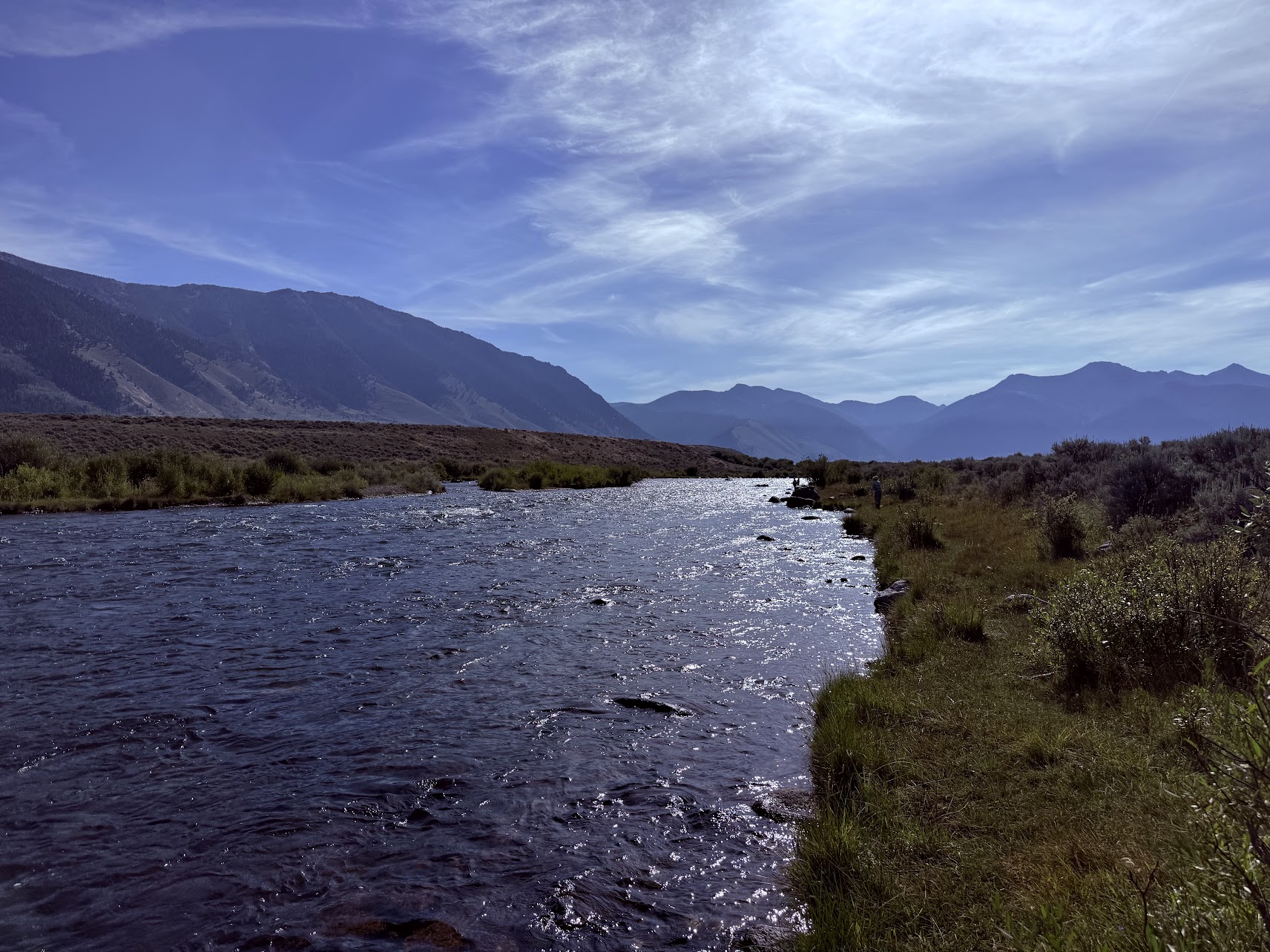
"Men do it drunk, how difficult can it be?"  ~The Madison Here is a draft that matches the classic, slightly rugged, and adventurous tone of Sporting Road. It leads directly into the hilarious quote you provided and sets up Bozeman as the ultimate fly-fishing hub. “Men do it drunk, how difficult can it be?” ~The Madison There is a specific brand of humility that only a Montana trout river can dish out. You pull into Bozeman with visions of cinematic, perfect loops slicing through the big sky, landing a dry fly gently on the nose of a rising twenty-inch brown trout. Then you actually step into the Madison River, watch a guy in a battered baseball cap net his fourth fish of the hour while balancing a cold beer, and realize you are utterly outclassed by the locals. Bozeman is arguably the epicenter of the fly-fishing universe, and for good reason. Within an hour’s drive in almost any direction, you have access to some of the most legendary blue-ribbon trout water on the planet. But if you’re going to tackle it, you need to know what you’re up against. The Big Three Rivers River Character What to Look For The Madison The "Fifty-Mile Riffle." Fast, shallow, and relentless rock gardens. Heavy nymph rigs or throwing massive streamers against the banks. The Gallatin Crystal clear, classic alpine canyon water right out of A River Runs Through It. Wading shoe-deep and hunting for rising trout along the log jams. The Yellowstone Big, wide, and untamed boat water. The longest undammed river in the lower 48. Hopper-dropper setups during the late summer heat. Surviving the "Fifty-Mile Riffle" The Madison is a unique beast. Unlike rivers with distinct

By |May 5th, 2026|Categories: Fishing, Uncategorized|Comments Off on Fishing Bozeman, Montana

Tying Flies Like a Pro by Marty Bartholomew

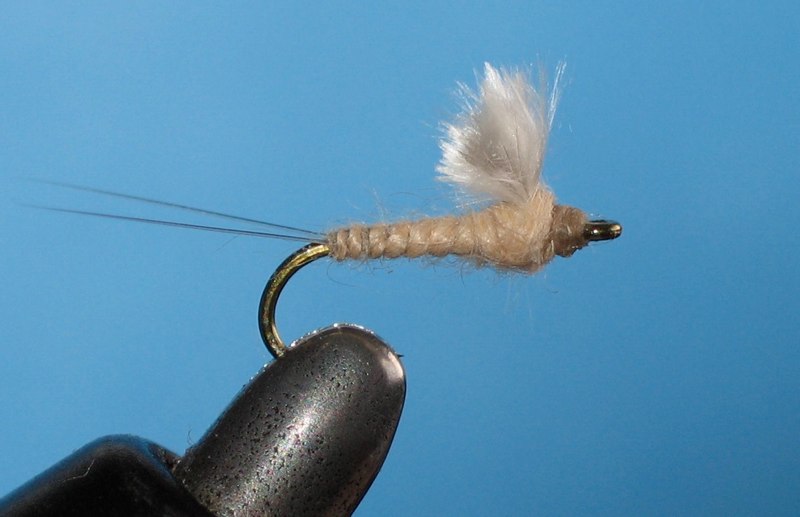
This book features many tiers, including my friends, John Hagen and Rim Chung.  John is a native of South Dakota and is professional duck and goose hunting guide, as well as fly fishing guide and professional fly tier.  John's passion is in dry flies, while Rim Chung's passion is in nymphs, specifically the RS2 and his Avatar fly. The book features John's Exploding Caddis and Prince Nymph, together with Pat Dorsey's version of the RS2, which he calls the PMD RS2, where it is written that "His fly boxes are loaded with tiny patterns on these streams (in the Denver area), and just about every other row is some type of RS2. "My clients bring a lot of flies to net using this fly, so I maintain an ample supply of them."  The RS-2 is a very simple fly to put together and I recommend that you tie a few for yourself, writes the author.  He says, "Take them to your local water and see for yourself how productive this pattern can be."   The RS-2 is also featured starting on page 104.

By |February 3rd, 2026|Categories: Fishing, Fly Tying, Rim Chung, RS2, Uncategorized|Comments Off on Tying Flies Like a Pro by Marty Bartholomew

Gyotaku

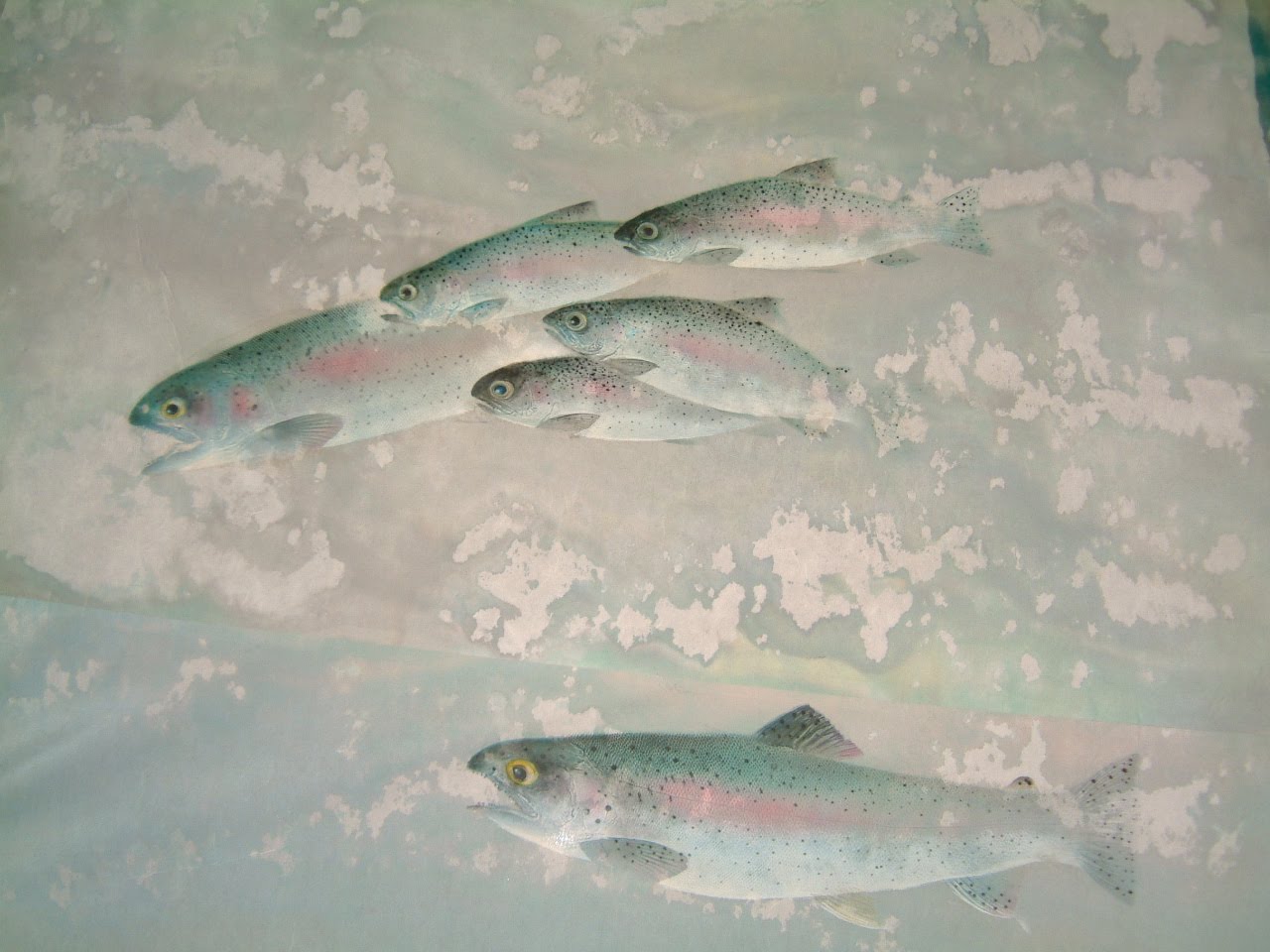
From our friends, this is a hobby we need     https://theartofeducation.edu/2017/07/19/july-gyotaku-revisited-researched-revamped/?mc_cid=4335fcd40d&mc_eid=73b9c2135a

By |February 3rd, 2026|Categories: Fishing, Uncategorized|Comments Off on Gyotaku

Schullery on One Fly

https://www.paulschullery.com/   A treatise on colors.  The Principles of Harmony and Contrast of Colours and Their Applications to ... - Michel Eugène Chevreul - Google Books

By |April 29th, 2024|Categories: Fishing|Comments Off on Schullery on One Fly

Types of Wild Salmon

6 Types Of Salmon Ranked From Least Preferred to Best Salmon, renowned for its taste and nutritional value, holds a special place in various cultures worldwide. From the revered ceremonies of North American tribes to its presence in traditional Japanese feasts, salmon continues to be a sought-after delicacy. With its popularity soaring, navigating the diverse array of salmon options available in grocery stores can be overwhelming. Questions about sustainability, sourcing, and quality often arise. To aid in making informed choices, it's essential to understand key factors such as size, bone presence, and meat color. Here, we present a comprehensive comparison of six popular types of salmon, shedding light on their unique characteristics and culinary uses. 6. Chum Salmon Chum salmon, also known as Silverbrite or Keta, roams the Pacific coast of America, typically weighing between 8 to 15 pounds. Despite its historical significance as a food source for sled dogs, chum salmon often faces aesthetic prejudice due to its brownish hue and curled lips as it ages. However, this variety offers excellent taste at a more affordable price point. Its mild flavor and drier texture make it suitable for various cooking methods, including baking, broiling, and grilling. 5. Pink Salmon Pink salmon, the most common species in the Pacific, lacks the oil content of its counterparts but shines in terms of sustainability. With regulations ensuring responsible harvesting practices, canned pink salmon emerges as a lean, healthy option. Ideal for salads, sandwiches, or salmon cakes, it offers versatility and nutritional value with minimal saturated fat content. 4. Atlantic Salmon Unlike the diverse Pacific salmon varieties, Atlantic salmon is exclusively farm-raised, boasting higher oil content and a flaky texture. Despite initial concerns about pollution and over-crowding in

By |April 22nd, 2024|Categories: Fishing|Comments Off on Types of Wild Salmon

This Land is Your Land

Get outside and discover it. While the white man did a great injustice to the native peoples of North America, in changing the lay of the land, the one redeeming thing about the current status of land ownership in the US, is the amount of public lands, particularly in western states. Get outside and discover it. Beeches, boats and fancy dinners or what most people think about when they think about a date. In our family, it’s more about prairies, ponies, and sporting adventures down two track roads that lead us back to old friends and the chance to make even more memories. Life is not measured by the breathes we take, but the moments that take our breath away.

By |October 9th, 2020|Categories: Fishing, Uncategorized, Wingshooting|Comments Off on This Land is Your Land

Frank Sawyer’s Bow Tie Buzzard

One of Sawyer’s favorite flies is described in Fly Fishing With a Buzzer Nymph, as described by my old pen pal. By Nick Sawyer  |   Submitted On May 03, 2010 There are a great many representations of buzzer nymphs available on the market. Some of them are very good and no doubt most of them will have caught fish at some time. As far as I know, there is only one bow-tie buzzer and that is the pattern designed by Frank Sawyer. Any others are simply copies of the original in just the same way as all weighted nymphs are developments of the Sawyer Pheasant Tail Nymph. Frank Sawyer spent a lot of his life teaching others how to use his original nymphs, the Pheasant Tail, the Killer Bug, the Sawyer Swedish and the Grey Goose. All require much the same technique and are used the world over with varying levels of skill. The Frank Sawyer Bow-Tie Buzzer (BTB) is completely different. It is true that a few fish will be caught whilst using it as a conventional weighted nymph but as such it is far from deadly. When fished as Frank intended, it really comes into its own. The natural buzzer nymph hangs in still water, just a few centimetres below the surface. In its struggle to transform itself from nymph to fly, the buzzer seems to rotate in the water. All buzzers appear to have a kind of frill around the head. As with all things to do with fish and flies, Frank Sawyer spent years observing what happened underwater. He knew that if fish were to take a representation of a buzzer with any sort of frequency, something unique was required. He tried all sorts

By |April 29th, 2020|Categories: Fishing, Fly Tying, Uncategorized|Comments Off on Frank Sawyer’s Bow Tie Buzzard

Fly Tying Head Cement for Small Flies

Griff's head cement is gone, and a part of me has died. I'm in search of a replacement for the best head cement currently available for tying small trout flies. Griff's head cement has been discontinued, which was the best head cement commercially available for tying of small flies. Rim Chung is now using laquer and laquer thinner. I've gone to Veniards No. 1. Lacquer-based Head Cements Many other modern Catskill masters also use spar varnish as well as lacquers in their various forms. The well known Western fly tyer A.K. Best, in his book, "Production Fly Tying", advocates the use of common hardware store lacquer for its economy and fast drying qualities. Many of the "lacquer" head cements you purchase appear to be a very small bottle of nitrocellulose lacquer that you can get at the hardware store for a whole lot less money…(like A.K. Best says). If the head cement is a pale yellow color (or clear) and smells like lacquer thinner, it is a good bet it is lacquer. Griff’s Head cement - Griffin makes two versions, thick and thin. This is a very common product found in the US. A lot of my friends used this stuff because it was so readily available in our area. But it’s not thin like Griff’s. TroutHunter Harrop Superior Head Cement is the next on my favorite list, but the cloudy color is less than desirable to look at in the bottle anyway, though the application of it seems fine. I am also trying Homemade Thin Nail Polish Head Cement Recipe which is the 2/3 Sally Hansen's Hard as Nails, Clear Topcoat, with 1/3 straight acetone. Veniard’s No. 1 is the closest I have found and my favorite so far. Rim

By |April 29th, 2020|Categories: Fishing, Fly Tying, Rim Chung, RS2, Uncategorized|Comments Off on Fly Tying Head Cement for Small Flies

What Happened to Mark Roth?

What ever happened to my fly tying picture framer friend, Mark Roth? If anyone knows how I can reach him, please let me know, as the mail I sent to his house/garage workshop in Woodland Park seems to have been returned. You can drop me a line at sportingroad@gmail.com. The following used to appear on his site about his hand rubbed wooden fly frames, which are unparalleled: Roth AnglingAll items are hand made one at a time...nothing here is mass-produced or farmed out. I started fly-fishing at age 11, and then filled my first professional fly order at age 12 in 1973, after being taught by Andy Puyans while working in his shop in Pacheco, Calif. I took up framing in 1988 following a number of customer requests. Some fishermen may have seen my small magazine ads in the late '80s and early '90s in 'Fly Rod & Reel' and 'Fly Fisherman' magazines, at which time I put out a small mail order catalog...this web site now functions as the catalog.A fly plate presentation consists of assorted flies mounted in a recessed shadowbox-depth frame, either with or without angling art or a photograph to correspond with the chosen flies. Each finished fly plate on this page is signed and dated, flies tied by Mark Roth. If you would like your own flies mounted in a fly plate, see: Custom Fly Framing page. Or if you see a design below you'd like to add your own flies to, inquire for a quote for a 'kit-only' on these without the flies.Each fly plate includes archival mats with gold & black French mat lines, acid-free backing, and each fly carefully mounted in a cherry frame. The depth of

By |April 29th, 2020|Categories: Fishing, Fly Tying, Uncategorized|Comments Off on What Happened to Mark Roth?

Semblance Minimalists, Impressionists and Exact Imitationalists

The essence of zen is the beauty of simple things. Fly or Nymph Fishermen tend to fall into one of the above three categories. I am a semblance minimalist fly fisher and only carry 5 or 6 different patterns. I used to carry around 3000 patterns, I was an exact imitationalist, as I was a commercial tyer in my youth. But nowadays it’s just Rim Chhng’s RS2, the Improved Yong Special, the YKnot, the Calgon Fly, Andy Kim’s micro egg and a pheasant tail variant. If I found my former methodology more effective, I'd return to it. But minimalism suits me, and the fish as well. My old pen pal Nick Sawyer explains the minimalist set up well: http://EzineArticles.com/4255534

By |April 29th, 2020|Categories: Fishing, Fly Tying, Rim Chung, RS2, Uncategorized|Comments Off on Semblance Minimalists, Impressionists and Exact Imitationalists