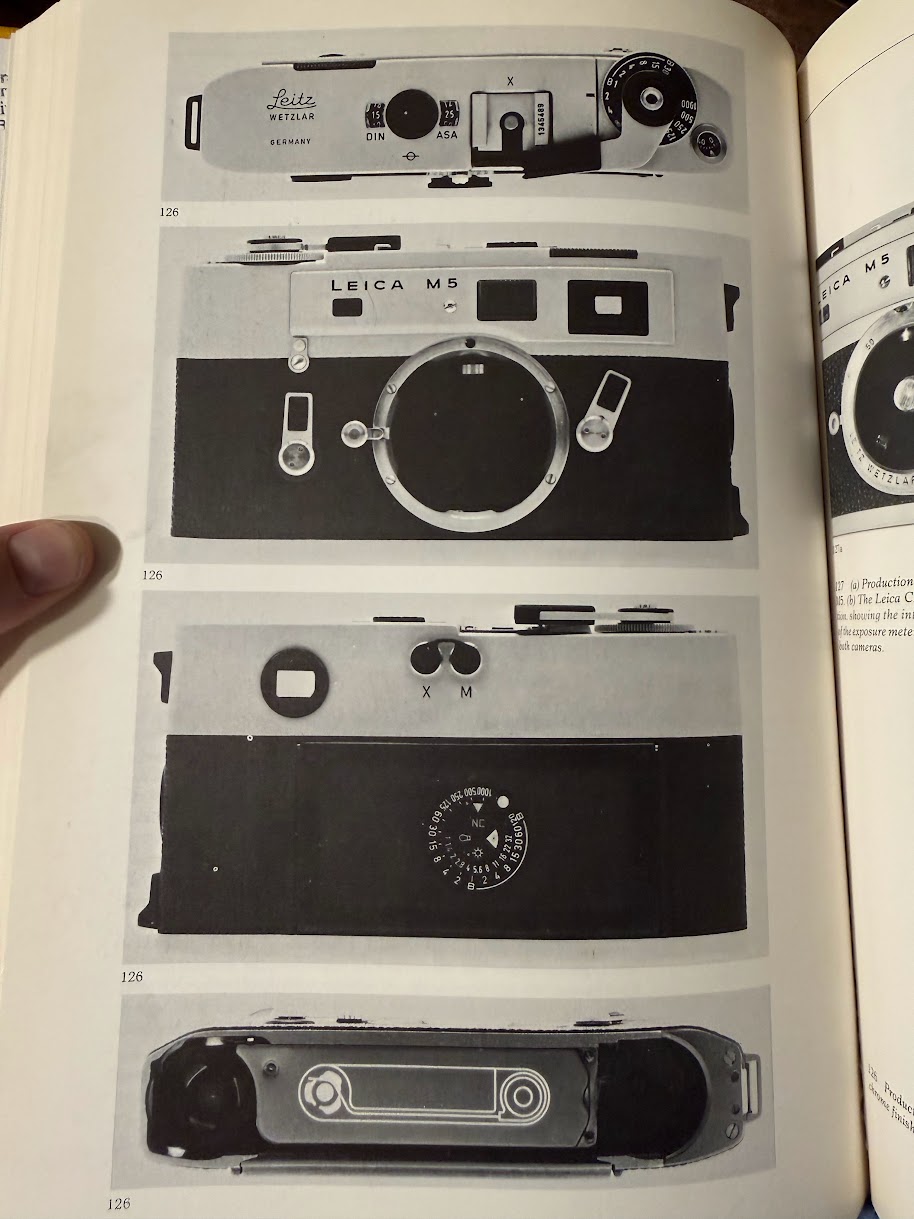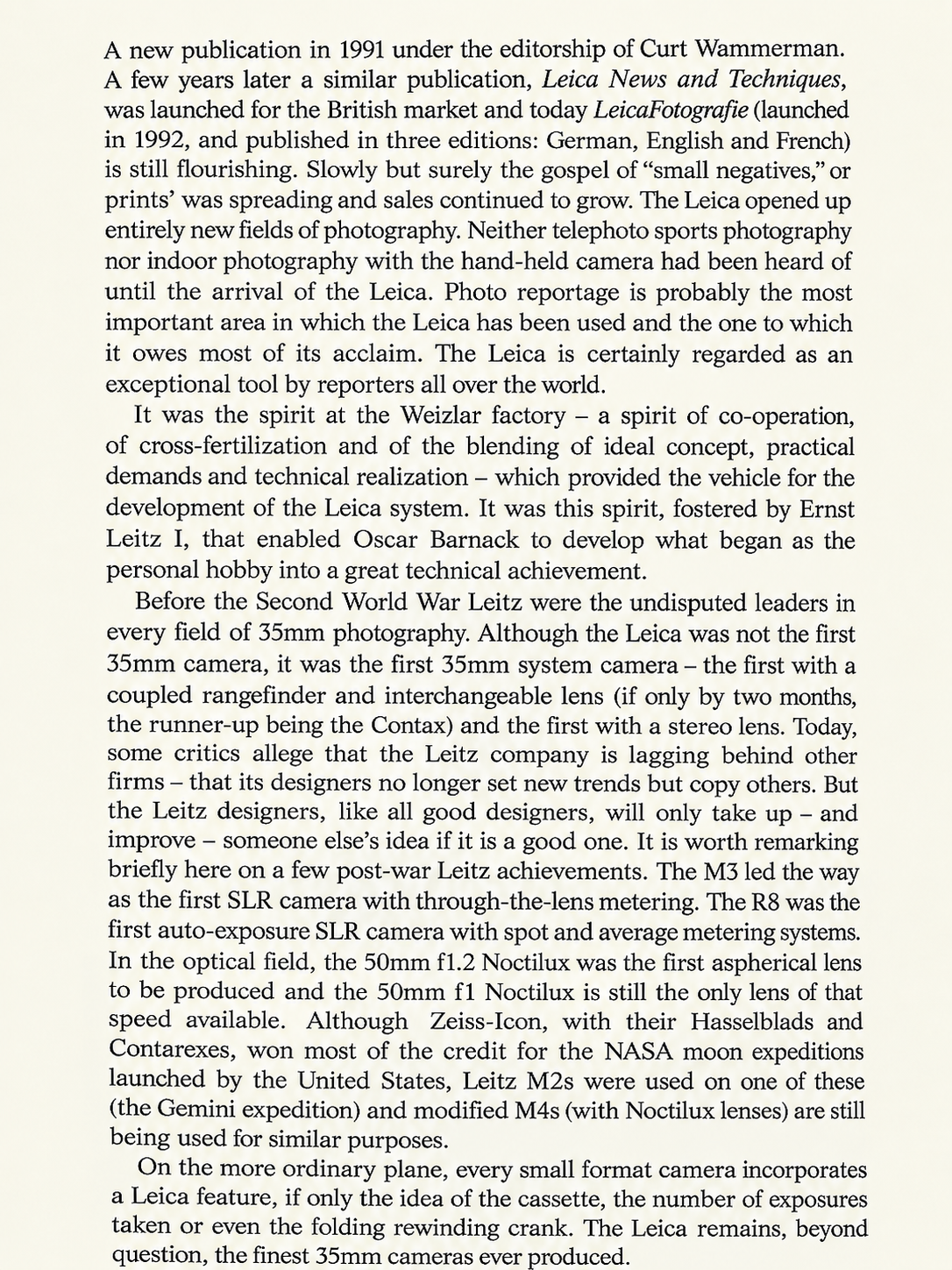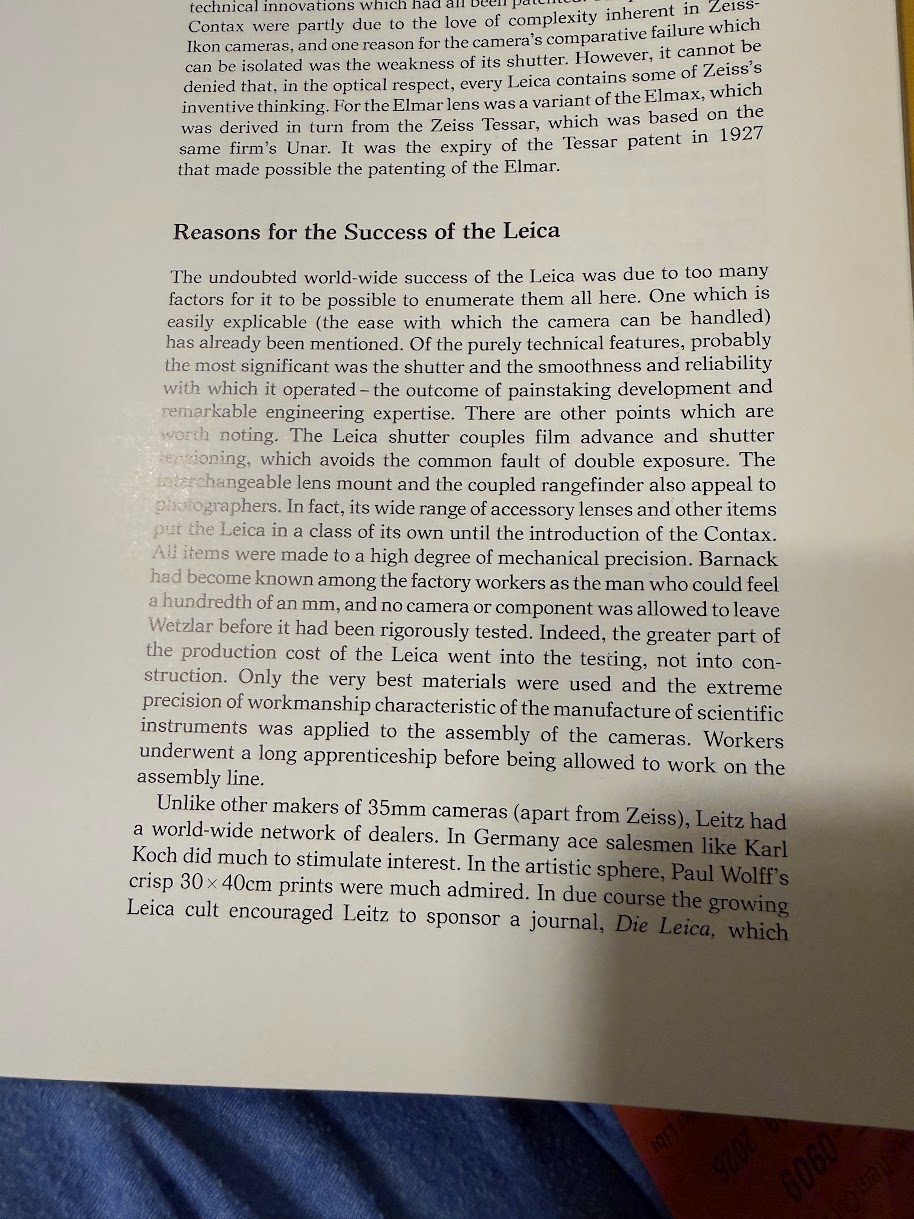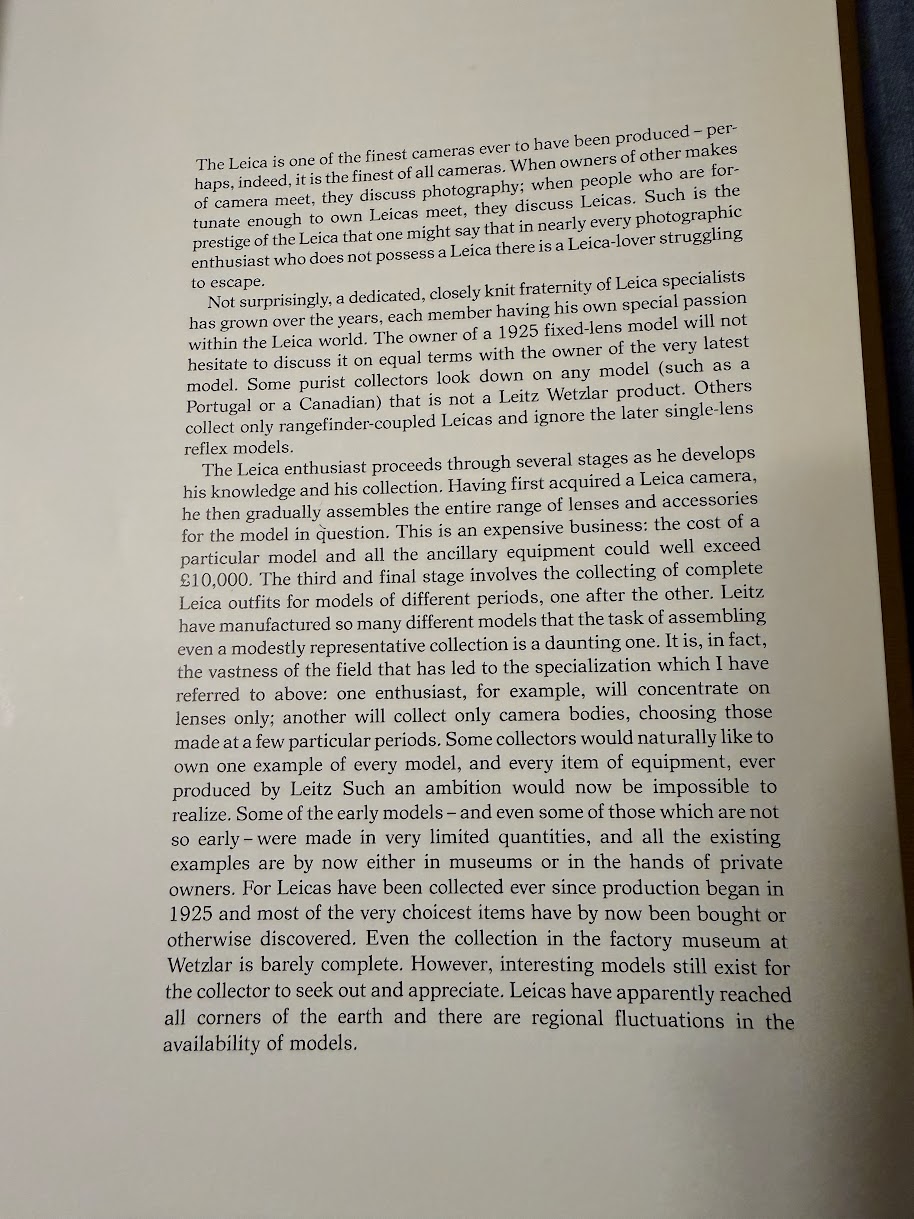
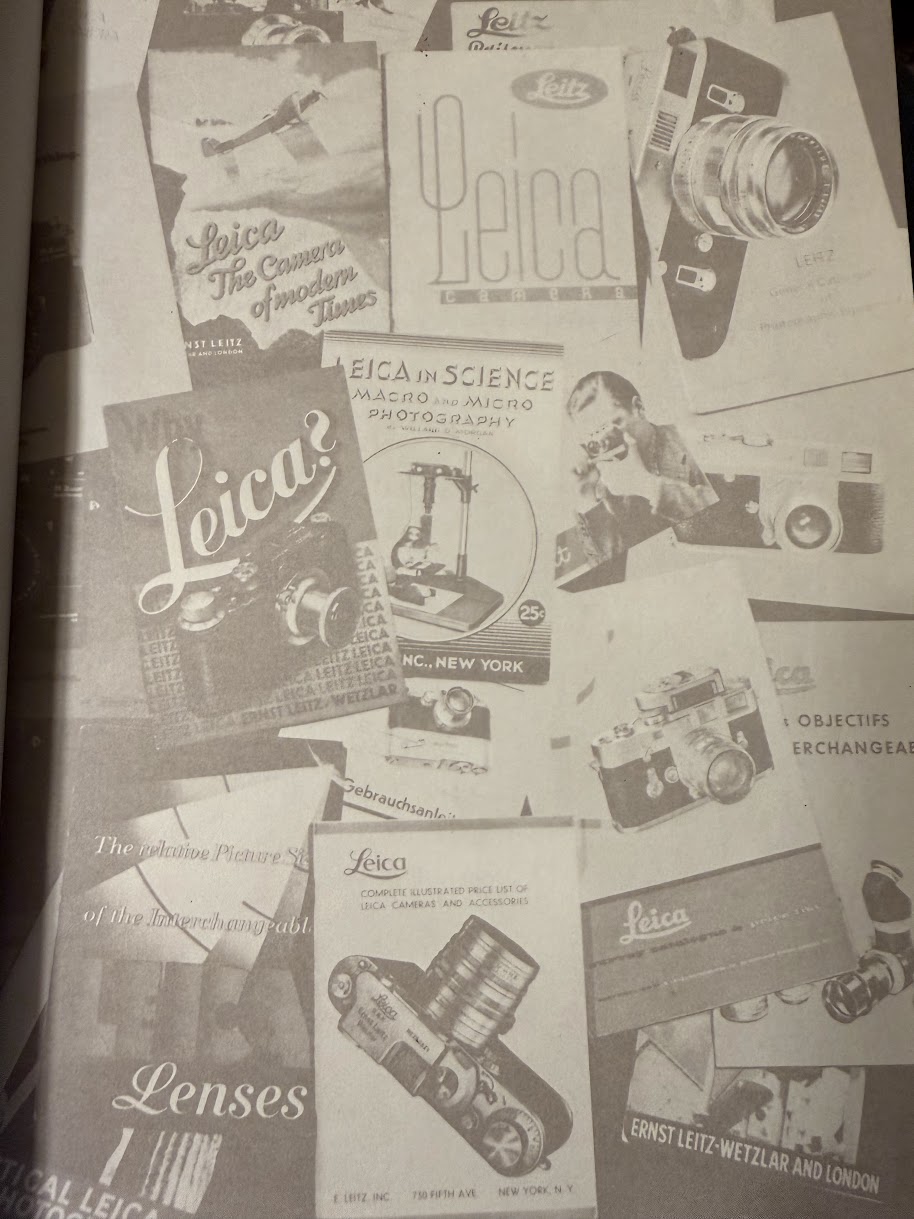
My First Ten Years with the Leica by Paul Wolff was an interesting read, having been published in 1935 with a lot of practical advice and 192 fine screen halftones. It triggered an epiphany in my shooting with the Leica M-E. What if we treat the digital Leica as if it were a film camera?
After all, the Leica M-E type 220 has a CCD sensor was tuned specifically with a unique infrared (IR) filter and a color filter array (CFA) designed to mimic Kodak film tones. Because it handles colors aggressively, many photographers feel CCD images have an organic, painterly quality straight out of the camera. In short, it captures digital images as if they were taking on film. So why not treat it as a film rangefinder camera?
I grew up shooting film in high school and even after graduate schools. When I got serious and acquired all of my Minolta 35mm gear, the first thing you would do is decide on what to take your bag for lenses and what kind of film you are going to shoot (100 for bright sun, 400 or 800 if you could find it for shooting in dimly lit areas or action shots and understanding that these would result in some grain, and 200-400 for everything in between). Then you set the ISO to match the film (no real decision to be made here after you loaded the film, you were stuck with whatever ISO film you had purchased for the entire roll). The practical limits of the Leica M-E are really between ISO 100 to 800 (sure you can shoot 3200 but be prepared for a lot of noise versus a modern Sony or Nikon DLSR or mirrorless where you can crank up to 32,000 ISO without noticing much noise in normal sized prints or on computer displays.) Further the practical limits of the cameras in that day and age also meant you usually next stuck to f4 to f-8 as a sweet spot to start from in making adjustments for many if not most shots. Also “friends don’t let friends shoot f11,” as they say, as you understood at f11 or f18 you were going to lose some sharpness and shooting wide open or below F4 also created issues and were only used for specific types of shots, so again most shots you stayed within the sweet spots.
And then you picked a shutter speed (1/4000 as an extreme for action shots or the opposite extreme of long exposures for low light, time lapse or whatever else you had in mind.) And then you tinkered from there and made your light readings, made small adjustments and took a shot. At least that is how I went about it as an amateur, I didn’t have the calculations of the exposure triangle memorized, but it all worked out fine to produce reasonably good shots. I started following that same method with the digital Leica and it all made sense again.
Finally, after all of your settings were made, you framed, composed, focused and decided when to take the shot. You didn’t usually take 5-6 shots hoping for a good one, like we all do with iPhone cameras these days. You had to conserve the costs of film and developing, unless you had unlimited budgets, and you deliberately tried to take only good shots.
Moral of the story, we can get too reliant on modern DLSRs or mirrorless cameras to either do everything for us, in auto mode for instance, or to recover itself from otherwise less optimal settings made by the user in manual mode. In short, the Sony will save you. The Leica is unforgiving. That’s why many folks say that got a Leica for the street cred, because you actually have to be a good photographer to make good shots with it. The Sony, not so much, you can be a rank beginner and still get great shots. And in the process you forget about the basics, or at least I did. Sure, there are a lot of hipsters who buy a Leica for the red dot, but at least with that kind of an expenditure it doesn’t solve your other problems, as with many things in life. The Leica is still for those who appreciate photography as an art and want to be part of that process. Otherwise, you can just stick with your iPhone and it will produce pretty amazing results without ever touching the settings.
But, in 2026, the iPhone 18 pro max was just released with a physical aperture for the first time in the Apple lineup. That tells me that real photography is not going away, in fact, it is needed now more than ever in our fast paced lives, as it grounds us to what is important in images, making them the way that we want to see the world, versus how the world may actually be with cameras now intentionally or unintentionally recording nearly every bit of our daily lives.