Sporting Road

About Sporting Road

This author has not yet filled in any details.
So far Sporting Road has created 554 blog entries.

Old Maui: Sugar, Rain and Roads

There is an older Maui hiding just beyond the beaches.  Leave Pāʻia behind and head uphill toward Haʻikū and Makawao. The road winds through a landscape of enormous trees, green valleys and old agricultural fields. Houses appear behind walls and gardens, some elegant, some weathered, many seemingly ordinary. But this is old plantation country, and beneath the tropical beauty is a story that changed Maui forever. Sugar arrived here in the middle of the nineteenth century. By the 1860s, plantations were being established around Haʻikū, and in 1870 Samuel Thomas Alexander and Henry Perrine Baldwin began developing what would become Pāʻia Plantation and, eventually, Alexander & Baldwin.  The problem was water. The slopes of Haleakalā received abundant rain, while the agricultural land farther down toward Pāʻia was considerably drier. The solution was audacious: build an irrigation system that would carry water from the wet mountains down to the sugar fields. Miles of ditches transformed the landscape. With water came sugar, and with sugar came a town. Pāʻia grew around its mill, which began operating in 1880. What developed was not simply a plantation but an entire community. Stores, schools, churches, theaters, medical facilities and plantation camps appeared around the mill. Workers arrived from Japan, the Philippines, Portugal, Puerto Rico, Korea and elsewhere. Each community brought its own traditions, food, religion and architecture. Much of the character of modern Maui can be traced to these plantation years.  The wealthier side of that world survives, too. Above Pāʻia and toward Haʻikū are the old residences of plantation managers and owners, surrounded by the kind of vegetation that makes everything look as though it has been there forever. Haʻikū House, associated with Henry Baldwin, dates to the 1880s. An older cottage on the

By |September 18th, 2026|Categories: Uncategorized|Comments Off on Old Maui: Sugar, Rain and Roads

Navajo Song of the Horse

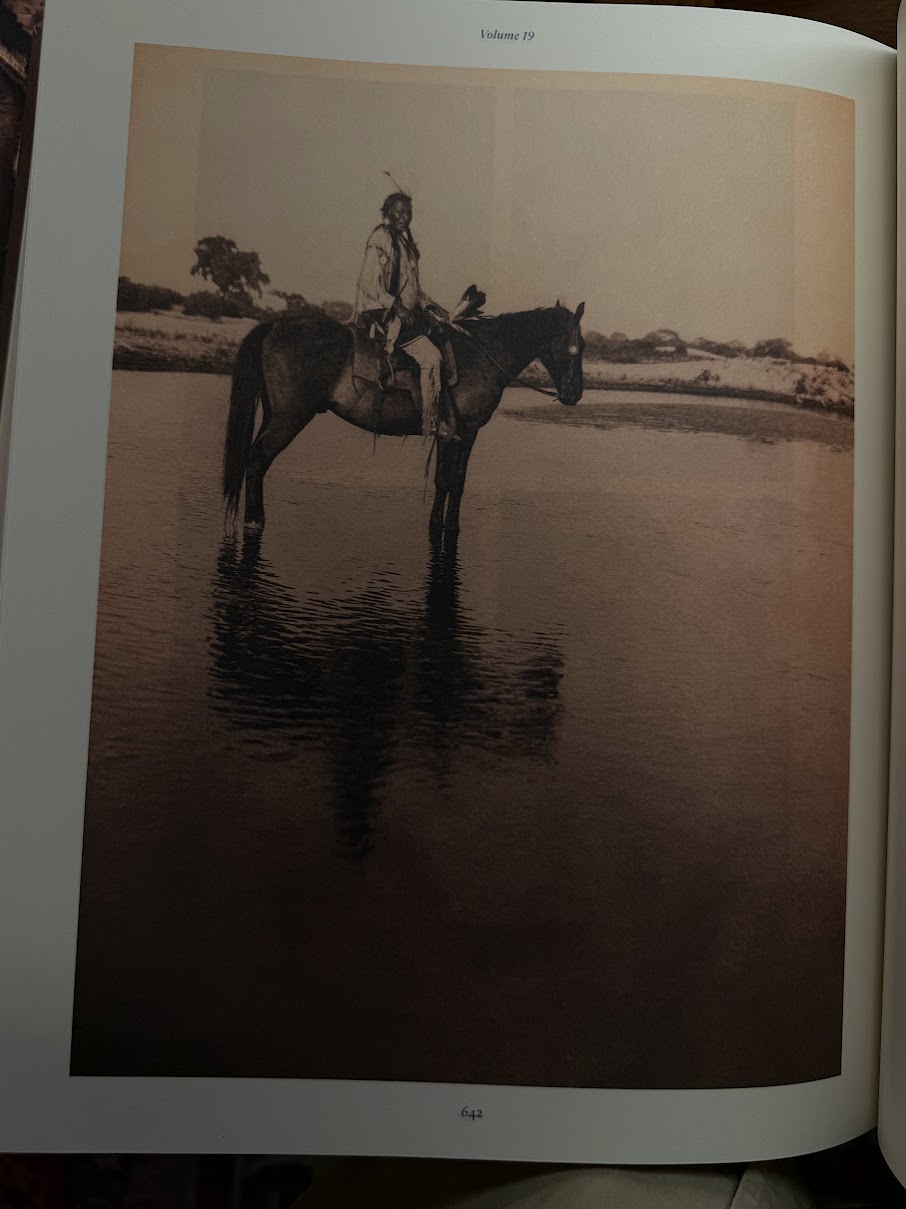
The traditional Navajo song often associated with horses is the Song of the Horse (dedicated to the Turquoise Horse of the Sun-God, Johano-ai), used to bless, calm, and connect with horses rather than act as a mechanical training command. Diné (Navajo) horsemen traditionally sing to their herds to establish spiritual harmony (hózhǫ́), mutual trust, and deep calm. Rather than "docile" a horse through force, the chanting shares a peaceful energy that wild or restless animals sense and respond to.  The words of the traditional song translate as:[/fusion_text] [/fusion_builder_column][/fusion_builder_row] [/fusion_builder_container]

By |September 18th, 2026|Categories: Horse|Comments Off on Navajo Song of the Horse

Marilyn on Horses

Marilyn Monroe was unquestionably a style icon, but what makes her interesting is that her influence went beyond simply wearing beautiful clothes. She helped create a visual language of American glamour that is still being copied more than six decades after her death.  The important distinction is that Marilyn's style was partly created for her and partly created by her.  The mistake is to think Marilyn's style consisted entirely of gowns and cleavage. While polo matches were high-society staples in mid-century Hollywood—frequently held at places like the Will Rogers Polo Club in Pacific Palisades or the Riviera Country Club—Marilyn Monroe was not part of that circuit.  A few common points of confusion often lead people to associate Monroe with polo or similar sporting events.   She did have some scenes with horses over the years (her choice of footwear makes it obvious that this was not a familiar hobby).   However, Monroe was famously a regular guest at The Beverly Hills Hotel (living in Bungalow 1 and Bungalow 7 at different points) and frequently spent time in its iconic Polo Lounge, which features classic equestrian polo imagery.  So, my imagination is left wondering what she would have worn to a polo match.   Surely something timeless and classic like the capri outfit below, but less than the formal gowns that she was famously and fabulously often photographed wearing. One of her most famous cinematic lines about polo comes from a scene aboard a borrowed yacht in Some Like It Hot (1959), when her character, Sugar Kane, talks with Tony Curtis (whose character was trying to impress her and was impersonating a Shell Oil heir): Sugar: "Water polo! Isn't that terribly dangerous?" Junior: "I'll say. Two ponies drowned under

By |September 17th, 2026|Categories: Uncategorized|Comments Off on Marilyn on Horses

Horse Prices in the West

Pandemic Peak and Stabilization: Across national and regional auctions (such as the Colorado Horse Sale), horse prices skyrocketed during the pandemic as demand surged. A mediocre lesson horse that might have sold for $8,000 in 2019 jumped to roughly $18,000 by 2021.  Today's Averages: Prices have corrected slightly from that absolute frenzy, but they have not returned to pre-pandemic levels. Safe, trained recreational horses ("good amateur horses") now consistently command between $15,000 and $22,000. Buyers operating on a historical mindset—expecting a safe, broke horse for $5,000 to $6,000—find that budget only covers animals with major quirks or training gaps.

By |September 17th, 2026|Categories: Uncategorized|Comments Off on Horse Prices in the West

Thelwell x Royal Grafton

Long ago I purchased an antique Royal Grafton trinket dish that features the famous comical equestrian artwork of British cartoonist Norman Thelwell.  Thelwell's cartoons for Royal Grafton showcase Thelwell's signature plump, hairy ponies and determined young girl riders in humorous predicaments (such as water jumps, bumpy rides, or carrying umbrellas while galloping). These vintage pieces are widely sought after by equestrian and British pottery collectors. You can find various listings and examples via the eBay Thelwell Mug Listing or browse community offerings on the Etsy Thelwell Cartoon Market. ;

By |September 17th, 2026|Categories: Art, Foxhunting|Comments Off on Thelwell x Royal Grafton

When Enough is Enough

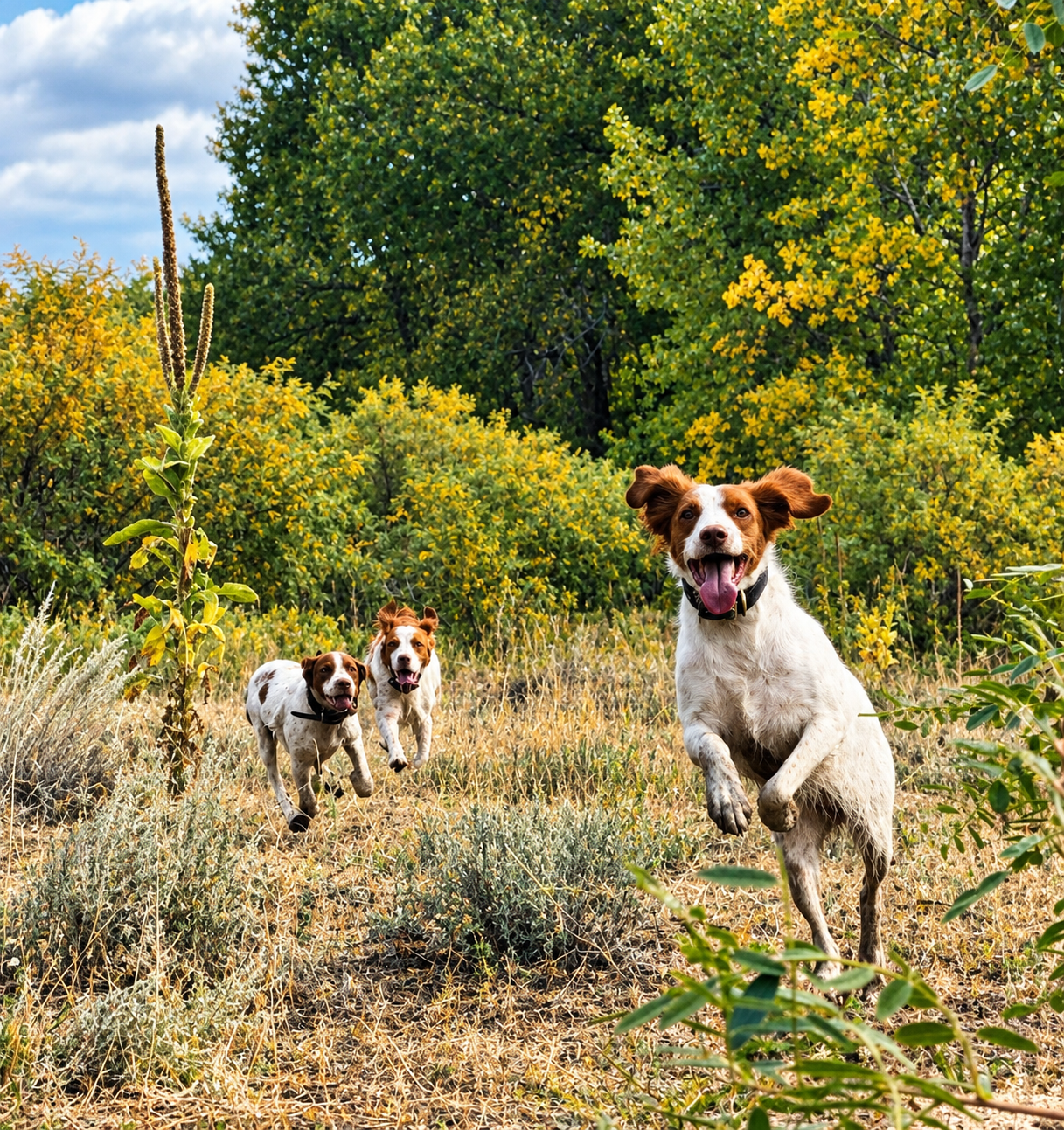
“Earth provides enough to satisfy every man’s need, but not every man’s greed.”  ~Mahatma Gandhi There is something deceptively simple in Gandhi’s observation. The earth gives us an extraordinary abundance. Food, water, timber, game, fish, horses, gardens, mountains, rivers, open country. It gives us the raw materials for both survival and pleasure. What it cannot provide is an end to wanting.  Perhaps that is the distinction worth remembering: need has a limit. Want does not. A day in the field has a way of making this point obvious. You walk a ridge at first light, a dog working ahead through the sparse cover of windswept prairie grass and cheatgrass, and for a few hours the notifications from the machinery of modern life that we carry in our pocket become irrelevant.  In fact sometimes those notifications get in the way of enjoying your experience outside, so if I have cell coverage, I often turn the phone to silent.   You are left thinking about the direction of wind, the dog's effort to quarter through the field leaving nothing uncovered, the anticipation of finding birds,  and the dew on the ground beneath your boots.  The view is often rewarding, as is the physical and mental calculations needed to be successful, but more than anything it creates a situation where you are forced to just be---just living in the moment.   Even if the hunt is successful, the reward is not measured by how much game meat you brought home. One bird can be enough. Sometimes the real prize is simply having been there and the stories that are made through these experiences in the natural world. The same is true around a table. A well-prepared meal does not require

By |September 16th, 2026|Categories: Uncategorized|Comments Off on When Enough is Enough

Jock Jorrocks and the Sporting Life

There are sporting men who take the field seriously, and then there is Jock Jorrocks.  Created by the English writer Robert Smith Surtees in the nineteenth century, John Jorrocks was a London cockney, horseman, foxhunter, gunner, gourmand, and enthusiastic authority on nearly everything. He was also, depending on the occasion, somewhat less accomplished than he believed himself to be.  That was precisely the point. Jorrocks appeared in an age when sport was becoming part of a larger culture of leisure, travel, food, friendship, and storytelling in the 1830's and 40's.  Surtees understood that the sporting life was never merely about the hunt, the hounds, the ride, or the quarry. It was about the entire day surrounding them: the early start, the horses, the dogs, the companions, the lunch, the weather, the mishaps, and the story that would inevitably become better by the time it was told again.  Jorrocks loved all of it.  And, we have to Surtees wonderful writing filled with humor that is as on point today as it was back then.   Frankly, nothing else in fictional literature about foxhunting even comes close, except maybe Gordon Grand. Surtees's famous character also possessed the great sporting virtue of enthusiasm. He approached the countryside with the appetite of a man who intended to enjoy himself regardless of whether the day went according to plan.  His character fits this image, when sketched as a man overly stuffed into his hunting attire, perhaps from decades of indulgences.  His confidence routinely exceeded his competence, but his pleasure in the sporting life was genuine. He was never too dignified to be ridiculous and never too ridiculous to be thoroughly entertaining. Perhaps that is why Jorrocks still feels familiar.  The best sporting lives are

By |September 15th, 2026|Categories: Uncategorized|Comments Off on Jock Jorrocks and the Sporting Life

Gambrel Method of Butchering Big Game

I recently got a copy of Aflield: A Chef's Guide to Preparing and Cooking Wild Game and Fish by Jesse Griffiths.   Griffiths does a great step by step demonstration of the Gabrel Method of cleaning big game, which is how we do it as well.   My daughter is spoiled by hunting with a professional butcher as her mentor, so we are trying to perfect all of this during the next deer season, as Uncle Henry is still better than we will probably ever become at butchering big game.  Here's how to start:

By |September 15th, 2026|Categories: Uncategorized|Comments Off on Gambrel Method of Butchering Big Game

Buy Toyota

Approximately 50% of all Toyota vehicles ever built are still on the road today, and about 80% of Toyotas sold 20 years ago remain active. About 80% of Toyota vehicles sold two decades ago are still driven today. Roughly 9.1% to 10.7% of all passenger vehicles currently driving on roads worldwide are Toyotas, making it one of the most common automotive brands in existence. Research shows that a Toyota has a 19.7% chance of reaching at least 250,000 miles. The general automotive industry average for reaching 250,000 miles is only 5.4%, meaning a Toyota is roughly 3.7 times more likely to hit that milestone than a typical vehicle.  Lexus (owned by Toyota) ranks second with a 14.4% chance of reaching 250,000 miles. I have always been a 4Runner guy, but when it comes to vehicles that instantly evoke an off-road envy, or a muddy wanderlust, the Land Cruiser 70 series is a sure contender. Although available in countries like Jamaica, Costa Rica, Australia, and South Africa, they’re not for sale in the US, unless you want to wait until they are 25 years old, when they are then eligible for US import.   Inios is making a stab at competing with this market, which is worth a look as well, but probably won't last you 250,000 miles like my Toyotas do.

By |September 15th, 2026|Categories: Uncategorized|Comments Off on Buy Toyota