Uncategorized

Bridgette Bardot French Style

[French actress Brigitte Bardot was one of the best-known sex symbols of the 1950s and 1960s. PHOTO: Michel Bernanau (CC BY-SA 3.0) via Wikimedia Commons.] Sotogrande (Cádiz) is widely known as the capital of European polo. It features top-tier facilities like the Santa María Polo Club and private luxury estates like Polo Valley, drawing international elites, royals, and high-goal tournaments every August.  If this is not your style, try the still chic but slightly shabby by comparison, the Deauville Polo Club in Normandy, France.   In fairness, this historic seaside club hosts the famous Barrière Deauville Polo Cup and the prestigious Gold Cup (Coupe d’Or) every August, which draws everyone from the same crowds to play, spectate, or just be part of the lifestyle.   Anyway, we were recently in Deauxville and couldn't help but think that Brigitte Bardot might have frequented the polo grounds there in her chic style, which if you look back on the photos of her, are all styles that have aged remarkably well and have spanned over 60 years. While she was not a polo player herself, Bardot was an avid equestrian and frequently mixed with high society during her peak fame in the 1960s and 1970s. She spent significant time in global jet-set hubs like Saint-Tropez and St. Moritz, both of which are deeply associated with elite polo culture.  For instance, she attended high-profile social galas tied to the sport, such as a Polo Gala Dinner at Badrutt's Palace in St. Moritz.  Additionally, the Polo Club Saint-Tropez regularly hosts major summer tournaments and parades in the very coastal town she famously transformed into a celebrity hotspot.  Brigitte Bardot's deep, lifelong passion for horses evolved from a high-society equestrian hobby during

By |August 11th, 2026|Categories: polo, Style, Travel, Uncategorized|Comments Off on Bridgette Bardot French Style

Polish Horse Pottery and Peaches

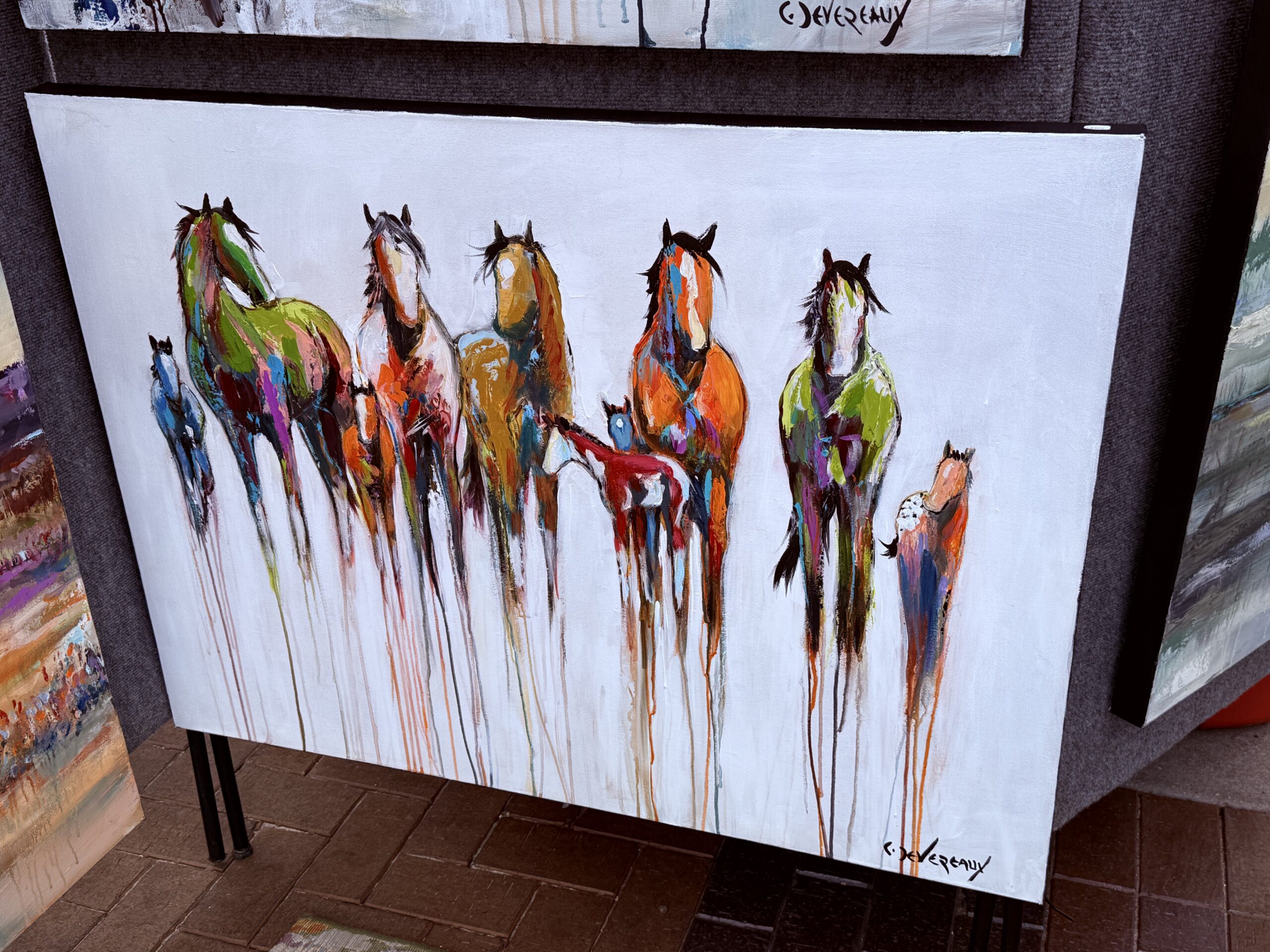
It's peach season here in Colorado and we found several varieties from Palisade, Colorado, this summer.   And, we are lucky to have an outlet here in Denver where they have beautiful, hand-painted, heirloom Polish Pottery with horse scenes, direct from Poland.

By |August 11th, 2026|Categories: Colorado, Cuisine, Uncategorized|Comments Off on Polish Horse Pottery and Peaches

Modern Huntsman

I signed up for a new subscription over at Modern Huntsman.   This was one of the best ideas that was in their archives, which I am going to replicate this week.   Stay tuned. Modern Huntsman Recipes - Messy Sushi Board Words By - Valentine Thomas Photography By - Tyler Sharp Appetizer, Serves 4-6 INGREDIENTS 2 Cups Sushi Rice 1 Splash of Rice Vinegar 10 Firm Fish (any you like) 1 Red Onion, thinly sliced* 1 Cucumber, thinly sliced* 1 Tablespoon of Sesame Seeds 1 Zest of an Orange 3 Tablespoons Soy Sauce 3 Tablespoons of Yuzu** – Cilantro – Paprika – Garlic Salt – Nori (Seaweed) Sheets for Serving *Fun alternate ingredients: pineapple or mango, diced bell peppers, green onions, pomegranate seeds, jalapeños. **Substitute: Fresh Lime Juice. You can find yuzu in sushi shops or Japanese grocery stores. THE SAUCE 1. In a small bowl, add 3 tablespoons of yuzu (if you couldn’t find it, use the same amount of lime juice), 3 tablespoons of soy sauce, and the juice of half a lime. THE BOARD 1. Cook the sushi rice as per the instructions on the package (or with a rice cooker). 2. When the rice is cooked, add a splash of rice vinegar to it and stir. 3. Spread the rice on a board (I like to use a wooden chopping board for presentation). 4. While the rice is cooling on the board, thinly slice the fish in pieces about ¼ cm in width. 5. Place the fish on the rice when it has cooled down, and spread all ofthe other ingredients on top. 6. Top off with the sesame seeds, orange zest, paprika and garlic salt. 7. Either pour the sauce

By |August 11th, 2026|Categories: Uncategorized|Comments Off on Modern Huntsman

More on Men’s Styles

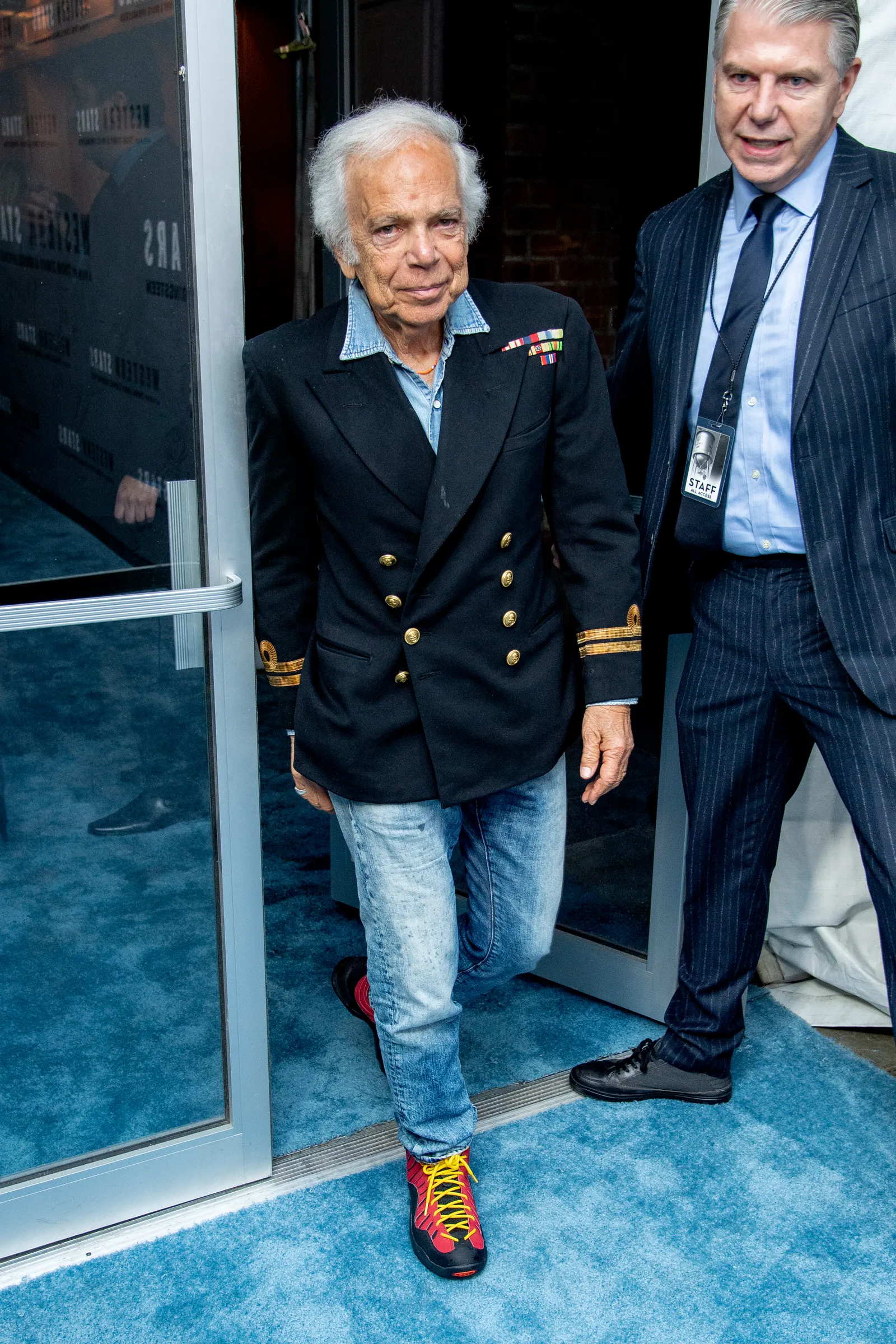
Relaxed, rugged, low maintenance and easy for travel and adventure---this is style that I have tried to adopt over the years for casual wear.  Wearing bespoke suits everyday for work are my usual uniform 5 days a week.   Perhaps without a tie these days that I am not in court.   Simple and nothing much for me to decide each day. But when not wearing a suit, I spend my time chasing bird dogs, riding fast horses, climbing mountains, or waving a stick in a stream, sometimes creates a vacuum in my closet for what to select for days requiring something a bit more formal than a sport coat but for when you want more than a t-shirt and jeans.   In the past, I usually opted for preppy, Polo Ralph Lauren bits, Brooks Brothers button downs, khaki pants, etc., which were the foundation of my first 25 years on the planet, which was largely spent in school.  Lately, we spend a lot of time in Western jeans, cowboy boots, cowboy hats, wild rags, etc., as it is convenient to our lifestyle here in the Rocky Mountains surrounded by horses.   But for town, I have always favored a bit more British town and country looks, with a French flair from my trips abroad.  For spectating at polo events, we often go for a more dressed up preppy style. My buddy Brian over at C. Woodcock & Co., has a great style for travel and adventure.  He mises vintage Willis & Geiger, Abercrombie and Fitch, Le Laboureur (French workman's coats), and lots of other thrift store finds, with field wear such as Russell Moccasin boots, Hemingway bits, NATO straps, etc.   Suffice it to say we have a lot

By |August 7th, 2026|Categories: Uncategorized|Comments Off on More on Men’s Styles

The Kentucky Derby is Decadent and Depraved

While Hunter S. Thompson was living in Woody Creek, Colorado during the late 1980s.   I had no idea who he was at the time, other than a "famous Colorado author" who had stumbled into an evening guest lecture series, where he had been booked to speak.   I introduced myself as he was walking in as I was writing for the Denver Clarion at that time and he had made waves at the University of Denver (DU) because he showed up for the lecture with a lit cigarette, alongside a ice bucket, a handle of wild turkey, a glass with ice, and a notebook of current event rants.   Turns out, he had been granted a special event liquor license for the speech (no alcohol can be served in lecture auditoriums without the school's consent in advance).   The license only allowed him to drink at the event, not any of the spectators.   Turns out he was throwing a fit over the non-smoking policy in the auditorium and the chancellor was there, and under threat that Thompson was walking out with his cigarette in hand before the lecture even started, because he planned to "smoke at least two packs" during the hour long event.   They let him stay.   It was a decadent and depraved speech and he was unwieldy, to say the least. Here is one of my favorite bits of Gonzo journalism.  Although assigned to cover the 1970 Kentucky Derby, Thompson devoted almost no coverage to the two-minute horse race itself. Instead, he focused entirely on the spectators—the drunken, chaotic, and debauched crowd at Churchill Downs.Satire of the "Whiskey Gentry":Thompson used the event to dissect class, culture, and Southern aristocracy. He described looking for a specific

By |August 7th, 2026|Categories: Uncategorized|Comments Off on The Kentucky Derby is Decadent and Depraved

Hunting at Home

Colorado Game Management Unit (GMU) 51 features over-the-counter (OTC) availability primarily for 2nd and 3rd rifle season bull elk tags, while archery and 1st/4th rifle seasons require a draw. [1, 2, 3, 4] Unit 51 Overview & Access Location: Douglas, Jefferson, and Teller counties, spanning around 24,000 acres of the Pike National Forest along Rampart Range Road. Terrain: Steep canyons, dense timber, and open mountain parks ranging from lower foothills up to rocky ridge lines. Special Restrictions: Specific properties like the Sharptail Ridge SWA within Unit 51 require separate unit-specific draw permits rather than general OTC access. [1, 2, 3, 4] License Rules & Purchasing Rifle Seasons: Unlimited OTC either-sex or bull tags are generally offered for the 2nd and 3rd rifle seasons. Archery Changes: Note that general non-resident OTC archery options have shifted significantly under modern Colorado Parks and Wildlife regulations, requiring verification of current draw vs. OTC status for bowhunters. Purchasing: Valid licenses can be acquired digitally via the CPW Online System or through authorized local license agents. [1, 2, 3, 4, 5] If you'd like, let me know: Your preferred season (2nd or 3rd rifle) Your residency status (resident or nonresident) I can help verify the specific active hunt codes and license fees for your upcoming hunt. ______________________________________________________ Colorado leftover elk licenses for Unit 51 can be purchased online at CPWShop.com, by phone at 1-800-244-5613, or at in-person sales agents. Leftover and reissued limited licenses requiring four or fewer preference points go on sale starting at 9:00 a.m. MT on the designated Leftover License Day in August. [1, 2, 3, 4] Purchasing Details Cost & Availability: Varies based on residency and specific hunt code quotas remaining after primary and secondary draws.

By |August 4th, 2026|Categories: Uncategorized|Comments Off on Hunting at Home

Siena Bareback Horse Race

The Palio di Siena is a historic bareback horse race held twice each summer in the central square of Siena, Italy. It features ten horses and riders representing the city's neighborhoods, competing in a frantic 90-second sprint. First, on July 2: Known as the Palio di Provenzano, honoring the Madonna of Provenzano. Second on August 16: Known as the Palio dell'Assunta, honoring the Assumption of Mary. Siena is split into 17 historic neighborhoods or contrade, but only 10 compete in each race (7 automatically and 3 chosen by lot) and the race goes through the city's main sloping medieval square.   It is transformed with a heavy layer of packed dirt and clay over the cobblestones. Jockeys ride bareback for three intense laps around the square, covering a total distance that takes roughly 90 seconds.  Virtually anything goes during the scramble once the starting rope drops; jockeys can use their whips and hinder competitors. For a quick look at the incredible pageantry, crowds, and fast-paced chaos of the event in the main square, try this video from Rick Steves.

By |July 29th, 2026|Categories: Travel, Uncategorized|Comments Off on Siena Bareback Horse Race

Why Is It Called a Blazer?

Today, a blazer is one of the most versatile pieces in a wardrobe. It can be dressed up with tailored trousers or paired with jeans for a casual look. Available in everything from classic navy and charcoal to bold plaids and vibrant colors, the modern blazer has become a fashion staple. But its origins have little to do with business attire—and everything to do with competitive rowing. The blazer was born on the rivers of 19th-century England, where rowers at Oxford and Cambridge wore loose-fitting jackets to stay warm during chilly morning practices and races. Unlike today's structured versions, these early jackets resembled lightweight windbreakers designed for comfort and function. The name itself is believed to have originated with the Lady Margaret Boat Club at St. John's College, Cambridge. Club members wore striking scarlet jackets that stood out on the water, inspiring the term "blazer," a reference to their blazing red color. Bright jackets and bold stripes soon became common among rowing clubs, making it easy for spectators to identify competing teams. As the jackets became symbols of pride and membership, athletes began wearing them away from the river—much like modern varsity or letterman jackets. Before long, rugby, cricket, croquet, and football clubs adopted similar styles, and by the late 1800s the word blazer had come to describe almost any colorful sporting jacket. The style crossed the Atlantic around the turn of the 20th century, where it quickly became popular on Ivy League campuses. Students at Yale, Harvard, Princeton, and Cornell embraced loose flannel blazers as part of collegiate fashion, helping transform the garment from athletic apparel into a symbol of classic American style. More than a century later, the cut, fabrics, and colors

By |July 22nd, 2026|Categories: Uncategorized|Comments Off on Why Is It Called a Blazer?

Railway through the Desert

The featured photo from the Library of Congress shows indian women at the Laguna, New Mexico, train depot c. 1902. Santa Fe Railroad officials encouraged the sale of Pueblo jewelry, crafts, and art at rail depots throughout the Southwest in an effort to attract tourists to the region. Native American imagery became a powerful force in American advertising during the late 19th century and has remained a familiar marketing symbol ever since. Thousands of posters, signs, brochures, and promotional booklets portrayed Indigenous people as symbols of strength, courage, speed, fierce independence, and a deep connection to nature. Railroads heading west, particularly those crossing the Southwest to California, embraced this imagery to sell the romance of travel. Their advertisements promised an unforgettable journey through dramatic landscapes inhabited by ancient cultures, transforming a train trip into an adventure. One example from my collection is this 1917 brochure, distributed aboard Santa Fe Railway trains to encourage travelers to visit Los Angeles. This version flows more naturally while preserving the historical context without endorsing the stereotypes used in the original advertising. If you're writing for a history or vintage advertising audience, it also reflects that these were marketing portrayals rather than factual representations. This is the story of how the Land of Enchantment was formed. https://mytext.cnm.edu/lesson/creating-the-land-of-enchantment/ 

By |July 14th, 2026|Categories: Uncategorized|Comments Off on Railway through the Desert

Running of the Bulls with Hemingway

PAMPLONA, Spain — This year’s San Fermin festival is fit for anything, including outfitters offering packages for running with the bulls and bullfighting side-trips.  This year marks the 100th anniversary of the publication of Ernest Hemingway’s book “The Sun Also Rises,” which put Pamplona on the map. Hemingway first attended the festival in Pamplona, Spain, on July 7, 1924, accompanied by friends. He was immediately captivated by the life-and-death drama of the bullfights, the bravery of the matadors, and the energetic, hard-drinking culture of the celebration. These annual trips provided the core setting and inspiration for his breakthrough work. Today, the festival consists of eight consecutive morning bull runs, beginning on July 7. Thousands of participants pack the cobblestoned streets of Pamplona to scramble out of the way of a pack of charging bulls.  The run spans roughly 875 meters (about 960 yards) through the old quarter of the city, culminating in the bullring.  The run is inherently dangerous, with participants regularly suffering gorings and severe injuries.

By |July 8th, 2026|Categories: Uncategorized|Comments Off on Running of the Bulls with Hemingway