Uncategorized

Home/Uncategorized

Tilley Hats

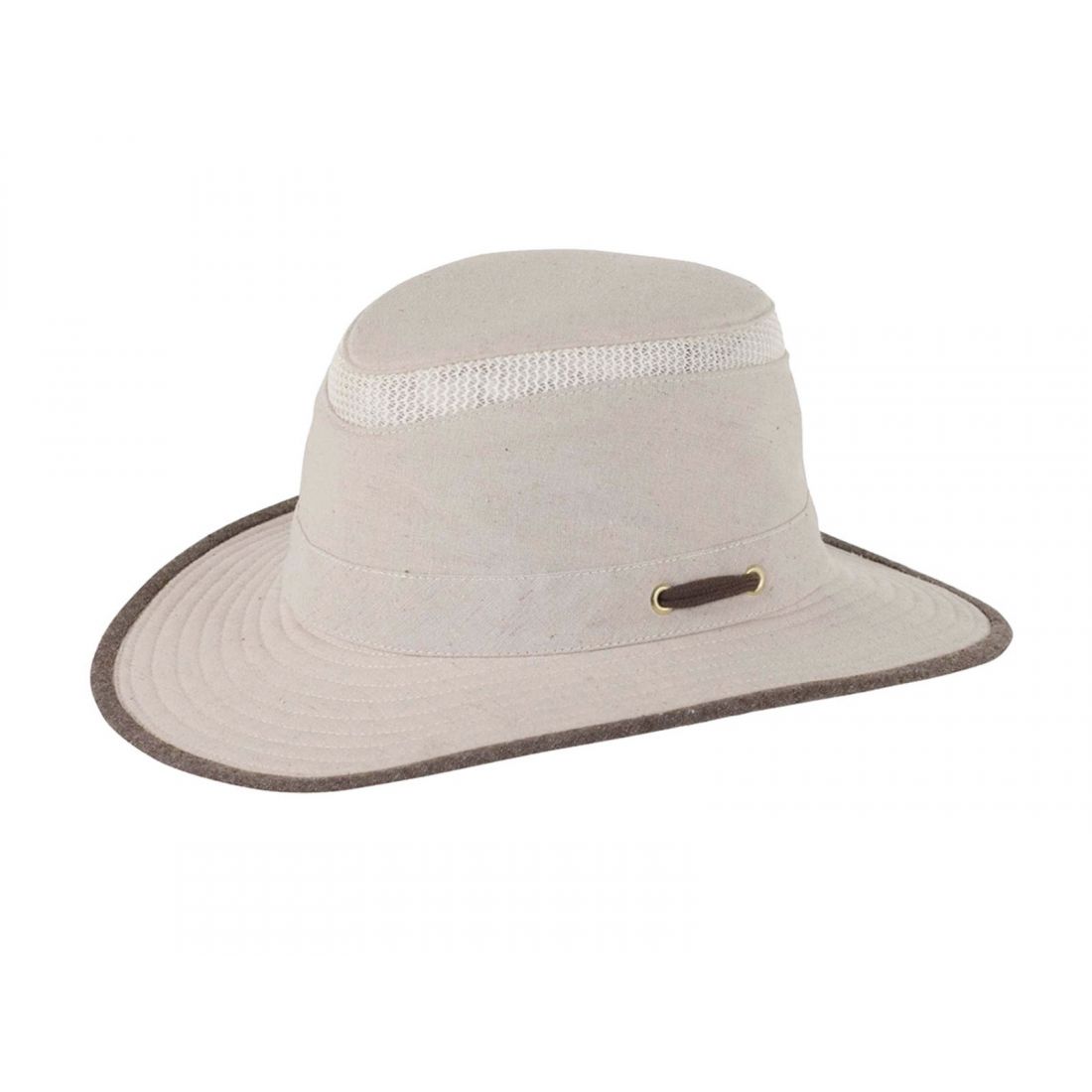
I have had all of the Tilley hats from the original bucket duck hat to the present day help and microfiber ones, almost every one that they have made over the last 30 years. I have to say, that Rim Chung's stylish fishing favorite was and still is the T3, in white with green under brim. I got one of those to start, but I really didn't like the white color for standing out too much while fishing or shooting. Rim claims "it made him blend in with the clouds." My favorite was the LT6 in Khaki with Green underbrim. It was perfect for fishing and shooting, but they no longer make it and finding used ones are now difficult even, such as this one on ebay Tilley Endurables LT6 Hat Khaki Tan w//Green 7-3/8 Outback Straps Wide Brim I used to wear a Fedora and then safari hats for hunting then cowboy hats but I keep coming back to the Tilley. They are perfect year round, except the colder days of winter. The T4 duck hat was better looking with the brass holes than the current LTM6 mesh around the top of the crown version. I have also tried the models with bigger and smaller brims. They don't make much difference in the actual sun protection, as the longer brims are floppier (moving around some in the wind), and the shorter versions are more fixed allowing for you to keep them in place to provide shade. Neither of these new models are as good looking as the original T4. But I guess the T5 or LTM6 is better than the longer brimmed LTM2, which is very floppy as you walk around, if you have

By |October 7th, 2019|Categories: Fishing, Uncategorized, Wingshooting|Comments Off on Tilley Hats

Dealing with Sensitive Dogs and/or Gun Shyness

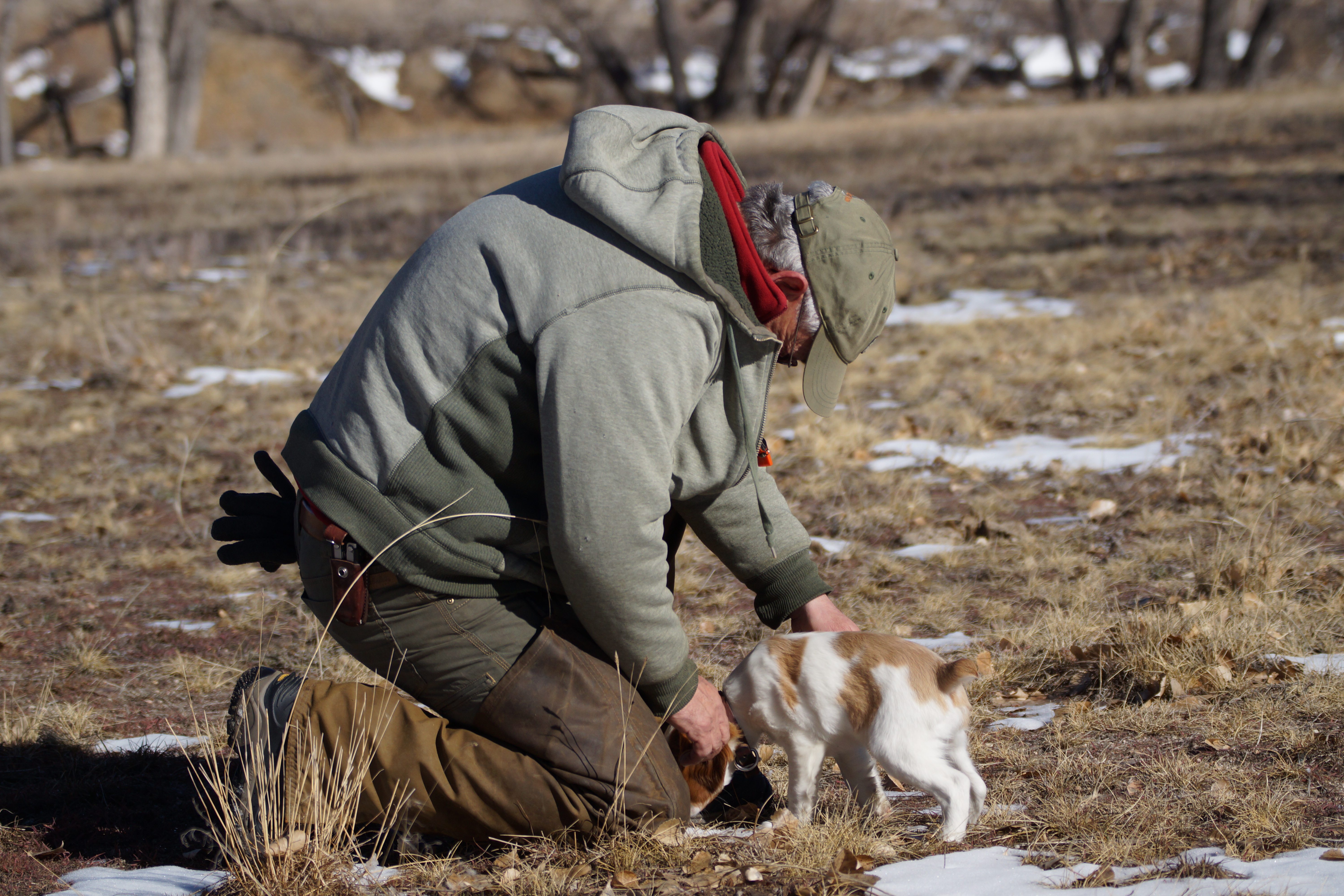
In 20 plus years of having field trial bred Brittanys, I currently Had a number of dogs and bitches. I currently have a Brittany bitch which came to us to us as a little shy or as Gary Ruppel says, she is sensitive. She was the daughter of a famously hard charging field trial dog. Her brood mom, not so much hard charging, more a family hunting dog. So part of it may be genetic. She was kept as the pick of the litter. She liked to bounce up and down in the kennel and was very friendly, enthusiastic and gentle. She was 6 months old when we got her. She had lived in a small field trial kennel her whole life, but one where the dogs are well treated and get out daily for roading or work with birds. They just don't get a whole lot of other contact with people or other dogs until they get a little older and start going to field trials and the local is rural so when they get out, they go a country mile to find birds for 30 minutes and then the next dog goes out. Bounce loved this life, as do I at many times. But, at this point, she was a little timid around people, particularly strangers as she hadn’t been to field trials yet, where they get this socializing with members outside their own pack. She didn't bark and wasn’t neurotic, but she was just a little timid looking at Petsmart, the dog park, or with even the mailman, and you could tell new situations made her uncomfortable. She would frequently roll over on her back, showing submission. She also did this if

By |September 25th, 2019|Categories: Dog Training, Uncategorized, Wingshooting|Comments Off on Dealing with Sensitive Dogs and/or Gun Shyness

How to Use an Axe

Before enlightenment: chop wood, carry water. After enlightenment: chop wood, carry water. -Zen proverb In a certain way, we are living back at the time before the entry of the booming forest industry. There are no axe-using forest workers any longer. The millions of cubic feet of pulpwood and timber that arrive today at forest industries have never been grazed by an axe. Chain saws, harvesters and logging machines have taken over completely. Today most axes are used in small scale activities by people like home owners, firewood cutters, campers, hunters, joiners, woodworkers, log builders. This manual that from the legendary Small Forest Axe maker Gransfors Bruk tells you everything you need to know on how to use an axe. Our axe was made by Martin Forslund. We use the axe for everything from camping to firewood, to trimming trees around the house and getting to and from hunting spots with downed trees on two track roads. https://www.gransforsbruk.com/app/uploads/2013/02/Yxboken-Engelsk.pdf

By |September 18th, 2019|Categories: Uncategorized|Comments Off on How to Use an Axe

Air Force Workout

What am I capable of?  This is my favorite new workout and I call it the Air Force Workout, as it is the basic physical fitness test for all ages. Taking Souls is a phrase meaning it's about to get better, to be better, to overcome adversity, as David Goggins says in his bestselling book, Can’t Hurt Me, follow, so this is just a launching point for me as a daily regime to get back in better conditioning at over 50, or any age for that matter.  For Marines: PULL UPS / PUSH UPS Male: 3 pull-ups or 34 push-ups (2:00 time limit) Female: 1 pull-up or 15 push-ups (2:00 time limit) RUN Male: 1.5 mile run in 13:30 Female: 1.5 mile run in 15:00 PLANK  40 second plank (1:03 minimum) For Air Force, over 50 males, it's: 50 and above 14 push up 29 sit ups 1.5 mile run in under 15:57 https://www.armyprt.com/air-force-pt-test-standards/air-force-pt-test-scoring-chart/ Looking for a greater challenge, try the Army Special Forces, Green Beret fitness recommendations:   I have long been a fan of interval training.  In track or swimming sessions, these are referred to as intervals, but they also are used in hockey and other sports and can be easily adapted to running as well—a brief period of increased pace followed by a return to regular speed. Recent research suggests that incorporating short, intense bursts of physical activity lasting one or two minutes, like brisk walking, into daily life is linked to a significantly reduced risk of mortality.  For running, that translates to run a block, walk a block, sprint a block, walk a block, or however you wish to mix it up.   According to the findings, engaging in three one-minute bouts of

By |September 17th, 2019|Categories: Running, Uncategorized|Comments Off on Air Force Workout

Transcendental Meditation

“I have been practicing TM for over nine years, and it has changed my life,” says Katy Perry. “It is one of the most important tools I use to keep me balanced and creative with a positive mindset. I started TM back in my college days and I recently went back to it. It is surprisingly effective and can be done anywhere for even a few minutes a day, but it is very effective at helping you fall asleep as well. I repeat my mantra as I fall asleep. Cracking a window, which both of my grandmothers always did, even in Minnesota winters, also helps with a good nights sleep. https://www.artofmanliness.com/articles/better-sleep-fresh-air/?mc_cid=d1e1bc25f1&mc_eid=c18403c855 What is TM? It’s a simple, natural, effortless technique practiced 20 minutes twice each day while sitting comfortably with the eyes closed. The TM technique allows your active mind to easily settle inward, through quieter levels of thought, until you experience the most silent and peaceful level of your own awareness — pure consciousness. Six things you should know Absolutely effortless — It’s so easy and enjoyable that anyone can do it — even children with ADHD. This makes it very different from other techniques.No concentratingNo control of the mindNo monitoring of thoughts (mindfulness)No trying to “empty the mind”Authentic — The TM technique was founded by Maharishi Mahesh Yogi over 50 years ago, and has been learned by more than six million people. It can only be taught by certified TM teachers in a course carefully personalized for each individual.Unique — Other meditations often claim to be the same or similar to the TM technique. In fact, they are very different — and there is no evidence they provide the same benefits.Evidence-based — Hundreds of published research studies on the TM

By |September 17th, 2019|Categories: Uncategorized|Comments Off on Transcendental Meditation

Bird Dog Training for 25 Years with Gary Ruppel

Take a guided stroll with us through the evolution of dog training with this tribute to those who get their hands dirty and train dogs professionally in both good weather and bad. And, the best set of those hands, at guiding dogs to achieve greatness, are those of Gary Ruppel. Gary was mentored by Mike Gould, and both were written extensively about by the late Bill Tarrant for their extraordinary ability to connect with pointing dogs on a new level. Come step with me, through an invisible veil, deep into the secrets of bird dog training. It is my hope that you will find something here useful, not only for you, but for your bird dog. To me, the joy of wing shooting and upland hunting is in watching the dogs work. If I didn't have a good bird dog, I wouldn't hunt. And, I prefer pointers over retrievers, but Gary breeds and trains both. Sure, the shotgunning part of a day afield is a beautiful thing, both in and of itself, and something I have spent a lot of time and money to perfect that craft as much as possible. But having a finely tuned bird dog is the real key to enjoying what God gives us from a day afield. Just enjoying a day in our safe space in nature and watching a dog run in the grand places in big skies, where our 14 species of upland birds are found, as are some of the most magical places in the United States, often wide open or undisturbed parts of the county, can set your heart right again in the world. So it is, that the training of bird dogs is a critical

By |September 17th, 2019|Categories: Dog Training, Uncategorized|Comments Off on Bird Dog Training for 25 Years with Gary Ruppel

Navajo Stick Game

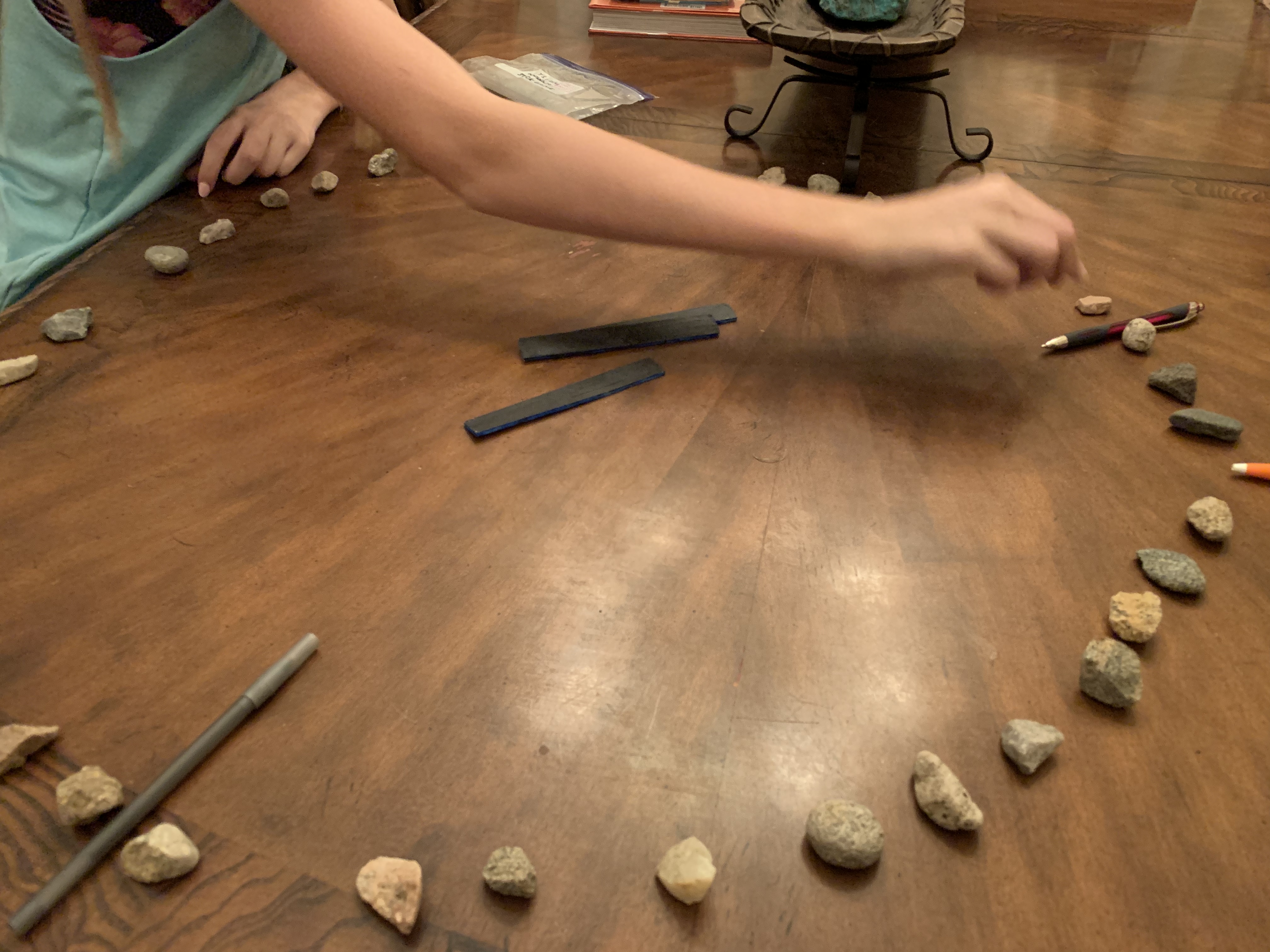
https://youtu.be/UdJ8vG-Rl3A A game traditionally played by Navajo women before sunset. The Navajo name for this game is tsìdìł. Navajo legend suggests that Changing Woman gave the game to the first Dine' clans to teach a lesson about ethics, morality, and living in harmony. Players create a circle of forty rocks with a large flat stone in the center. The players then throw wooden sticks into the circle, scoring the game by where the sticks fall relative to the center stone and by which side of the stick was up when it fell. The game is curtailed at nightfall, limiting the duration of the play. In addition to teaching moderation, by stopping the play of the game at nightfall, the game also represents movement through the circle of life: the circle of stones represents the Navajo homeland, Dinetah; the stones that make up the circle are the stars found in Father Sky; the center stone represents Mother Earth; three sticks painted white on one side and black on the other, represent day and night. The four spaces between the stones represent the Colorado, Rio Grande, Little Colorado and San Juan rivers. Today, the game is used in classrooms to teach history, culture, and the Navajo language.

By |September 16th, 2019|Categories: Games, Uncategorized|Comments Off on Navajo Stick Game

Dutch Blitz

Sometimes the old games are best games. We saw the Amish kids at a horse auction playing it in the stable areas and had to try it. Turns out, it is a great game that 2-8 players can play. It's easily understood by kids, like Uno, but more going on so that even adults can enjoy. It's fast paced. Adapted from Wikipedia: Dutch Blitz is a fast-paced, family oriented, action card game played with a specially printed deck. The game was created by Werner Ernst George Muller, a German immigrant from Bucks County, Pennsylvania. The game is very popular among the Pennsylvania Amish and Dutch community, and among Christian groups in the United States and Canada (primarily in Mennonite communities). Contents 160 cards total:4 decks (one for each player); Pump, Carriage, Plow, and Pail.Each deck includes 10 Red, 10 blue, 10 green, and 10 yellow cards.160 cards available in an expansion deck, for players 5-8. Terminology Blitz Pile This pile of 10 cards is the most important pile of cards to each player since it is the key towards "Blitzing" the other players when all cards from this pile have been cleared. Dutch Piles Stacks of cards in each of the four colors - 1 through 10 an ascending sequence - placed in the center of the table and played upon by all players. Each player accumulates scoring points here. Post Piles Groups of cards placed to the left of both the Blitz and Wood piles in descending sequence For each player, the Post Piles serve as a "trading" or replacement area during the game. There are generally three post piles but in a two person game four or five post piles are often used

By |September 16th, 2019|Categories: Uncategorized|Comments Off on Dutch Blitz

Turquoise

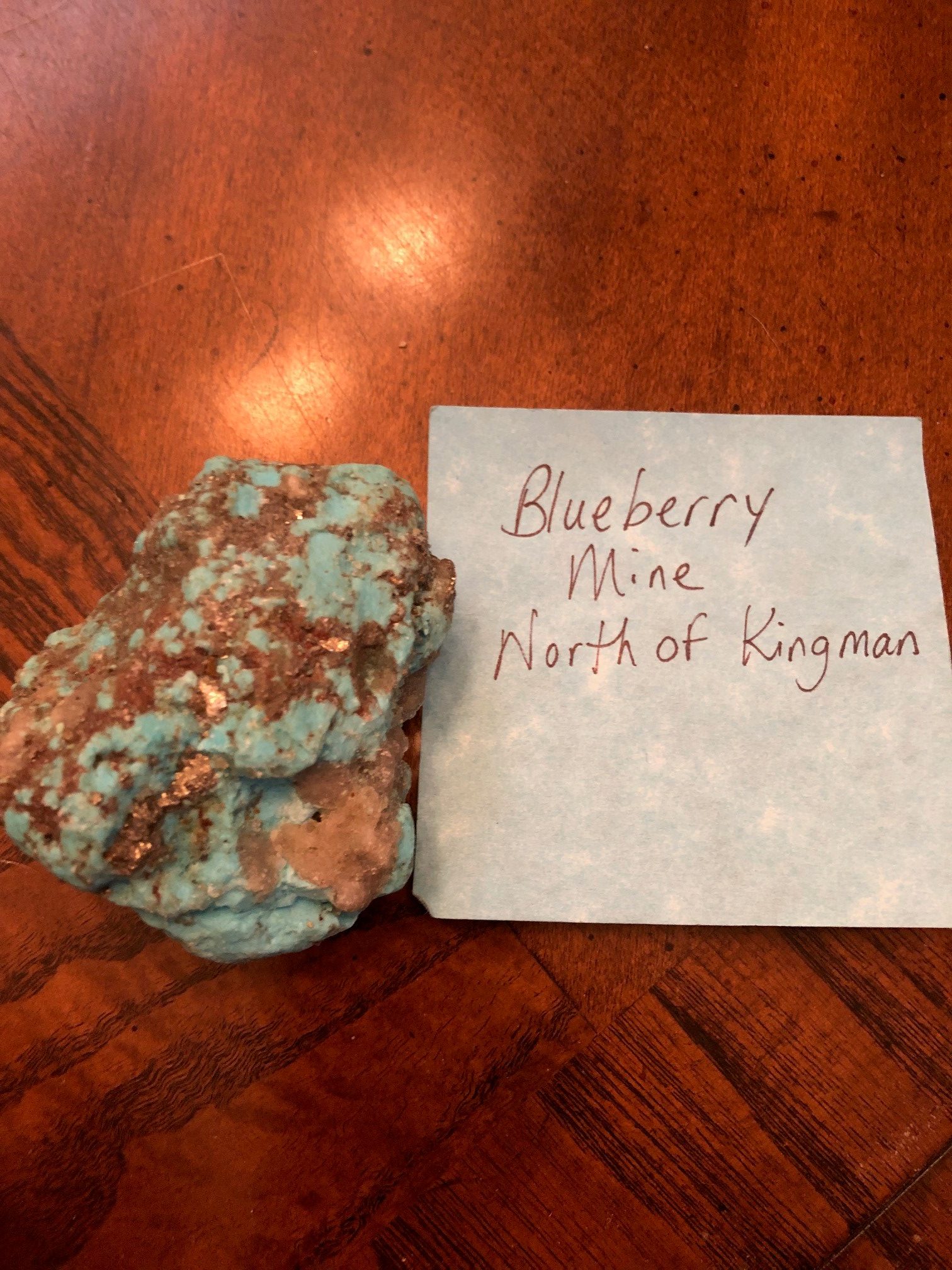
NAVAJO JEWELRY MAKING TECHNIQUES - INGOT From Perry Null Trading Company JEWELRY MAKING TECHNIQUES - INGOT In-got /ˈiNGɡət/ (noun) – a block of steel, gold, silver, or other metal, typically oblong in shape. When the Navajo first learned how to make silver jewelry, they had to be very innovated. The luxury of modern tools or a supply store where they could purchase silver was still decades away. Instead they would collect silver coins until they had enough to make a piece of jewelry. How they turned that silver into a piece of jewelry involved a couple of different techniques. One of these techniques was using an ingot. Today’s silversmiths pride themselves on knowing how to use this technique because it is what the first smiths used. Plus, it is a labor-intensive process that requires a number of steps, almost like the artist becomes more invested in the work.   I try and imagine the setting in which those early smiths made their jewelry. Maybe they constructed an additional hogan next to their family hogan to work silver, or they just created a space inside the family hogan. The workspace would be a dirt floor with a limited number of tools. Then they would have to figure out a way to heat the silver to over 1700 degrees so it could melt. This heating the silver would happen several times during the course of making the piece. These early pieces would be thick and would have a simple design. Also, they wouldn’t have any turquoise. It was a new craft where the craftsman was proud to have acquired the skill and it would become the mission of Navajo silversmiths to perfect this craft. A number of

By |September 9th, 2019|Categories: Travel, Uncategorized|Comments Off on Turquoise

Ticks, Bears, Coyotes, Bobcats and Cougars

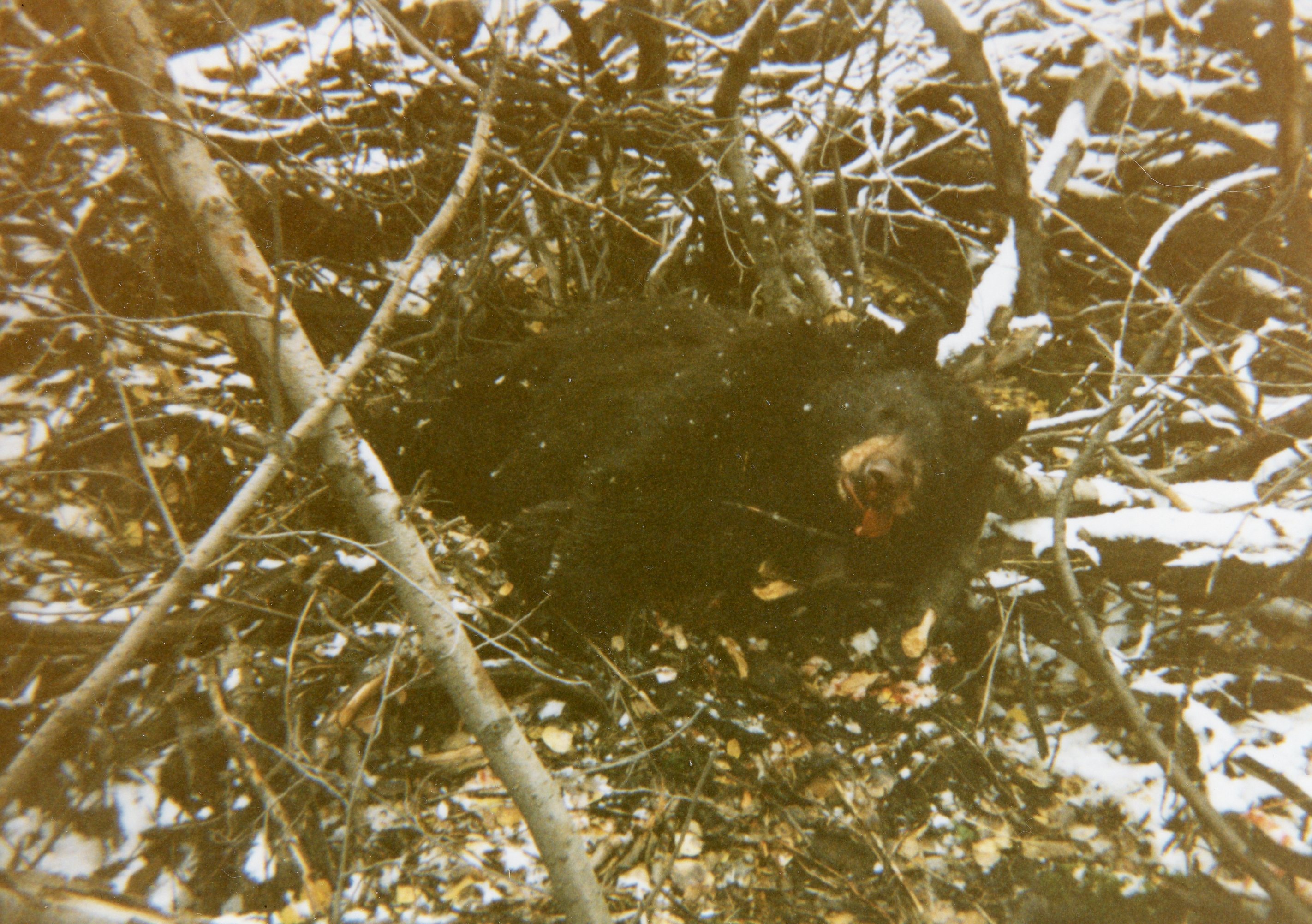
We are the world's first indoor species. Humans living in this generation now spend more time indoors than outside. And it's becoming very apparent when talking to children these days. I frequently get asked about spending a lot of time hunting and fishing in the mountains and about ticks, bears, coyotes, bobcats and cougars. The question usually has something to do with getting attacked by one or getting bitten by a tick or mosquito with malaria, West Nile Virus or the plaque. The chances of getting attacked by a bear are 1 in 2.1 million. So I like to tell people, "No, I'm not afraid of any of those things, as I already got my turn at that and survived a bear coming in our tent, so I really doubt that something like that would happen again to me, as the odds would be astronomical." I have also walked into a sleeping moose in thick willows nearly hitting him with the end of my fly fishing rod. Countless matches burned removing ticks, the odd encounter with a running bobcat and cougar, and watching hundreds of coyotes leave the scene with a human arrives. The Chinese are even paying $4000 for a wild bear gallbladder.  It's illegal to sell bear parts in the US, but in case you are wondering why this would fetch such a high price in China, it’s been a component of Traditional Chinese Medicine (TCM) for thousands of years. The gallbladder has a high concentration of ursodeoxycholic acid, and even modern scientists can’t deny its medical properties from non-surgical gallstone treatment to preventing tumor growth. Commonly sold as “bear bile,” the gallbladder is dried, ground, placed in capsules, and prescribed to treat

By |August 26th, 2019|Categories: Hunting, Uncategorized|Comments Off on Ticks, Bears, Coyotes, Bobcats and Cougars