
“I have been practicing TM for over nine years, and it has changed my life,” says Katy Perry. “It is one of the most important tools I use to keep me balanced and creative with a positive mindset. I started TM back in my college days and I recently went back to it. It is surprisingly effective and can be done anywhere for even a few minutes a day, but it is very effective at helping you fall asleep as well.
I repeat my mantra as I fall asleep. Cracking a window, which both of my grandmothers always did, even in Minnesota winters, also helps with a good nights sleep.
What is TM?
It’s a simple, natural, effortless technique practiced 20 minutes twice each day while sitting comfortably with the eyes closed.
The TM technique allows your active mind to easily settle inward, through quieter levels of thought, until you experience the most silent and peaceful level of your own awareness — pure consciousness.
Six things you should know
- Absolutely effortless — It’s so easy and enjoyable that anyone can do it — even children with ADHD. This makes it very different from other techniques.
- No concentrating
- No control of the mind
- No monitoring of thoughts (mindfulness)
- No trying to “empty the mind”
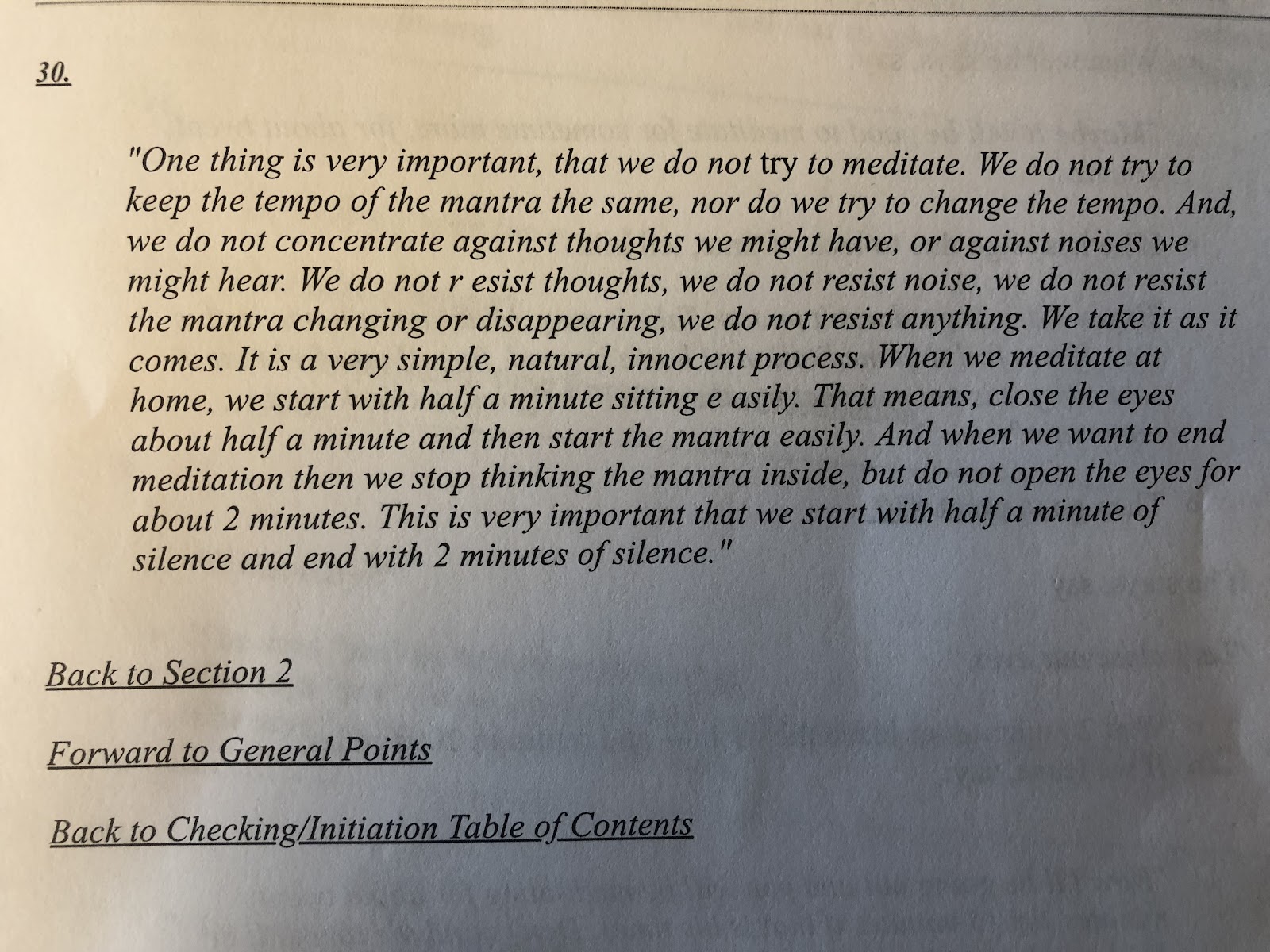
- “One thing is very important, that we do not try to meditate. We do not try to keep the tempo of the mantra the same, nor do we try to change the tempo. And, we do not concentrate against thoughts we might have, or against noises we might hear. We do not resist thoughts, we do not resist noise, we do not resist the mantra changing or disappearing, we do not resist anything. We take it as it comes. It is a very simple, natural, innocent process. When we meditate at home, we start with half a minute sitting easily. That means, close the eyes about half a minute and then start the mantra easily. And when we want to end meditation then we stop thinking the mantra inside, but do not open the eyes for about 2 minutes. This is very important that we start with half a minute of silence and end with 2 minutes of silence.”
- Authentic — The TM technique was founded by Maharishi Mahesh Yogi over 50 years ago, and has been learned by more than six million people. It can only be taught by certified TM teachers in a course carefully personalized for each individual.
- Unique — Other meditations often claim to be the same or similar to the TM technique. In fact, they are very different — and there is no evidence they provide the same benefits.
- Evidence-based — Hundreds of published research studies on the TM technique have documented major benefits for:
- stress and anxiety
- brain function
- cardiovascular health
- Established — Over six million people have learned the TM technique and experienced its benefits — people of all ages, cultures, religions, and walks of life.
- Nothing to believe in — The TM technique is not a religion, philosophy, or lifestyle. No belief or expectation is needed for it to be effective.
The TM technique is simple mental repetition of a “mantra” or word. The TM movement claims that only specific “words” can be used. They claim that the selection of words is based upon a secret formula.
Lauren’s mantra is ENG
My mantra is KIRING
Unlike other forms of meditation, TM® practice involves no concentration, no contemplation, no monitoring of thoughts, no control or manipulation of any kind. TM is easy and enjoyable. Instead of trying to focus or control your mind (or your breath or posture, for that matter), the TM technique allows your mind to automatically and effortlessly settle inward to that silent and peaceful level within. It’s something you can both enjoy and benefit from.
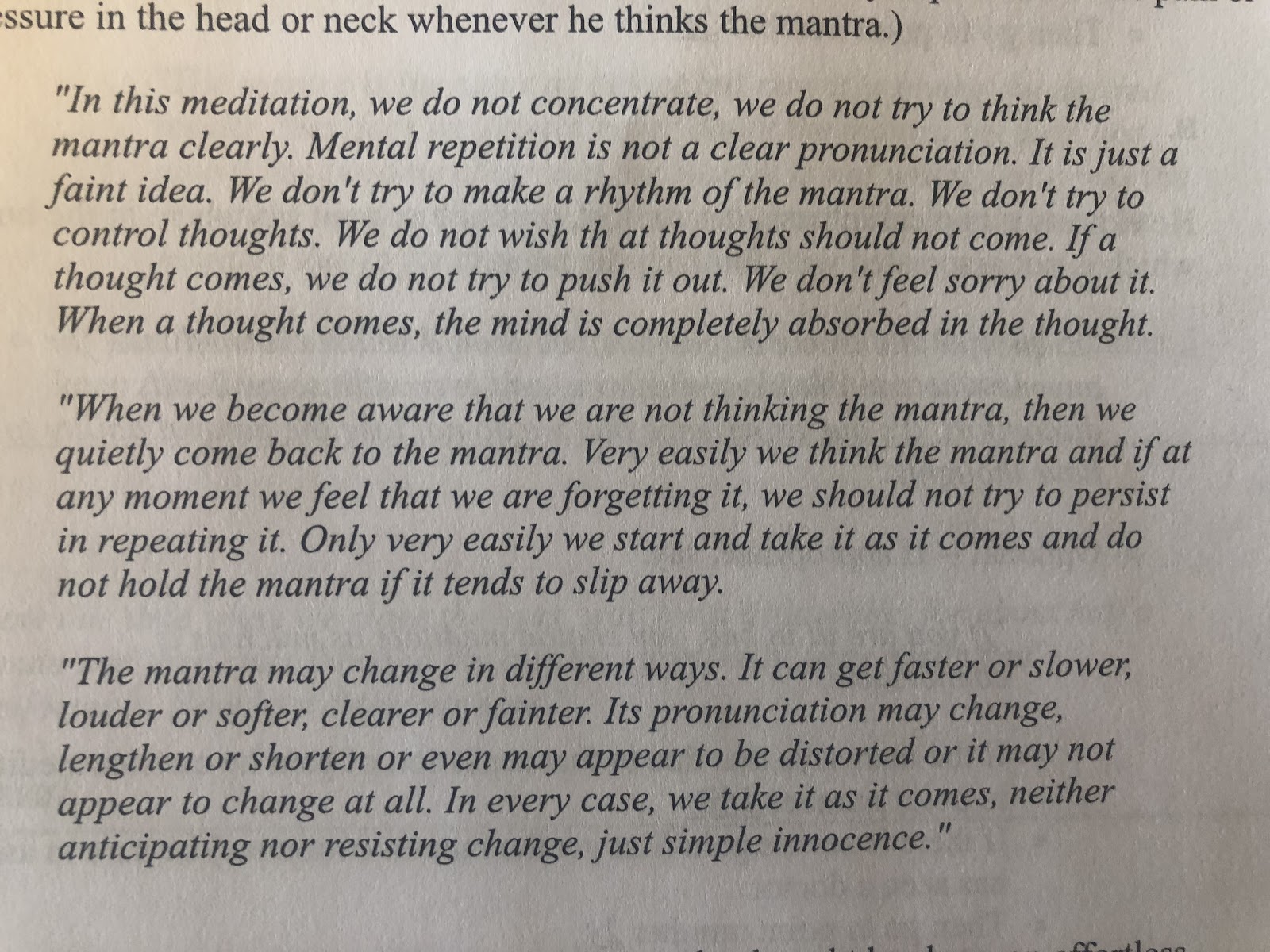
“In this meditation, we do not concentrate, we do not try to think the mantra clearly. Mental repetition is not a clear pronunciation. It is just a faint idea. We don’t try to make a rhythm of the mantra. We don’t try to control thoughts. We do not wish th at thoughts should not come. If a thought comes, we do not try to push it out. We don’t feel sorry about it. When a thought comes, the mind is completely absorbed in the thought.
“When we become aware that we are not thinking the mantra, then we quietly come back to the mantra. Very easily we think the mantra and if at any moment we feel that we are forgetting it, we should not try to persist in repeating it. Only very easily we start and take it as it comes and do not hold the mantra if it tends to slip away. “The mantra may change in different ways. It can get faster or slower, louder or softer, clearer or fainter. Its pronunciation may change, lengthen or shorten or even may appear to be distorted or it may not appear to change at all. In every case, we take it as it comes, neither anticipating nor resisting change, just simple innocence.”
See the TM Checking Notes and Steps to Initiation for details on the initiation and checking rituals.