Modern Huntsman
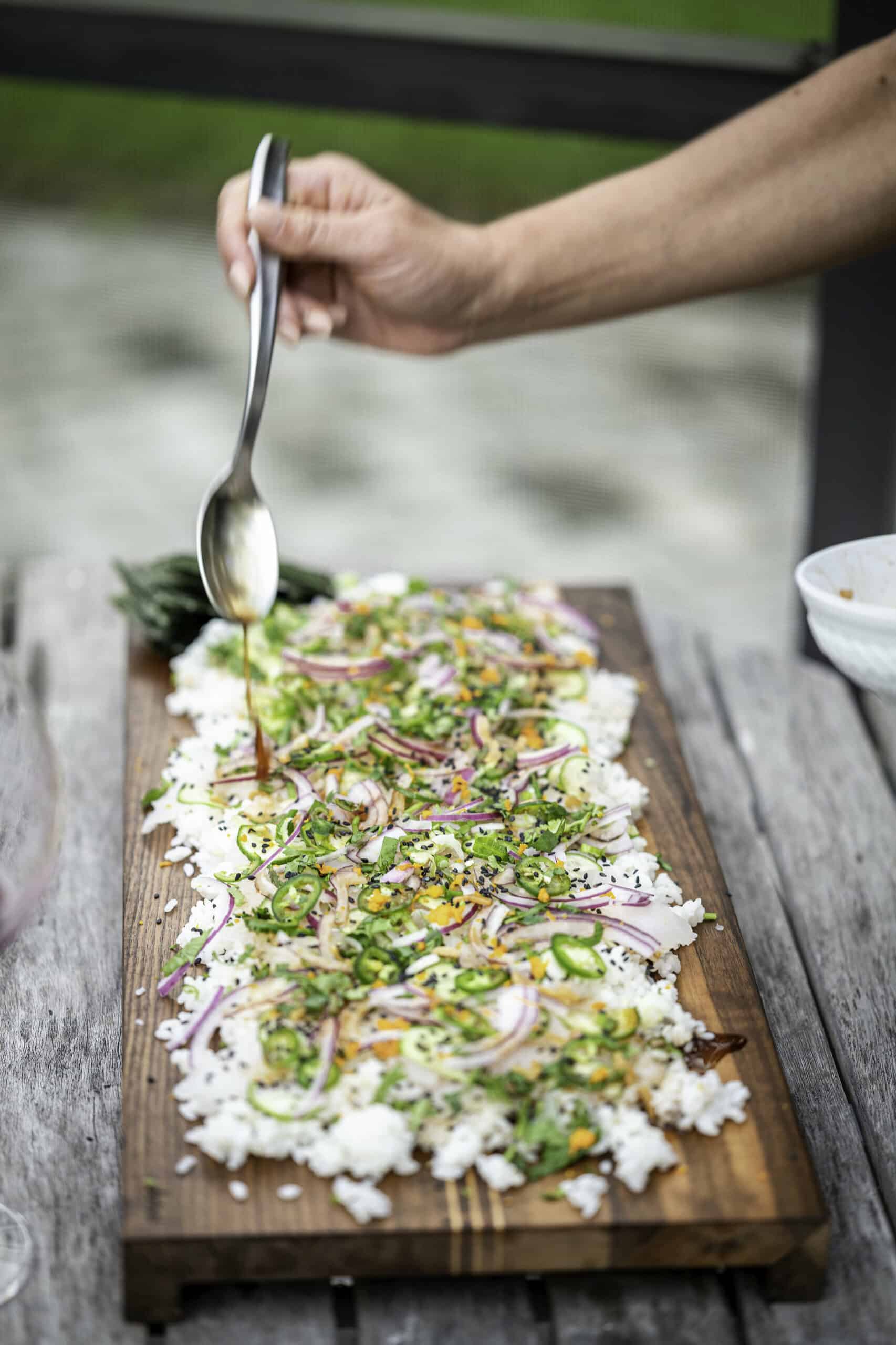
I signed up for a new subscription over at Modern Huntsman, after my buddy, Stephen Collector, got a photo essay published there. This recipe was one of the best ideas that was in their archives, which I am going to replicate this week. Stay tuned. Modern Huntsman Recipes - Messy Sushi Board Words By - Valentine Thomas Photography By - Tyler Sharp Appetizer, Serves 4-6 INGREDIENTS 2 Cups Sushi Rice 1 Splash of Rice Vinegar 10 Firm Fish (any you like) 1 Red Onion, thinly sliced* 1 Cucumber, thinly sliced* 1 Tablespoon of Sesame Seeds 1 Zest of an Orange 3 Tablespoons Soy Sauce 3 Tablespoons of Yuzu (or fresh lime juice) Cilantro Paprika Garlic Salt Nori (Seaweed) Sheets for Serving Fun alternate ingredients: pineapple or mango, diced bell peppers, green onions, pomegranate seeds, jalapeños. THE SAUCE 1. In a small bowl, add 3 tablespoons of yuzu (if you couldn’t find it, use the same amount of lime juice), 3 tablespoons of soy sauce, and the juice of half a lime. THE BOARD 1. Cook the sushi rice as per the instructions on the package (or with a rice cooker). 2. When the rice is cooked, add a splash of rice vinegar to it and stir. 3. Spread the rice on a board (I like to use a wooden chopping board for presentation). 4. While the rice is cooling on the board, thinly slice the fish in pieces about ¼ cm in width. 5. Place the fish on the rice when it has cooled down, and spread all ofthe other ingredients on top. 6. Top off with the sesame seeds, orange zest, paprika and garlic salt. 7. Either pour the sauce directly over the