Diamonds are Forever, But Their Price Aren’t
Diamonds lose 50-70% of their price once they leave the store. Try pawning your “forever ring” and you will learn real fast. Lab diamonds are worth nothing once you leave the store and DeBeers saw that coming, as they are exiting the lab diamond market completely this year. A decade ago, slipping a synthetic diamond into an engagement ring felt like an act of quiet subversion. Early adopters were rewarded with pristine, carbon-copied brilliance, an ethical halo, and a cheeky twenty percent discount off mined stones. It felt like the future: immaculate, guilt-free, and exclusive enough to still turn heads over dinner in Aspen or Manhattan. Fast forward to today, and that gleaming high-tech revolution looks less like rare luxury and more like consumer tech on a clearance rack.
Between 2016 and now, the retail price of a classic one-carat lab-grown solitaire has plummeted from over four thousand dollars to well under five hundred. What began as an exacting craft inside boutique laboratories turned into an industrial firehose of mass production. Enormous reactor farms across India and China cracked the code on scaling chemical vapor deposition, flooding jewelry cases with an endless cascade of flawless crystals. The romantic illusion evaporated the moment supply became infinite. Even the historic gatekeepers realized the gig was up. When De Beers launched Lightbox in 2018, the strategy was audacious: set a flat price floor and relegate lab stones to fun, beach-day baubles rather than forever heirlooms. But the market raced straight past them to the bottom. By the time De Beers pulled the plug on Lightbox jewelry last year, turning its reactors toward industrial quantum tech and laser optics, the message was unmistakable. You cannot manufacture rarity in a microwave. For today’s bride and groom, this collapse presents a curious cultural paradox. The aesthetic perfection of the ring on your finger has effectively decoupled from its balance sheet. You can walk out of a boutique with a tennis bracelet or a five-carat sparkler for the cost of a weekend getaway—and it will shine just as brightly under candlelight.
Yet luxury has always thrived on friction, scarcity, and story. As lab stones settle into their rightful place alongside cashmere sweaters and good espresso machines—splendid daily luxuries meant to be enjoyed, not hoarded—the romance has shifted. The modern proposal isn’t an investment asset, nor is it a high-stakes demonstration of sacrifice. It’s just sparkling glass with better PR, and perhaps, finally, that’s all it ever needed to be. There are a few tips that you need to know, which is a certified stone will be worth more and is less of a gamble. A GIA (Gemological Institute of America) report number (if graded in the last 20 years by GIA) is often laser-inscribed on the girdle of a diamond , which is the outer edge where the crown meets the pavilion. This tiny inscription, visible under 10x magnification, provides a unique identifier linking the stone to its GIA report. There are other IGI and GRA, which are usually not as stringent grading, and therefore less accurate and less valuable of a grade. Often lessor stones are sent there because they know the GIA report will not be as good of a rating.
Colored Gem Stones
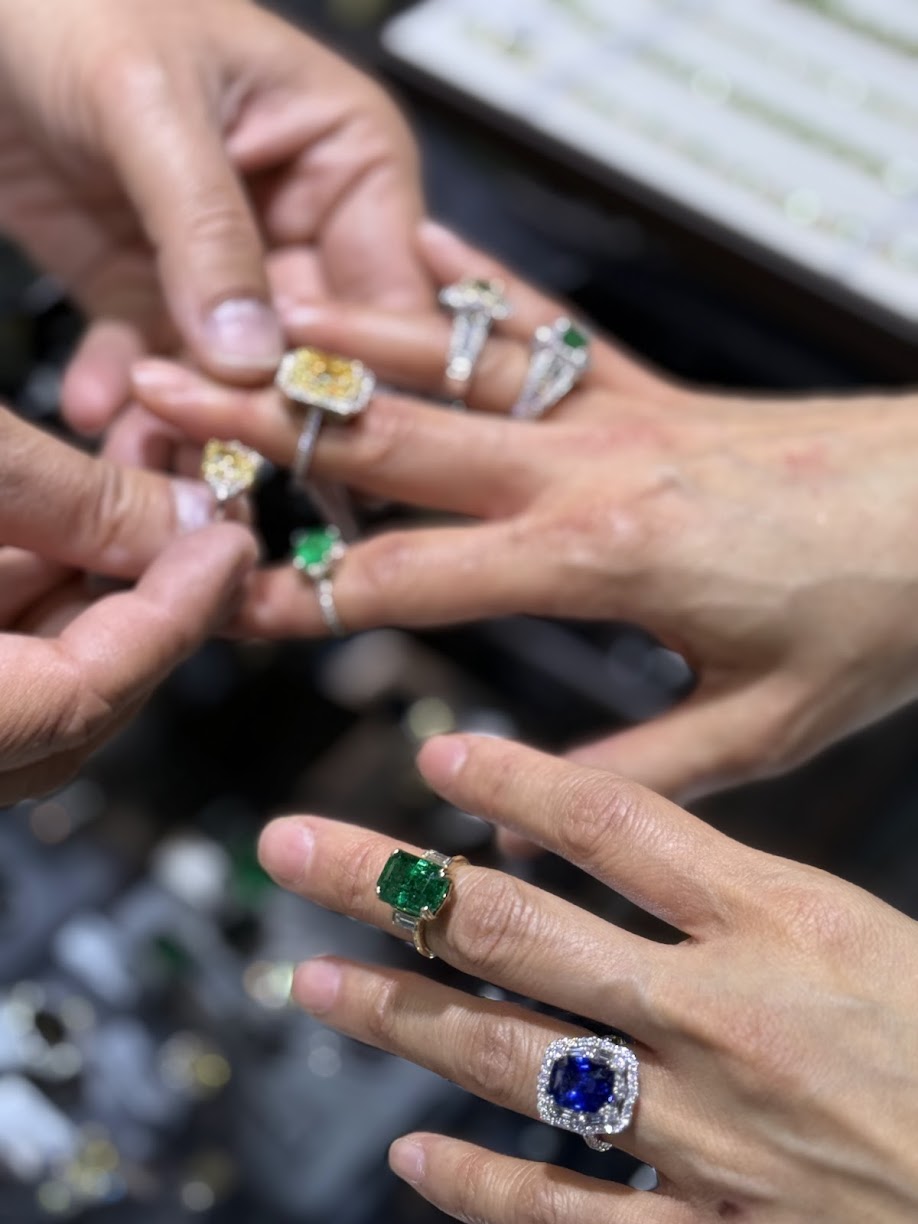
The Gemological Institute of America (GIA) doesn’t offer formal grading for emeralds, rubies, or sapphires, but they do provide detailed reports on their characteristics. These reports assess weight, measurements, shape, cutting style, color, clarity, and other relevant factors. GIA also determines if the gem is natural or laboratory-grown and identifies any detectable treatments.
-
No Formal Grading:GIA doesn’t assign numerical grades like they do for diamonds.
-
Detailed Reports:GIA provides comprehensive reports that detail a gem’s characteristics and origin.
-
Focus on Identification:The reports primarily focus on identifying and assessing the quality of the gem, including its color, clarity, and any treatments.
Buying Colored Stones-Let’s Start with Emeralds vs Beryl
A mineral species with the chemical formula Be3Al2Si6O18. Pure beryl is colorless, but trace elements cause various colors. Includes varieties like aquamarine (blue), morganite (pink), heliodor (yellow), and goshenite (colorless). Emerald is a specific green variety of beryl.
Emerald:
A green variety of beryl colored by trace amounts of chromium and sometimes vanadium.
Known for its vibrant, saturated green color.