Sporting Road

About Sporting Road

This author has not yet filled in any details.
So far Sporting Road has created 488 blog entries.

Holland & Holland Park Drag Coaching

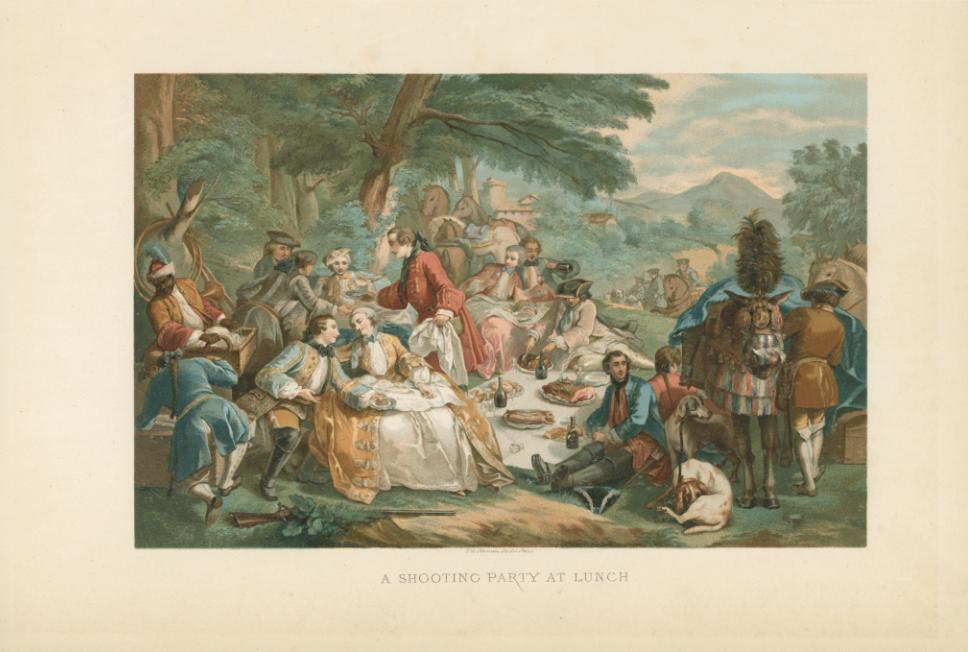
Private coaches, as opposed to public coaches, were first built for some members of the driving clubs that were formed in London in the early nineteenth century.  Only a small number of private coaches were built before the time of the “coaching revival” in the 1860s. The chosen design during this period was based on a larger version of the Royal mail coach of 1835, but seating was often reduced in favor of style in the private versions.  Coaches made by the leading makers differed usually only in the detailing. F & R Shanks was one of the two most successful builders of park drags (private coaches) and road coaches in Britain following the "Coaching Revival." Holland & Holland of North Row, Grosvenor Square, was the other.  The choice between coaches made by either of these two was said to be merely a matter of personal preference, but we believe the Holland & Holland to be the finest of the two.  Erik M. and Mary Jensen drive black Hackney-Clydesdale crossbreds and an 1890 Holland and Holland park drag on a regular basis, which is probably the only park drag regularly driven west of the Mississippi River.

By |July 16th, 2011|Categories: Coaching|Comments Off on Holland & Holland Park Drag Coaching

Check Cords

Check cords should be made of 3/8" nylon and 20' in length with a bowline knot and a brass snap. They used to be available from only one gun dog supplier in the south and now this is the closest you will find to the correct stiffness from Cabella's. Gary Ruppel demonstrates his famous half-hitch, which is a trick used to acquaint foals with saddling, and it works great on bird dogs to change the point of contact from the collar to the flank.  Gary uses it frequently in teaching heel, whoa, and other commands.  I am always surprised at its effectiveness and the simple fact that few other trainers have learned this technique.

By |July 16th, 2011|Categories: Dog Training, Wingshooting|Comments Off on Check Cords

Basics of Bird Dog Training by Bill Tarrant

Bill Tarrant has been a correspondent, bureau chief and editor for Reuters in Asia for the past 22 years.  He wrote extensively on bird dogs and was an interesting character who I was grateful to have met a couple of time with Gary Ruppel and Mike. Basics of Bird Dog Training article by Bill Tarrant Part I and Part II.

By |July 16th, 2011|Categories: Book Reviews, Wingshooting|Comments Off on Basics of Bird Dog Training by Bill Tarrant

Active Nymphing

Rick Osthoff, Stackpole Books, 2006 In this comprehensive book on nymph fishing, the author challenges the long-held notion that nymphing involves little more than dead drifting with the current. Osthoff advocates an active strategy of moving the nymph, applying effective casting and creative presentation techniques this book exhausts the techniques of nymphing. However, it fails to consider the previous works on the subject of active nymphing, such as those by Sawyer, Kite and others.  It is good general overview of all of the methods of fishing below the surface with files.  It probably is well received for trout fisherman in the Midwest, but for our selective trout on mostly tailwaters in the Rocky Mountain streams, I felt that the information to be of limited practical application and failed to even catch the depth of what was already written by Sawyer and Kite, among others.

By |July 3rd, 2011|Categories: Book Reviews, Fishing|Comments Off on Active Nymphing

The Blackberry Farm Cookbook

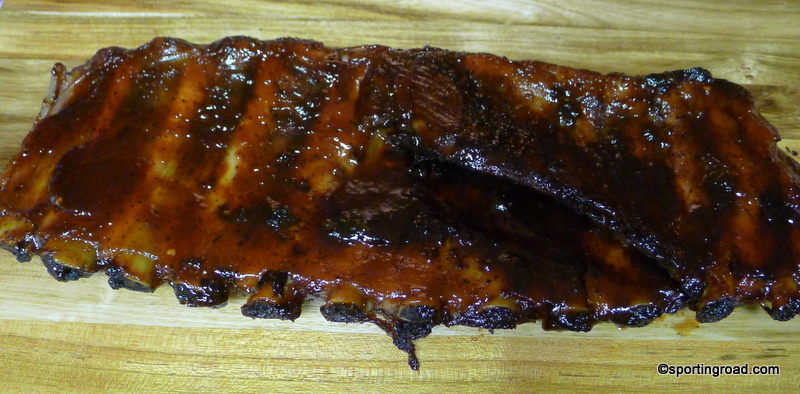
Sam Beall, 2009 Clarkson Potter One reviewer said, "Farm-to-table is one of those irritating culinary trends that is hard to really stay irritated by. Fundamentally, it's just so darn right: we should be eating seasonally and locally, we should be supporting sustainable agriculture and the preservation of heirloom vegetables. The most delicious food is the stuff that's been harvested (butchered, cultivated, fished) as close as possible to the kitchen that's cooking it." I find this review troubling.  Why is the idea of farm to table irritating to anyone?  It makes sense.  I believe, it makes sense to everyone, even vegans.  This book is separated into seasons, the seasons of our life--the seasons of our food.  It is about food from Knoxville, Tennessee, a bit dressed up, as the author is the son of the Ruby Tuesday's restaurant founder.  Not exactly what you would call a hunter-gatherer tradition, but one he seems to now claim. Anyway, the recipes are separated into seasons, starting with summer's Blackberry Cobbler and a diatribe on smoking at the Barbie.  But the first one I found interesting was infusing peaches into his BBQ sauce or blackberries.  And I like the southern sweet tea infused with various things from raspberries to blue berries to strawberries, all set to cure in canning jars with the old French lids. First a discussion on smoke, which is "almost a sacrament below the Mason-Dixon Line."  Cherokee fires in a pit banked by river rock topped with large joint meat and buried, to wood-fired clay ovens, brick ovens, fireplaces and smokehouses.  From pig cookers welded by locals to kettle grills, the Kamado ( a clay and ceramic style tandoori cooker), to wood cookers and it goes on. And the explanation of the two kinds of Tennessee fried chicken.    The Kreis's Tennessee Fire Fried Chicken is worth repeating,

By |July 2nd, 2011|Categories: Book Reviews, Fur and Feather, Wingshooting|Comments Off on The Blackberry Farm Cookbook