
Schullery on One Fly
https://www.paulschullery.com/ A treatise on colors. The Principles of Harmony and Contrast of Colours and Their Applications to ... - Michel Eugène Chevreul - Google Books

https://www.paulschullery.com/ A treatise on colors. The Principles of Harmony and Contrast of Colours and Their Applications to ... - Michel Eugène Chevreul - Google Books
Polo Grooming Checklist At Farm – Prior to Travel 1) Start engine and let truck warm up. Make sure parking brake is on. Make sure trailer is properly hitched (clasp closed/locked, leg is all the way up, power plugged in, chains latched. 2) Make sure water tank is full, if taking a tank 3) Check tire pressure in all tires 4) Check brake lights on trailer 5) Make sure all tack is loaded 6) Pull horses/tie to trailer 7) Shipping boots for long trips 8) Muzzle? 9) Load horses in order 10) Clip all trailer gates before leaving 11) Undue parking break and set E-brake before driving, and set brake at 3.5 for full load of horses (1.5 if empty) At Trailer Before Game 1) Set truck parking brake 2) Unload and tie (not near door latch on back or side of trailer) 3) Set up hose (away from trucks) 4) Trailer Tying and water buckets up horses (for long trips) 5) Brush 6) Fly spray 7) Wrap legs, bell boots and tendon boots 8) Determine playing order of horses 9) Tack horses 10) Lay out gear bags, mallets/chairs and mounting block 11) Tails braided but left down until just before chukker played During Game 1) Prepare next chukker horse, warm up 2) End of chukker take horse/hand off next horse and mallet 3) Strip horse – unwrap/undo tail 4) Thoroughly wash horse (no sweat) – do not spray trucks or waste water 5) Walk horse if breathing hard 6) Tie to trailer 7) Hang bridles on hook in trailer 8) Hang wraps and lay out saddle pads to dry 9) Repeat If Playing 1) Prepare both horses before chukker 2) Strip horse if done/stack
The homeless population in Bozeman, Montana, has seen a 50% increase since 2020, with the issue becoming more visible due to urban camping. This surge in homelessness is closely tied to soaring housing costs, particularly evident in Bozeman, which boasts the highest rents in Montana. The phenomenon of "urban camping," where individuals reside in RVs or vehicles parked on city streets, has become increasingly prevalent as housing expenses continue to escalate, affecting communities across the Western United States. Bozeman, nestled in the Rocky Mountains near Yellowstone National Park, is home to approximately 56,000 residents. According to Montana PBS, the number of Bozeman residents living in RVs or cars has skyrocketed by 200% over two years, coinciding with a 50% increase in the overall homeless population since 2020. Montana, known as Big Sky Country, has experienced a surge of remote workers and affluent individuals relocating there in recent years, particularly in cities like Bozeman and Missoula. Many are digital nomads or thriving small business owners drawn in by the allure of *Yellowstone*. While this influx has driven up living costs, it hasn’t significantly impacted median incomes. Currently, about 17% of Montanans earn above the upper-class threshold of $135,262. The surge in homelessness corresponds with a significant spike in housing costs. City data reveals that the median listing price for a home surged from $669,000 in early 2020 to $1.2 million in 2024. Rental costs in Gallatin County, where Bozeman is situated, surged nearly 19% from 2019 to 2022, solidifying the county's status with the highest rents in Montana. In response, the city implemented an ordinance in November aimed at regulating urban camping, limiting stays at a single location to 30 days without extension and prohibiting camping
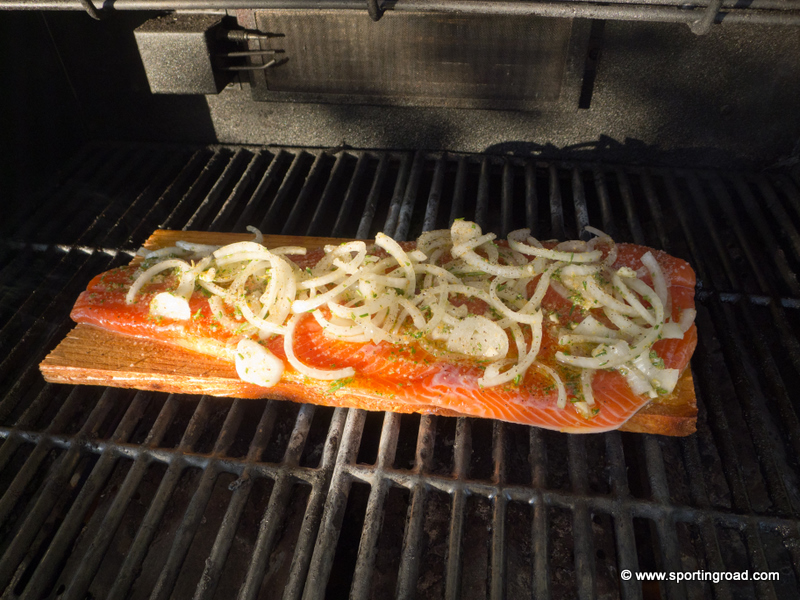
6 Types Of Salmon Ranked From Least Preferred to Best Salmon, renowned for its taste and nutritional value, holds a special place in various cultures worldwide. From the revered ceremonies of North American tribes to its presence in traditional Japanese feasts, salmon continues to be a sought-after delicacy. With its popularity soaring, navigating the diverse array of salmon options available in grocery stores can be overwhelming. Questions about sustainability, sourcing, and quality often arise. To aid in making informed choices, it's essential to understand key factors such as size, bone presence, and meat color. Here, we present a comprehensive comparison of six popular types of salmon, shedding light on their unique characteristics and culinary uses. 6. Chum Salmon Chum salmon, also known as Silverbrite or Keta, roams the Pacific coast of America, typically weighing between 8 to 15 pounds. Despite its historical significance as a food source for sled dogs, chum salmon often faces aesthetic prejudice due to its brownish hue and curled lips as it ages. However, this variety offers excellent taste at a more affordable price point. Its mild flavor and drier texture make it suitable for various cooking methods, including baking, broiling, and grilling. 5. Pink Salmon Pink salmon, the most common species in the Pacific, lacks the oil content of its counterparts but shines in terms of sustainability. With regulations ensuring responsible harvesting practices, canned pink salmon emerges as a lean, healthy option. Ideal for salads, sandwiches, or salmon cakes, it offers versatility and nutritional value with minimal saturated fat content. 4. Atlantic Salmon Unlike the diverse Pacific salmon varieties, Atlantic salmon is exclusively farm-raised, boasting higher oil content and a flaky texture. Despite initial concerns about pollution and over-crowding in
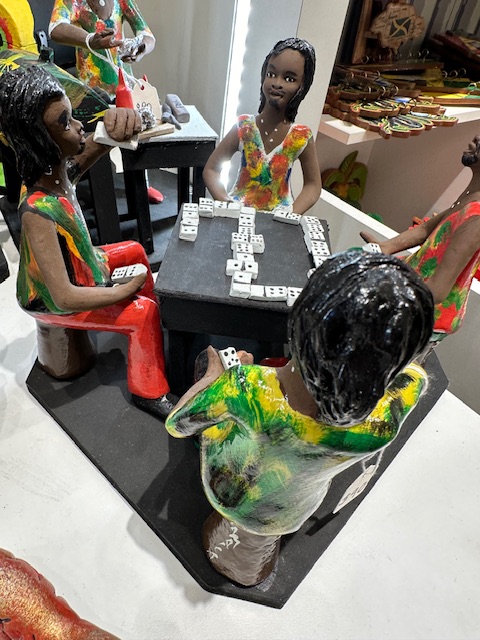
By XAVIER MURPHY Jamaicans play “draw” style dominoes. There are many variations to the “draw” style. Jamaican style dominoes are intense and a sturdy table is needed in most cases as players slam the dominoes. Six love (6 to 0) is one type of game Jamaicans love to play. In this game you must win six rounds. In many cases you have to play this game with a partner to shorten the duration. Below are the steps to play “Jamaican Style” dominoes with four players. Steps: Count out 28 dominoes, from double blank to double six. Place all the dominoes face-down on a sturdy table. Shuffle the dominoes well. Each players take seven dominoes. The player with the highest double goes first. In this case it will be “Double Six”. It is placed horizontally. This is called the “pose”. The player to the right (counter clockwise) of the first player should plays next. Except for doubles each domino is placed vertically. In Jamaican style dominoes only two sides of the domino is used to match. The next player will play the domino with like value next to the first domino (it doesn’t matter which end). Make sure like values are always touching. If you don’t have a domino that corresponds to the ones on the layout, you must pass. Most Jamaican players will either lay down their dominoes to show they “pass” or they will “click” two dominoes together twice to show they have passed. Who wins: The first person to run out of dominoes wins OR if everybody passes (GAME BLOCKED). The winner is the person with the lowest score. You count your score by the number of dots on the tiles remaining in
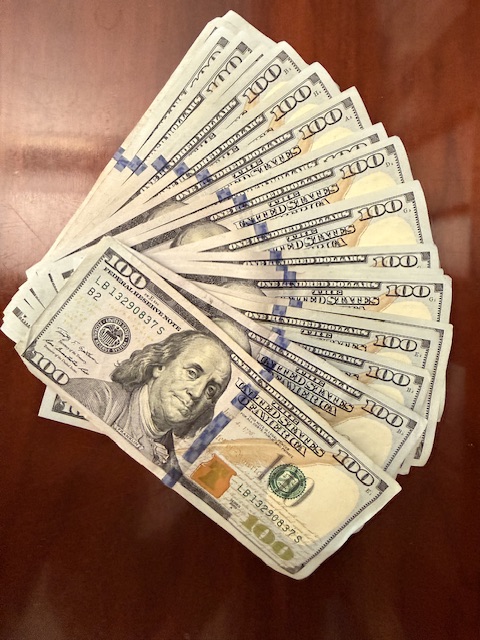
My daughter asked the other day what's the definition of rich. Here's the answer: Let’s start with the clearer economic signs. Investopedia’s analysis of 2023 shows that the top 1% of American citizens make an average of $407,500 annually. This is for individuals, though, and when it comes to households, this number goes up to $591,550. Making these means you’re making at least 7 times more than the average person. Another direct indicator is the amount of tax you pay. If you’re having to deal with a 35% or 37% tax on your income (at least $105,664, as Nerdwallet shares), then you’re basically rich. It’s important to note, however, that the super-rich billionaires actually pay less tax than the average American due to very smart financial moves. According to the Fed, the median household’s net worth is about $193,000, or roughly $215,000 after adjusting for inflation. Meanwhile, the wealthiest 1% of Americans control about one-third of the nation’s wealth, while the bottom half owns only a small share. Many say wealth is in your mindset, and rightfully so. When you start making a lot of money or when you get accustomed to a high-class social environment, you start looking at opportunities differently. You look at money as a tool to create wealth, and you also use your networks for collaboration instead of competition. Although there’s no exact cutoff to receive financial aid for college, people who are rich or from rich households typically find it difficult to qualify—and it’s not always about bad grades. Even if you get financial aid, you’ll also notice that it does not cover anything close to the full cost of tuition. The richer you are, the higher your credit limits, and the
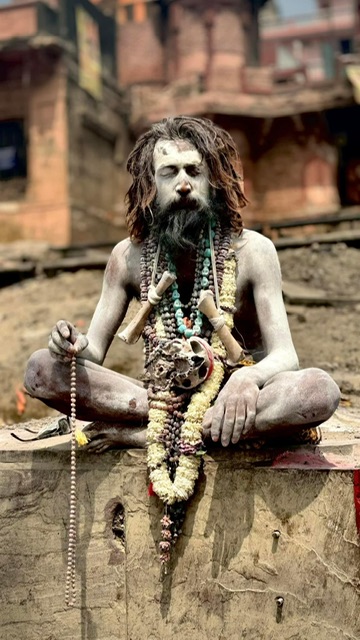
A guru is a spiritual teacher or guide in Indian religions, particularly in Hinduism, Buddhism, and Sikhism. The term "guru" is derived from Sanskrit and literally means "dispeller of darkness." Gurus are highly respected and revered figures who are believed to have attained enlightenment or profound spiritual knowledge. They are often sought after for their wisdom, guidance, and teachings on various aspects of life, spirituality, meditation, and self-realization. In addition to spiritual matters, gurus may also provide guidance on practical aspects of life, such as morality, ethics, and social conduct. Traditionally, the relationship between a guru and their disciple is deeply personal and based on trust, respect, and devotion. photo credit my friend Darrell R. On Instagram Eckhart Tolle's teachings on enlightenment center on living in the present moment as a path to spiritual awakening, emphasizing that it is not a future goal to be achieved but an immediate state of consciousness. He teaches that by silencing the "mind" and the "ego," and by focusing on the "Now," individuals can connect with a deeper, more peaceful reality beyond their thoughts. This awakened state is seen as a way to become more conscious, present, and free from psychological pain. Key concepts Enlightenment as presence: Tolle argues that the mind creates pain and that to be free from it, one must be fully present in the "Now". The "Now" is all there is: The past is gone, and the future has not yet arrived, so the only reality is the present moment. Tolle's book, The Power of Now, is a guide to living in this state. Separating from the ego: Enlightenment involves seeing that the "self" is not the ego or the mind but a deeper, more indestructible "Being" or consciousness. Awakening is not a
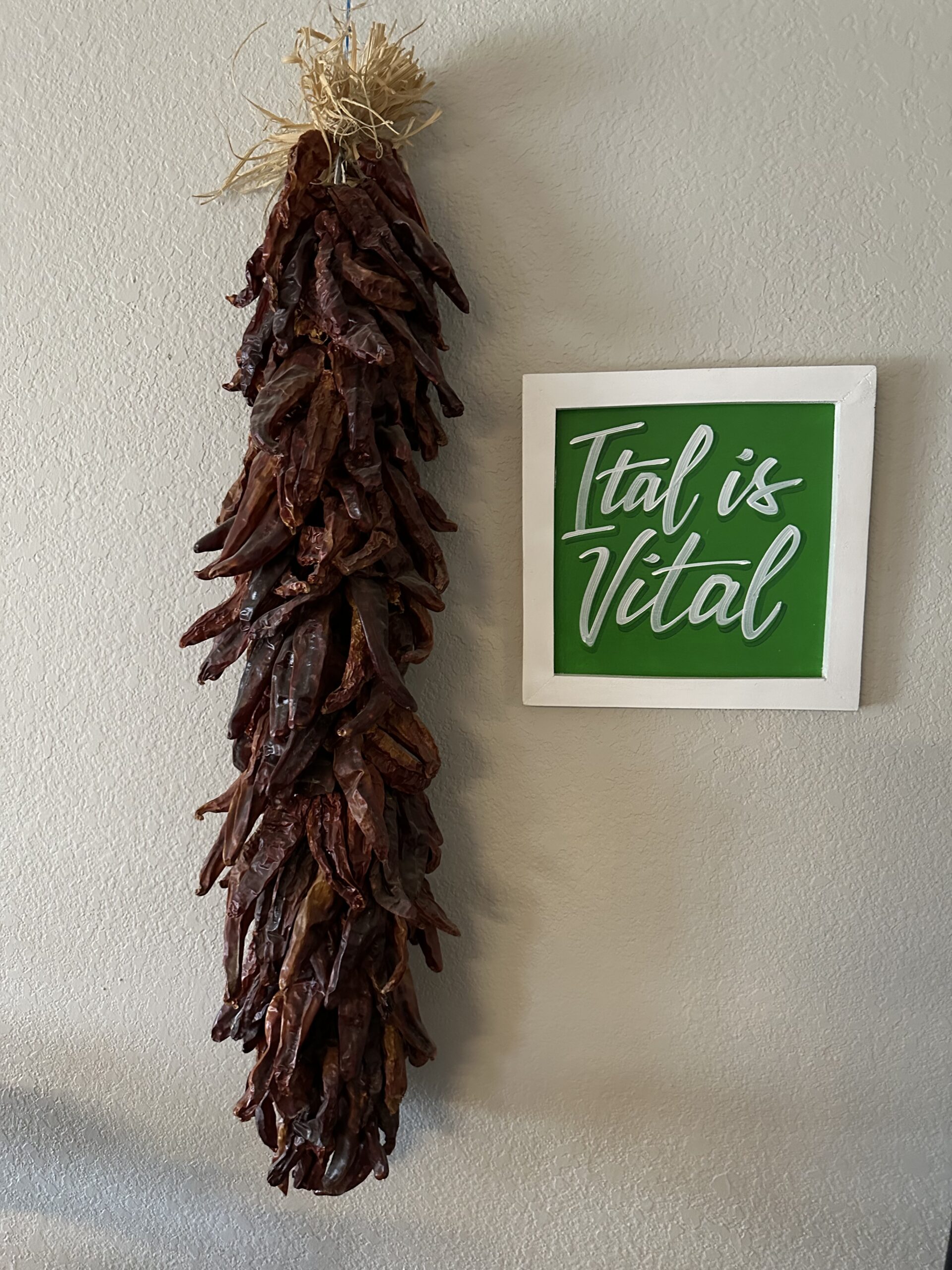
The most inflammatory thing you can put into your body is alcohol. Your diet is not only what you eat. It's what you watch, what you listen to, what you read, the people you hang around... be mindful of the things you put into your body emotionally, spiritually, and physically. This is the Rasta way of thinking and a big part of their spiritual way of life which is very much connected to the earth, as much or more so than Native Americans, as they also largely live off the land. The ital diet, also spelled I-tal, is a diet celebrated by members of the Rastafari movement that emphasizes eating fresh, organic, and preferably homegrown produce. The goal of the diet is to increase "life energy" or livity by eating foods that enhance it. Livity is the belief that an energy or life-force flows through all people and living things. The diet has some universal rules, including: Avoid chemically modified foods Avoid foods with artificial additives Avoid added fats and salts No salt No meat No dairy No metal or plastic cookware No alcohol Moderate white foods Natural sugar Most expressions of the Ital diet include adherence to a strict vegetarian diet. Some adherents to Ital diets are strict vegans, as they do not consider dairy to be natural for human consumption either. Many also avoid pork, shellfish, caffeine, and artificial additives. And, since alcohol is toxic to nearly every cell in the body, you can see why they forbid it, and turned to ganja instead. **The Basics: Start Here** * **Keep it simple.** When you read a label, ask yourself: did this come from the earth or a living source? If not, think
This was a great article recently published in Polo Players Edition. no Is in team and goals given in tournaments