
Uncategorized

Home/Uncategorized

Falconry

My friend Hal Webster, was co-author of one of the most famous books on falconry with Frank Beebe), entitled  North American Falconry and Hunting Hawks, was in his 70's when he introduced me to some falconry friends many years back, including Stu Hutchinson, who took me hunting with falcons and hawks.  I had the initial idea of grandeur that a falcon might replace my side-by-side in a poetic sort of way, but I quickly realized in hunting ducks with one of his Master Falconer friends that this was real work, and a lifetime of dedication to the birds they fly and live with, year round.  I can't wait to see them soar again, but this is not a something that one takes up casually, as I quickly realized it involves a life-time of education, dedication, breeding, and training.  We made several trips with Hal for fly fishing, wingshooting and dog training.  He passed in June 2019, after a long life of adventure, living into his late 90's. For falconry supplies:  www.westernsporting.com
By |October 26th, 2012|Categories: Uncategorized|Comments Off on Falconry

Yerba Mate

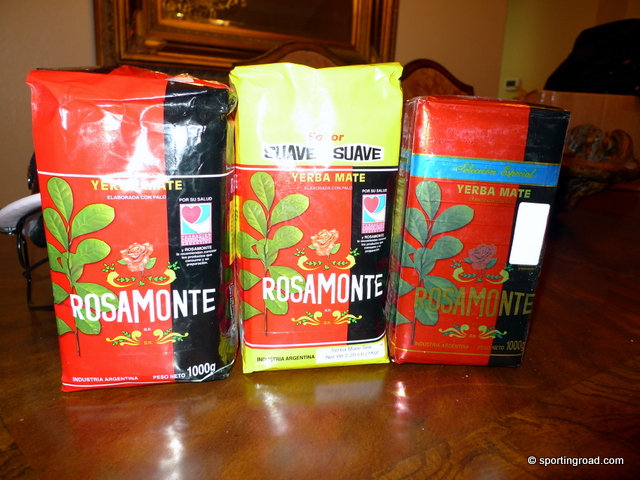
Our new friends from Argentina are going home, as summer polo season is about over here in the West and they left with us a special gift this year, a matero (a bag for holding a the mate gourd, the yerba mate and a thermos).  The also left a leather covered mate gourd, which we added to our small collection, but this mate is the one we reach for every morning now, as it is the perfect size and it is of the best quality. Yerba mate is consumed all over South America in place of tea or coffee, or in addition to it.  It has an earthy taste, like green tea, though sometimes slightly more bitter taste due to the high tannin content of the leaves, which are a member of the holly family.  We were introduced to it at polo from the Argentines, and I love it.  Oprah's doctor promotes it as the only healthy caffinated beverage and studies seem to indicate it significantly reduces cholesterol, especially when brewed with hot water, but not boiling, as is the traditional way.  Yerba mate con polo, with a higher amount of sticks and stems, will typically have more of a woodsy taste than pure leaf mate.  Some add sugar and milk, particularly for children. You add hot water (never boiling) to the yerba mate, which is traditionally drunk from a gourd with a bombilla straw, and as the tea and be steeped multiple times, it is perfect for sharing with friends.  Each cup is consumed and then the gourd is passed back to the maker of the tea for a refill of hot water and then it is passed on to the next drinker, when

By |July 26th, 2012|Categories: polo, Uncategorized|Comments Off on Yerba Mate

The Frugal Fly Fisherman

The Frugal Fly Fisherman by Patrick Straub is a title that I would love just from the cover.  But, in getting into the merits of the work, it is bit long on theory and short on content.  It recommends saving money where possible with brands such as Redington, but at the same time recommending you invest as much as you can afford in a quality rod.  This doesn't seem to help the newbie angler with actual recommendations.  I understand the concept of not promoting brands over concepts, but it still leaves the angler with the dilemma of "what to buy?" I liked the quotes, particularly of Norman Maclean from A River Runs Through It, such as, "My father was very sure about certain matters pertaining to the universe.   To him, all good things--trout as well as eternal salvation--come by grace and grace comes by art and art does not come easy." From mentions of silk lines and split cane to Gore-tex and carbon-fibers, the book covers it all.  There is certainly an art to getting the most for your dollar.  The reccomendations to avoid The 5-Weight Shootout and lists and focusing on disk drag versus click and prawl, among others are well on point.  As well as the fact that tying your own flies and making do it yourself trips will save money in the long run, but it doesn't overcome the standard advice of 5-weight rods for everything and what flies are most effective, which misses the mark of a died in the wool frugal fisherman who benefits from other's experiences.

By |June 22nd, 2012|Categories: Uncategorized|Comments Off on The Frugal Fly Fisherman

The 10 Famous Chinese Teas

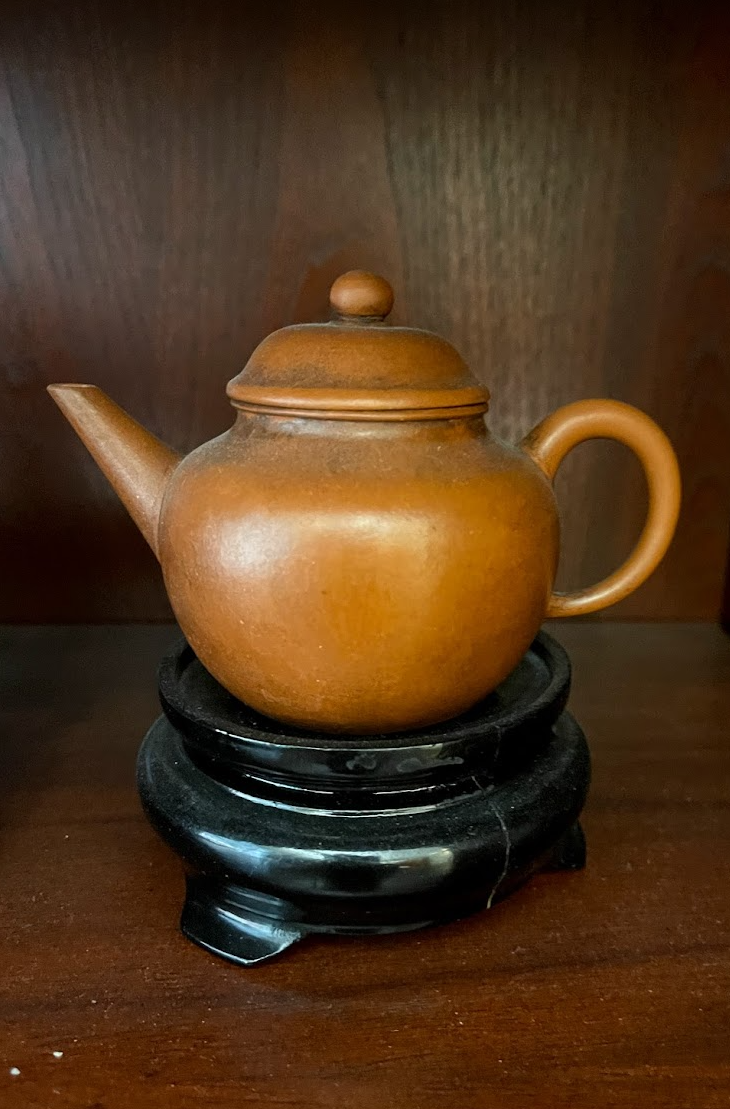
While Ireland (my favorite tea from there is Barry's) and England (some of the best come from Harrod's) are known for their breakfast teas, I prefer the rich depth of choices in Chinese teas. There is an infamous list of the ten most famous Chinese teas, which varies a bit, depending on who you ask.  Having spent some time in the tea cafes of Hong Kong, it is something you will treasure once you have tried the best Chinese teas.   These teas we try to enjoy, along with some of the lessor known teas, on a daily basis.  For serving and more on Chinese tea pots click here. 1) Junshan Yinzhen Tea Of all the famous Chinese Teas, this tea has received a lot of attention lately due to its health benefits. The Silver Needle Tea is Junshan Yinzhen. It comes from Yueyang in Hunan Province. This white or yellow tea is among the rarest and it is my personal favorite. But I love all white teas and the pick of the leaves determines the type of white tea. There are two principal types of white tea: 'bud' and 'bud and leaf'. These are classified further into four main grades: Silver Needle, White Peony, Gong Mei and Shou Mei. Top grade: Silver Needle made solely from buds Second grade: White Peony made from buds, leaves and stems Third Grade: Gong Mei, being a 'looser' pick using buds, leaves and stems from non-premium cultivars.   It is aged for 7 years before it is sold.  Comes pressed or loose.   This is one of my favorites and it keeps forever, if stored in a dry place. Fourth grade: Shou Mei. Lower grade than Gong Mei. Both Gong Mei

By |February 5th, 2012|Categories: Travel, Uncategorized|Comments Off on The 10 Famous Chinese Teas

How to Fireproof your Christmas Tree

Adapted from an Eastman Chemical Company employee newsletter, December, 1996 Choose a fresh tree -- find a “bad” spot on the tree and bend a branch.  It shouldn’t snap; if so, find another one.  Ideally, you should be buying one at least 10 days before Christmas. Make a fresh cut 1” above the bottom of the trunk Immediately after you make your fresh cut, mix up the following ingredients in a 2 gallon bucket filled almost to the top with HOT water to make your home made preservative: 2 cups of Karo syrup 2 ounces of liquid chlorine bleach 2 pinches of Epsom salt 1/2 teaspoon Boraxo 1 teaspoon of chelated iron (pronounced “keylated” and found in the garden section) All of these ingredients should be found in either a grocery store or Wal-Mart. Stir the ingredients thoroughly in the bucket, then immediately stand the trunk of the tree in this solution.  Leave the tree in the bucket until you are ready to decorate inside. When the tree goes indoors, stand the trunk in the tree stand and decorate as you always do.  Then get the bucket filled with your ingredients, draw off the mixture from the bucket and fill the tree stand right up to the top. How does it work? The Karo syrup provides the sugar; it is only in the presence of sugar that tremendous amounts of water will be taken up by the exposed tissue at the base of the tree trunk.  Without the sugar, only the smallest bit of water will be absorbed.  However, in the presence of the sugar, you can expect more than one and a half gallons of the water to be absorbed by the tree during

By |December 22nd, 2011|Categories: Uncategorized|Comments Off on How to Fireproof your Christmas Tree

Jambon, Speck, Proscuitto, Virginia Country Ham, Jamón Serrano and Jamón Ibérico

Meat has been cured since ancient times.  Dry cured hams have been a favorite in France, Italy, Spain, and Portugal for centuries.  Americans, particularly those in the South and the names Smithfield and Surry are legendary in this area, carried on this tradition with smoked hams, fattening them with tasty peanuts, beech nuts, hickory nuts, acorns and fruits.     All of these hams are salt cured and aged.  Some are smoked over fragrant hardwoods. While we love everything French and American, and whilst the Italian prosciutto is the best known the world over, we prefer Spanish ham which usually has a more uniform texture, more intense flavor and is usually less moist than other cured hams, because of the long curing stage.  In fact, every European country seems to have its own specialty on cured hams.  But pig rearing is Spain dates back to antiquity and once the pig was harvested, it was dry-cured to last the family for an entire year.  Jamón serrano is a type of jamón (dry-cured Spanish ham), which is generally served raw in thin slices, or occasionally diced for use in cooking.  Today, Spain is the world's leading producer of dry-cured pork.  Serrano means from the tierra or the mountain range, where the European white (it's really pink) pig is curred.  Jamón Ibérico comes from the black Ibérico pig, which has smaller litters and is more difficult to put weight on quickly (compared to the white pigs), hence its higher price and gamier flavor, which we prefer.  These Spanish hams are often thinly sliced and served on a slice of pan tomate. The German Black Forest ham is commonly available world-wide and is smoked over pine and fir and coated with beef blood to give it a black exterior. Very lean and

By |October 1st, 2011|Categories: Cuisine, Recipes, Uncategorized|Comments Off on Jambon, Speck, Proscuitto, Virginia Country Ham, Jamón Serrano and Jamón Ibérico

New Posts

Please check out all my new posts...which are hidden under separate pages and therefore don't show up here.  Kohlrabi Mardi Gras La Buche de Noel Noel House Wine Hungarian Partridge with Gin & Juniper Berries Pheasant Confit Four-legged Friends Gary Ruppel Rim Chung Friends from the Sporting Road Jim Fergus

By |September 22nd, 2011|Categories: Cuisine, Dog Training, Fishing, Fly Tying, Recipes, Uncategorized|Comments Off on New Posts

The Ultimate Field Picnic

I was sent a copy of this article on the ultimate picnic party wagon, which is a proper English wooden trailer converted for tailgating for polo matches.   Polo Magazine- Party Wagon Article. I then discovered Christy's auction of Patricia Kluge's estate in Virginia, and found that after the Kluge divorce, John Kluge remarried and built another house nearby.  This incredible picnic hamper is the piece de resistance  of the auction.  click article from the New York Times which appeared in December 2005. Apparently in the 1980's by the Kluges commissioned the London firm of Asprey, jewellers and silversmith to the British Royal Family, to fashion this picnic hamper containing a full service for sixteen. The wicker trailer holds some 15 wicker cases, each fitted with brass handles and leather straps, with battery-powered hot and cold boxes and a water pump, cases for Bernardaud Limoges china, Baccarat crystal, Asprey silver cutlery, a staghorn bar service, two folding mahogany tables and 16 chairs, complete with the "K" monogram.  The set was estimated at $20,000 to $30,000 and sold for some $144,000. Although  wicker carryalls have been used since the 1700s, the picnic basket was born in 1901, when British luxury-goods retailers like Asprey started stocking hampers filled with tableware for motorists to enjoy on country drives.  See more at http://driven.urbandaddy.com/2011/08/17/meals-on-wheels/ and http://www.finesse-fine-art.com/Picnic/PicnicArticle.htm.

By |September 13th, 2011|Categories: Cuisine, Fishing, Foxhunting, Picnic, polo, Uncategorized, Wingshooting|Comments Off on The Ultimate Field Picnic

Peace Maker American Bourbon

  Peace Maker American Whiskey (it's really Bourbon, so don't let the name fool you into thinking it's just for cowboys).  This stuff competes with Maker's Mark.  Pour it into a glass of ice and enjoy.  No burn, no bad taste, and it's half the price.  Dress it up for the Kentucky Derby in a julep, or just pass it around as a shot at the shoot.   It makes a great stirrup cup at the fox hunt.  Devised and distributed by local kids here in Colorado, but made in Kentucky, where all Bourbon should be born.

By |June 15th, 2011|Categories: Uncategorized|Comments Off on Peace Maker American Bourbon

Chef’s Knives

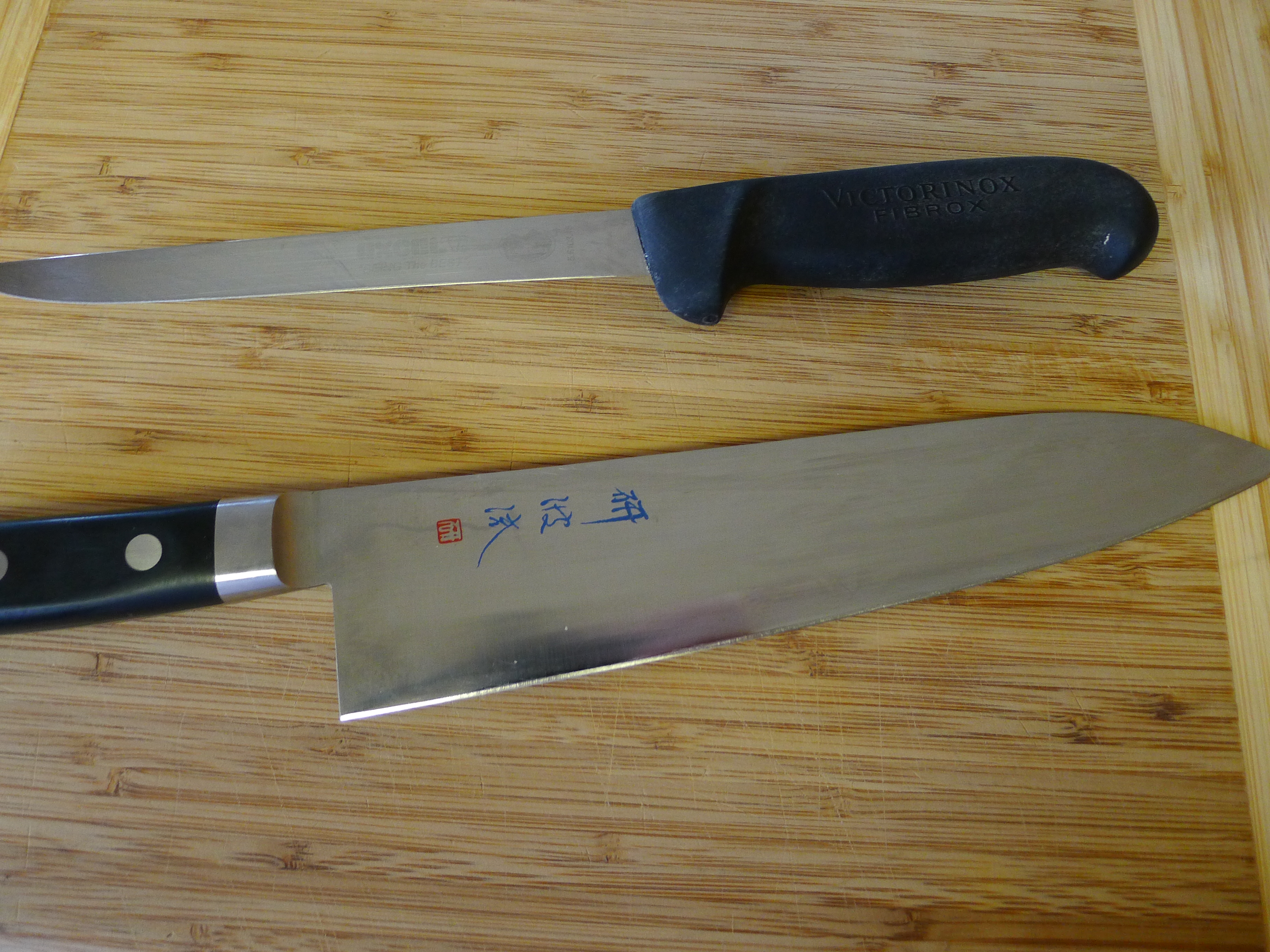
CHEF KNIFE RECOMMENDATIONS:   My favorite chef's knife is a Togiharu Molybdenum Gyutou 9.4" (24cm) - Right handed (if you are right-handed, otherwise get the left handed one) : $66.00 when I bought it in 2009, but now a whopping $179 in 2017.  I guess it is has been discovered by more aficionados than just me. Prior to this, I had been using mostly Victorianox or Wusthof, both of which are good, but not of this caliber.  Check http://en.wikipedia.org/wiki/Wusthof for the explanation of the various Wusthof lines.  Though I own some expensive Wusthof knives, I still prefer the Classic series because I like their heft, but many chefs like the Cordon Blue series. As for German knives, you should seriously consider the Messermeister, which cost around $120 and you hardly ever see them discounted.  These are popular with chefs, but are relatively unknown to the home chef.  In German knives the two I'd pick from are Wusthof Classic and Messermeister Meridian Elite Knife (ex. 9" chef's).  The latter has a different edge (smaller edge angle) than the usual German knives. In Japanese knives, MAC Mighty (MTH-80), Tojiro DP Gyutou, Togiharu G-1 Molybdenum Gyutou, or the cheaper Togiharu Molybdenum Gyutou, and the Bu-Rei-Zen Gyuto 9 1/2 in leap to mind, as favorites. My friend is something of a knife aficionado and he is salivating about the last one.  Check this out: http://epicedge.com/shopexd.asp?id=85486 The thing to keep in mind about Japanese knives is that the good ones are made of much harder steel and hold their edges longer than German knives--as long as you use them what they were designed to do.  If  you're careless with them, you may chip their edges easier.  Many of  the are only sharpened on one side, resulting in a more acute edge.   They have left and right handed knives.  The Japanese chef knives follow

By |May 29th, 2011|Categories: Cuisine, Uncategorized|Comments Off on Chef’s Knives