Firewood and Fatwood
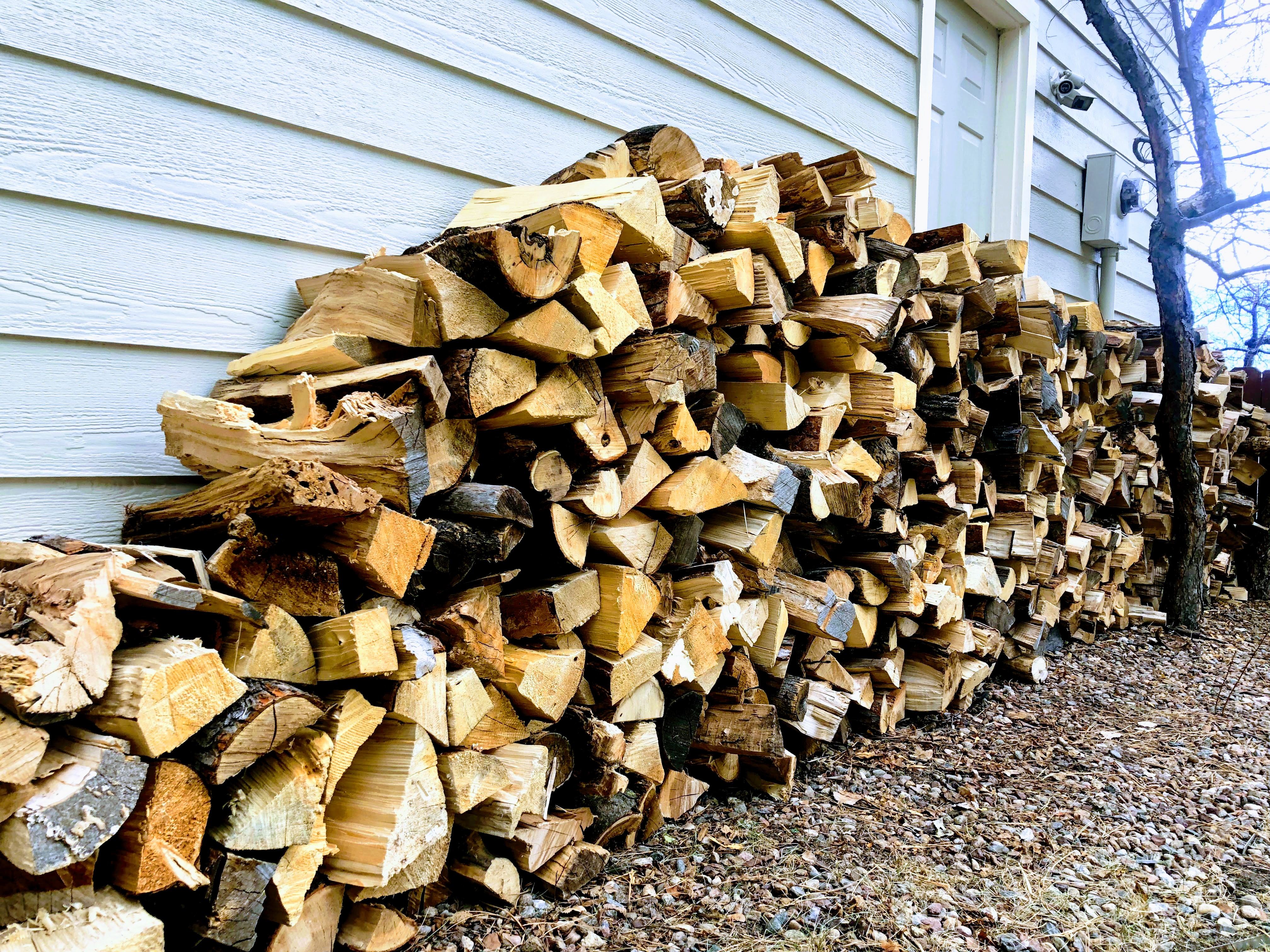
Our new firewood guy brought us some of the best firewood in 2017-2018. He had great mixes of Colorado spruce and Engelmann spruce, split beautifully, along with ash, oak and sugar maple, with some pine ponderosa scattered in, we went through a lot of it. Fatwood is the greatest fire starter you can find. Add about 5 sticks to the bottom of your log cabin stack and viola, great fire, with no paper or other kindling of any kind. ____________________________________ Fatwood From Wikipedia, the free encyclopedia Fatwood is derived from the heartwood of pine trees. The stump (and tap root) that is left in the ground after a tree has fallen or has been cut is the primary source of fatwood, as the resin-impregnated heartwood becomes hard and rot-resistant over time after the death of the main tree. Other locations, such as the joints where limbs intersect the trunk, can also be harvested. Although most resinous pines can produce fatwood, in the southeastern United States the wood is commonly associated with longleaf pine (Pinus palustris), which historically was highly valued for its high pitch production. Coniferous tree sap is a viscous liquid, that contains terpene, a volatile hydrocarbon. Over time the evaporation of the terpene changes the state of the sap; it slowly gets thicker until it hardens into resin. New fatwood leaks the sticky sap, while in aged fatwood the sap has hardened and is no longer sticky. At every stage of the aging process, fatwood will burn readily, even when wet. Because of the flammability of terpene, fatwood is prized for use as kindling in starting fires. It lights quickly even when wet, is very wind resistant, and burns hot enough to light larger