Uncategorized

How to Cut the Cheese

It is amazing how many Americans don't know how to cut the cheese. Well, not at the table anyway. Please don't just hack off a piece here and there on a cheese board. Here is how you properly do it:

By |April 29th, 2019|Categories: Uncategorized|Comments Off on How to Cut the Cheese

Gary Dewey Flies

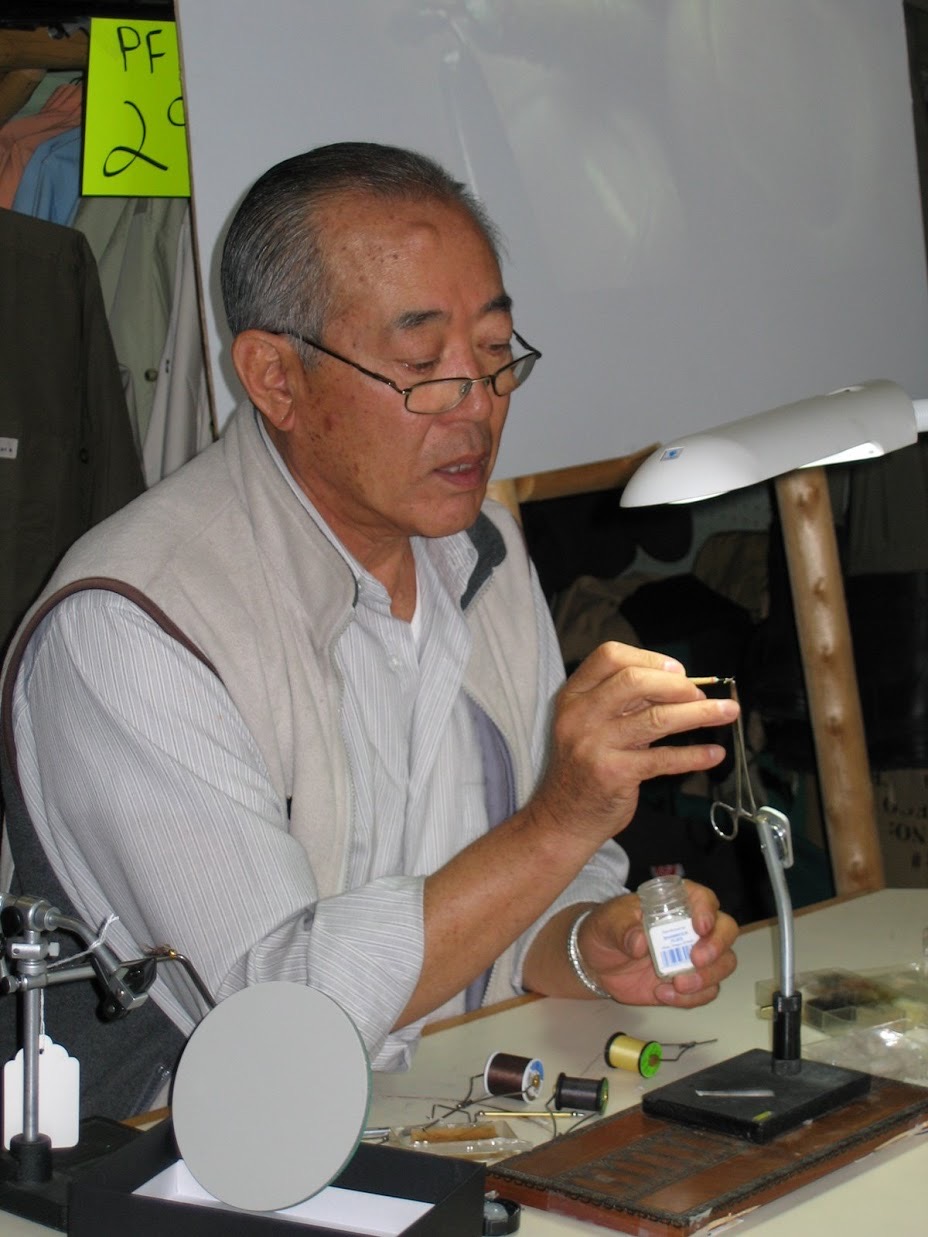
Having mentors is important in life, and especially in fishing. Wonder what ever happened to my old fishing buddy, Gary Dewey? Gary was an iron worker who tied some great flies. He became a fishing friend of mine and tied some memorable flies, which had a George Grant woven fly look to them. He had stoneflies with jungle cock, and DewDads, crawfish patterns, both of which I learned to tie from him, among many other innovative patterns. George F. Grant began an innovative style of fly tying in the early 1930s, and patented a unique method in 1939 (U.S. Patent No. 2,178.031). Grant's method for weaving hackles is similar to but distinct from that of Francis Potts. Grant was one of the first anglers to realize that large trout fed primarily beneath the surface on nymphs, and that one needed to imitate and learn to fish this insect-stage if one wanted to consistently catch large trout. Grant's nymphs imitated primarily large stoneflies such as the giant salmonfly (Pteronarcys californicus), which grows up to two inches in length. In 1973, the Federation of Fly Fishers awarded Grant the Buz Buszek Memorial Award-an award plaque presented annually to that person who has made significant contributions to the arts of fly tying. Grant wrote two books on his style of woven Montana flies, which remain largely obscure. Grant liked to use jungle cock for the back of the stonefly, which is also what Gary Dewey did on his stoneflies. George Grant flies Dew Dad by Gary DeweyDownload Gary Dewey Stone Nymph.Tying Instructions.Download Dewey's flies are somewhat similar to the woven stoneflies of George Grant

By |April 23rd, 2019|Categories: Uncategorized|Comments Off on Gary Dewey Flies

One Fly, Two Flies

If you look back in time, you’ll find a few legendary anglers who filled extraordinary bags with just one fly, maybe two. Frank Sawyer and his pheasant tail nymph and grey goose come to mind (although he actually had 5 flies in all, including for lakes). Rim Chung and his RS2. Magical flies or perfect technique, a mere mortal would question? Truth is that it is a little of both. By doing 90% of all things perfectly you cannot catch 90% of the fish in a river. Only by doing 100% perfectly will you achieve that kind of success. Sawyer could average 20 trout an hour on just two flies, one in brown, the other in grey, in a variety of sizes, or even more on grayling for that matter on his Killer Bug. I have seen Rim have these banner days as well on public stretches with wild trout here in the West. The wonderful part of many of these flies are that they are very simple to tie, just some pheasant tail and wire, or yarn and wire, or sewing thread on a hook, in the case of a Yong Special. So how can such a simple fly be so effective? So what’s the secret? Perfection of a single technique and fly, in the hands of experts in presentation. Light lines, small flies, tied well and fished without drag, over finicky trout. Flies that are more a semblance of a midge or mayfly nymph with good segmentation. Simple but translucent bodies. Thin, elegant tapering of the fly bodies. Putting the fly where the fish are at, without drag. Exceeding concentration and strike detection. Excellent control of the fish once the hook is set,

By |April 21st, 2019|Categories: Uncategorized|Comments Off on One Fly, Two Flies

What’s a choil on a knife used for?

"What is the purpose of the choil?" Many knives have a small choil. A choil is the cut away area, or notch, between the heel of the blade edge and the ricasso of a pocket knife blade and between the edge and the guard of a fixed blade knife. For many knives, the reason for a choil simply ad to do with the ability to sharpen the full length of the blade edge. In some instances a choil is not necessary because the blade is wider than the ricasso making it possible to sharpen the edge cleanly all the way to the heel. While a choil often adds to the visual appeal of a blade, that is not the reason for one to be used. A blade that does not require a choil. However, some makes have chosen to exaggerate the choil for use as a line cutter or bird wing cutter like in the knife below.

By |April 12th, 2019|Categories: Uncategorized|Comments Off on What’s a choil on a knife used for?

Clay Pottery for Cooking

From Ferenc Recommendations on non-micaceous clay pots: I think Roemertopf ( Römertopf ) pots are the most flexible.  They used to be made in Mexico, but are now made in Germany ( again ).  The newer pots have a glazed bottom, so cleaning them after cooking is easier now. There's an out of print cookbook, which has lots of very good recipes for it: By the Editors of Consumer Guide Clay Cookery Some of our favorite recipes from it: Wedding Chicken From Crete, Gingered Roast Chicken with Nectarines, Ratatouille.  The latter is our all time favorite.  This pot is for the oven only. Though not made of micaceous clay, the Emile Henry pots can take a lot of heat.  Some can be used on stove tops. You can even use soap to clean them.  I use this one mostly for cooking chicken: Emile Henry Made In France Flame Oval Stewpot Dutch Oven, 6.3 quart, Charcoal Micaceous clay: Chamba You'd like the Chamba Cookware https://www.mytoque.com/pages/about-la-chamba-cookware ) soup pots for stews and soups.  The Chamba pots are made from black clay.  I use them on the stove top, but would work in the oven too. They're functional and beautiful. Güveç It's a Turkish clay pot.  ( See for example: https://drojkent.wordpress.com/2013/02/12/istanbul-pots-and-cooking-guvec/   I make Turkish moussaka in it.  Got that pot here: https://www.tulumba.com/products/3438-earthenware-non-coated-pot-medium/ But they don't always have it available. When I use clay pots on the stove top, I always use a flame diffuser, which I brought from Hungary.  You can get similar stuff here too, of course ( see for example: http://www.bramcookware.com/index.php ). I soak and them scrub with baking soda--never use soap on my clay pots. Because of the different pots I have, I put

By |April 8th, 2019|Categories: Cuisine, Uncategorized|Comments Off on Clay Pottery for Cooking

Favorite New Fly – Calgon Fly -Ancient Chinese Secret

The “Calgon” Effect: A Simple Fly That’s Quietly Dominating the Water In fly fishing, innovation rarely comes from reinventing the wheel. More often, it’s about refinement—taking what already works and distilling it down to its most effective elements. That’s exactly the thinking behind my newest go-to pattern: a deceptively simple fly with a tongue-in-cheek origin story and a serious track record on the stream. Originally dubbed the “Ancient Chinese Secret,” this emerging pattern—now better known as the Calgon fly—isn’t built on mystery, so much as mastery. It draws from a lineage of proven performers, blending the DNA of the Yong Special, Pat Dorsey’s Mercury series, and Rim Chung’s Plebby into a single, highly efficient design. At its core, the Calgon fly is a hybrid: the subtle profile and fish-catching instincts of the Andy Kim Yong Special meet the flash-triggering appeal of a Pat Dorsey-style mercury bead. The result is a clean, minimalistic pattern that’s easy to tie and even easier for trout to find irresistible. There’s also a nod to Rim Chung’s Plebby—a pattern known for its sparse elegance. Like the Plebby, the Calgon incorporates a thread-based tail, paired with a peacock-toned bead and fine wire ribbing. It’s a study in restraint, proving once again that less can be more when it comes to fooling pressured fish. The materials are straightforward but intentional. Tied with Coats & Clark thread, the Calgon fly comes in a range of productive hues: summer brown, olive, cream, chartreuse, and multiple shades of grey. Lately, medium grey (charcoal) has emerged as the standout—echoing the same tone Andy Kim favors in his Yong JR and consistently producing results across varied conditions. But perhaps the real secret to the Calgon’s success isn’t

By |April 1st, 2019|Categories: Uncategorized|Comments Off on Favorite New Fly – Calgon Fly -Ancient Chinese Secret

Yong Special Featured in Fly Fisherman Magazine

Andy Kim is a legendary guide on the San Juan River for the past 20 years, after having fished extensively in Colorado and Utah. His 13 fly patterns are relatively simple impressionistic flies, yet they are the most deadly effective that I have ever come across in having fished with lots of guides and well-known anglers. The key, as he has told me several times, to his often imitated but never duplicated thread bodied nymph is "in the exact right shape and thickness, with a reasonably close color, not the exact material." The quest for his Yong Special tying thread, believing that is the secret to his fish catching success has become a hobby within a hobby to many. The truth is he has used a lot of materials over the years, but he is very meticulous about following the exact method of tying, as any deformity in the shape or abnormal tapering, etc., will effect the effectiveness of his simple midge patterns described in this Fly Fisherman Magazine article from 2001. Further, he is a master at presentation of the fly, using many different techniques. He teaches all of this to his clients so hiring him for a day is the key to starting to learn how the hell he catches so many fish. I have been hiring him for 20 years and took his three day one-on-one school, and I've just begun to scratch the surface, as he spends so much time on the water, that his methods and flies continue to adapt and improve with time. The name of the game on the San Juan River, where Andy guides, is to fish midge imitations (tiny ones). The San Juan River is

By |March 9th, 2019|Categories: Uncategorized|Comments Off on Yong Special Featured in Fly Fisherman Magazine

Pat Dorsey Flies

My favorite things about Pat Dorsey flies are that they are generally very simple to tie and they work exceptionally well. I have incorporated those strategies into my fly tying over the past couple decades, after chasing the illusive, you got to have it, hot fly of the week syndrome promoted by many in the industry for much of my youth. Pat Dorsey is a Colorado fly fishing guide, commercial fly tyer, and author of quite a few fly fishing books. He is a long-time acquaintance and his flies include staple patterns of the South Platte River, usually featuring his signature "Mercury Bead head" added to the pattern, with other small improvements. These flies will catch fish and the Mercury Bead seems to improve the flies from their original versions. While Pat's flies are not something I tie or use regularly, you have to admire them. Or at least I do, as I was a commercial fly tyer in high school and the patterns are generally fast to tie and more effective than most. However, a lot of my friends do use these files regularly and Pat's improved versions of the black beauty, buckskin, brassie, and other South Platte favorites such as the Mercury RS2, and his version of Andy Kim's Yong Special, the Top Secret Midge, all catch a lot of fish and are flies that I have experimented with over the years. I post some pictures here from Pat's great books, which are educational in how simple flies can be to still be very successful. He has proven to be a guide who knows how to educate his clients both in fishing and fly tying, and is never one to hold back on

By |February 26th, 2019|Categories: Fishing, Fly Tying, RS2, Uncategorized|Comments Off on Pat Dorsey Flies