Sporting Road

About Sporting Road

This author has not yet filled in any details.
So far Sporting Road has created 527 blog entries.

Why Is It Called a Blazer?

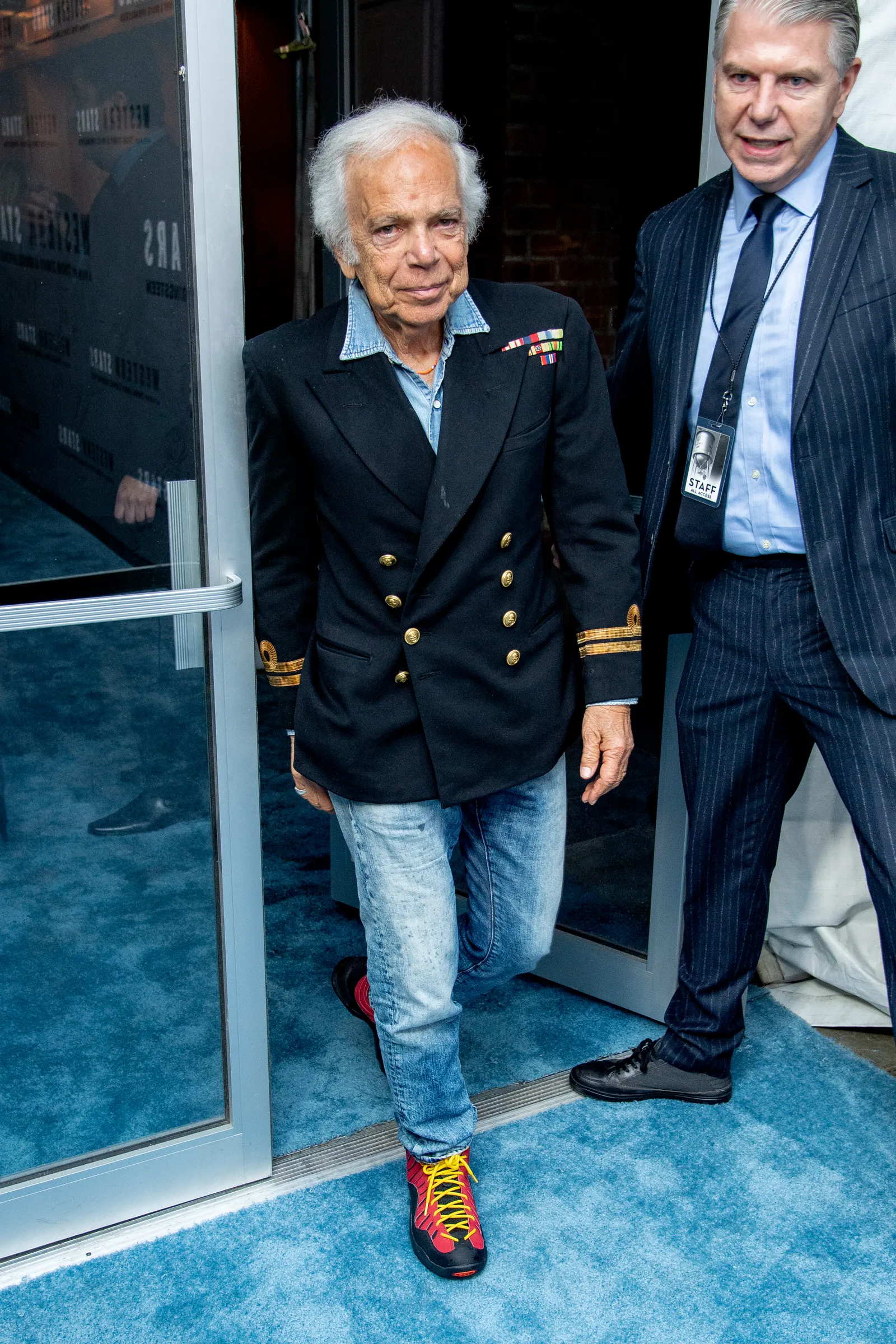
Today, a blazer is one of the most versatile pieces in a wardrobe. It can be dressed up with tailored trousers or paired with jeans for a casual look. Available in everything from classic navy and charcoal to bold plaids and vibrant colors, the modern blazer has become a fashion staple. But its origins have little to do with business attire—and everything to do with competitive rowing. The blazer was born on the rivers of 19th-century England, where rowers at Oxford and Cambridge wore loose-fitting jackets to stay warm during chilly morning practices and races. Unlike today's structured versions, these early jackets resembled lightweight windbreakers designed for comfort and function. The name itself is believed to have originated with the Lady Margaret Boat Club at St. John's College, Cambridge. Club members wore striking scarlet jackets that stood out on the water, inspiring the term "blazer," a reference to their blazing red color. Bright jackets and bold stripes soon became common among rowing clubs, making it easy for spectators to identify competing teams. As the jackets became symbols of pride and membership, athletes began wearing them away from the river—much like modern varsity or letterman jackets. Before long, rugby, cricket, croquet, and football clubs adopted similar styles, and by the late 1800s the word blazer had come to describe almost any colorful sporting jacket. The style crossed the Atlantic around the turn of the 20th century, where it quickly became popular on Ivy League campuses. Students at Yale, Harvard, Princeton, and Cornell embraced loose flannel blazers as part of collegiate fashion, helping transform the garment from athletic apparel into a symbol of classic American style. More than a century later, the cut, fabrics, and colors

By |July 22nd, 2026|Categories: Uncategorized|Comments Off on Why Is It Called a Blazer?

Sunglasses for the Field

Ihave I have some old Ray Bans, yellow, brown, black, you name it. They never go out of style.    I break or scratch them up, long before they ever go out of style. This new collaboration between Dolce & Gabbana and Ray Ban shows the new cool version for 2026.  But trust me, the vintage ones are just as great as the new ones, as Corky Robinson over at C. Woodcock & Co., can attest, he even goes so far as to collect vintage eyeglass and sunglass frames and have prescription lens dropped in them for as little as $60.  I haven't gone to the point of buying vintage frames, but I have many I purchased new some 40 years ago which probably now almost fit in that category.   They were made cool by military pilots, Tom Cruise in the 80's both on screen and off, and even back in the days of Hemingway and the likes.   I wasn't going for fashion when I first bought them, I was going for their optical qualities afield. Introduced in 1937 for U.S. military aviators, Ray-Ban's legendary G-15 and B-15 lenses were engineered to provide exceptional optical performance in the brightest conditions. Rather than simply darkening the view, these precision-crafted mineral glass lenses were designed to reduce glare, improve visual comfort, and preserve natural color perception—essential qualities for pilots navigating long hours in the cockpit. The G-15 lens, with its distinctive green tint, transmits approximately 15 percent of visible light while maintaining true-to-life colors and excellent contrast. The amber-tinted B-15 lens also allows about 15 percent light transmission but enhances depth perception and contrast, making it particularly effective in hazy or low-contrast environments. Both became hallmarks

By |July 17th, 2026|Categories: Wingshooting|Comments Off on Sunglasses for the Field

I’ll Be Your Huckleberry

The phrase "I'll be your huckleberry," means "I am your man," "I’m the right person for the job," or "I'm up for the challenge." Dating back to the late 1800s, being someone's "huckleberry" was a term for being the perfect match or the ideal person for a specific role.  The phrase was immortalized in pop culture by Val Kilmer, who played Doc Holliday in the classic western film Tombstone.  Some fans and historians debate whether the line was actually a mispronunciation of "hucklebearer" (an old term for a pallbearer, meaning "I'm the one who will carry you to your grave"). However, Val Kilmer confirmed in his memoir that the script explicitly stated "huckleberry," meaning "you've met your match." The wild huckleberry is the ultimate cultural icon and unofficial fruit of Montana, highly prized for its intense, sweet-tart flavor and its refusal to be commercially cultivated. Because these berries only thrive in the wild, high-elevation mountain forests of the Pacific Northwest, harvesting them requires hand-foraging and a bit of mountain adventure.  Huckleberry hunting is a deeply rooted summer tradition across the state. Locals guard their "secret patches" fiercely, but you can find them if you know what to look for:  small, round berries with distinct flat bottoms that range from deep red to dark purple-black. Similar to a blueberry in flavor but much deeper, brighter, and tarter. Darker berries are sweet and juicy, while redder ones are tangier.  They are notoriously resistant to cultivation because they require specific native forest soil chemistry and fungal networks to fruit. Look in low- to mid-elevation conifer forests throughout Western Montana, especially in the Flathead and Kootenai National Forests, Glacier National Park, and the Bitterroot mountains.  Search in partially

By |July 15th, 2026|Categories: Cuisine|Comments Off on I’ll Be Your Huckleberry

Railway through the Desert

The featured photo from the Library of Congress shows indian women at the Laguna, New Mexico, train depot c. 1902. Santa Fe Railroad officials encouraged the sale of Pueblo jewelry, crafts, and art at rail depots throughout the Southwest in an effort to attract tourists to the region. Native American imagery became a powerful force in American advertising during the late 19th century and has remained a familiar marketing symbol ever since. Thousands of posters, signs, brochures, and promotional booklets portrayed Indigenous people as symbols of strength, courage, speed, fierce independence, and a deep connection to nature. Railroads heading west, particularly those crossing the Southwest to California, embraced this imagery to sell the romance of travel. Their advertisements promised an unforgettable journey through dramatic landscapes inhabited by ancient cultures, transforming a train trip into an adventure. One example from my collection is this 1917 brochure, distributed aboard Santa Fe Railway trains to encourage travelers to visit Los Angeles. This version flows more naturally while preserving the historical context without endorsing the stereotypes used in the original advertising. If you're writing for a history or vintage advertising audience, it also reflects that these were marketing portrayals rather than factual representations. This is the story of how the Land of Enchantment was formed. https://mytext.cnm.edu/lesson/creating-the-land-of-enchantment/ 

By |July 14th, 2026|Categories: Uncategorized|Comments Off on Railway through the Desert

When Did Dog Show Handlers Start Dressing Like They Lost a Bet?

Spend five minutes at a dog show and you'll inevitably ask yourself the same question: Why is that woman wearing a hot pink sequined blazer while sprinting behind a poodle? The answer is surprisingly practical. Back in the beginning, men wore top hats and tails, and women wore their finest gowns and attire to attend Westminster Kennel Club dog shows, and the handlers followed suit---literally.    They were the playgrounds of the elite---people who had time and money in a struggling new world to continue their European traditions of showcasing the finest dogs that time and money could buy, and breed.   They wore their Sunday finest from those humble beginnings into the 1940s and '50s, where dog handlers looked like they were headed to church or a board meeting. Men wore conservative suits. Women wore tasteful dresses and hats. The only thing flashy in the ring was the dog. . Then somewhere along the way, handlers discovered that clothing could actually help showcase the dog. By the 1980s and '90s, business attire gave way to brightly colored jackets, bold prints, and fabrics that could survive a day of jogging, kneeling, bending, and occasionally stuffing liver treats into hidden pockets.  Those electric-blue suits and lime-green skirts aren't fashion statements—they're marketing for the dog. A black Labrador pops against a bright red jacket. A white Maltese stands out against navy. Sequins catch the arena lights. Stretch fabrics let handlers move without looking like they're about to split a seam chasing an excited Golden Retriever. Even the shoes have a purpose. While spectators may wonder why no one is wearing heels, handlers know it's hard to sprint across wet grass while convincing a Saint Bernard that this is

By |July 14th, 2026|Categories: Dog Training|Comments Off on When Did Dog Show Handlers Start Dressing Like They Lost a Bet?

Running of the Bulls with Hemingway

PAMPLONA, Spain — This year’s San Fermin festival is fit for anything, including outfitters offering packages for running with the bulls and bullfighting side-trips.  This year marks the 100th anniversary of the publication of Ernest Hemingway’s book “The Sun Also Rises,” which put Pamplona on the map. Hemingway first attended the festival in Pamplona, Spain, on July 7, 1924, accompanied by friends. He was immediately captivated by the life-and-death drama of the bullfights, the bravery of the matadors, and the energetic, hard-drinking culture of the celebration. These annual trips provided the core setting and inspiration for his breakthrough work. Today, the festival consists of eight consecutive morning bull runs, beginning on July 7. Thousands of participants pack the cobblestoned streets of Pamplona to scramble out of the way of a pack of charging bulls.  The run spans roughly 875 meters (about 960 yards) through the old quarter of the city, culminating in the bullring.  The run is inherently dangerous, with participants regularly suffering gorings and severe injuries.

By |July 8th, 2026|Categories: Uncategorized|Comments Off on Running of the Bulls with Hemingway

The Essential Guide to Chukkas, Jodhpurs, Paddocks, and Vellies

The Ankle Boot Masterclass: The Essential Guide to Chukkas, Jodhpurs, Paddocks, and Vellies Ankle-high boots are the ultimate foundation of a refined, versatile footwear wardrobe. Born from the fields of equestrian sport, military utility, and rugged wilderness exploration, four iconic short styles have stood the test of time: the Chukka boot, the Jodhpur boot, the Paddock boot (and it's sister boot the slip-on Chelsea), and the Veldskoen (Vellies).  While they share a similar ankle-high silhouette, their distinct fastening methods, leather paneled construction, and structural personalities yield entirely different styling outcomes for differing conditions. The Shared History: From Polo Fields and Stables to Global Fashion All four styles trace their core lineages directly to equestrian activities, historical migrations, or the military, showcasing how functional utility transitions into everyday menswear. The Chukka's Evolution: Borrowing its name from a period of play in a polo match, Western travelers took this lightweight, open-laced design back to Europe. During WWII, it famously evolved into the "desert boot" utilizing pliable crepe rubber soles.  The Clarks Desert Boot was created in 1949 by Nathan Clark, a descendant of the Clarks shoe dynasty, while serving in the British Army in Burma. He was inspired by off-duty officers wearing rough suede, crepe-soled boots purchased from the Khan el-Khalili bazaar in Cairo, Egypt.  Nathan Clark took the design—which was originally derived from South African veldskoen ("vellies")—and made prototypes using newsprint. He brought the design back to England in 1946, but his family's board initially rejected the idea, claiming it would never sell. Undeterred, Clark presented the boots at the 1949 Chicago Shoe Fair, where an Esquire editor featured the lightweight, durable footwear.  The boot officially launched in 1950. It quickly transcended its military roots, becoming

By |July 8th, 2026|Categories: Hunting, Travel|Comments Off on The Essential Guide to Chukkas, Jodhpurs, Paddocks, and Vellies

Sources for All of Your Adventures Afield

I used to remember paging through the annual Willis & Geiger print catalog.   It left you reminiscing of days afield and dreaming of more days to come.   But, after a day of looking to find the name of catalog company that I ordered the best leather dog collar that I have ever found, I decided that I had better start making a list of all of the great resources that I have curated over the years.   Here's just the beginning: Books ---independent and antiquarian book resellers specializing in rare, out-of-print, and collectible outdoor sporting literature: Angling & Fly Fishing Specialists Coch-y-Bonddu Books: Widely regarded by international collectors as one of the best angling bookstores on the planet. They maintain a massive online catalog of both new and deeply out-of-print fishing texts.  Adams Angling Books: A highly trusted reseller specializing in hard-to-find, used, and rare books focused on fly fishing, fly-tying, and related natural history.  A.M. Rapach Angling Books: A specialized Pennsylvania-based antiquarian dealer that curates out-of-print fishing and field sports catalogs for discriminating collectors.  An Angler's Bookcase: An independent reseller stocking thousands of fishing titles, focusing heavily on signed first printings and rare limited-edition books.  Spinoza Rod Company (Book Division): Along with high-end split-bamboo fly rods, they curate an elite digital vault of collectible and antique angling literature.  Hunting, Firearms & Big Game Outfitters Callahan and Company Booksellers: Operating via classic physical mail-order catalogs out of New Hampshire, they specialize heavily in waterfowling, upland gamebird shooting, and sporting bibliography.  Fairfax & Favor Sporting Classics Store: The book division of the famed sporting publication, specializing in high-end leather-bound reprints and first-edition tales of wilderness adventure. Worldwide Hunting Books: The premier destination for acquiring or selling

By |July 7th, 2026|Categories: Dog Training, Fishing, Fly Tying, Foxhunting, Hunting, polo, Uncategorized|Comments Off on Sources for All of Your Adventures Afield

Off Season Wingshooting Checklist

Offseason Checklist for Bird Hunters Prepare Now for a Better Fall Hunting Season. I’ve reached a point where I need to do less, do it smarter, and take recovery seriously. In other words, I need to be highly intentional.  Preparing for the upcoming season is one important, and often overlooked step, for upland wing shooters.   First, is getting fit and making sure my canine team members are also in tip top shape. My purpose for fitness is simple: to keep my body in the best shape possible so I can continue doing the things I love for as long as I can. What that looks like will be different for every person, and it will change at every stage of life.  As one wise man said, “If you have a body, you are an athlete.” Watch a professional athlete and you’ll see how intentional they are about everything they do. That idea has stayed with me. Each morning, when I get up and brush my teeth, I look in the mirror and ask myself, “You are an athlete. What would an athlete do today?” Some days the answer is rest. Other days, it’s moving my body with purpose. When you start being intentional about prioritizing your pursuits in the outdoors, you have probably noticed the same quiet pattern underneath everything: deeper sleep, steadier moods, more energy in the afternoons, mornings that feel clearer, and days that begin to belong to you again. None of it arrives with a dramatic moment. Real change rarely does.  It just happens. There is no single morning when you wake up as a completely different person. What happens instead is a shift in direction. A new baseline that slowly moves,

By |July 1st, 2026|Categories: Dog Training, Wingshooting|Comments Off on Off Season Wingshooting Checklist