Sporting Road

Home/Sporting Road

About Sporting Road

This author has not yet filled in any details.
So far Sporting Road has created 490 blog entries.

What’s a choil on a knife used for?

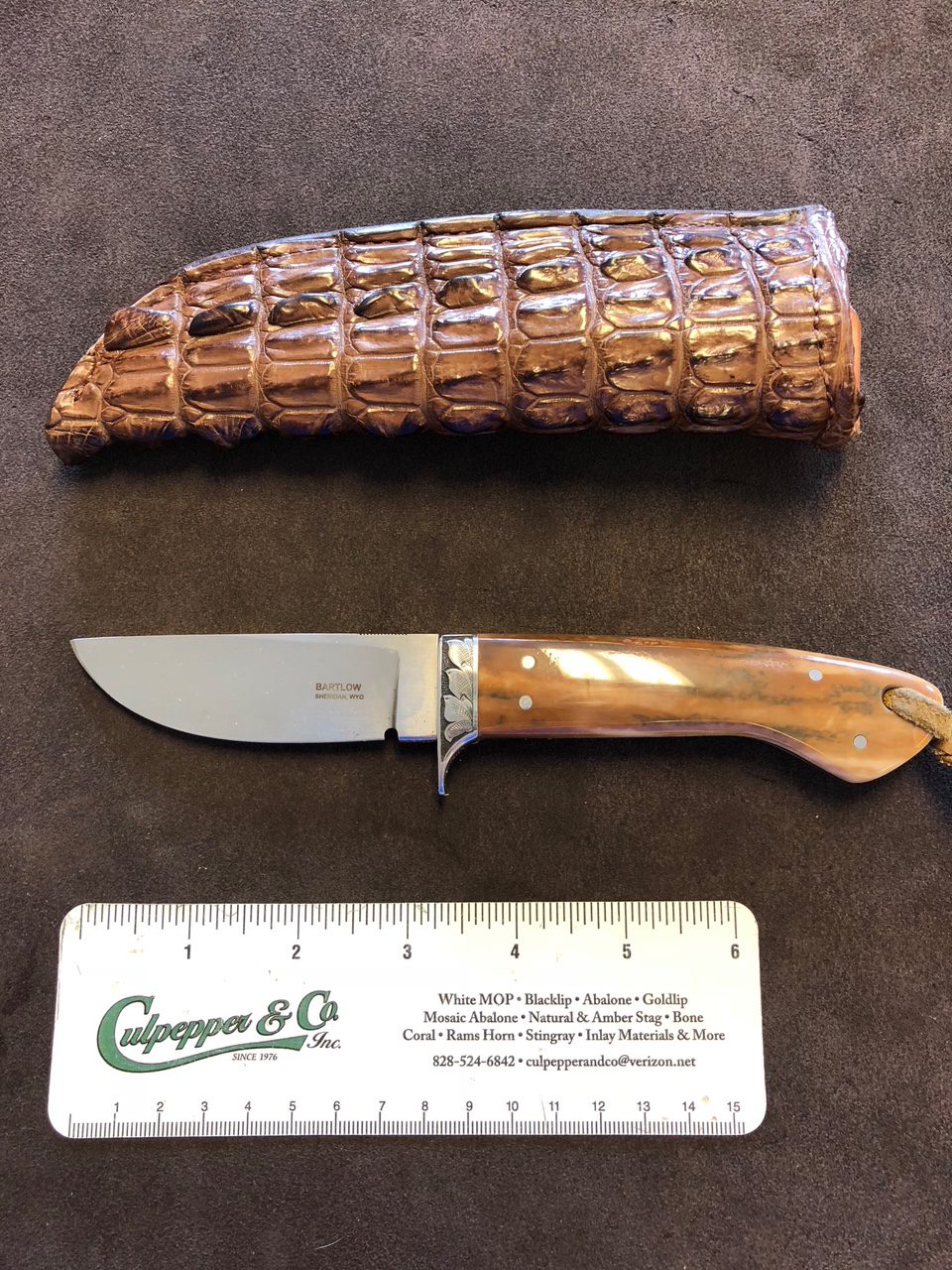
"What is the purpose of the choil?" Many knives have a small choil. A choil is the cut away area, or notch, between the heel of the blade edge and the ricasso of a pocket knife blade and between the edge and the guard of a fixed blade knife. For many knives, the reason for a choil simply ad to do with the ability to sharpen the full length of the blade edge. In some instances a choil is not necessary because the blade is wider than the ricasso making it possible to sharpen the edge cleanly all the way to the heel. While a choil often adds to the visual appeal of a blade, that is not the reason for one to be used. A blade that does not require a choil. However, some makes have chosen to exaggerate the choil for use as a line cutter or bird wing cutter like in the knife below.
By |April 12th, 2019|Categories: Uncategorized|Comments Off on What’s a choil on a knife used for?

Are You Ready to Fish Just One Fly?

Fly-Fishing Secrets of the Ancients: A Celebration of Five Centuries of Lore and Wisdom by Paul Schullery is a great read. One of my favorite sections, talks about whether anglers are really needing thousands of match the hatch imitations, or perhaps even just one fly. he found many anglers, even editors of fishing magazines, often used only a handful of patterns. Are you ready to fish one fly, like Rim Chung has with his RS2 for the last 30 years, albiet in six sizes and six different colors? It makes your fly fishing much more Zen like, at least for me anyway. And, I would be the first to switch back to my thousands of patterns that I carried as a commercial fly tyer if I caught more fish with them, but Rim's method is the most productive of any that I have ever seen. Are you ready for one fly? It is difficult to argue with Herd's comments.  It makes sense that fly shops want to profit from selling as many flies as possible. In fact if they all worked like magnets, the average angler would be buying less flies, not more (so there is a lot of financial incentive for the industry to sell you flies you don't need). I saw this in the difference between American flies shops and those across the pond, which are spartan in comparison. It's not that our English and European brotheran catch less, they just buy less, as marketing and consumerism isn't as big of part of their daily lives, especially among anglers. But it's also true from experience that fishing the same fly over the same group of fish will eventually get old with those fish

By |April 10th, 2019|Categories: Fishing, Fly Tying, Rim Chung|Comments Off on Are You Ready to Fish Just One Fly?

Andy’s YKnot Fly-My Daughter’s Favorite

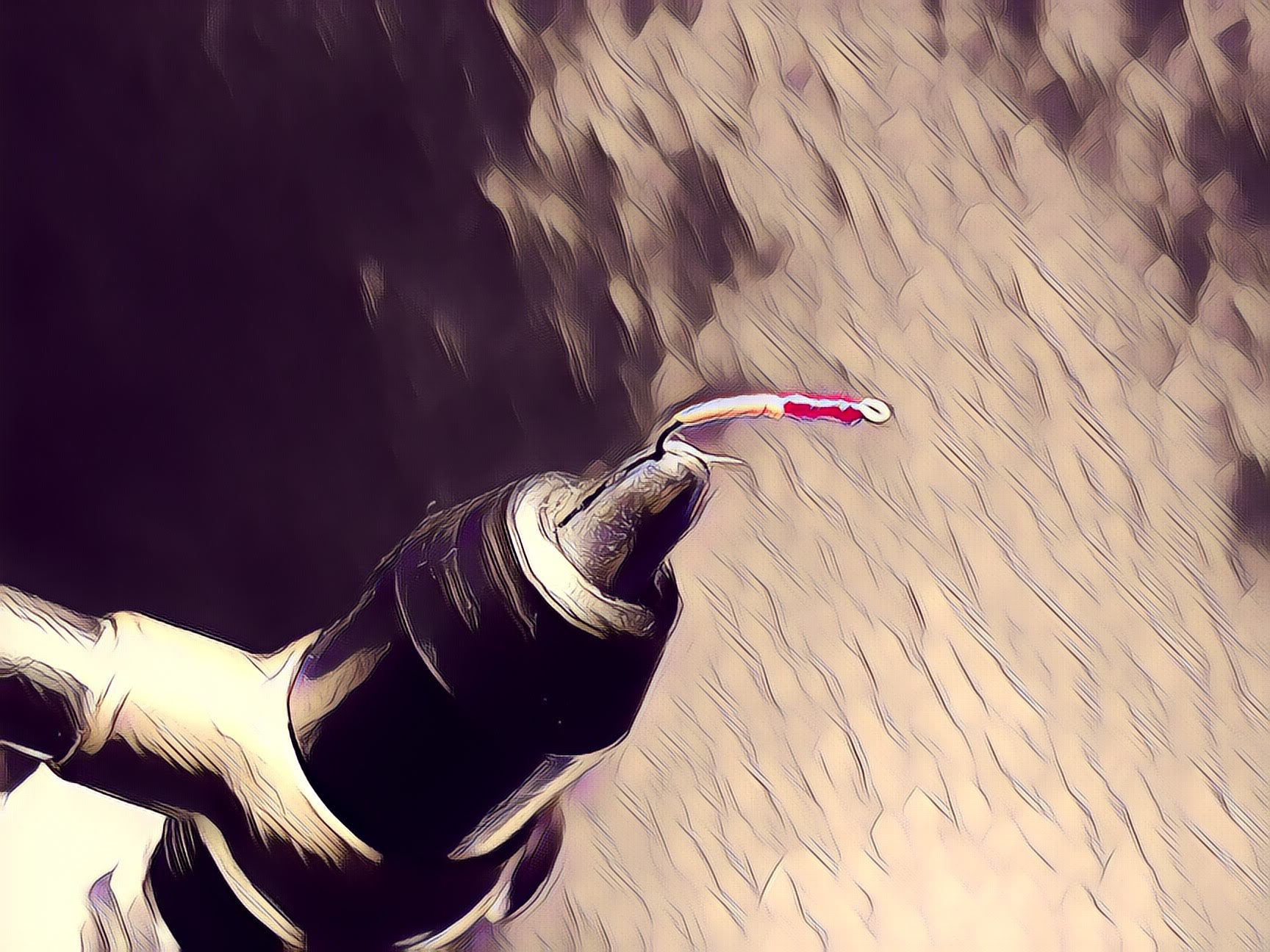
Photo Courtesy of Andy Kim This chronomid only hatches during the spring and fall, according to legendary guide and fish magnet, Andy Kim. But it doesn't have to be the prevalent insect in the water for trout to take your fly resembling it, as "sometimes big fish look for big meals," says Andy. The fly is killing it on our local waters and has become my daughter's favorite fly, not only to tie but to fish. You can buy the fibers from Andy to tie yourself, or better yet, just buy the flies from Andy at http://www.fly-fish.com/ because for only $3 each, you can't go wrong. And, take a lesson while you at it with Andy, because there is lot more to his success than simply copying his fly recipes. His method and skills are worth the costs of going back to him again and again, as you always pick up a little more each time, even for this seasoned angler. Tiemco 200R, size 18 and 20. Use red 8/0 thread and make about 4-5 wraps at the eye of the hook, after twisting bobbin counterclockwise about 20 times to make it lie flat on the hook. Tie in a Blondie AK Fiber on the near side of the hook and wrap to the bend. Wrap thread forward in ribs, spacing one wrap for every two thread wraps on the way back, so as to not make the fly body too thick. Stop at halfway point of fly and half hitch the thread. Wrap Blondie AK Fiber forward to halfway point and tie off with 2-3 wraps and cut off fiber. Twist red thread clockwise to make it a little thicker rope and wrap forward

By |April 9th, 2019|Categories: Fishing, Fly Tying|Comments Off on Andy’s YKnot Fly-My Daughter’s Favorite

Clay Pottery for Cooking

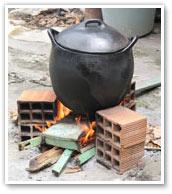
From Ferenc Recommendations on non-micaceous clay pots: I think Roemertopf ( Römertopf ) pots are the most flexible.  They used to be made in Mexico, but are now made in Germany ( again ).  The newer pots have a glazed bottom, so cleaning them after cooking is easier now. There's an out of print cookbook, which has lots of very good recipes for it: By the Editors of Consumer Guide Clay Cookery Some of our favorite recipes from it: Wedding Chicken From Crete, Gingered Roast Chicken with Nectarines, Ratatouille.  The latter is our all time favorite.  This pot is for the oven only. Though not made of micaceous clay, the Emile Henry pots can take a lot of heat.  Some can be used on stove tops. You can even use soap to clean them.  I use this one mostly for cooking chicken: Emile Henry Made In France Flame Oval Stewpot Dutch Oven, 6.3 quart, Charcoal Micaceous clay: Chamba You'd like the Chamba Cookware https://www.mytoque.com/pages/about-la-chamba-cookware ) soup pots for stews and soups.  The Chamba pots are made from black clay.  I use them on the stove top, but would work in the oven too. They're functional and beautiful. Güveç It's a Turkish clay pot.  ( See for example: https://drojkent.wordpress.com/2013/02/12/istanbul-pots-and-cooking-guvec/   I make Turkish moussaka in it.  Got that pot here: https://www.tulumba.com/products/3438-earthenware-non-coated-pot-medium/ But they don't always have it available. When I use clay pots on the stove top, I always use a flame diffuser, which I brought from Hungary.  You can get similar stuff here too, of course ( see for example: http://www.bramcookware.com/index.php ). I soak and them scrub with baking soda--never use soap on my clay pots. Because of the different pots I have, I put

By |April 8th, 2019|Categories: Cuisine, Uncategorized|Comments Off on Clay Pottery for Cooking

Favorite New Fly – Calgon Fly -Ancient Chinese Secret

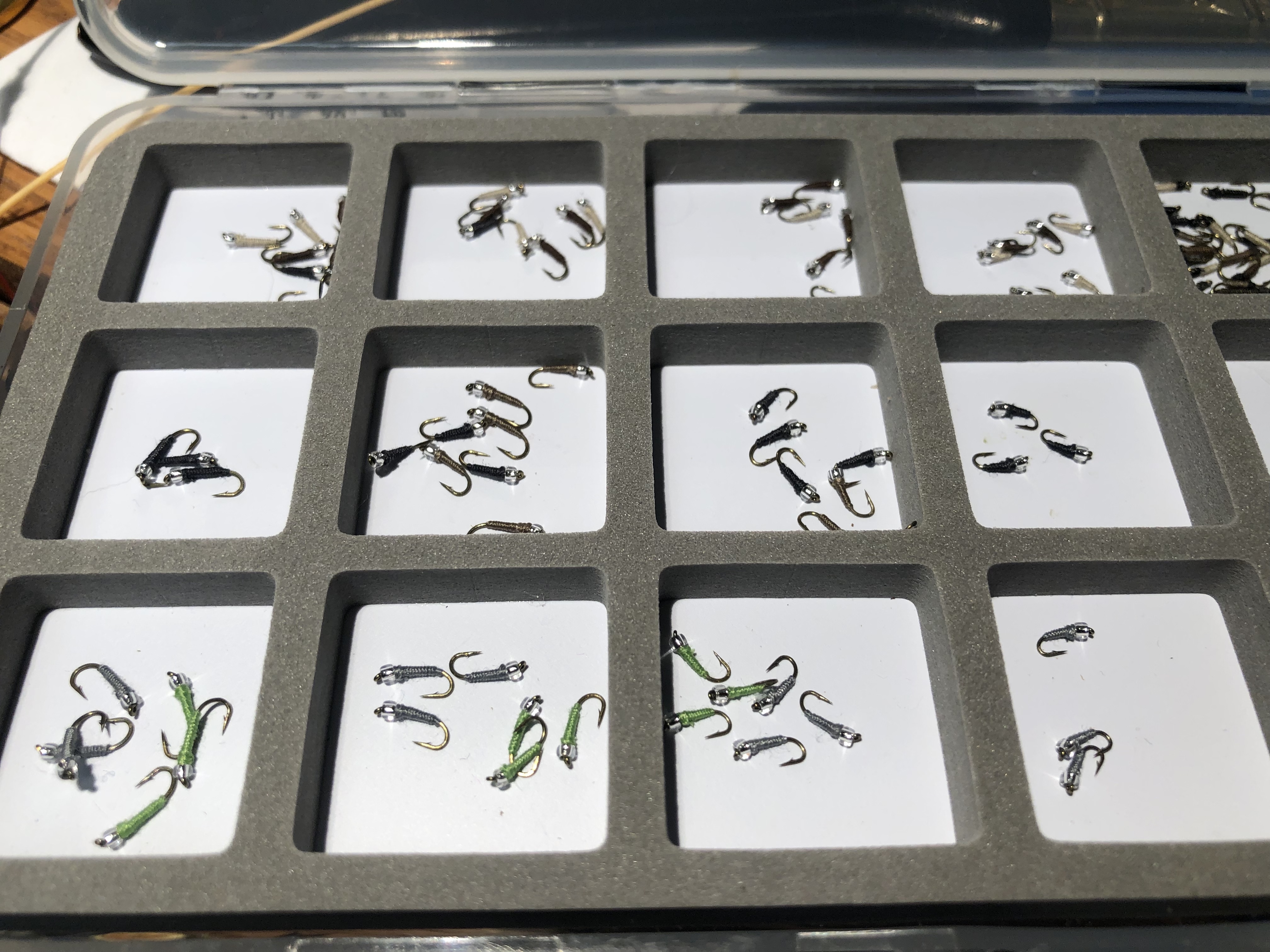
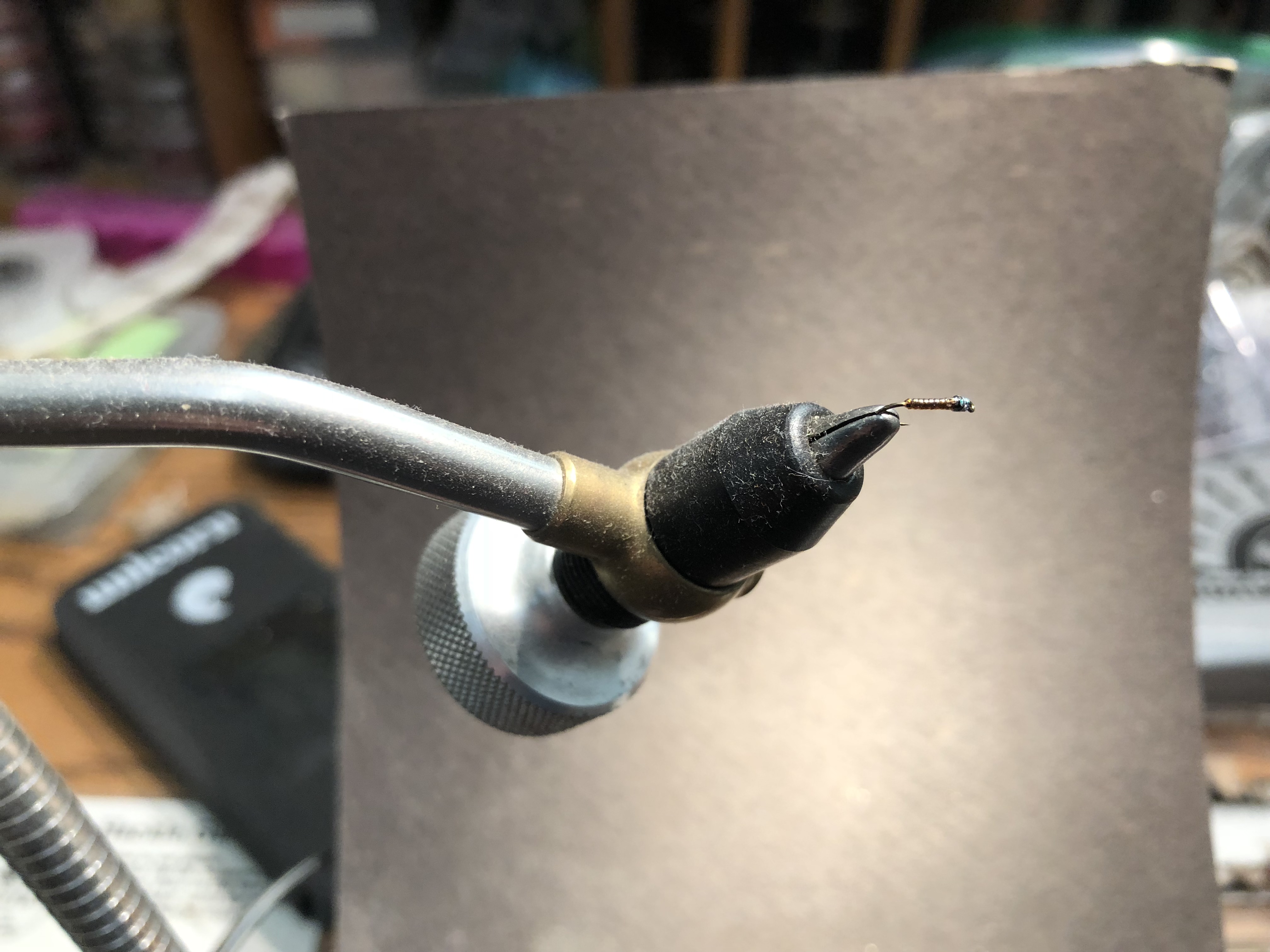
A fly I have developed, which I originally called the "Ancient Chinese Secret" is my favorite new fly. I combined a few of my favorite flies, the Yong Special, the Mercury patterns of Pat Dorsey, and Rim Chung's Plebby. Then, I stripped them down to their essential essence of what I believe makes them each so effective. It is an Andy Kim Yong Special combined with a Pat Dorsey Mercury bead head. It's very simple to tie and it's killing it on the stream. Rim Chung, a close fishing friend of mine, also devised somewhat of a similar pattern in his Plebby, which features a tail made from the thread, together with a peacock colored bead and a wire ribbing. My Calgon fly is tied in Coats and Clark thread, summer brown, olive, cream, chartreuse and medium grey and charcoal grey, with an extra-small glass bead, mercury colored. Currently the medium grey is my favorite, the same grey color that Andy Kim uses for his Yong JR. I always fish these Calgon flies in a two fly rig, with the other fly being a Rim Chung RS2, in a variety of sizes and colors. Calgon-Ancient Chinese Secret Materials needed • Hook: Tiemco 101 in sizes 18-24• Bead: Mercury clear and silver glass bead, Extra Small• Thread: Coats & Clark, Dual Duty Plus, in Summer Brown or   Charcoal (available at any Wal-Mart in the sewing aisle) Tying instructions • Put a Mercury clear extra small bead on the 101 hook.• Start wrapping the thread right behind the bead.  • Make a few wraps toward hook bend and remove tag end of thread.Once reaching the bend, twist thread clockwise about 30 spins of the bobbin, to form

By |April 1st, 2019|Categories: Uncategorized|Comments Off on Favorite New Fly – Calgon Fly -Ancient Chinese Secret

Yong Special Featured in Fly Fisherman Magazine

Andy Kim is a legendary guide on the San Juan River for the past 20 years, after having fished extensively in Colorado and Utah. His 13 fly patterns are relatively simple impressionistic flies, yet they are the most deadly effective that I have ever come across in having fished with lots of guides and well-known anglers. The key, as he has told me several times, to his often imitated but never duplicated thread bodied nymph is "in the exact right shape and thickness, with a reasonably close color, not the exact material." The quest for his Yong Special tying thread, believing that is the secret to his fish catching success has become a hobby within a hobby to many. The truth is he has used a lot of materials over the years, but he is very meticulous about following the exact method of tying, as any deformity in the shape or abnormal tapering, etc., will effect the effectiveness of his simple midge patterns described in this Fly Fisherman Magazine article from 2001. Further, he is a master at presentation of the fly, using many different techniques. He teaches all of this to his clients so hiring him for a day is the key to starting to learn how the hell he catches so many fish. I have been hiring him for 20 years and took his three day one-on-one school, and I've just begun to scratch the surface, as he spends so much time on the water, that his methods and flies continue to adapt and improve with time. The name of the game on the San Juan River, where Andy guides, is to fish midge imitations (tiny ones). The San Juan River is filled

By |March 9th, 2019|Categories: Uncategorized|Comments Off on Yong Special Featured in Fly Fisherman Magazine

The Hooker and Royal Hooker Flies

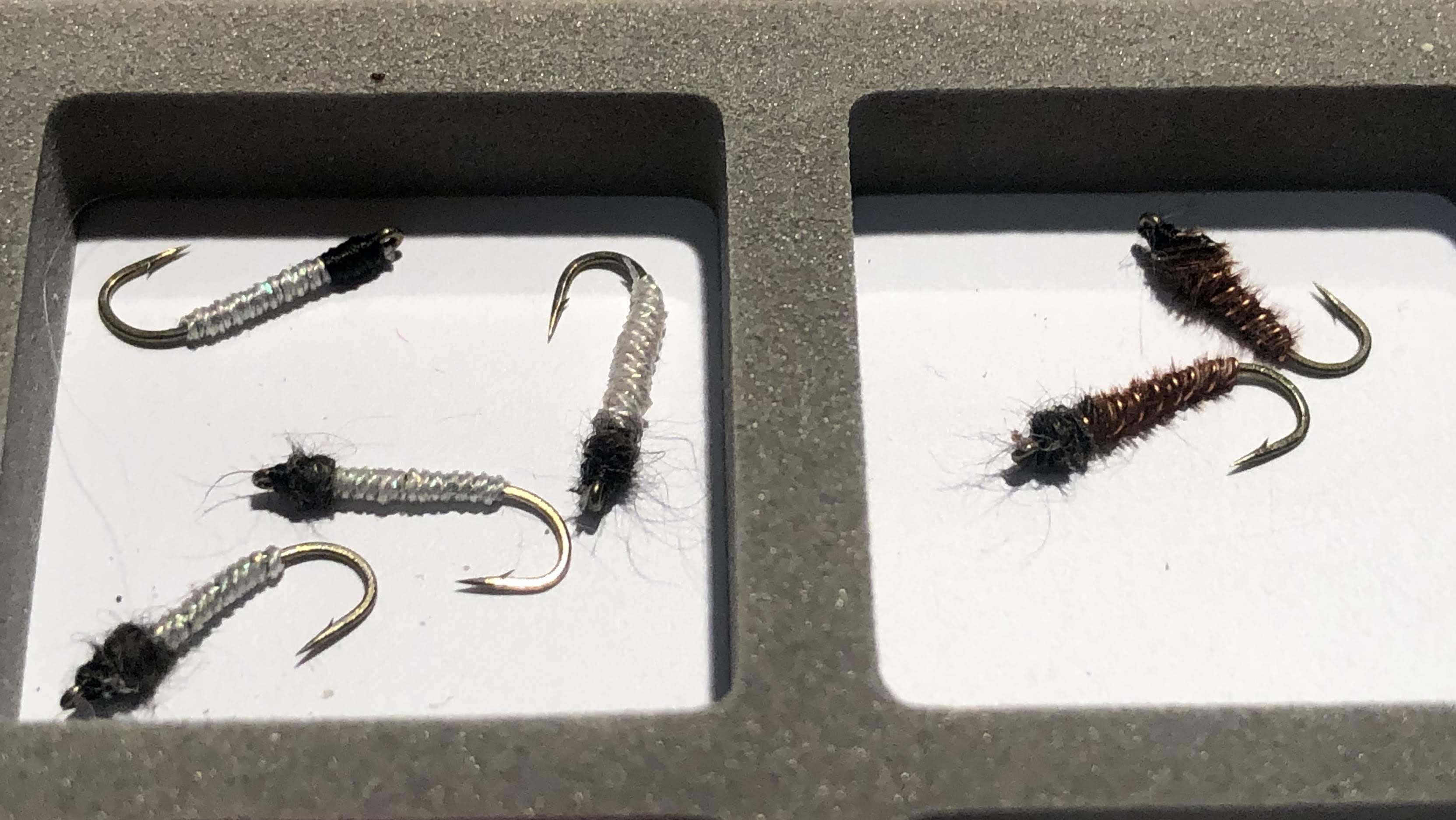
The Hooker is a pheasant tail based nymph pattern devised by Rim Chung about 20 years ago. He ties it in brown with copper wire and black with silver wire, and used it extensively for many years, coupled in a two fly rig, with the RS2 as the point fly. While it was one of his most effective flies and even though he still uses it occasionally, he currently has mostly gone to his Avatar and Plebby as his more common upper fly. I created a similar fly made from DMC metallic embroidery thread 272 Blanc (which has been discontinued), that Rim dubbed the Royal Hooker. It works very well on the South Platte River, the Arkansas, and many other Colorado rivers, especially where cased caddis are present. Rim's brown and black ones work everywhere that there are mayfly nymphs, for as Frank Sawyer note, the nymphs tuck in their legs when swimming through the water and the midge nymphs do not have tails, so they may be taken for those as well as the mayfly nymphs.

By |March 5th, 2019|Categories: Fishing, Fly Tying|Comments Off on The Hooker and Royal Hooker Flies

Fishing for the Lord-Deadly White Jig for Trout and Salmon Lake Taneycomo

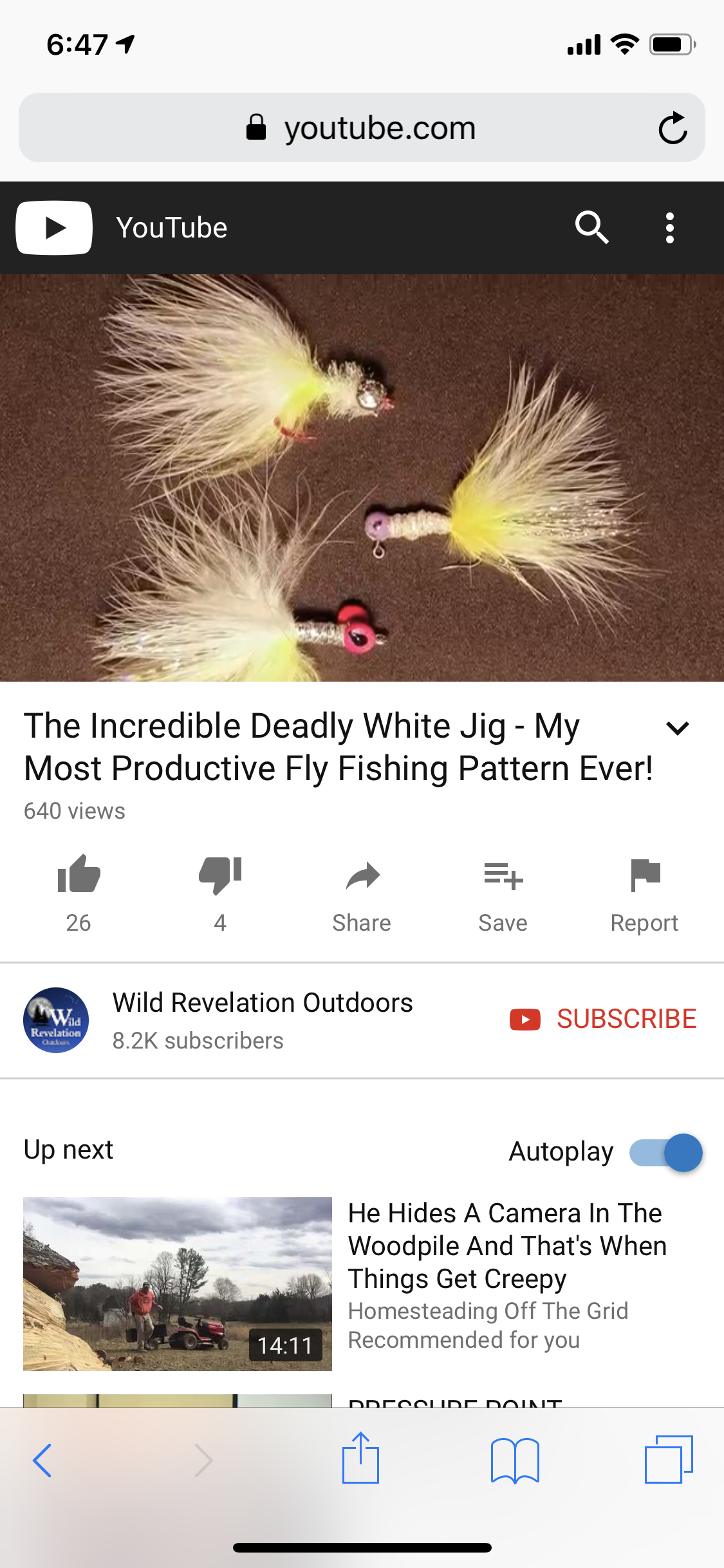
For Missouri trout streams, this Catholic priest invented a fly called the Deadly White (Micro) Jig which can be tied on a Dai Riki 730C size 8 with 3/16" nickle bead head, or he uses bait fishing jigs in 1/124 or 1/64 for trout and bigger ones for bass or salmon. It has white crystal flash or other white flash thread for a body and white marabou tail for trout. For salmon, he adds with some crystal flash and marabou for salmon. Sounds intriguing for both fly fishing for trout and bait casting for bass, which we like to do in Missouri where he was located as a pastor. trout fishing Lake Taneycomo

By |March 4th, 2019|Categories: Fly Tying|Comments Off on Fishing for the Lord-Deadly White Jig for Trout and Salmon Lake Taneycomo