Sterling Silver, Coin Silver and Otherwise
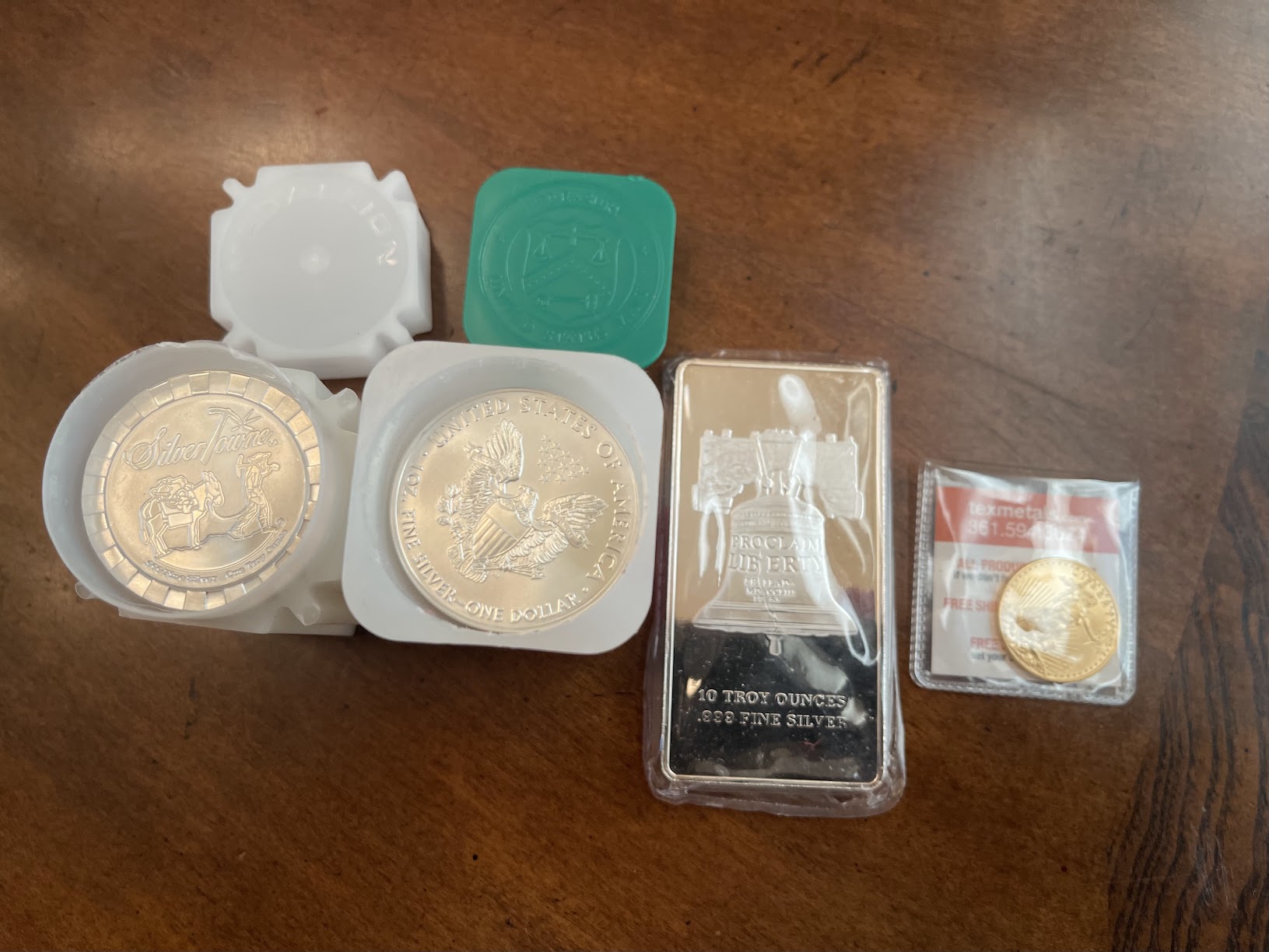
The Difference between Pure Silver, Sterling Silver, Coin Silver, Junk Silver, and Silver Plating Technically, silver is a metallic chemical element whose chemical symbol is Ag (Argentum) and whose atomic number is 47. It is a precious metal that is used to make jewelry, tableware (silverware), and coins, among other things. It also has many other uses which we will discuss in future posts. The millesimal fineness system is used to show the purity of silver, gold, and platinum alloys by parts per thousand of pure metal by mass in the alloy. For example, if an alloy contains 92.5% silver, it is referred to as “925.” [NOTE: An alloy is a mixture of two or more metals to obtain desirable qualities such as hardness, lightness, and strength.] Fine silver (99.9% pure) is too soft to use in jewelry or almost anything else because it bends, breaks, and stretches too much. For this reason, manufacturing jewelers and silversmiths mix copper with it to give it some strength without discoloring it. Copper is the industry standard. However, some countries use other alloys as well. When you see “.999 fine silver” or “999” stamped on an item, it is considered pure silver. It is softer and more malleable than sterling silver. It is used in bullion bars, and is also known as three nines fine. Sterling silver (also known as standard silver) is what jewelry and silverware are traditionally made from, which is 92.5% silver and 7.5% copper. That is why you sometimes see .925 stamped on your jewelry. In the U.S., only a minimum of 92.5% fine silver can be marketed as “silver.” Sterling silver jewelry is often plated with a thin coat of .999 fine silver to give the item a shiny finish (called