
Uncategorized

Home/Uncategorized

OnX and Garmin Rung My Bell

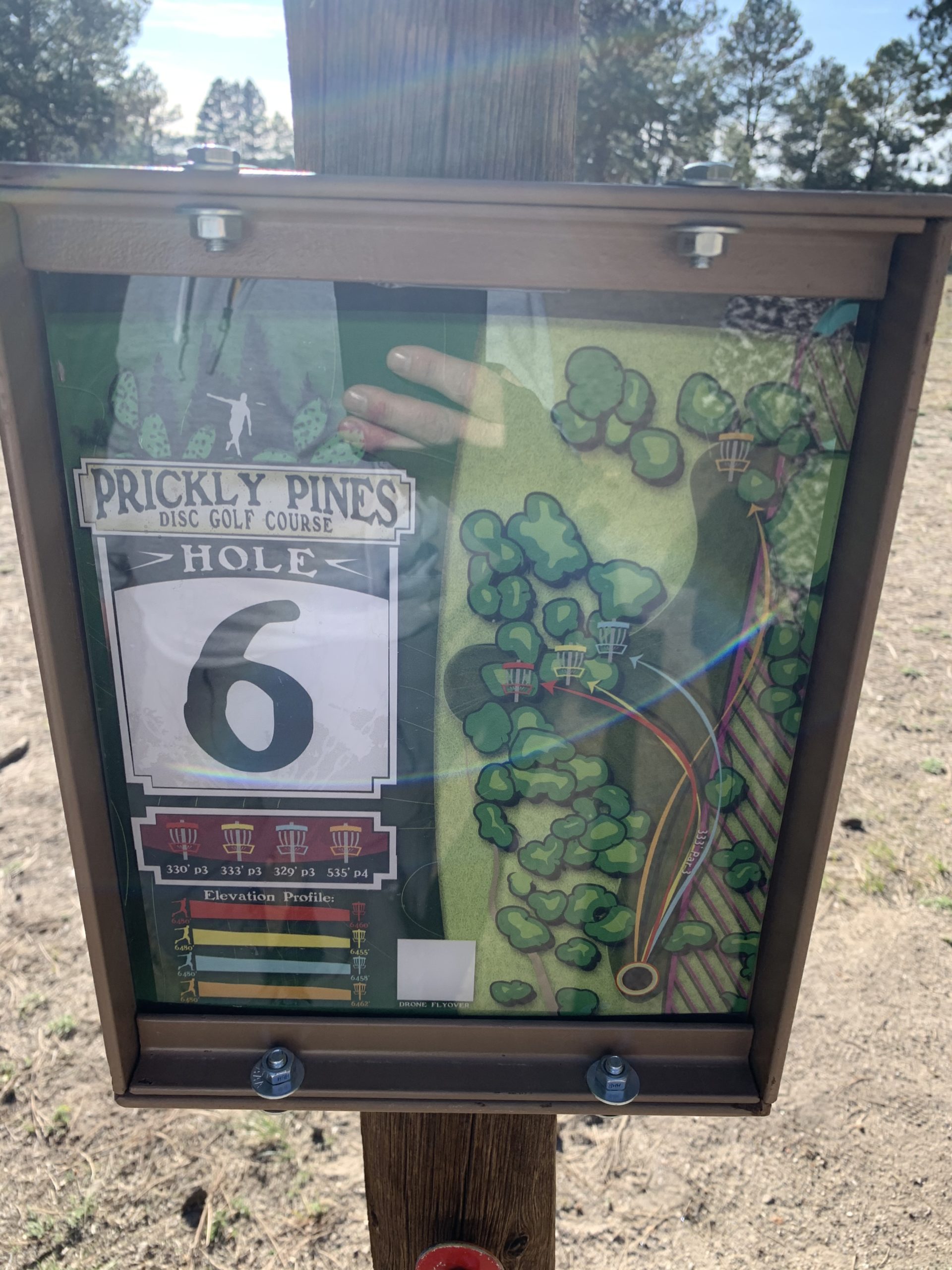
Your experience afield is incomplete without a pointing dog. And that time afield sometimes turns down right scary when your beloved bird dog cannot be located. Life was easier many years ago, after law school, when I went afield upland hunting with a Swiss cowbell on the leather collar my big ranging Brittany. Until it got not so easy, with a big ranging 2 year old who was slightly out of control running more than a mile out at times in big country. But, even the biggest bell couldn't be heard at that range and if the dog was out sight and out of sound, what to do next other than holler, whistle and wait. Or maybe fire off a shot and see if he returned for the retrieved (which I did in a number of moments of desperation with seemingly great success). Looking back on it, I ordered some really great sounding bells, some of which were very pricey and difficult to find in catalogs. I lost or gave away many of them over the years, but the real challenge was getting the dog accustomed to it, and for that task I had to start with clip on fishing bells or cat bells, so that the dog wouldn't freeze up in my training sessions of leaving the bell on for hours around the house each day.  Further, I became convinced that a bell was a hindrance to finding grouse, as the grouse surely heard the bell coming.   Someone recently wrote a great article on this over at Project Upland.   I've purchased and experimented with all of these over the years, but I pretty much narrowed my preference to these three below... The big 8/0

By |September 2nd, 2020|Categories: Dog Training, Uncategorized, Wingshooting|Comments Off on OnX and Garmin Rung My Bell

Walk in Beauty Always

Part of the attitude of the Navajo culture is the concept of Hozro, which is to Live in Beauty, Walk in Beauty Always. Walking in Beauty: Closing Prayer from the Navajo Way Blessing In beauty I walkWith beauty before me I walkWith beauty behind me I walkWith beauty above me I walkWith beauty around me I walkIt has become beauty again Hózhóogo naasháa dooShitsijí’ hózhóogo naasháa dooShikéédéé hózhóogo naasháa dooShideigi hózhóogo naasháa dooT’áá altso shinaagóó hózhóogo naasháa dooHózhó náhásdlíí’Hózhó náhásdlíí’Hózhó náhásdlíí’Hózhó náhásdlíí’ Today I will walk out, today everything negative will leave meI will be as I was before, I will have a cool breeze over my body.I will have a light body, I will be happy forever, nothing will hinder me.I walk with beauty before me. I walk with beauty behind me.I walk with beauty below me. I walk with beauty above me.I walk with beauty around me. My words will be beautiful.In beauty all day long may I walk.Through the returning seasons, may I walk.On the trail marked with pollen may I walk.With dew about my feet, may I walk.With beauty before me may I walk.With beauty behind me may I walk.With beauty below me may I walk.With beauty above me may I walk.With beauty all around me may I walk.In old age wandering on a trail of beauty, lively, may I walk.In old age wandering on a trail of beauty, living again, may I walk.My words will be beautiful… Click to hear the prayer spoken in Navajo by  Wanye Wilson, a Navajo member. Linguistic Note: The word “Hozho”  in  Dine’  (roughly translated) Concept of Balance and Beauty. Consideration of the nature of the universe, the world, and man, and the nature of time and

By |August 26th, 2020|Categories: Uncategorized|Comments Off on Walk in Beauty Always

Pendleton Blankets

This great photo above was on a Perry Null Trading Post newsletter that I received recently. It reminded me of times we have attended native pow wows or corn dances and the locals are wrapped up in Pendleton blankets for warmth, or they use it is a ground covering to sell wares, or folded up as a seating cushion, or countless other uses. Living in the Southwest, we have grown to love our Pendleton blankets and we own quite a few of them now. We love them and particularly, love taking them along on trips for an extra blanket on the couch, a picnic, or to keep warm on an unexpectedly cold outing. In the midwest, Faribault from Minnesota is popular among native peoples as was Hudson Bay in the East, and Woolrich in other places. Poyet Motte from France is probably still the softest heavyweight wool blanket you can buy, but Pendleton is the most durable.

By |August 24th, 2020|Categories: Uncategorized|Comments Off on Pendleton Blankets

Scripta- The Game of 12 Inscriptions

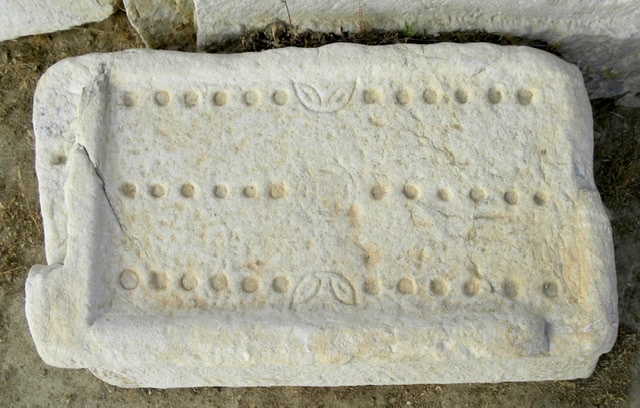
Ludus Duodecim Scriptorum – Duodecim Scripta – The Game of Twelve Inscriptions From ancient games.com Ludus Duodecim Scriptorum, or Duodecim Scripta, is an ancient Roman game, which combined elements of luck and strategy. It is somewhat similar to Backgammon, in the fact that each player has 15 pieces, and the pieces stack and move on and off the board in a similar fashion. The name Ludus Duodecim Scriptorum in Latin, means The Game of Twelve Inscriptions, and refers to the fact that many Duodecim Scripta boards had a Latin letter written for each cell, instead of just circles. There is a theory that the reason letters were used and not circles or squares is because the game was used for gambling, which was prohibited during the later years of the Roman empire, and so the writing on the boards was used as an excuse to call them “inscriptions”, instead of gambling devices, thus preventing the users from being arrested and the boards confiscated. I emphasize that this is just a theory, because some of the inscriptions are so specific to gaming and gambling that it is really hard to believe that somehow the inscription would conceal the gambling aspect of the game. The three large rosettes or circles in the center of the boards were markers where the players would put the coins that were being gambled on. https://www.ancientgames.org/ludus-duodecim-scriptorum-duodecim-scripta-the-game-of-twelve-inscriptions/ we are going to try to make a board like this stellar one from https://www.ignitedartsdesign.com/listing/735295503/ludus-duodecim-scriptorum-an-ancient

By |May 24th, 2020|Categories: Games, Uncategorized|Comments Off on Scripta- The Game of 12 Inscriptions

The Egyptian Game of Senet

our handmade Senet board, pieces and dice sticks Ancient Games, Senet Senet, originating from ancient Egypt, holds a significant place in the annals of gaming, representing one of the earliest board games known to humanity. Dating back to at least 3100 BCE, this game is prominently featured in Egyptian texts and hieroglyphs, demonstrating its widespread popularity across all societal strata, with players continuously refining its rules. Consisting of a board placed atop a rectangular box, Senet featured etched spaces where players maneuvered their pieces, simulating beliefs regarding the afterlife in Egyptian culture. Some boards even boasted a storage drawer for pieces, adding a touch of practicality to this otherworldly pastime. Surviving versions of Senet, often adorned with intricate designs and vibrant colors, hint at diverse gameplay scenarios, leading archaeologists to speculate about the game's nuances and the strategic maneuvers employed by its players. Yet, despite the wealth of physical evidence, the exact rules and mechanics of Senet remain shrouded in mystery, leaving historians to ponder its gameplay and the experiences of its ancient enthusiasts. Senet is a race game dating back to ancient egyptian times, and it is thought that it may be the ancestor of modern day backgammon (Soubeyrand (1995)). We know of this game today due to discoveries made through the excavation of ancient tombs. The original rules of Senet (The Game of Passing) are unknown. There are no records of the rules ever having been discovered, however many have attempted to reconstruct the rules using knowledge gathered through excavations in which images have been found on ancient tomb walls, as well as through Senet related artifacts. Two of the most well known versions of the games rules have been created by T.

By |May 20th, 2020|Categories: Games, Uncategorized|Comments Off on The Egyptian Game of Senet

Royal Game of Ur

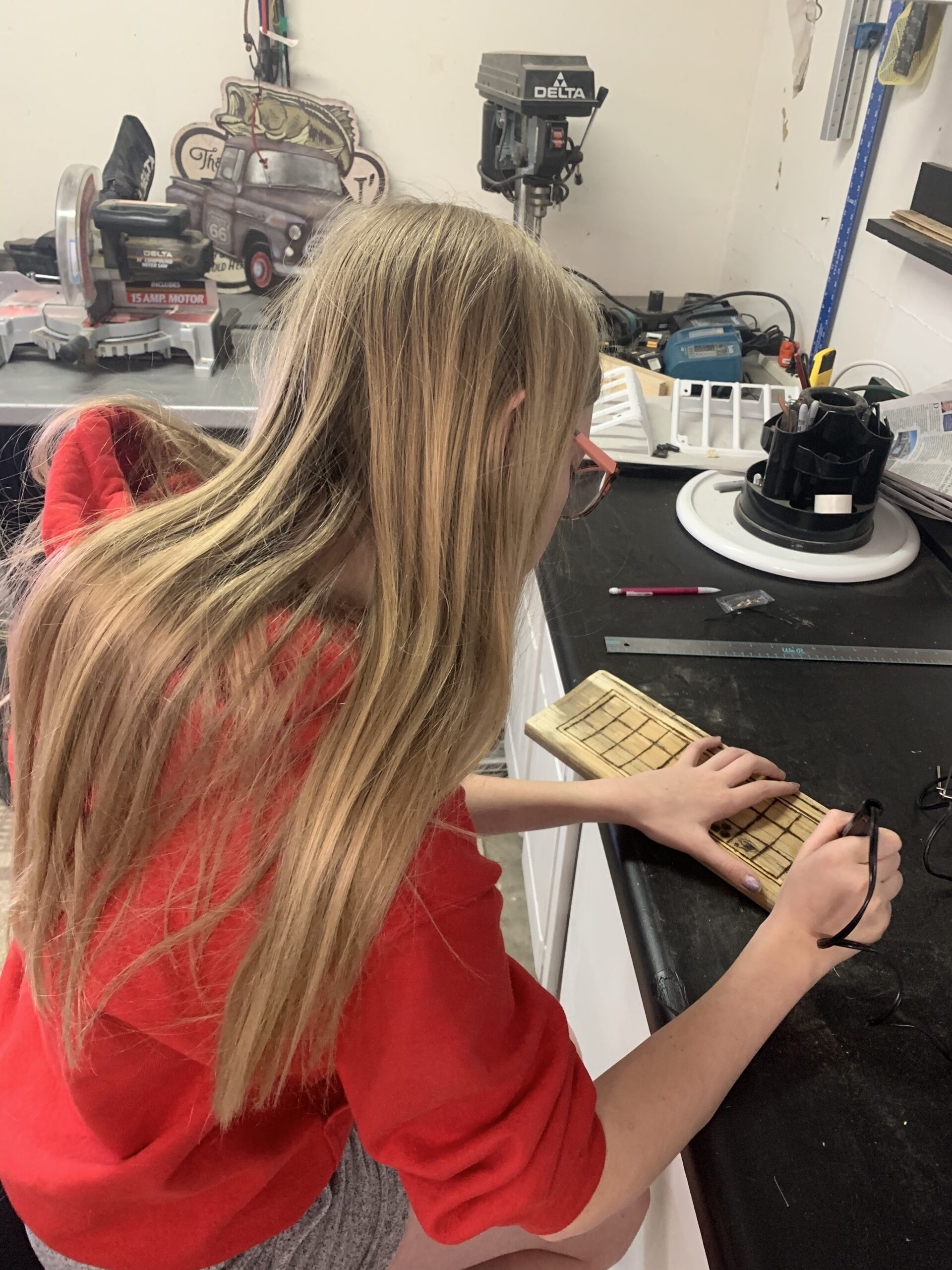
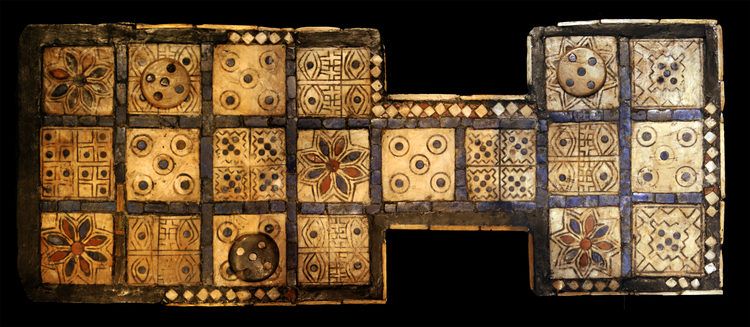
The Royal Game of Ur Another daddy daughter project with woodworking and polymer clay to make the oldest board game in the world. And it’s really fun, like backgammon. Alternate NamesThe ancient name of this game is unknown. It is also called the Game of Twenty Squares. No. of Players Probably two. Equipment The Royal Game of Ur board was accompanied by equipment comprising fourteen counters made of shell that are marked differently on either side, seven each of black and white, as well as six tetrahedral (pyramidal) dice, each of which has two of its four points dotted with inlay.Printable Royal Game of Ur BoardHistory The archaeological site of Ur lies in the south of present-day Iraq at the junction of the Tigris and Euphrates Rivers and was once capital of the Sumerian Empire and reputedly the home of the biblical Abraham. Amongst the many archaeological treasures yielded from the site of Ur come some of the oldest game board artifacts known. During excavation of the royal tombs in 1926-7, led by Sir Leonard Woolley in conjunction with the British Museum and the University of Pennsylvania, four boards were discovered. The ancient Sumerian name of this game is not known, but it is today typically referred to as the Royal Game of Ur. The oldest of these boards has been dated at around 2600 BCE. Some of the rules for this game have been found on a cuneiform tablet dated around 200 BCE. The boards differ greatly in terms of their designs, but all feature the rosettes in the same pattern and some do not contain any design other than the rosettes. This factor leads many game historians to believe that the rosettes are the only detail of the board

By |May 17th, 2020|Categories: Uncategorized|Comments Off on Royal Game of Ur

Frank Sawyer’s Bow Tie Buzzard

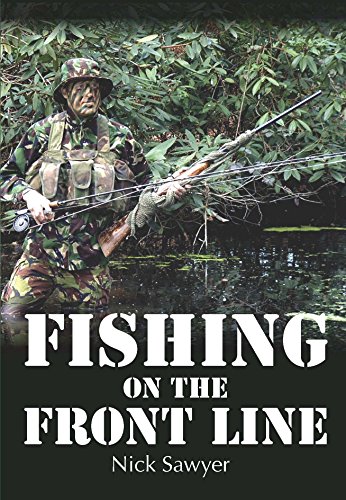
One of Sawyer’s favorite flies is described in Fly Fishing With a Buzzer Nymph, as described by my old pen pal. By Nick Sawyer  |   Submitted On May 03, 2010 There are a great many representations of buzzer nymphs available on the market. Some of them are very good and no doubt most of them will have caught fish at some time. As far as I know, there is only one bow-tie buzzer and that is the pattern designed by Frank Sawyer. Any others are simply copies of the original in just the same way as all weighted nymphs are developments of the Sawyer Pheasant Tail Nymph. Frank Sawyer spent a lot of his life teaching others how to use his original nymphs, the Pheasant Tail, the Killer Bug, the Sawyer Swedish and the Grey Goose. All require much the same technique and are used the world over with varying levels of skill. The Frank Sawyer Bow-Tie Buzzer (BTB) is completely different. It is true that a few fish will be caught whilst using it as a conventional weighted nymph but as such it is far from deadly. When fished as Frank intended, it really comes into its own. The natural buzzer nymph hangs in still water, just a few centimetres below the surface. In its struggle to transform itself from nymph to fly, the buzzer seems to rotate in the water. All buzzers appear to have a kind of frill around the head. As with all things to do with fish and flies, Frank Sawyer spent years observing what happened underwater. He knew that if fish were to take a representation of a buzzer with any sort of frequency, something unique was required. He tried all sorts

By |April 29th, 2020|Categories: Fishing, Fly Tying, Uncategorized|Comments Off on Frank Sawyer’s Bow Tie Buzzard

What MD’s are Doing During Covid

Personally, I am taking lots of Vitamin D3, because Dr. England thinks it helps everything from energy to recovery to not getting sick. Turns out that it really does and it may even prevent against Corona-virus. See https://www.accuweather.com/en/health-wellness/severity-of-covid-19-may-depend-on-where-youre-located-on-the-map/734371?utm_medium=push&utm_source=pushly&utm_content=529622&utm_campaign=pushly_trial Then, I recently received this article, "What I am doing for the upcoming COVID-19 (coronavirus) pandemic," from James Robb, MD UC San Diego. Dear Colleagues, as some of you may recall, when I was a professor of pathology at the University of California San Diego, I was one of the first molecular virologists in the world to work on coronaviruses (the 1970s). I was the first to demonstrate the number of genes the virus contained. Since then, I have kept up with the coronavirus field and its multiple clinical transfers into the human population (e.g., SARS, MERS), from different animal sources. The current projections for its expansion in the US are only probable, due to continued insufficient worldwide data, but it is most likely to be widespread in the US by mid to late March and April. Here is what I have done and the precautions that I take and will take. These are the same precautions I currently use during our influenza seasons, except for the mask and gloves. 1) NO HANDSHAKING! Use a fist bump, slight bow, elbow bump, etc. 2) Use ONLY your knuckle to touch light switches. elevator buttons, etc.. Lift the gasoline dispenser with a paper towel or use a disposable glove. 3) Open doors with your closed fist or hip - do not grasp the handle with your hand, unless there is no other way to open the door. Especially important on bathroom and post office/commercial doors. 4) Use disinfectant wipes

By |April 29th, 2020|Categories: Uncategorized|Comments Off on What MD’s are Doing During Covid

Fly Tying Head Cement for Small Flies

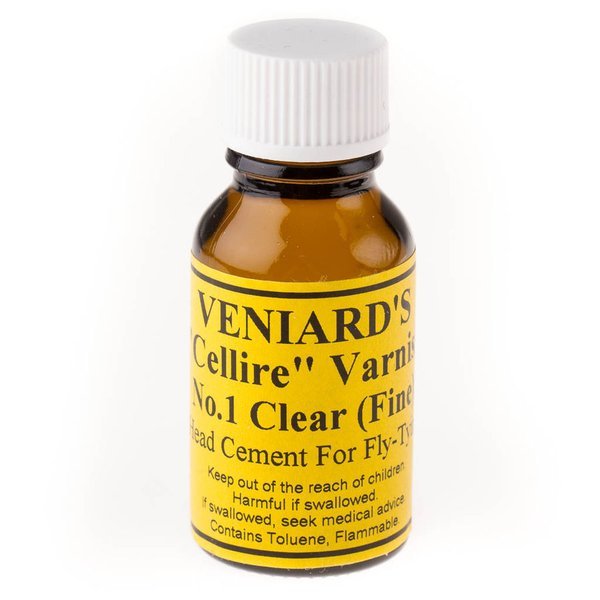
Griff's head cement is gone, and a part of me has died. I'm in search of a replacement for the best head cement currently available for tying small trout flies. Griff's head cement has been discontinued, which was the best head cement commercially available for tying of small flies. Rim Chung is now using laquer and laquer thinner. I've gone to Veniards No. 1. Lacquer-based Head Cements Many other modern Catskill masters also use spar varnish as well as lacquers in their various forms. The well known Western fly tyer A.K. Best, in his book, "Production Fly Tying", advocates the use of common hardware store lacquer for its economy and fast drying qualities. Many of the "lacquer" head cements you purchase appear to be a very small bottle of nitrocellulose lacquer that you can get at the hardware store for a whole lot less money…(like A.K. Best says). If the head cement is a pale yellow color (or clear) and smells like lacquer thinner, it is a good bet it is lacquer. Griff’s Head cement - Griffin makes two versions, thick and thin. This is a very common product found in the US. A lot of my friends used this stuff because it was so readily available in our area. But it’s not thin like Griff’s. TroutHunter Harrop Superior Head Cement is the next on my favorite list, but the cloudy color is less than desirable to look at in the bottle anyway, though the application of it seems fine. I am also trying Homemade Thin Nail Polish Head Cement Recipe which is the 2/3 Sally Hansen's Hard as Nails, Clear Topcoat, with 1/3 straight acetone. Veniard’s No. 1 is the closest I have found and my favorite so far. Rim

By |April 29th, 2020|Categories: Fishing, Fly Tying, Rim Chung, RS2, Uncategorized|Comments Off on Fly Tying Head Cement for Small Flies