Trail Etiquette for Horses, Bikers, and Hikers
https://youtu.be/zzc2ZbyGNqw This is a good reminder from Douglas County Parks.

https://youtu.be/zzc2ZbyGNqw This is a good reminder from Douglas County Parks.
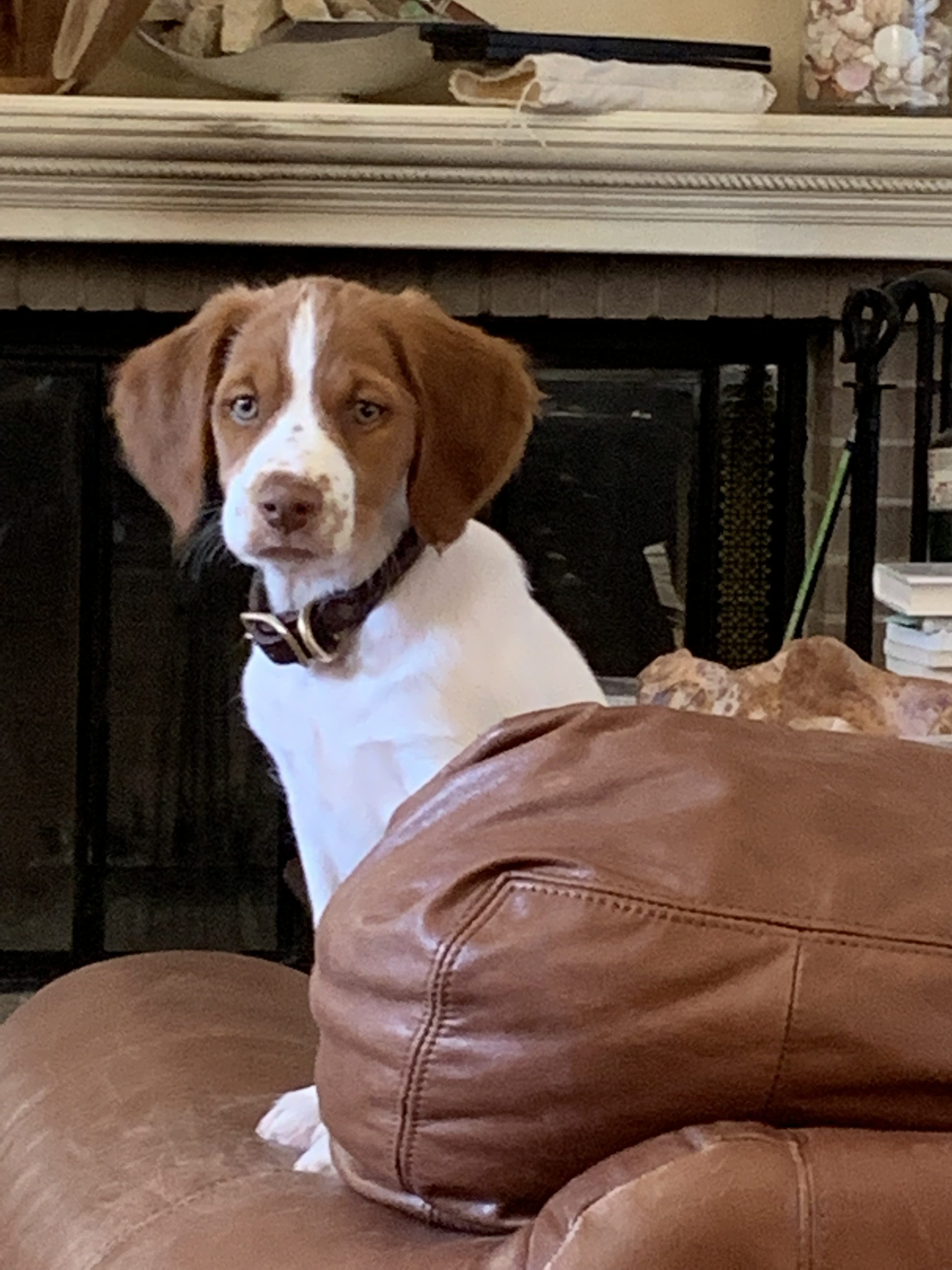
Dam - AFC Sniksoh Evolution ( Eve) Sire NFC Sniksoh Worthy Expense (Spenser) Dawn Droel bought Spencer’s half brother Sniksoh Slippery Slope ( Slick) who is doing well as a show Brittany.Whelped 06/12/2019 I have to learn to spell Deuce all over again, as I continually type Duece. Sire: Sniksoh Worthy Expense ( Spencer ) - Spencer won the ABC Central All Age Futurity. Excellent hunting dog with lots of point, nose, style, and desire to please. Dam: AFC Sniksoh Evolution (Eve ) - Eve has been easy to train. Excellent nose with lots of point. View complete pedigree FC AFC SNIKSOH LITTLE RASCAL GFC FC AFC SNIKSOH SPANKS HANK AFC DECANS BLAZIN BYE Sniksoh Worthy Expense FC AFC SNIKOSH FREE BOY FC AFC MKS MY LIL AMMO FC AFC CHIEFS NUBBINS MY LIL LADY FC AFC SNIKSOH LITTLE RASCAL GFC FC AFC SNIKSOH SPANKS HANK AFC DECANS BLAZIN BYE AFC Sniksoh Evolution FC AFC SNIKSOH FREE BOY FC SNIKSOH SUPER SNOOPER FC AFC SNIKSOH SWEET HERSHEY Duece's Dad Spencer, (far left) A note about field trials and field trial type training of pups with Jeff This is a living memoir and journal of reminders largely for my daughter, who enjoys the bird dog training with me, and she especially the pups which I hope she will continue later in life. We have spent quite a few days afield with Jeff and we enjoy his methods which are very similar to our dog trainer's of 20 years, Gary Ruppel. But they are uniquely his own, which is not surprising as we all pick up things here and
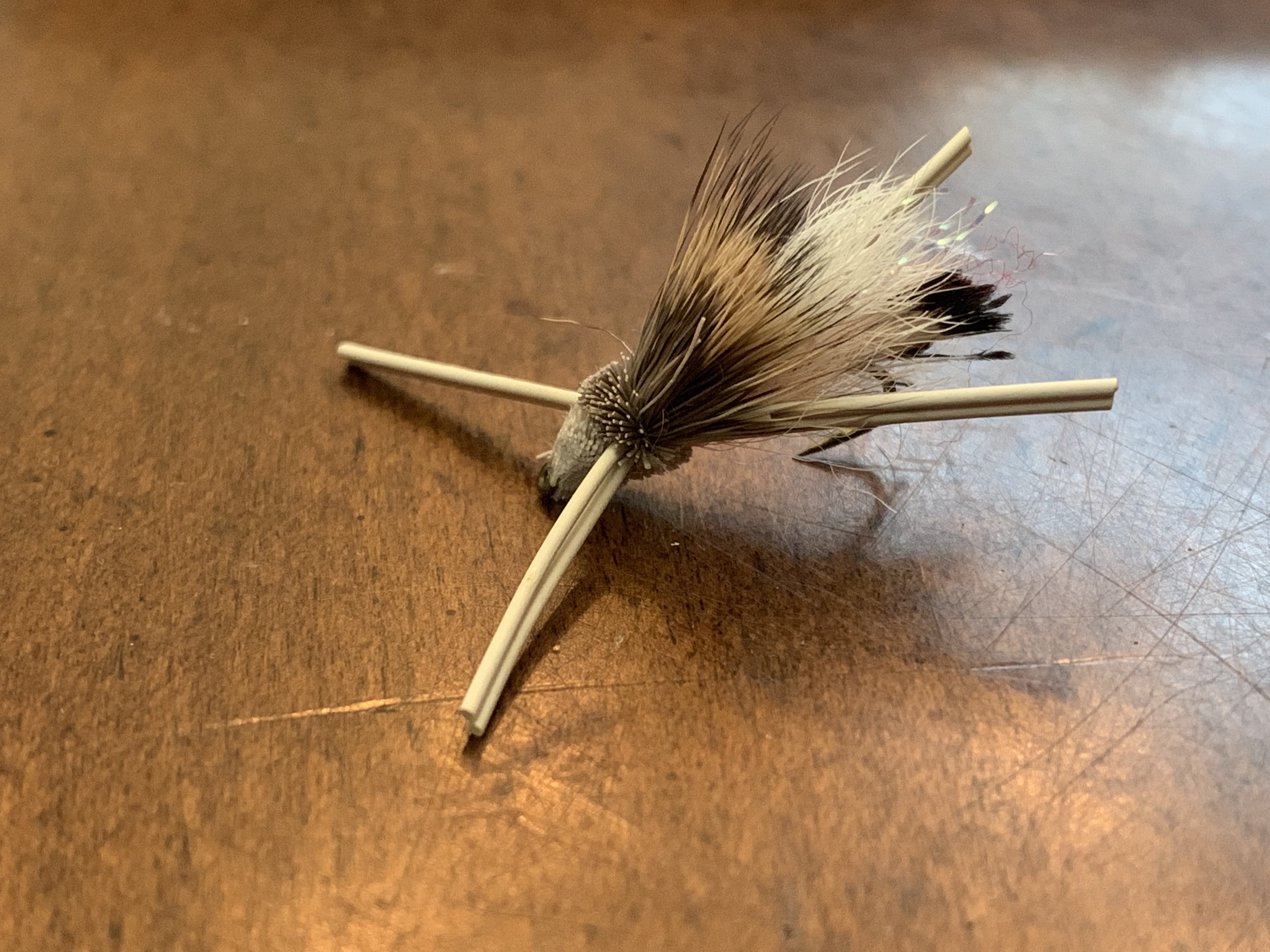
It's funny how time flies and how over time, some flies disappear while others just get repackaged with easier to tie foams, etc. One day, the Madam X is a popular pattern, and then you wake up and it's two decades of Turck's Tarantulas, and now there are dozens of knock-offs including the The Chubby Chernobyl, the Rubber Legged Stimulator, or the Stoneflopper. Thirty years has gone by since the Madam X. Sounds like a country song doesn't it? But, so is life, time passes, things change, some get easier, some just get uglier. And the flies are in essence the same, but have gotten easier to tie with foam replacing spun hair, etc., which not only makes the flies uglier, but much easier to tie. I have to say I am glad I stocked up, back when flies were good looking. One of my favoite flies is Guy Turck's Tarantula. I was one of the first to order it from him from his site back in 1995. In 1990, Guy began guiding float fishermen for Jim Jones’ High Country Flies in Jackson. In August of 1990, while searching for a pattern that improved the durability and visibility of the increasingly popular Madam X fly, Guy developed his clipped deer hair head, rubber leg hopper/stonefly imitation. During a slow afternoon Guy handed his creation to a client, World Bank head Jim Wolfensohn. Noting the fly’s bulky, leggy appearance, Wolfensohn quipped, “What is this thing, a tarantula?” This wonderfully creative fly name stuck like head cement. By September when the Snake’s hefty Classenia Sabulousa stoneflies become active, another guide pal, Shannon McCormick, introduced Guy to master fishing entrepreneur George Anderson of Livingston. Turck gave the “Montana
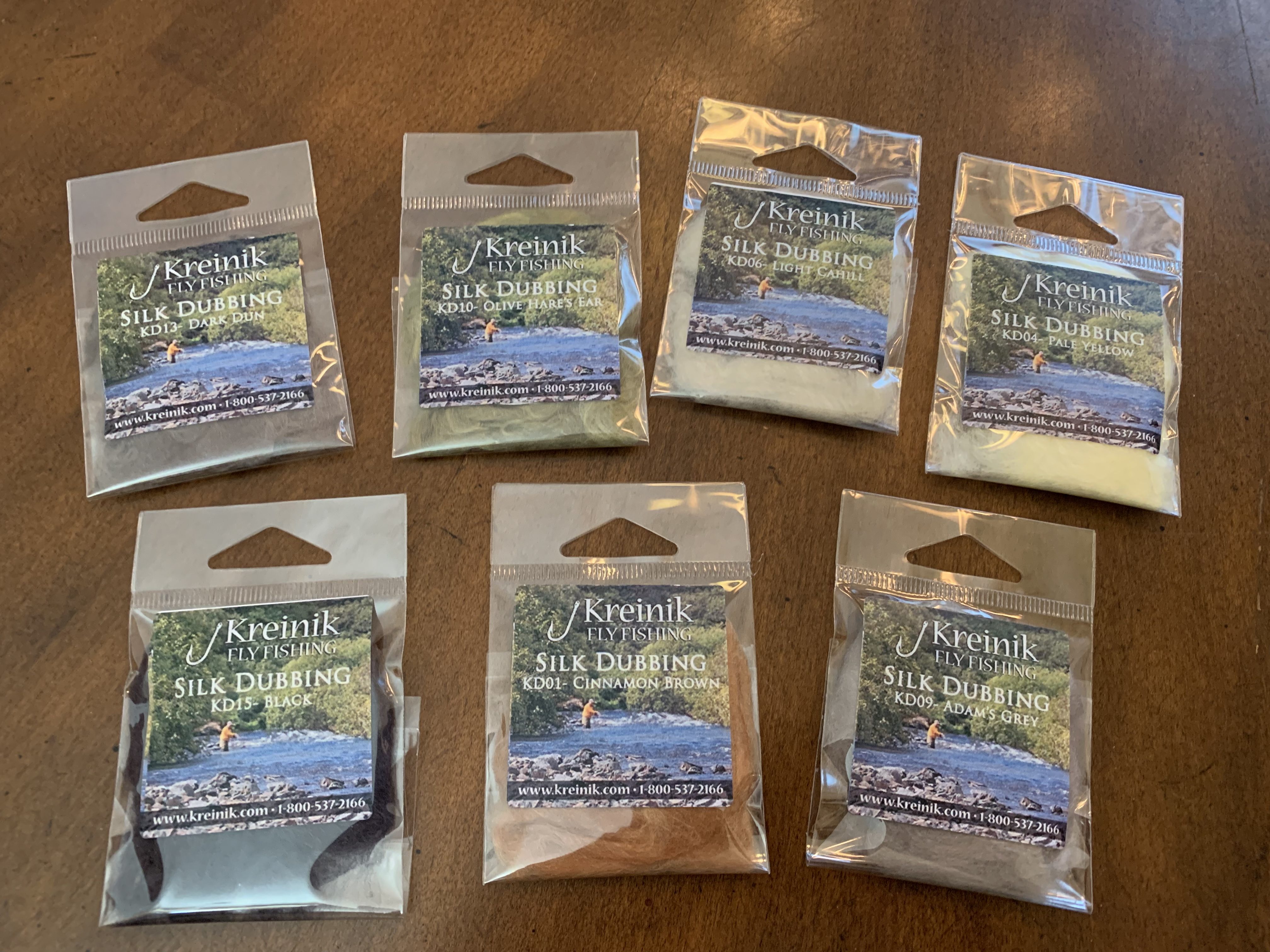
Often times I am asked where do you get the natural beaver fur dubbing dyed in various colors for tying Rim Chung's original RS2? I was surprised the other day when Rim suggested to a guy that he buy silk dubbing. I didn't even know it existed. The problem with commerical beaver dubbing is that the fibers are cut and blended in a blender type machine. This results in a lot of short, coarse pieces that go onto the thread in a big clump. The natural fibers off the pelt, can be 1/2" to even 1" long and they can be aligned vertically with the thread, a few fibers at a time, to form a dubbing rope which is then twisted finely onto the thread. The problem nowadays is there are not many commercial companies offering beaver fur on the pelt, and if it is offered, it is usually only in the natural gray, brown and sometimes black, not the olive, yellow, and tan that Rim also uses. So to check it out, I ordered some Kreinik silk dubbing in the following colors:Adam's Grey Black Cinnamon BrownDark DunLight CahillOlive Hare's Ear Pale Yellow They are nice and fine fibers, with longer strands, perfect for substituting for natural beaver. So if you can't find natural beaver dubbing on the fur, and/or don't have time to dye your own then try some silk dubbing. Kreinik Manufacturing Phone: 1-800-624-1928 Fax: 304-428-4326 URL: www.kreinik.com
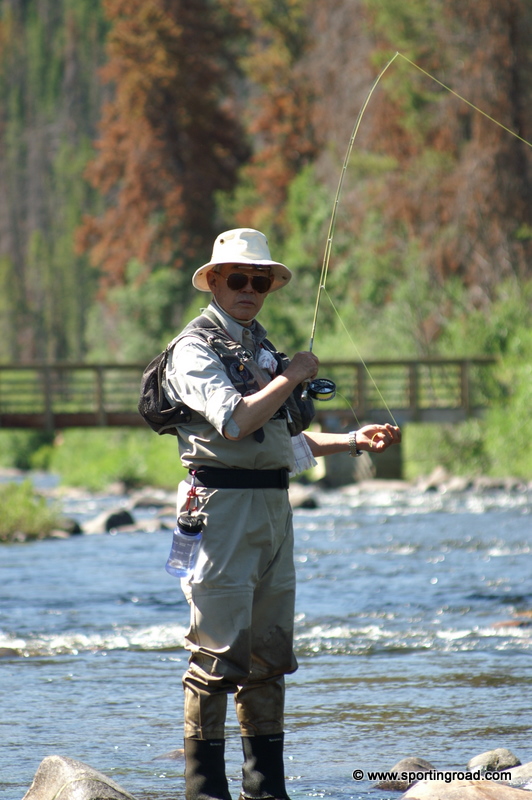
Chung’s RS-II a fishing pearl Rim Chung, originator of the RS-II, remains an active fly-fisherman.By KARL LICIS and SPECIAL TO THE DENVER POST | The Denver Post PUBLISHED: February 2, 2010 at 1:22 pm UPDATED: May 6, 2016 at 5:03 pm When Rim Chung came to America, little did he know he would create what might be the most effective fishing fly ever devised for Colorado’s South Platte River.ADVERTISING Perhaps it was inevitable. When he arrived in Denver in 1968, the elements for development of the RS-II were already in place. First, Chung already was an accomplished fisherman. “I probably had a certain knack for it,” he said, recalling his childhood in South Korea, where he grew up fishing with long, limber bamboo rods for saltwater fish, with live shrimp as the bait of choice. “I was a good fisherman when I was 15.” Equally important, he and his fellow fishermen were inquisitive. They engaged in lively discussions of the fine points of their fishing — the precise best way to place a shrimp onto a hook and exactly how it should be presented to the fish. He brought some pearls of Oriental philosophy, including an observation by ancient Chinese sages that man should strive to be as one with nature, in this case the water, and recognition of a moral responsibility to the effect, “Why disgrace the fish by not learning about it?” Those qualities would serve him well when he took up fly-fishing in 1970, but the main catalyst leading to creation of the RS-II might have been something in his nature that told him the prevailing approaches to the sport were not necessarily the best. “When I do some self-reflection, I think I must have been born an
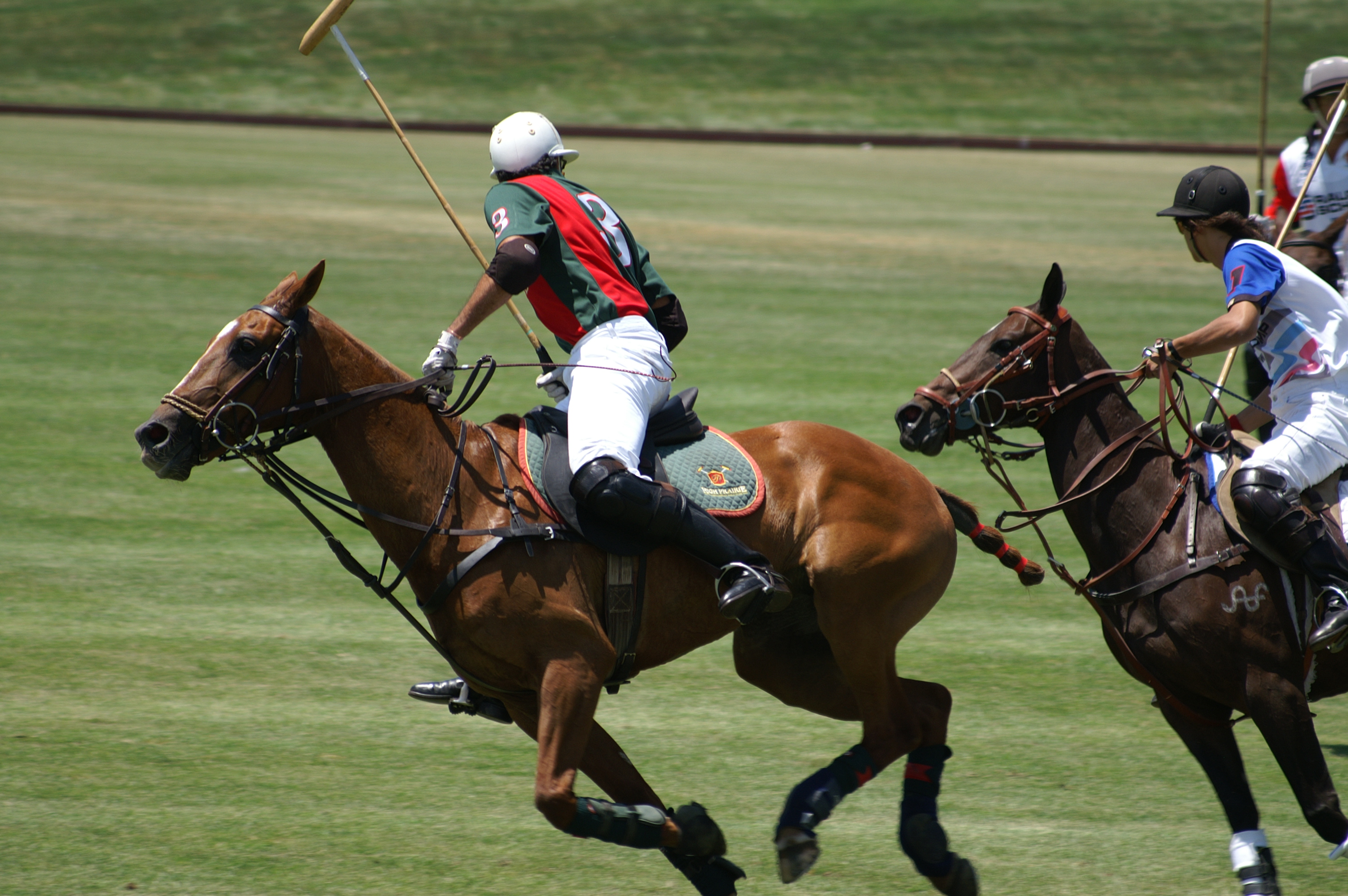
Have a minor repair that is needed on your mallet, well here is the brochure on how to do it yourself from a reputable polo mallet manufacturer.HowToDoItYourselfPoloMalletRepairsDownload
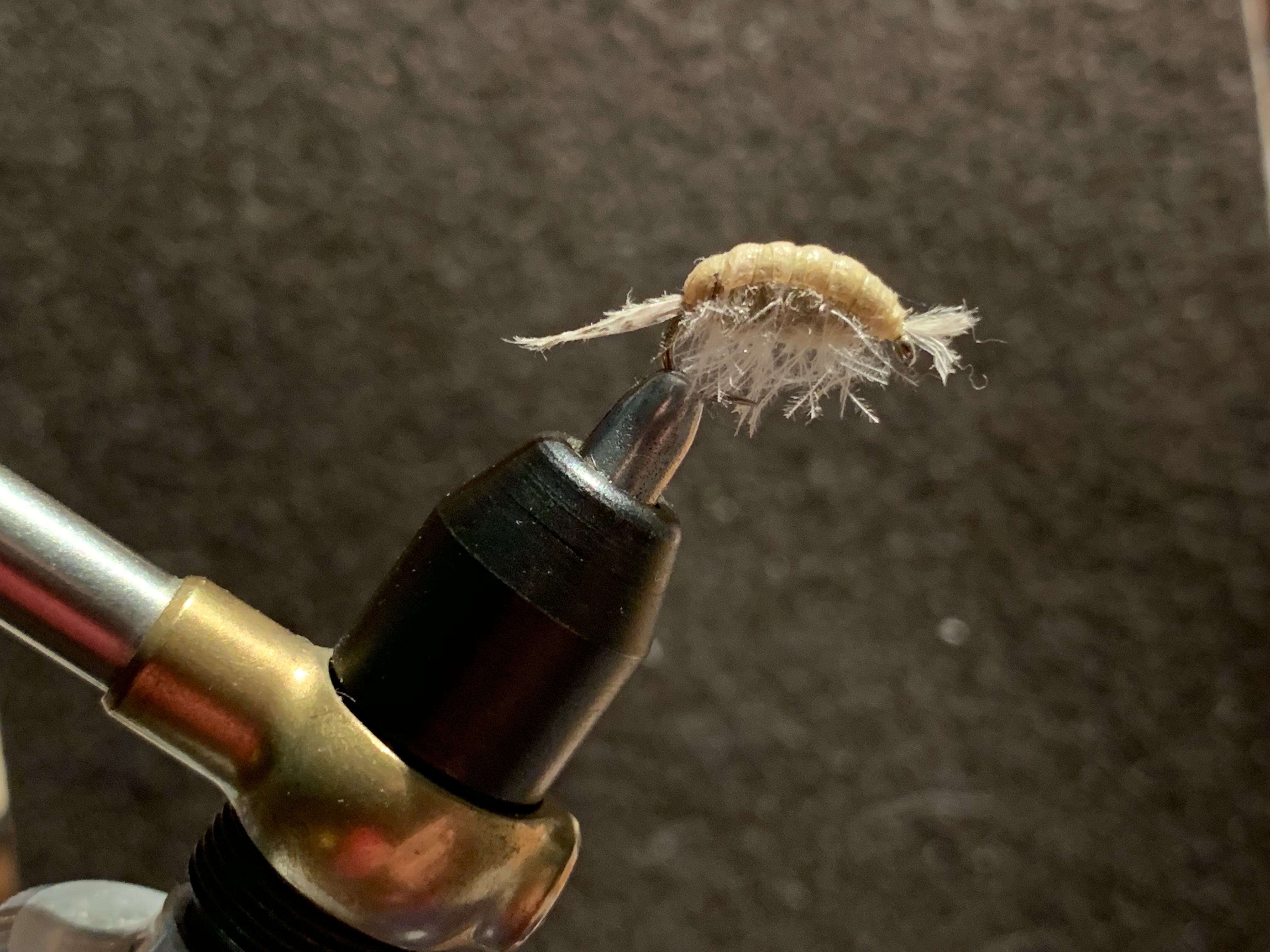
Below is the scud fly tying instructions/recipe by Jeff Goff who was legendary for bringing gallon jars of scuds to a local Denver fly shop that I used to frequent, which he brought in his vehicle all the way down from Grey's Reef, Wyoming, just to show how many were in the river during a few minute seining session he had done. It was a gallon jar and it looked like there were a million grayish scuds in it. To date, Jeff Goff's Scud is still the most realistic scud pattern I have ever seen, for when the fly was thrown in that jar of scuds, you couldn't find it (a trick he liked to perform at the shop after tying one of his flies). Many more realistic plastic looking patterns have developed over the years, but they don't look the same in that jar with the naturals, as Jeff threw a few others in the jar from the fly shop's bins. It's been over 25 years since those days, and I was sad to see that Jeff had passed away as I attempted to research what he was up to these days for this article, as I am grateful for this fly which has served me well throughout the Western states. I often fish it as the upper fly with the RS2 as the lower fly. He also devised a very cute little lady bug, which I never caught any fish on, but it was a fun little pattern to give away to friends. Jeff Goff's Wyoming Scud Hook: Dia- Riki 135 scud Size 12Tail mallard flank fibers at 1/8” or so, yellow thread light CahillScud back light grayLead weight, tie in at eye
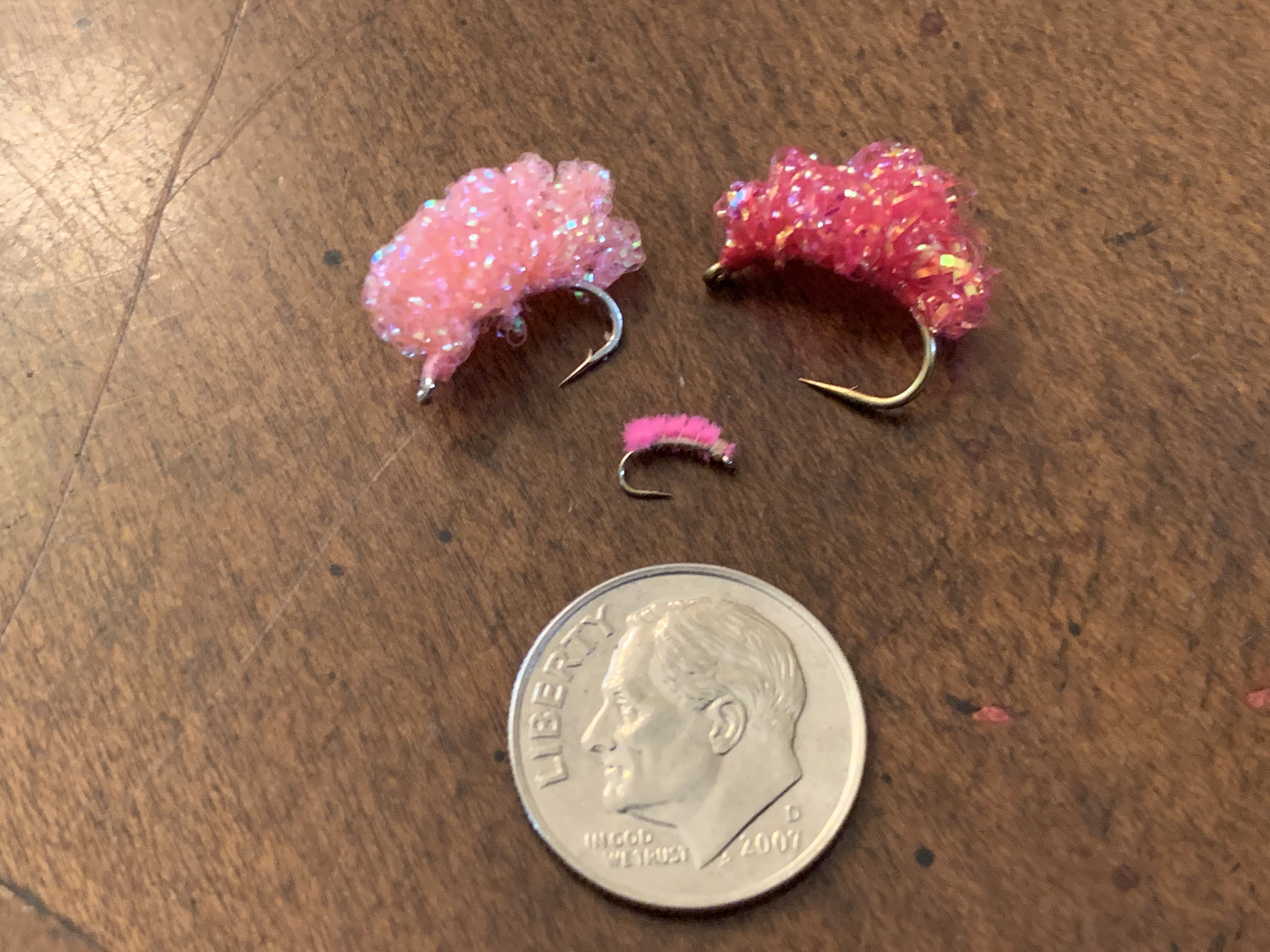
Our daughter is going crazy over pink flies. Here’s one of her favorite new patterns. Pink Crystal Meth: The Crystal Meth or Sucker Spawn is a another pattern that was originally designed for Great Lakes Steelhead fishing and now used a lot in the Northwest and Alaska. The flash in this pattern makes is especially effective in off-color water. Also a great fly for trout in high water conditions. Hook Daiichi 135, size 12 Pink Veevus 8/0 Thread Fluorescent Pink or Fluorescent Shrimp Pink diamond crystal braid
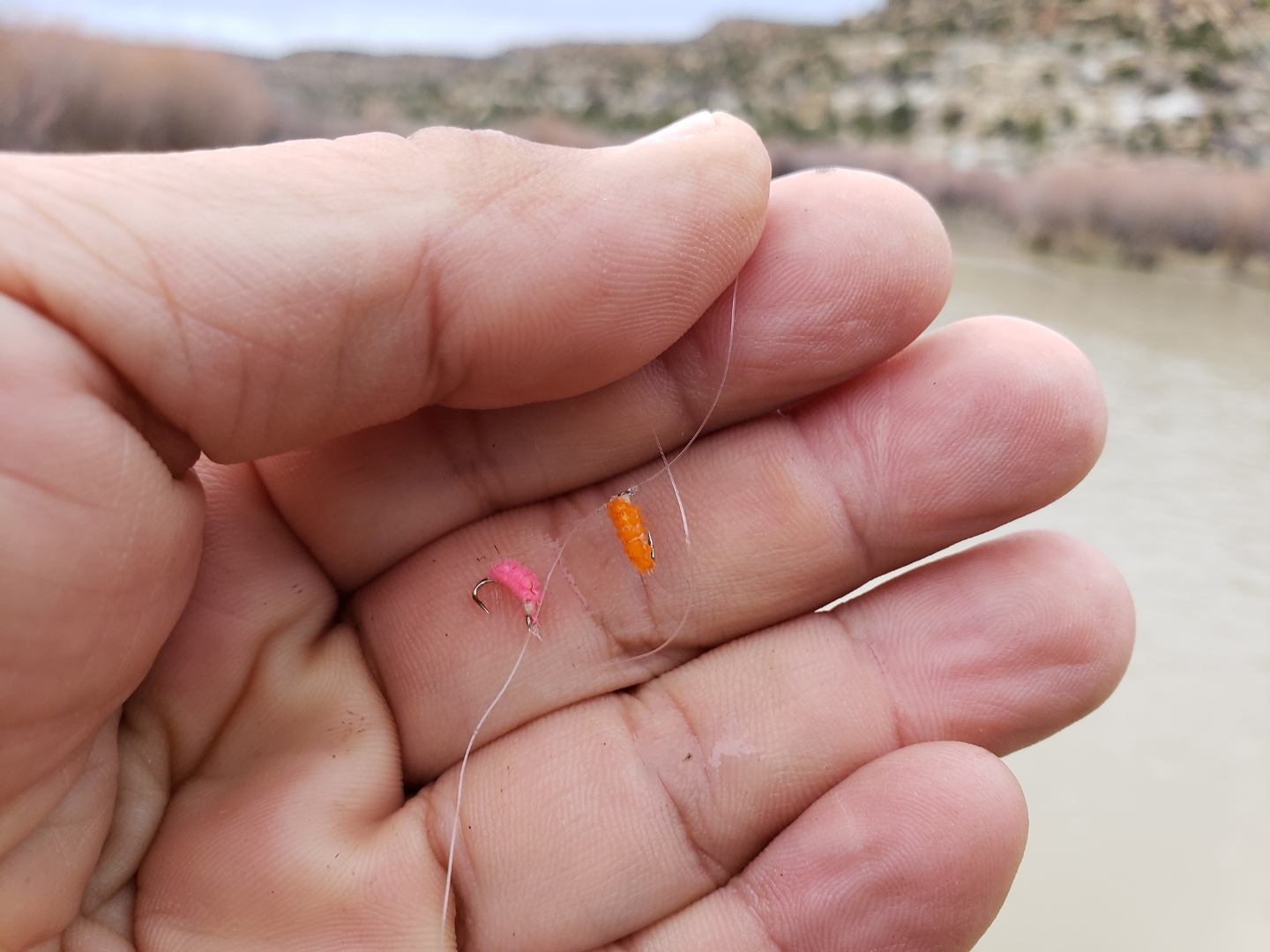
One of our favorite hook companies, at least for scud and streamer hooks, has discontinued business as a hook manufacturer. It was a less expensive alternative to Tiemco/Umpqua hooks, and was better for scud hooks as the hook was offset to the eye, which improved hooking performance. Now we begin the search for a substitute, as there are many new hook manufacturers entering the market in the last few years. We loved the Dai-Riki 135 for my daughter's favorite fly.
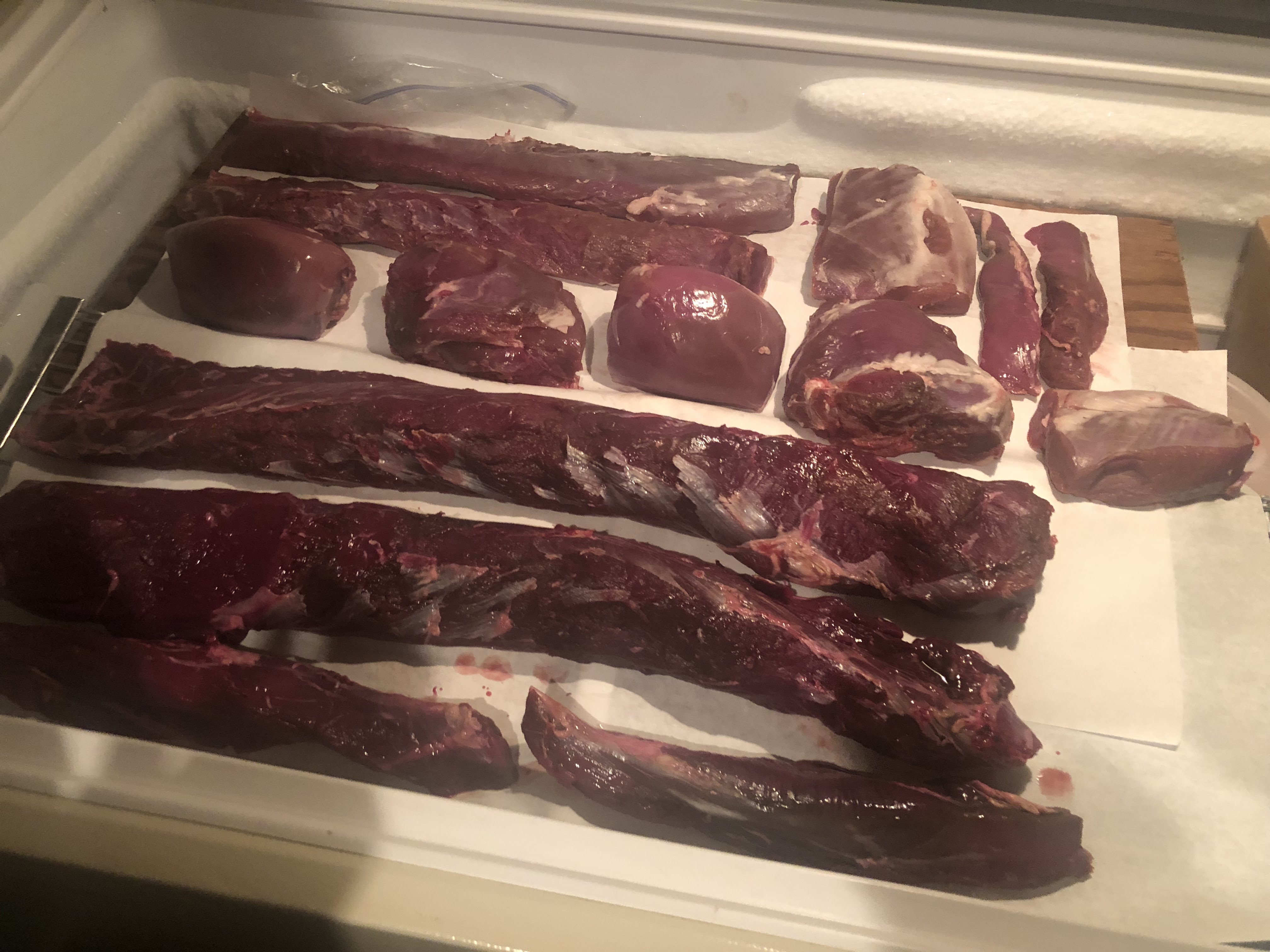
I read a recent article by David Draper on "The Perfect Game Meat to Fat Ratio is None at All - Stop adding fat to your healthy ground game meat, you don't need it." Draper writes: I've been processing my own (and others) deer and elk for about a dozen years and view adding some type of fat to ground venison as a necessary evil. I prefer ground pork, adding anywhere from 10 to 20 percent. Due to a calculating error on my part... the grind ended up at about 25 percent pork, a bit more than preferred. You don't need to add fat to your ground game meat to make it taste good. This math problem set me to wondering why hunters take a healthy source of protein and fatten it up? That's like someone on a diet taking a carrot stick and dipping it in ranch dressing. Quick research shows no clear consensus on what or how much fat to add. Some hunters swear by 50/50, others just 10 percent. Some like pork, others beef tallow. Some add bacon ends and pieces. Certainly, there's a rationale to adding fat, including enhancing flavor because, hey, we all know fat tastes good. Fat also keeps meat from drying out when you fry it and helps patties from falling apart. But is there a better, healthier alternative? Yes, depending on how you're planning to cook it. Burgers on the grill are probably how much of the ground venison in America makes it to the table. I'll be the first to admit, making a good burger without fat sounds impossible. The fat not only makes a burger juicy, it also helps it stay in patty form. Next