Sporting Road

Home/Sporting Road

About Sporting Road

This author has not yet filled in any details.
So far Sporting Road has created 490 blog entries.

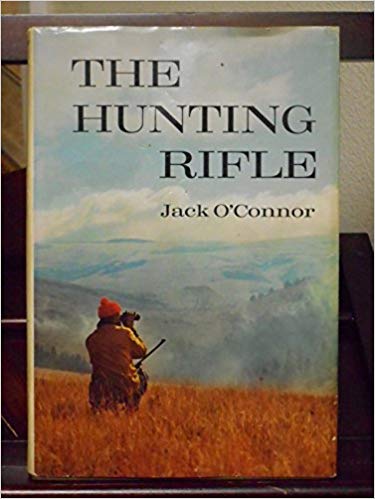
Reading the Legendary Library Left by Sportsman Jack O’Connor

In 1902,  Jack O'Connor, this country's foremost gun and hunting writer was born and he died in 1978 just two days short of his 76th birthday, was born in Nogales, Arizona, where he grew up in what he fondly described as "the last frontier." It's interesting that fellow outdoor writing legends Jim Harrison and Jim Fergus have settled in and around Nogales in more recent generations.  Being a prolific reader, I have made it a goal this year to read all of his books, after owning a half dozen of his best known best know books for over 20 years now. Jim Casada of Outdoor Life, https://www.outdoorlife.com/articles/jim-casada/2007/09/remembering-jack-oconnor writes this about O'Connor: O'Connor was the product of a hard land and a difficult childhood. His parents drifted apart and then divorced when he was quite young. Fortunately for O'Connor, his maternal grandfather, James Woolf, was a key formative influence during O'Connor's boyhood and saw to it that the youngster had ample exposure to the outdoors.  "Bird hunting was grandfather's dish," O'Connor would reminisce in one of his literary works. Woolf, who hunted birds with a vintage Purdey, endowed his youthful protage with a sense of style and an appreciation for fine guns that would be reflected in O'Connor's writings.  From O'Connor's mother, who was a teacher, came a recognition of the importance of education. Following a short stint in the Army, O'Connor pursued undergraduate studies at Arizona State Teachers College and the University of Arizona. A few years later, after earning a master's degree in English from the University of Missouri, O'Connor married Eleanor Bradford Barry. Theirs would be a marriage marked by mutual devotion, countless wonderful days spent afield together and the rearing of four children. After he
By |July 11th, 2018|Categories: Uncategorized|Comments Off on Reading the Legendary Library Left by Sportsman Jack O’Connor

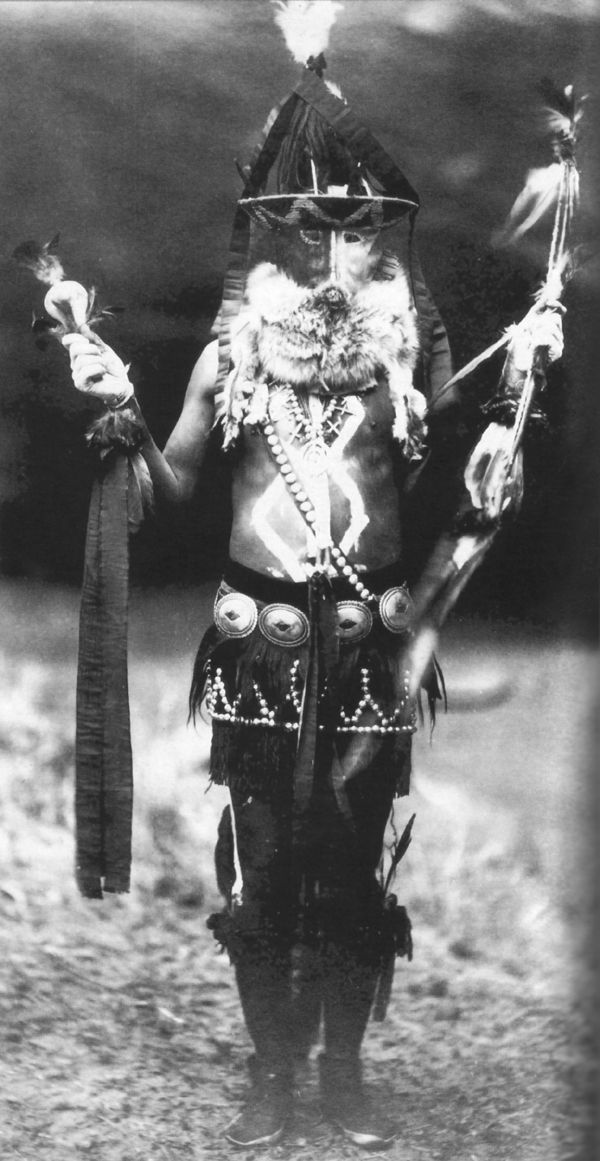
Navajo Medicine

From http://www.twinrocks.com/legends/168-medicines.html His father had shown him how to cut the stems with an ancient flint blade from the sacred medicine bundle and to sprinkle pollen which in itself was a prayer. His gather had told him too that flowers have power, that they belong to Mother Earth and that they should never be broken without a purpose. He knew that "purpose" meant "ceremonial," that the plants were as important to a chant as were prayers, songs and sandpaintings, that their uses had been decreed when the Navajo were created, and that the decrees were irrevocable. Dezba: Woman of the Desert; 1939, Gladys A. Reichard.The so-called Mormon tea or Brigham tea is a mountain bush that grows on high slopes. There are two kinds: one of yellowish green and the other of purplish green. On a few occasions our camp had a Mormon cook who knew not only how to prepare food well, but also a great deal about plants and animals. I had the opportunity of drinking some of this tea prepared by him. When it is brewed from the fresh plant, it has a n astringent taste; otherwise it tastes like sarsaparilla and is quite pleasant. The plants should be dried in the sun and then boiled for ten to fifteen minutes to make the tea. Our cook told us that Brigham tea grows at higher levels to get away from sheep! All animals are very fond of it. When suffering from distemper, horses and cattle develop a great craving for it. The Early pioneers, while crossing the desert, found that it made a good drink, and considered it Heaven-sent. There is even a patented concoction made from this herb and sold today over

By |July 10th, 2018|Categories: Uncategorized|Comments Off on Navajo Medicine

Navajo Horses of the Sun

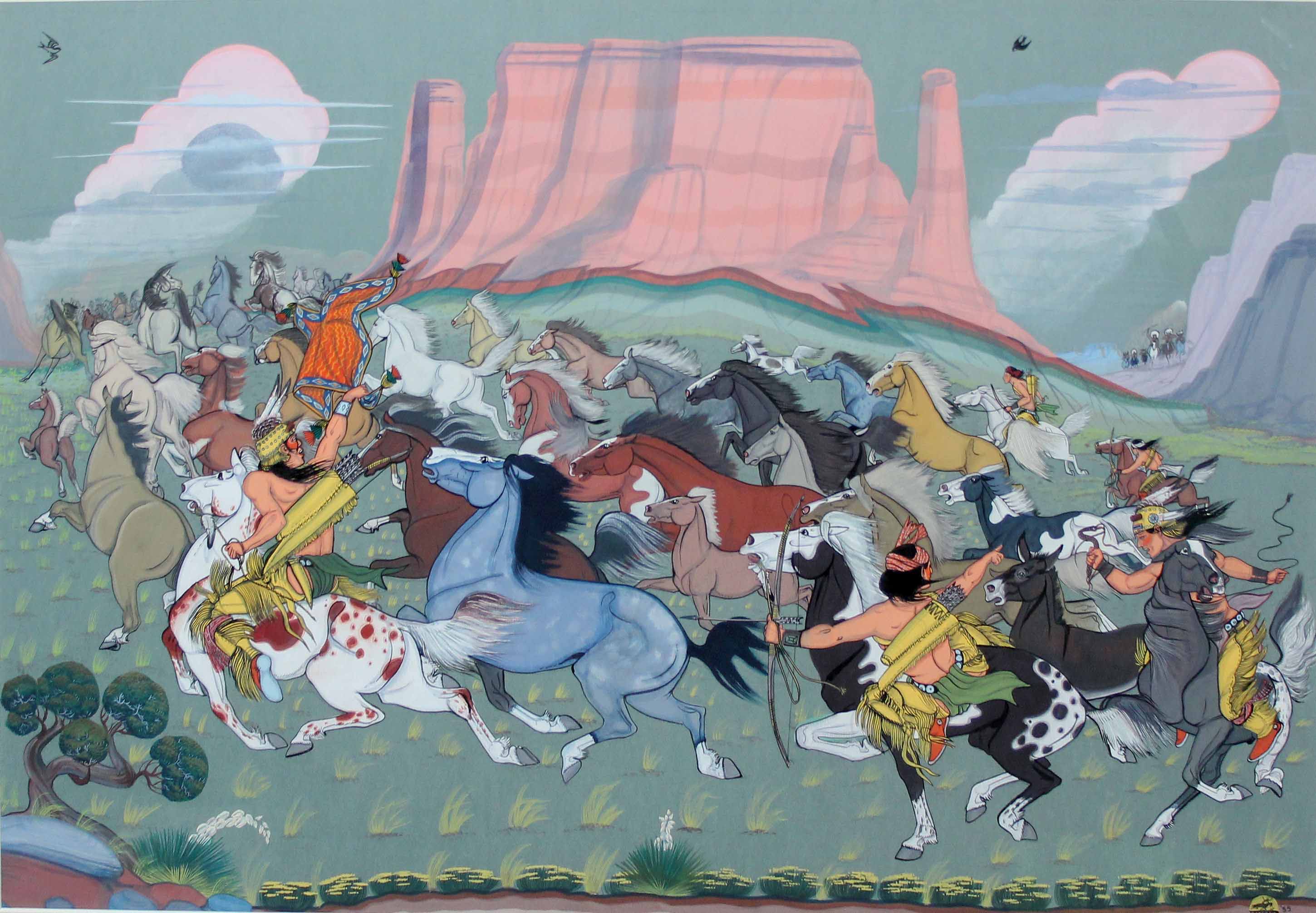
Much has been written about the Horses of the Sun in Navajo mythology. Look up a Navajo legend about horses and you’ll find a version of this story. Johano-ai, the Navajo Sun God, starts each day from his hogan in the east, and rides across the skies to his hogan in the west, carrying the shining golden disk, the sun. He has five horses: a horse of turquoise (blue), a horse of white shell, a horse of pearl shell, a horse of red shell, and a horse of coal. When the skies are blue and the weather is fair, Johano-ai is riding his turquoise horse or his horse of white shell or of pearl; but when the heavens are dark with storm, he has mounted the red horse, or the horse of coal. And a further interpretation of the colors is found in this accounting: The five horses of the Sun Father are a way of telling time, Navajo style. White shell and pearl horses represent dawn, turquoise is noon, red shell is sunset, and jet or coal is night. 1952, King of the Stallions, print courtesy of Charnell Havens

By |July 9th, 2018|Categories: Uncategorized|Comments Off on Navajo Horses of the Sun

Silver – Coin, German and Other Types

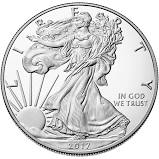
Silver: Coin, German & Otherwise Let's get this out of the way up front, we are talking about three hundredths of one percent between sterling and coin silver.  That isn't much, so what is the big deal? In her 1936 pamphlet on Navajo silver, Margery Bedinger gives three lengthy paragraphs—half a page—to explaining the difference between sterling silver and coin silver. She states, “This difference is too small to greatly affect the properties of the alloy...” (1936:15) Having said that, she spends two and a half more paragraphs discussing the two different alloys. But she asserts that the difference is “…a fact that becomes significant when one is trying to date an old piece of jewelry, for the two sorts of money have different colors and take on a different luster when made up and so can easily be distinguished by the expert.” (1936:16)  John Adair, writing just a few years later, claims that the actual working of the silver, like annealing, will affect color. He concludes, “Therefore, individual pieces can never be dated accurately on the basis of color.” (1944:29) It is true, however, that silver and nickel oxidize differently. Nickel turns skin green, silver turns black, and nickel seems to oxidize faster. But immediately after buffing it is difficult to tell them apart. I use the sound method—nickel has a tinny sound when dropped on a glass display case. Most writers simply add to the confusion: Mexican pesos were supposedly purer silver and thus easier to work. According to coin dealers this is not true: Coin silver was almost the same in both countries (U.S. .900, Mexico .903) until the Mexican Revolution of 1910 when Mexican coins gradually contained less and less precious metal. It

By |July 2nd, 2018|Categories: Uncategorized|Comments Off on Silver – Coin, German and Other Types

Stampede Strings, Bolo Ties, and Wild Rags

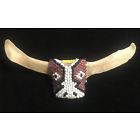
Stampede Strings & Bolo Ties Adapted from the Perry Null Trading Company newsletter The bolo tie has nothing to do with the Argentine throwing weapon that consists of three round stones tied together with leather thongs. With that thing around your neck you were in trouble. It was also not invented by some fellow in Arizona with a good imagination in 1940 something. In fact, the bolo tie has been around in some form for many years.  For white consumption the original form was known as a stampede string. In the 1850’s inmates in Deer Lodge Prison were braiding them out of horsehair. It was time consuming, which was probably the idea. The cord went around the crown of the hat and though the hat with two small holes. The hanging cords were joined together with a slider, also made of hair. The tips were two large fluffy tufts of hair hanging from the cord ends.  In a stampede or a tornado the cord was snugged up under the chin with the slider. It might not keep the hat on your head, but it did keep the darned thing on your person. A similar cord—gold—went around the brim of the hat of a cavalry officer. The next development was also part of the cowboy’s dress. The scarf—bandana, neckerchief and 17 others, some not fit to print—was a common item of dress. It was pulled up over the face when riding drag, eating the dust of the herd. Or robbing a bank if that was your thing. The tie slide is faster to slip off.  The Zuni version was pretty early. Sheep vertebrae have a hole the right size for the purpose. The earliest ones were painted, then came

By |July 2nd, 2018|Categories: Uncategorized|Comments Off on Stampede Strings, Bolo Ties, and Wild Rags

Top Hats

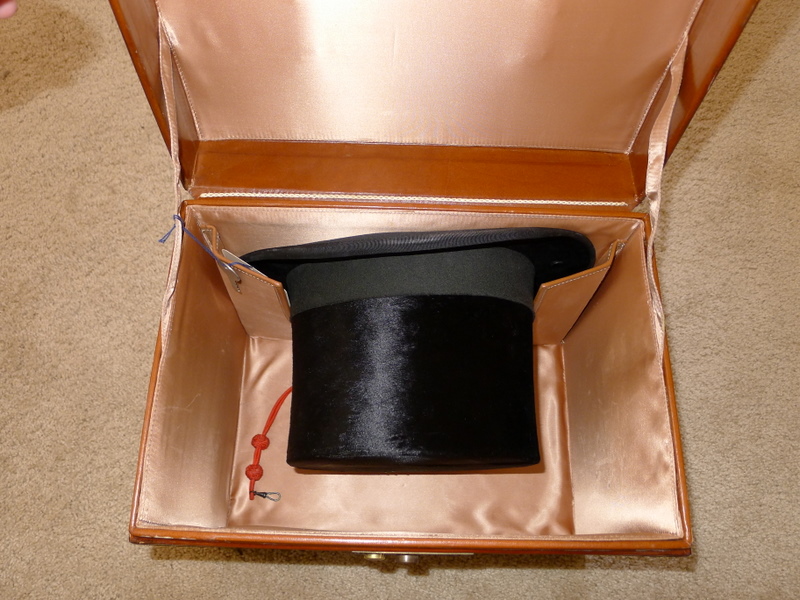
Leading the Glamorous Life without Love It Ain't Much Top This . . . The story of Top Hats Adapted from an article by Ms. Lou Carver There has never been a more sophisticated and dominating hat in fashion than the top hat. When the first top hat was worn by the haberdasher John Hetherington in 1797, it caused a near riot. According to a newspaper account, “passersby panicked at the sight. Several women fainted, children screamed, dogs yelped, and an errand boy’s arm was broken when he was trampled by the mob.” So Hetherington was taken to court for wearing “a tall structure having a shining luster calculated to frighten timid people.” What Hetherington designed was a modified riding hat of the day, widening the brim and lengthening the top area. In 1823, Antoine Gibus came along and modified it even more to a collapsible opera hat; which made traveling with it much easier and during the opera could be stored flat, under the seat. It was not until 1850 that the top hat really took off when Prince Albert starting wearing it in public and it became the fashion rage. The Victorian top hat was really making a statement, not merely being worn as part of a costume. Gentlemen were simply saying they were important and classy. By 1900 the top hat was made with silk and worn only for special occasions, such as weddings and dances, as we commonly see it worn today. However, there was a great top hats resurgence in the 1930s when Fred Astaire, Gary Cooper, Marlene Dietrich and others, brought it back in favor with motion pictures. Every affluent American had a top hat and black tie and tail.

By |June 28th, 2018|Categories: Uncategorized|Comments Off on Top Hats

Silk Fly Lines

I was recently given a silk line line, which I am going to try out on the three bamboo rods which were gifted to me by Rim Chung and Gary Dewey.  Ever since 2013 when Scientific Anglers was purchased from 3M by the Orvis Company, based in Manchester, Vermont, the first ownership change for Scientific Anglers in decades, their lines have gone downhills and Rio and others have come up. This sale lead to a complete rebranding of the company, with a new color scheme, new logo, and new packaging.  Sometimes, in faces of change, we need to return to the old, as well as trying some of the new.  Silk fly lines are one of the originals behind horse hair lines. It’s extremely difficult, if not impossible, to tie your leader to the line with a nail knot or similar connection, since the tip of the silk line is much finer and more flexible than the butt of your leader.  So, superglue is often applied to assist in the holding of the knot. On the other hand, I have discovered that I can turn over even very long leaders using leaders with a butt diameter of only .015 or even .013. Many old fly fishing books have illustrations that contain directions for attaching leaders to silk lines. I have found that a tiny loop spliced in the end of the line, and a perfection loop in the butt section of the leader is the perfect solution. This is not only convenient for attaching leaders, but for reversing the line on the reel. Cleaning and dressing a silk line is not the onerous burden modern line makers would have you believe. Examining any line imperfections

By |June 28th, 2018|Categories: Fishing|Comments Off on Silk Fly Lines

Epsom Salt

Top 10 Health Benefits of Epsom Salt From https://www.top10homeremedies.com/kitchen-ingredients/top-10-health-benefits-epsom-salt.html Epsom salt has numerous health benefits as well as many beauty uses. It is made up of the chemical compound magnesium sulfate. Magnesium, one of the components of human cells, is required by the body to regulate more than 325 enzymes and plays an important role in many bodily functions. Magnesium deficiency has also been associated with health problems like high blood pressure, osteoporosis and migraines. Sulfate plays a key role in the formation of brain tissue and improves the body’s absorption of nutrients. It also helps in the detoxification process. As magnesium sulfate can be absorbed through the skin, enjoying Epsom salt baths on a regular basis is an easy and ideal way to enjoy the health benefits of Epsom salt. Epsom salt also can be used topically or taken internally. Here are the top 10 health benefits of Epsom salt. 1. Eases Stress Epsom salt can help you calm down when you are feeling stressed. Stress drains the body of magnesium and increases adrenaline levels. Magnesium plays an important role in the release and uptake of serotonin, a mood-elevating chemical in the brain. This creates a feeling of well-being and relaxation while also reducing anxiety, irritability, insomnia and abnormal heart rhythms. Add 1 cup of Epsom salt to warm bath water. Soak in it for 20 minutes to feel more relaxed and sleep better. Take an Epsom salt bath about 3 times a week to enjoy a stress-free life. 2. Aids Detoxification Epsom salt can assist in eliminating toxins from the body. The magnesium in Epsom salt is required for detoxifying cells. It also helps detox the body of environmental contaminants that can potentially cause ill health.

By |June 28th, 2018|Categories: Uncategorized|Comments Off on Epsom Salt

How to Talk to Anyone

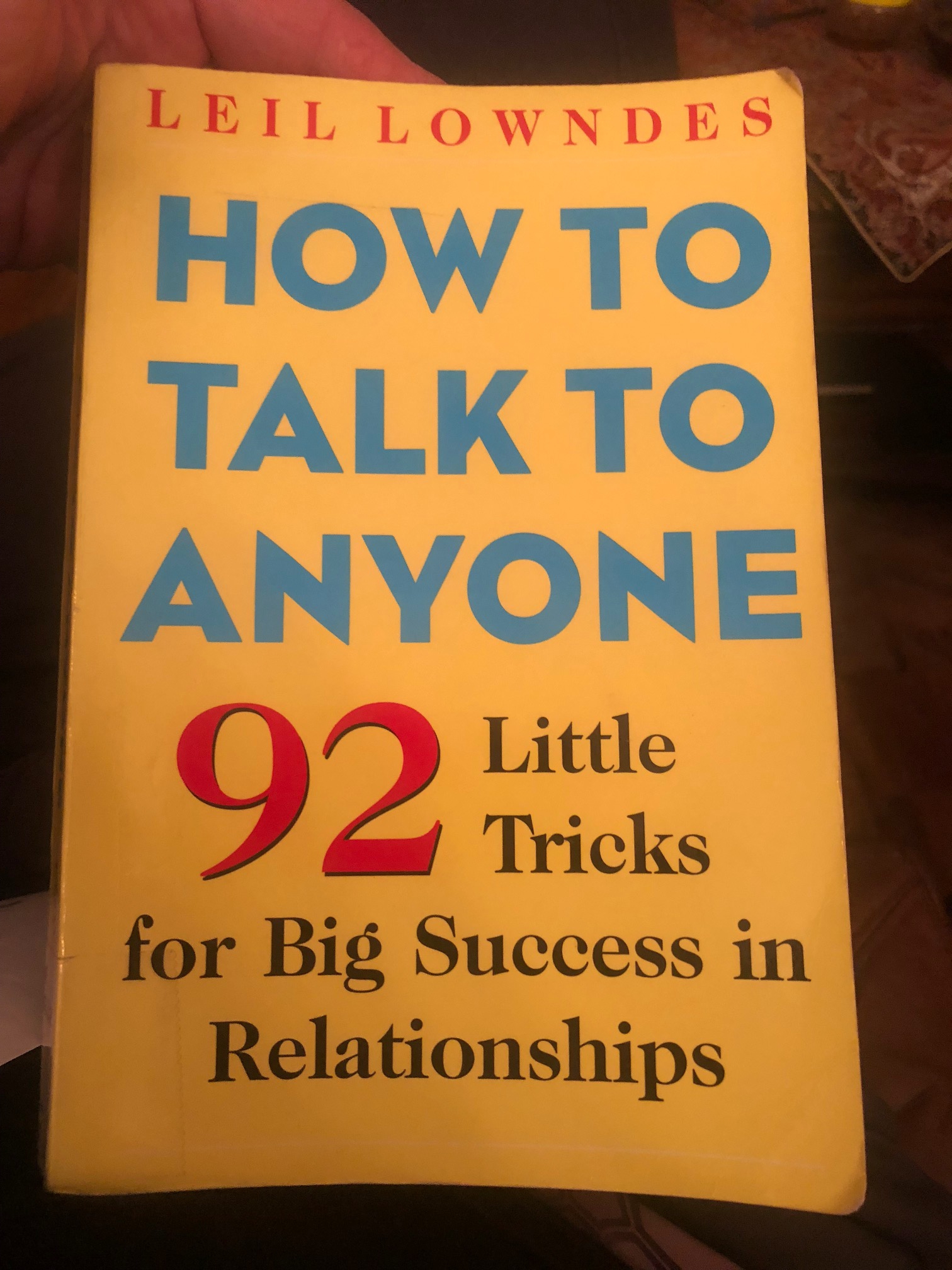
This was an excellent book for anyone who wishes to improve their ability to communicate in person with real people, an essential skill in life that many are lacking. Maxims – Hold solid eye contact with everyone as much as possible. – Speak with sincerity and passion Notes The way you move is your autobiography. Part 1: How to intrigue everyone without saying a word You only have 10 seconds to show your somebody First nine techniques–come across as a special person without saying anything Smile big at the right time. Women who were slower to smile in the corporate world are perceived as more credible. The flooding smile: when meeting someone, don’t smile right away. Pause for a moment, then let a big flooding smile go over your mouth and eyes. This will give them the impression that the smile is more genuine Use your eyes–strong eye contact gives the impression of respect and affection. It also gives the impression of being an abstract thinker. The sticky eyes technique: hold your gaze as much as possible. When talking about personal matters with another men, hold your gaze a little less. The epoxy see eyes technique: hold gaze on the subject even when another party is speaking. Conveys intense confidence and interest in the subject. Use with caution. Watch your posture whenever you walk through a doorway. Hold your head high, your shoulders back, and your torso out. This will convey confidence and command respect. the big baby pit it-turn your full body toward a new acquaintance and smile Hello old friend-pretend that the person you are meeting is an old friend When you act as though you like someone, you actually like the more.

By |June 26th, 2018|Categories: Book Reviews|Comments Off on How to Talk to Anyone

12 Rules for Life-And Lessons on Being Positive

I was going to write a review on this excellent read, 12 Rules for Life, but this review from Amazon about covers it all. ByAlex on January 23, 2018   Jordan Peterson is a beacon of light in this chaotic world, a psychologist whose writing combines science and common sense. One of his talents is his ability to articulate complex ideas to a wide audience. Regardless of whether you have a background in psychology or not, you will understand this book. It covers his twelve rules for life, which are intended not only as a guide for life of the individual, but as a remedy for society’s present ills. Peterson believes that the cure for society starts with curing the individual, the smallest unit of society. Peterson’s well-known advice to clean your room is a reflection of the truth that if you can’t even manage the most basic and mundane responsibilities of life, then you have no business dictating to others how to fix society. One of the main themes of this book is: Personal change is possible. There's no doubt you can be slightly better today than you were yesterday. Because of Pareto's Principle (small changes can have disproportionately large results), this movement towards the good increases massively, and this upward trajectory can take your life out of hell more rapidly than you could believe. Life is tragic and full of suffering and malevolence. But there's something you can start putting right, and we can't imagine what good things are in store for us if we just fix the things that are within our power to do so. The 12 Rules for Life: In Peterson’s own words, it’s 12 rules to stop you from being

By |June 26th, 2018|Categories: Uncategorized|Comments Off on 12 Rules for Life-And Lessons on Being Positive