Sporting Road

Home/Sporting Road

About Sporting Road

This author has not yet filled in any details.
So far Sporting Road has created 490 blog entries.

Ferenc’s Desparado Flies

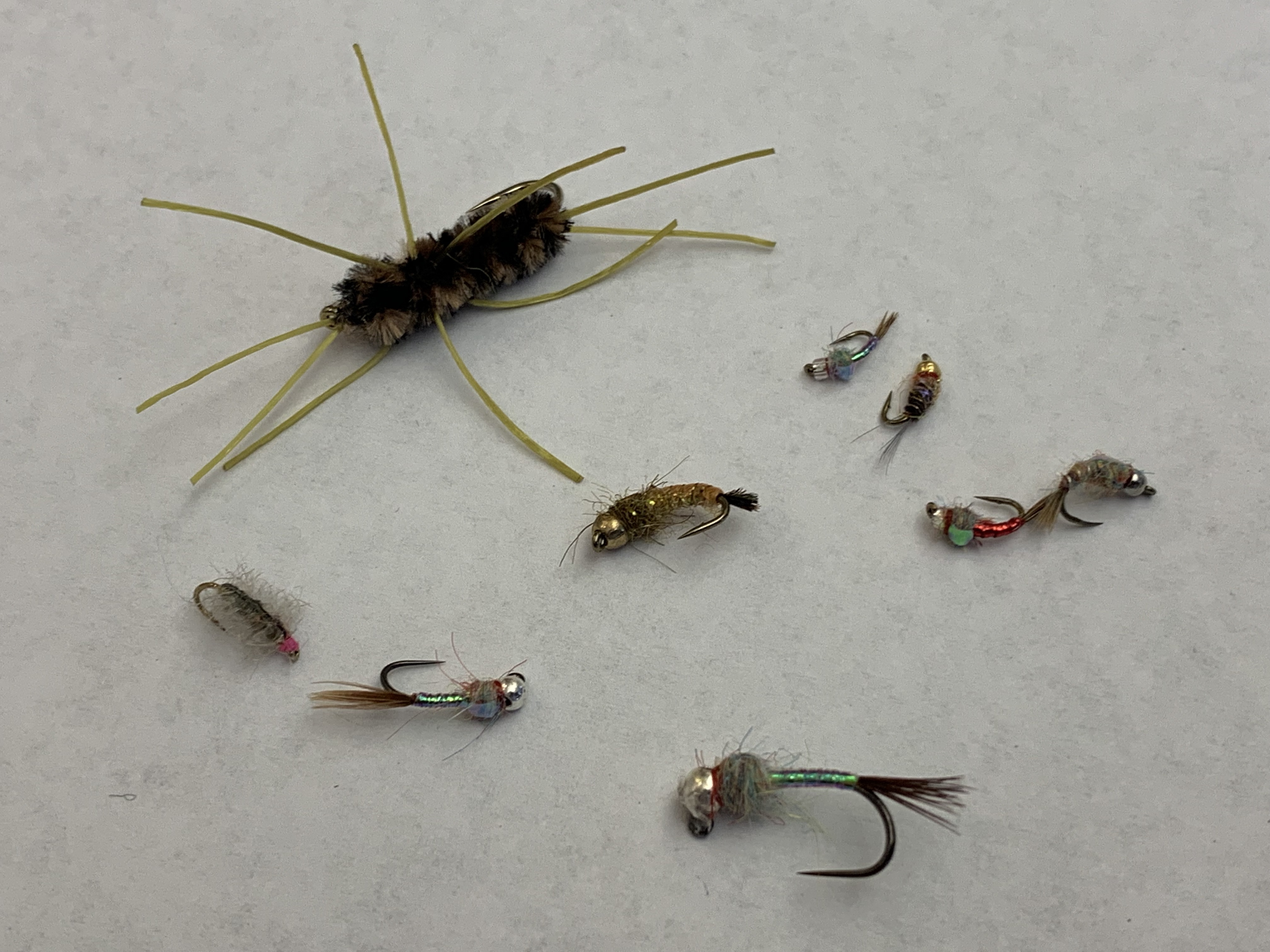
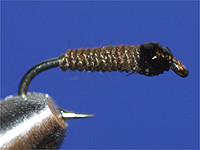
My fishing buddy Ferenc has been on a 20+ year long succession of playing around with attractor type flies, in addition to being one of Rim's students in the nymphing methods of the RS2. His obsession for Desparado flies started with his Desparado fly. Ferenc's new favorite attractor fly for spring high water conditions is the Finlayson's Dirty Politician, which has been deadly for Euro Style nymph fishing across the pond and here in the West, especially in Montana. I recently jumped on the bandwagon and started tying the Dirty Politician in pink and orange. We have had days where it is hugely successful and other days where it didn't work at all. But it is definitely a keeper for the upper fly in my two fly system with an RS2 as the dropper. Ferenc has played around a lot with Lance Egan's flies and the whole "tactical fishing" arsenals. Some are effective, others not so much. We like to use the Dirty Politician as an attractor fly at the river below one of our mountain reservoirs when the flow is very high, fishing near the bank. It might be taken for a sow bug or scud, by the lake trout, browns, rainbows and salmon that anglers come to take in the spring high runoff period, where the fish are seeking refuge along the banks. Whatever the fish take it for, it’s deadly when the water flow is high. Dirty Politician Fly Here's Ferenc’s recipe: - Firehole 516 Jig Hook, size 14 (or similar jig hook such as Umpqua U-Series U555 Jig Hook which I prefer as it is not barbless. I have also used TMC 3769 which has a straight shank and I actually
By |June 11th, 2019|Categories: Fishing, Fly Tying|Comments Off on Ferenc’s Desparado Flies

Useful Remedies for Your Horses

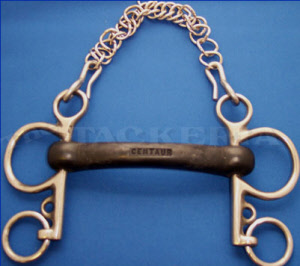
Most of our kit of remedies are based on veterinary advice we have received over the years. Consult your own veterinarian, but here is what works for us and our horses: If a large ring snaffle doesn't work, try a D-ring snaffle. Need more stop, then try a rubber pelham bit. All horses will go well in one or the other. If they don't is probably a teeth issue and not a bit issue. Get your horses teeth floated annually. For polo we start with a large ring gag, then a rubber pelham on most that don't stop well, adding increasingly longer shanks, but if you need the horse to be more straight, then add draw reins. Shapley's Original M-T-G for rain rot, skin infections in the spring, rub on affected areas with your hand and leave in. Bluelite or Morton's lite table salt on game and hunt days for electrolytes. Feed Equine Senior for steady horse feed that won't make them hot, but if you want to add weight then go to Purina Ultrium. Spray Absorbine on sore backs and legs after hosing the area down, if you have issues with soreness. Roach polo pony manes and whiskers, together with trimming the sides of tails monthly. Get a Oster Volt cordless clipper, those are the best, but pricy at $350. Use a 10 wide blade for body clipping. Use Dove dishwashing liquid detergent to clean sheaths (this needs to be done annually on geldings) and just use Dove liquid soap in place of all of your expensive horsey shampoos and conditions. This was recommended by our vet. Use triple antibiotic ointment on small cuts and Scarlet Oil spray on large cuts and scrapes. Bute

By |May 21st, 2019|Categories: polo, Uncategorized|Comments Off on Useful Remedies for Your Horses

Simple Midges

My first favorite fly on the South Platte was The Brassie. Then, Pat Dorsey's Miracle Midge and Mercury Black Beauty. Then, I fell in love with Greg Garcia's Rojo Midge. This was followed by a step back in history, when I went back to Sawyer's Pheasant Tail and his Grey Goose, as my favorites. And, by favorite, I mean the fly that has caught the most fish over time (which is always my upper fly fished with an RS2 as the point fly (in about 6 different sizes and 6 different colors, as Rim Chung has done for 30 years, as it is still my most productive fly ever when you have those colors and sizes available to select from, which also changes throughout the day). Then, I became enamoured with Andy Kim's Yong Specials, his Yong Blood and recently Rim Chung's Plebby. Then, back to Andy's Improved Yong Specials and YKnot, as my most recent favorites. But, now I have finally had an ephiphany after some 40 years of fishing and I have combined them all into the single best pattern that I have used in recent times, which I call The Calgon Fly or Ancient Chinese Secret. It's killing it in local Western waters. But they are all great midge patterns and have been extremely productive for me throughout the years, and they are all quite similar when you look closely at them. Do the trout know, or do they just like something a little different once in a while on our heavily pressured tailwaters?

By |May 3rd, 2019|Categories: Fishing, Fly Tying|Comments Off on Simple Midges

My Daughter’s Favorite Fly

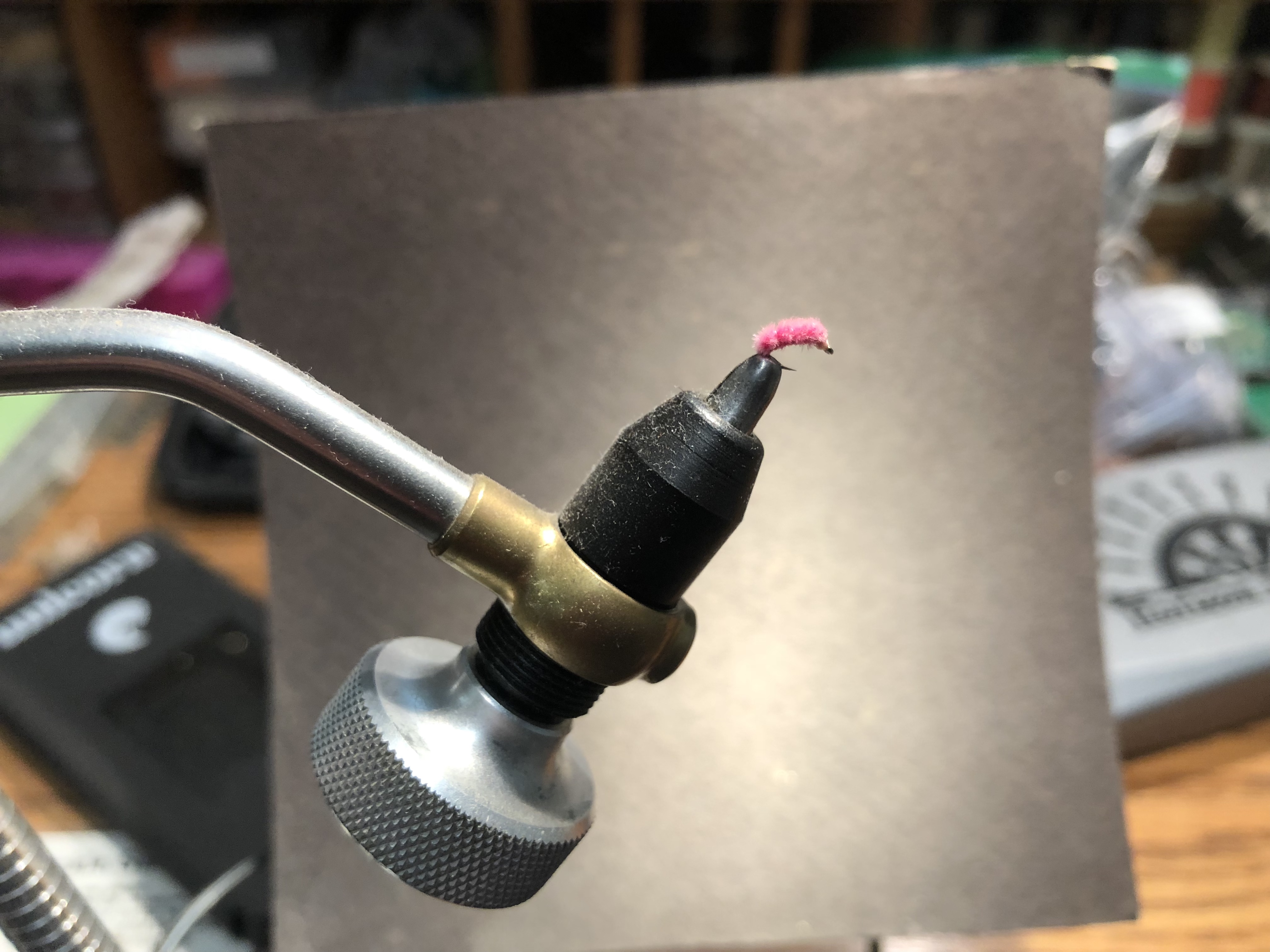
Yong OJ is Andy Kim's orange mini-scud or micro-egg pattern using San Juan worm chenille or vernille material tied in for the length of the shank then doubled over and ribbed with matching thread on a curved scud hook.  Also favorite colors of Andy's in this patter are pink and yellow. This is my daughter's favorite fly to tie or to fish, so I'll put the recipe here on our family recipes and sporting pages, so that she doesn't forget it, nor Andy's comments about this extremely effective fly. To buy the flies from Andy or book a trip visit his site at: http://www.fly-fish.com/ You won't be disappointed, as he catches a tremendous amount of fish on the San Juan and he can teach you his methods, which are quite unique and extremely effective. Tying My Daughter’s Favorite Fly Yong OJ is Andy Kim’s orange mini-scud or micro-egg pattern using San Juan worm chenille or vernille material tied in for the length of the shank then doubled over and ribbed with matching thread on a curved scud hook.  Besides just tithe OJ color, as Andy says the color spectrum changes throughout the day, his other colors of in this patter are pink and yellow. This is my daughter’s favorite fly to tie or to fish, so I’ll put the recipe here on our family recipes and sporting pages, so that she doesn’t forget it, nor Andy’s comments about this extremely effective fly. Hook: Tiemco 2457 in size 20 (or similar types in fairly micro sizes compared to the much larger usual egg patterns sold in shops) Thread: Uni-thread light cahill (for all colors, as it turns relatively transparent when wet) Body: Wapsi Ultra Chenille–Micro Fluorescent

By |May 2nd, 2019|Categories: Fishing, Fly Tying|Comments Off on My Daughter’s Favorite Fly

Simple Flies, Tactical Fishing

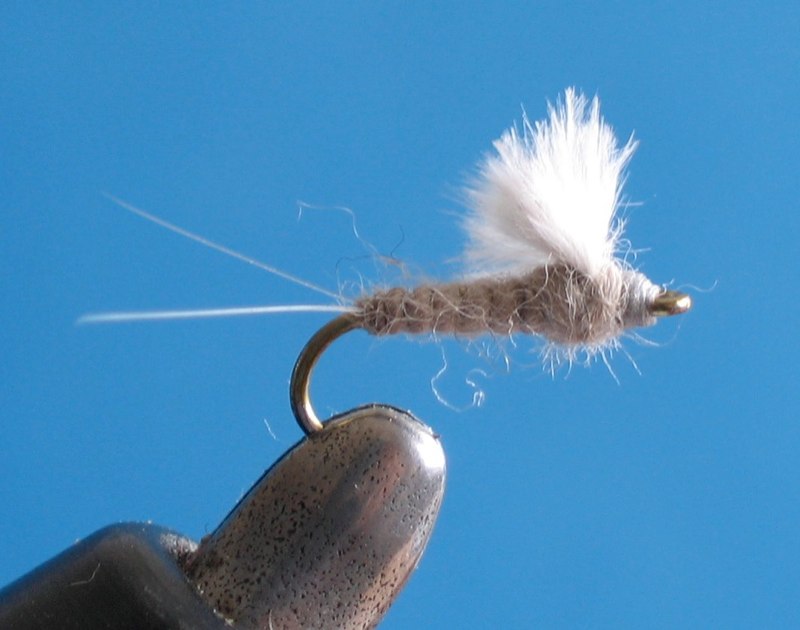
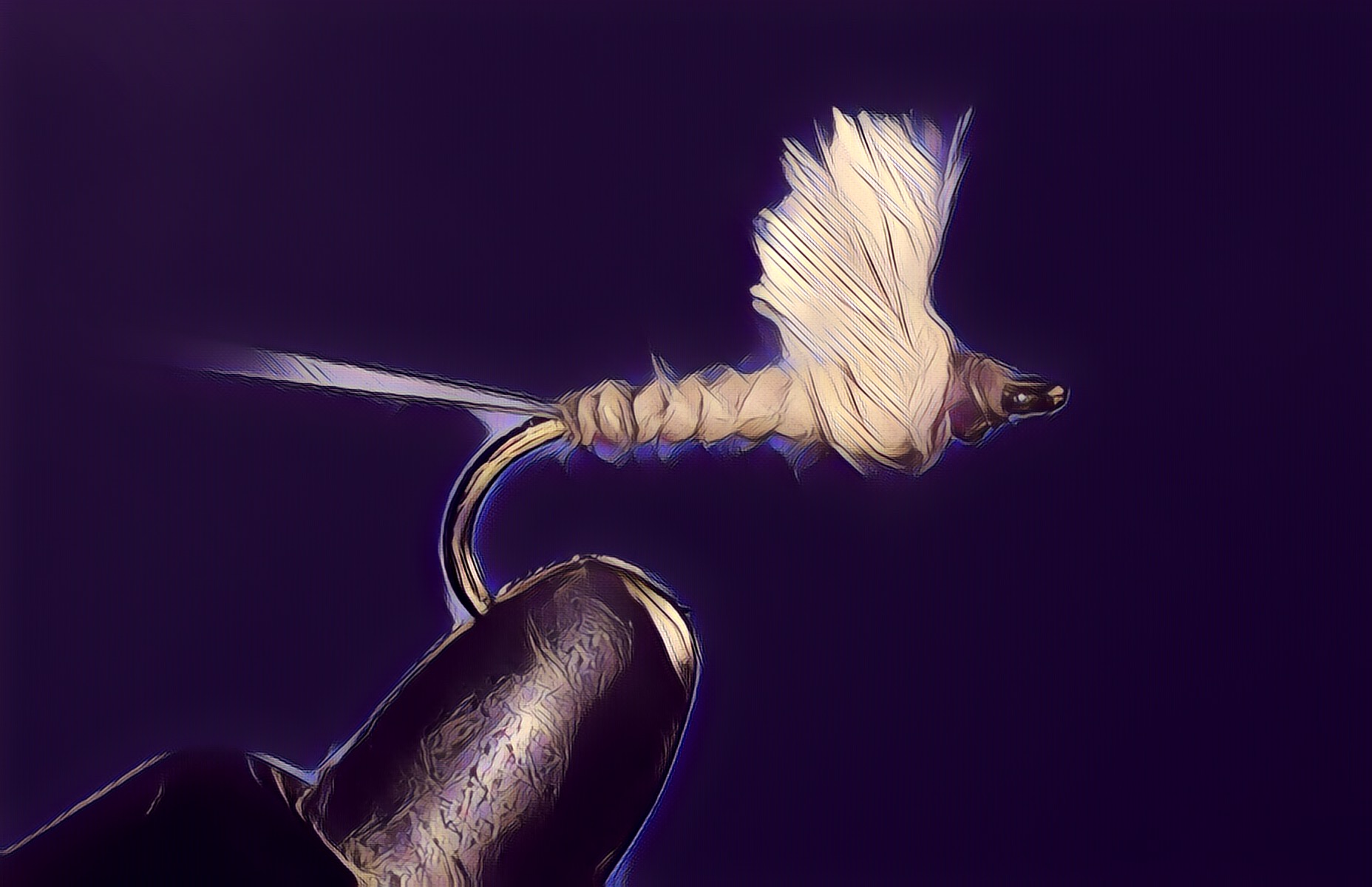
I always like the way that the fly fishing industry markets with buzzwords. The latest one being "tactical", having been preceded by many others over the past three decades. I started before the days of Roger Hill's classic little book on Fly Fishing the South Platte River: An Angler's Guide. Having fished with Roger, and after becoming good friends with his son, Jeff Hill, who was also a former commercial tyer, I was intrigued by the dozen or so rather impressionistic flies that Roger listed in the book, many of which were popular renditions available at that time from local fly shops, not necessarily anything he claimed to be his own inventions. Roger is a rocket scientist by trade and no dummy at the fly tying bench, yet the South Platte Classic flies that he mentioned in the book were filled with very simple images and dressings such as this one: Others included the Brassie, which was brass wire with a black thread head. Or the Buckskin, which was a little buckskin wrapped as the body with a thorax of a couple turns of peacock. Or, the Black Beauty, black tying thread, ribbed with brass wire, and a little dubbing for the thorax. Other flies came out of this simple South Platte Style, including the Miracle Midge (same as the Black Beauty, only white or cream thread, and later with the addition of a glass Mercury bead head). You might say they are more of semblances of insects rather than exact imitations, as Rim Chung often says of his famous RS2 (which, by the way, is not a super easy fly to tie, at least not in the segmented way that Rim ties it, not

By |May 1st, 2019|Categories: Fishing, Fly Tying, Rim Chung, RS2, Uncategorized|Comments Off on Simple Flies, Tactical Fishing

Sawyer Nymphs

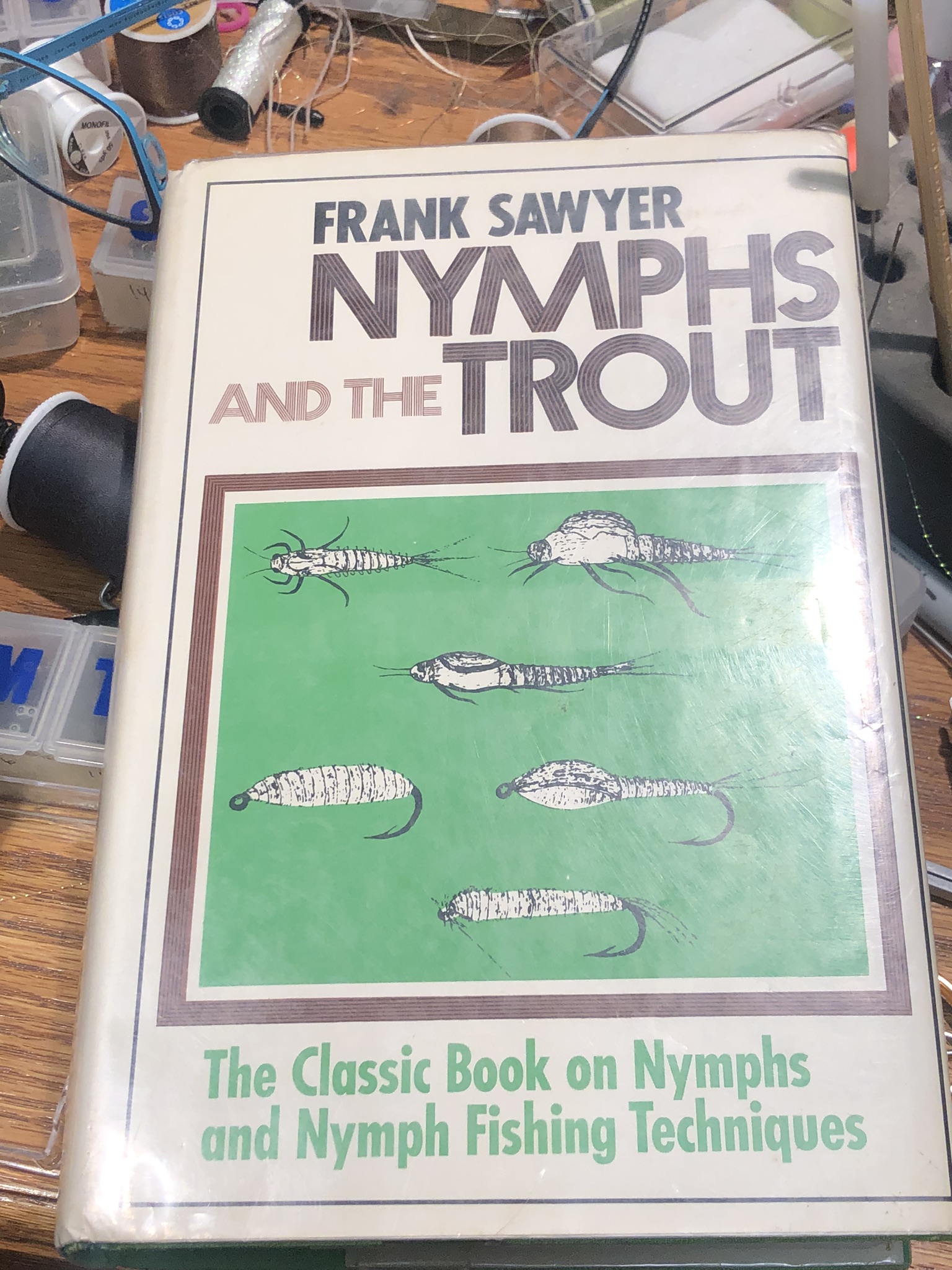
FRANK SAWYER’S COLLECTION By Magnus Angus Sawyer Nymphs Ltd was run by the Sawyer family so they were the only source of authentic Sawyer nymphs and they used to offer a set of Sawyer flies, tied to the original patterns, in a fly box finished with a portrait of Sawyer. The set seems to me to capture the nature of Sawyer’s thinking, i.e., just a few materials combined into dressings which represent natural insects by simplifying or reducing the representation to a few key features and an overall shape. Others have commented that the flies are all geared to fish where trout or grayling expect to find the types of prey these represent. So the lightly weighted Nymphs sink but the weighting is delicate. Cast into a modest current they move with the water rather than plummeting to the bottom. The dries have enough hackle to spread the tiny weight of the fly on the water surface. With a touch of floatant, these fish initially on the surface, and slightly deeper in the surface film as they become waterlogged. Price: £10 (For the boxed set of 12 flies: 2 each Sawyer Pheasant tails, Swedish, Grey Goose, Killer Bug, Bow Tie Buzzer and Chalk Stream dries.)From: www.sawyernymphs.com Too bad they are no longer available from Nick's www.sawyernymphs.com and the site is down but meanwhile, you can visit these articles by Nick Sawyer About Nick Sawyer Nick Sawyer is the grandson of the late Frank Sawyer MBE, inventor of the Pheasant Tail Nymph and famous river keeper of the Hampshire Avon chalk stream. Nick runs a small hobby business (Sawyer Nymphs Ltd) dedicated to selling traditional nymphs and flies ties to the orignal patterns of Frank Sawyer. Sawyer

By |April 29th, 2019|Categories: Uncategorized|Comments Off on Sawyer Nymphs

How to Cut the Cheese

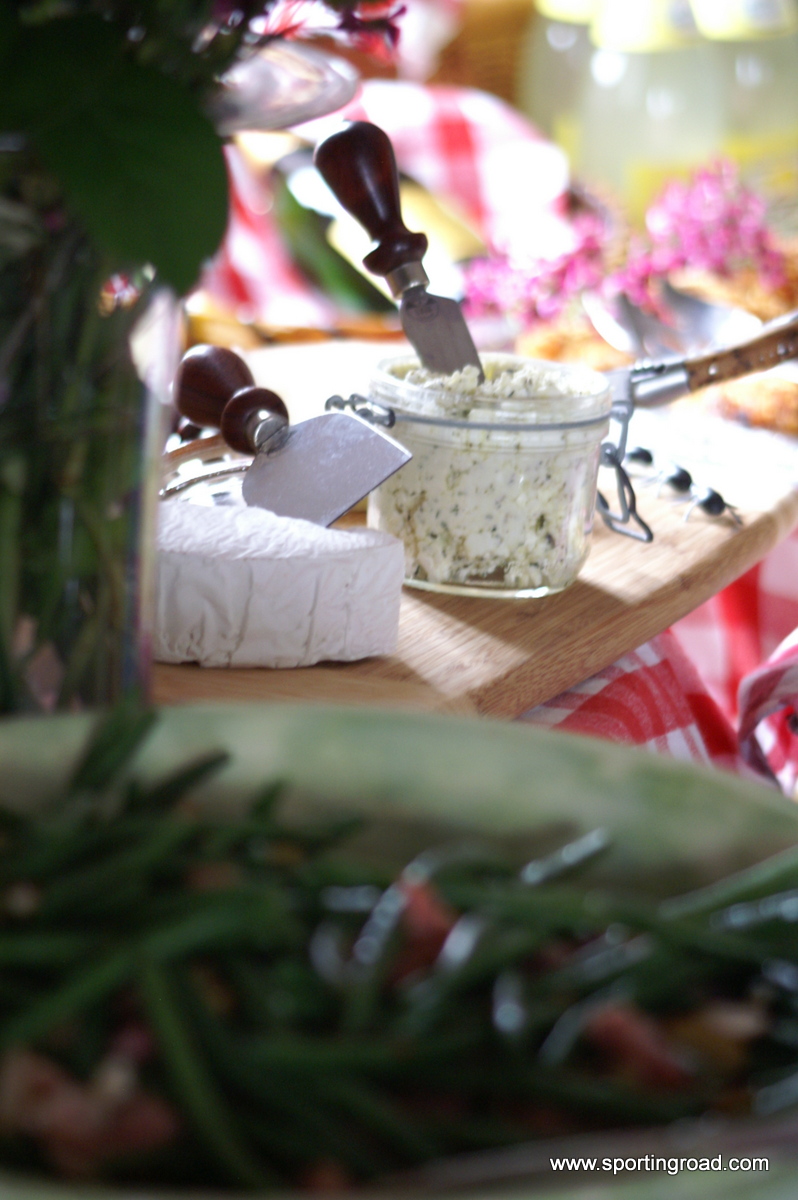
It is amazing how many Americans don't know how to cut the cheese. Well, not at the table anyway. Please don't just hack off a piece here and there on a cheese board. Here is how you properly do it:

By |April 29th, 2019|Categories: Uncategorized|Comments Off on How to Cut the Cheese

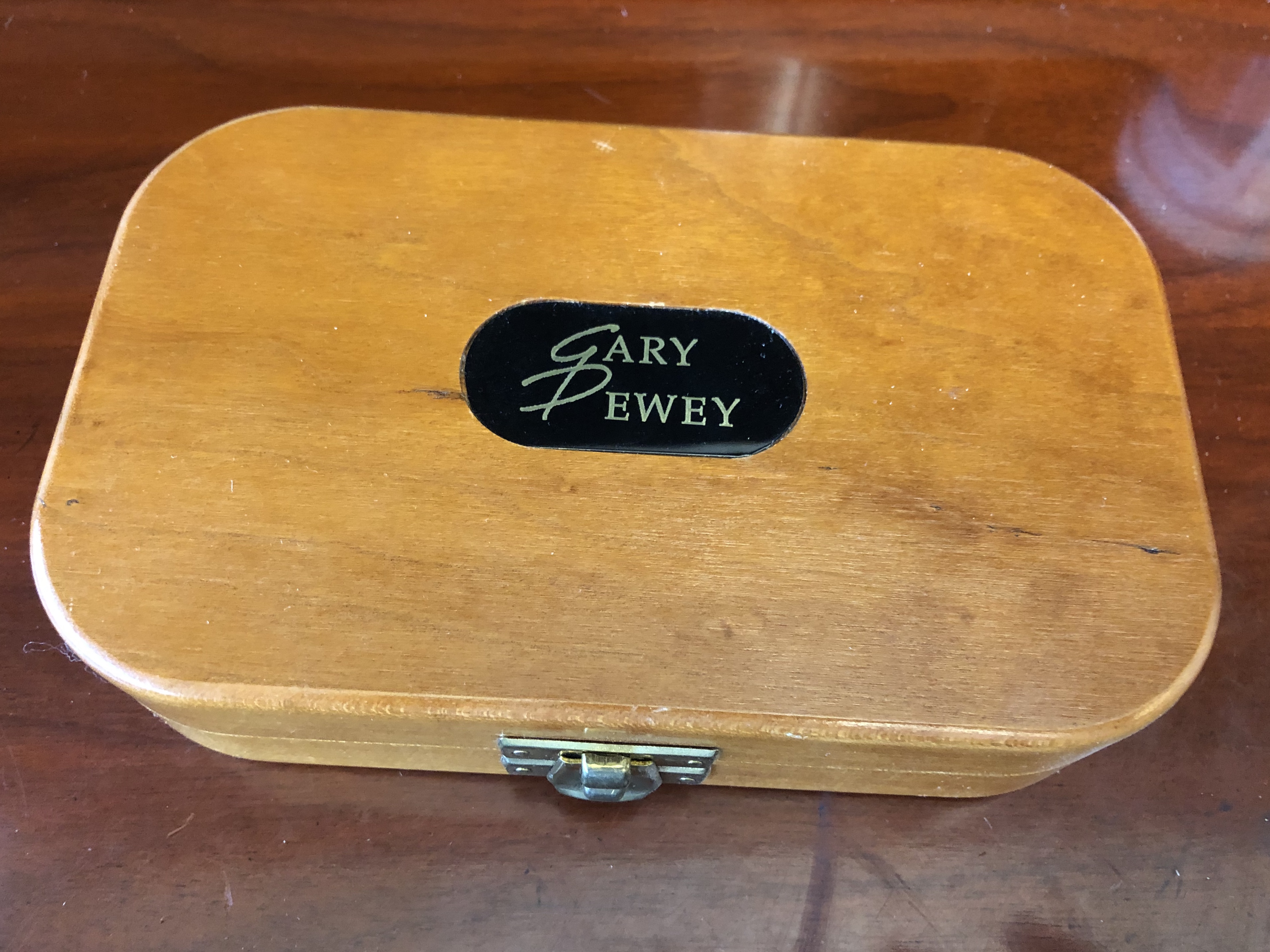
Gary Dewey Flies

Having mentors is important in life, and especially in fishing. Wonder what ever happened to my old fishing buddy, Gary Dewey? Gary was an iron worker who tied some great flies. He became a fishing friend of mine and tied some memorable flies, which had a George Grant woven fly look to them. He had stoneflies with jungle cock, and DewDads, crawfish patterns, both of which I learned to tie from him, among many other innovative patterns. George F. Grant began an innovative style of fly tying in the early 1930s, and patented a unique method in 1939 (U.S. Patent No. 2,178.031). Grant's method for weaving hackles is similar to but distinct from that of Francis Potts. Grant was one of the first anglers to realize that large trout fed primarily beneath the surface on nymphs, and that one needed to imitate and learn to fish this insect-stage if one wanted to consistently catch large trout. Grant's nymphs imitated primarily large stoneflies such as the giant salmonfly (Pteronarcys californicus), which grows up to two inches in length. In 1973, the Federation of Fly Fishers awarded Grant the Buz Buszek Memorial Award-an award plaque presented annually to that person who has made significant contributions to the arts of fly tying. Grant wrote two books on his style of woven Montana flies, which remain largely obscure. Grant liked to use jungle cock for the back of the stonefly, which is also what Gary Dewey did on his stoneflies. George Grant flies Dew Dad by Gary DeweyDownload Gary Dewey Stone Nymph.Tying Instructions.Download Dewey's flies are somewhat similar to the woven stoneflies of George Grant

By |April 23rd, 2019|Categories: Uncategorized|Comments Off on Gary Dewey Flies

One Fly, Two Flies

If you look back in time, you’ll find a few legendary anglers who filled extraordinary bags with just one fly, maybe two. Frank Sawyer and his pheasant tail nymph and grey goose come to mind (although he actually had 5 flies in all, including for lakes). Rim Chung and his RS2. Magical flies or perfect technique, a mere mortal would question? Truth is that it is a little of both. By doing 90% of all things perfectly you cannot catch 90% of the fish in a river. Only by doing 100% perfectly will you achieve that kind of success. Sawyer could average 20 trout an hour on just two flies, one in brown, the other in grey, in a variety of sizes, or even more on grayling for that matter on his Killer Bug. I have seen Rim have these banner days as well on public stretches with wild trout here in the West. The wonderful part of many of these flies are that they are very simple to tie, just some pheasant tail and wire, or yarn and wire, or sewing thread on a hook, in the case of a Yong Special. So how can such a simple fly be so effective? So what’s the secret? Perfection of a single technique and fly, in the hands of experts in presentation. Light lines, small flies, tied well and fished without drag, over finicky trout. Flies that are more a semblance of a midge or mayfly nymph with good segmentation. Simple but translucent bodies. Thin, elegant tapering of the fly bodies. Putting the fly where the fish are at, without drag. Exceeding concentration and strike detection. Excellent control of the fish once the hook is set,

By |April 21st, 2019|Categories: Uncategorized|Comments Off on One Fly, Two Flies