Sporting Road

Home/Sporting Road

About Sporting Road

This author has not yet filled in any details.
So far Sporting Road has created 490 blog entries.

Royal Game of Ur

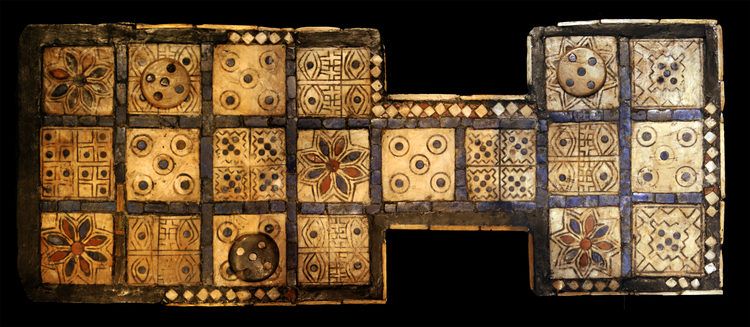
The Royal Game of Ur Another daddy daughter project with woodworking and polymer clay to make the oldest board game in the world. And it’s really fun, like backgammon. Alternate NamesThe ancient name of this game is unknown. It is also called the Game of Twenty Squares. No. of Players Probably two. Equipment The Royal Game of Ur board was accompanied by equipment comprising fourteen counters made of shell that are marked differently on either side, seven each of black and white, as well as six tetrahedral (pyramidal) dice, each of which has two of its four points dotted with inlay.Printable Royal Game of Ur BoardHistory The archaeological site of Ur lies in the south of present-day Iraq at the junction of the Tigris and Euphrates Rivers and was once capital of the Sumerian Empire and reputedly the home of the biblical Abraham. Amongst the many archaeological treasures yielded from the site of Ur come some of the oldest game board artifacts known. During excavation of the royal tombs in 1926-7, led by Sir Leonard Woolley in conjunction with the British Museum and the University of Pennsylvania, four boards were discovered. The ancient Sumerian name of this game is not known, but it is today typically referred to as the Royal Game of Ur. The oldest of these boards has been dated at around 2600 BCE. Some of the rules for this game have been found on a cuneiform tablet dated around 200 BCE. The boards differ greatly in terms of their designs, but all feature the rosettes in the same pattern and some do not contain any design other than the rosettes. This factor leads many game historians to believe that the rosettes are the only detail of the board

By |May 17th, 2020|Categories: Uncategorized|Comments Off on Royal Game of Ur

Frank Sawyer’s Bow Tie Buzzard

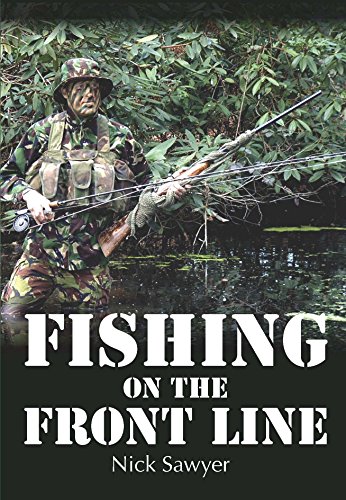
One of Sawyer’s favorite flies is described in Fly Fishing With a Buzzer Nymph, as described by my old pen pal. By Nick Sawyer  |   Submitted On May 03, 2010 There are a great many representations of buzzer nymphs available on the market. Some of them are very good and no doubt most of them will have caught fish at some time. As far as I know, there is only one bow-tie buzzer and that is the pattern designed by Frank Sawyer. Any others are simply copies of the original in just the same way as all weighted nymphs are developments of the Sawyer Pheasant Tail Nymph. Frank Sawyer spent a lot of his life teaching others how to use his original nymphs, the Pheasant Tail, the Killer Bug, the Sawyer Swedish and the Grey Goose. All require much the same technique and are used the world over with varying levels of skill. The Frank Sawyer Bow-Tie Buzzer (BTB) is completely different. It is true that a few fish will be caught whilst using it as a conventional weighted nymph but as such it is far from deadly. When fished as Frank intended, it really comes into its own. The natural buzzer nymph hangs in still water, just a few centimetres below the surface. In its struggle to transform itself from nymph to fly, the buzzer seems to rotate in the water. All buzzers appear to have a kind of frill around the head. As with all things to do with fish and flies, Frank Sawyer spent years observing what happened underwater. He knew that if fish were to take a representation of a buzzer with any sort of frequency, something unique was required. He tried all sorts

By |April 29th, 2020|Categories: Fishing, Fly Tying, Uncategorized|Comments Off on Frank Sawyer’s Bow Tie Buzzard

What MD’s are Doing During Covid

Personally, I am taking lots of Vitamin D3, because Dr. England thinks it helps everything from energy to recovery to not getting sick. Turns out that it really does and it may even prevent against Corona-virus. See https://www.accuweather.com/en/health-wellness/severity-of-covid-19-may-depend-on-where-youre-located-on-the-map/734371?utm_medium=push&utm_source=pushly&utm_content=529622&utm_campaign=pushly_trial Then, I recently received this article, "What I am doing for the upcoming COVID-19 (coronavirus) pandemic," from James Robb, MD UC San Diego. Dear Colleagues, as some of you may recall, when I was a professor of pathology at the University of California San Diego, I was one of the first molecular virologists in the world to work on coronaviruses (the 1970s). I was the first to demonstrate the number of genes the virus contained. Since then, I have kept up with the coronavirus field and its multiple clinical transfers into the human population (e.g., SARS, MERS), from different animal sources. The current projections for its expansion in the US are only probable, due to continued insufficient worldwide data, but it is most likely to be widespread in the US by mid to late March and April. Here is what I have done and the precautions that I take and will take. These are the same precautions I currently use during our influenza seasons, except for the mask and gloves. 1) NO HANDSHAKING! Use a fist bump, slight bow, elbow bump, etc. 2) Use ONLY your knuckle to touch light switches. elevator buttons, etc.. Lift the gasoline dispenser with a paper towel or use a disposable glove. 3) Open doors with your closed fist or hip - do not grasp the handle with your hand, unless there is no other way to open the door. Especially important on bathroom and post office/commercial doors. 4) Use disinfectant wipes

By |April 29th, 2020|Categories: Uncategorized|Comments Off on What MD’s are Doing During Covid

Fly Tying Head Cement for Small Flies

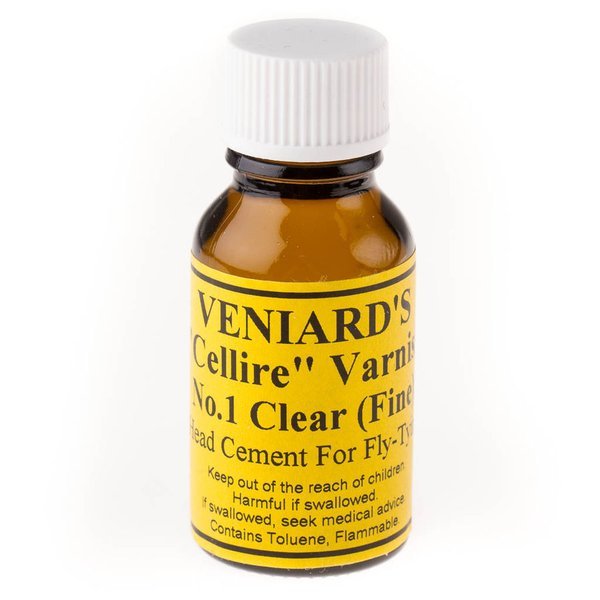
Griff's head cement is gone, and a part of me has died. I'm in search of a replacement for the best head cement currently available for tying small trout flies. Griff's head cement has been discontinued, which was the best head cement commercially available for tying of small flies. Rim Chung is now using laquer and laquer thinner. I've gone to Veniards No. 1. Lacquer-based Head Cements Many other modern Catskill masters also use spar varnish as well as lacquers in their various forms. The well known Western fly tyer A.K. Best, in his book, "Production Fly Tying", advocates the use of common hardware store lacquer for its economy and fast drying qualities. Many of the "lacquer" head cements you purchase appear to be a very small bottle of nitrocellulose lacquer that you can get at the hardware store for a whole lot less money…(like A.K. Best says). If the head cement is a pale yellow color (or clear) and smells like lacquer thinner, it is a good bet it is lacquer. Griff’s Head cement - Griffin makes two versions, thick and thin. This is a very common product found in the US. A lot of my friends used this stuff because it was so readily available in our area. But it’s not thin like Griff’s. TroutHunter Harrop Superior Head Cement is the next on my favorite list, but the cloudy color is less than desirable to look at in the bottle anyway, though the application of it seems fine. I am also trying Homemade Thin Nail Polish Head Cement Recipe which is the 2/3 Sally Hansen's Hard as Nails, Clear Topcoat, with 1/3 straight acetone. Veniard’s No. 1 is the closest I have found and my favorite so far. Rim

By |April 29th, 2020|Categories: Fishing, Fly Tying, Rim Chung, RS2, Uncategorized|Comments Off on Fly Tying Head Cement for Small Flies

What Happened to Mark Roth?

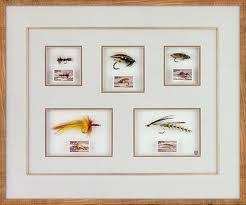
What ever happened to my fly tying picture framer friend, Mark Roth? If anyone knows how I can reach him, please let me know, as the mail I sent to his house/garage workshop in Woodland Park seems to have been returned. You can drop me a line at sportingroad@gmail.com. The following used to appear on his site about his hand rubbed wooden fly frames, which are unparalleled: Roth AnglingAll items are hand made one at a time...nothing here is mass-produced or farmed out. I started fly-fishing at age 11, and then filled my first professional fly order at age 12 in 1973, after being taught by Andy Puyans while working in his shop in Pacheco, Calif. I took up framing in 1988 following a number of customer requests. Some fishermen may have seen my small magazine ads in the late '80s and early '90s in 'Fly Rod & Reel' and 'Fly Fisherman' magazines, at which time I put out a small mail order catalog...this web site now functions as the catalog.A fly plate presentation consists of assorted flies mounted in a recessed shadowbox-depth frame, either with or without angling art or a photograph to correspond with the chosen flies. Each finished fly plate on this page is signed and dated, flies tied by Mark Roth. If you would like your own flies mounted in a fly plate, see: Custom Fly Framing page. Or if you see a design below you'd like to add your own flies to, inquire for a quote for a 'kit-only' on these without the flies.Each fly plate includes archival mats with gold & black French mat lines, acid-free backing, and each fly carefully mounted in a cherry frame. The depth of

By |April 29th, 2020|Categories: Fishing, Fly Tying, Uncategorized|Comments Off on What Happened to Mark Roth?

Semblance Minimalists, Impressionists and Exact Imitationalists

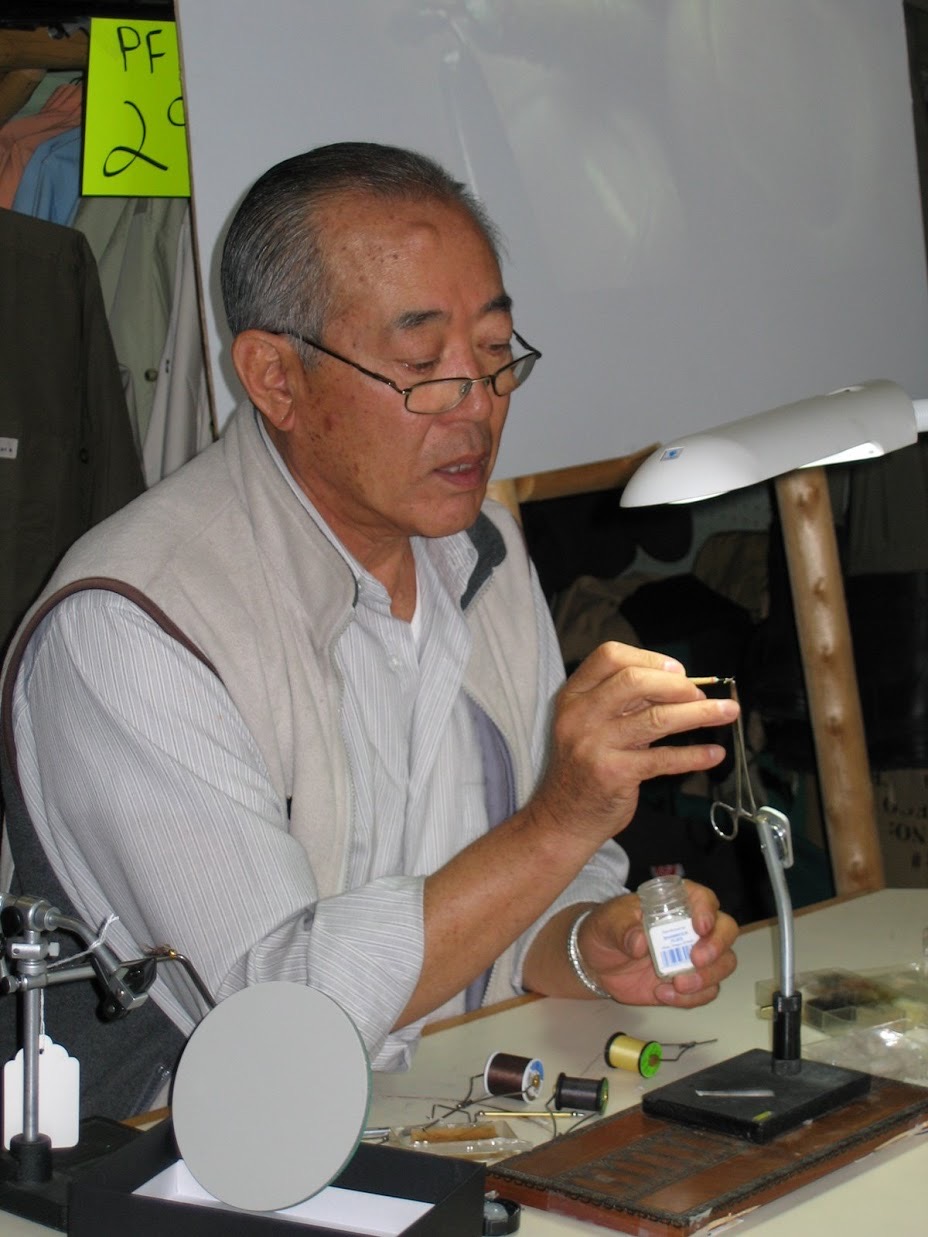
The essence of zen is the beauty of simple things. Fly or Nymph Fishermen tend to fall into one of the above three categories. I am a semblance minimalist fly fisher and only carry 5 or 6 different patterns. I used to carry around 3000 patterns, I was an exact imitationalist, as I was a commercial tyer in my youth. But nowadays it’s just Rim Chhng’s RS2, the Improved Yong Special, the YKnot, the Calgon Fly, Andy Kim’s micro egg and a pheasant tail variant. If I found my former methodology more effective, I'd return to it. But minimalism suits me, and the fish as well. My old pen pal Nick Sawyer explains the minimalist set up well: http://EzineArticles.com/4255534

By |April 29th, 2020|Categories: Fishing, Fly Tying, Rim Chung, RS2, Uncategorized|Comments Off on Semblance Minimalists, Impressionists and Exact Imitationalists

Running Intead of ”Staying at Home”

The daily run is more therapeutic than lying on the analyst's couch. If you don’t take care of your body, where will you live? Life is filled with challenges and adversity. My life was filled with experiences as a teenager that had taught me how to suffer. Turns out, that taught me how to be a good athlete. You never know how strong you are, until being strong is the only choice you have. Pain only hurts. The more you know, the less you need. Running is an adventure in minimalism and finding your own strength, both mentally and physically. To do it in nature, adds a third dimension to make it a complete mind, body, soul adventure. To hike in nature with a friend or loved one, adds an even fourth dimension of connection with others, but sometimes solitude adds its own medicinal powers in clearing the mind of stress and problems of the world, as these things fade away. New habits can be made in this vacuum of thought. Strength does not come from physical capacity. It comes from indomitable will. You only ever grow as a human being, if you’re outside your comfort zone. In the face of adversity, you want to do something, move forward, not backwards. Running books are filled with all kinds of quotes on the zen of life.  If you never do more than you are doing now, you will never become more than you are now.   During what period of your life did you feel the best and why? When I was in college and law school, even though I was working 60 hours a week plus full time school during the days, I did something outside

By |April 29th, 2020|Categories: Running, Uncategorized|Comments Off on Running Intead of ”Staying at Home”