There is a curious thing about fishing and hunting. Long after we have grown up and acquired jobs, responsibilities, homes, and families of our own, we find ourselves drawn back to places and pursuits that may have first entered our lives as children. We tell ourselves we are going fishing or deer hunting. And we are. But sometimes the reasons are a little more difficult to explain.
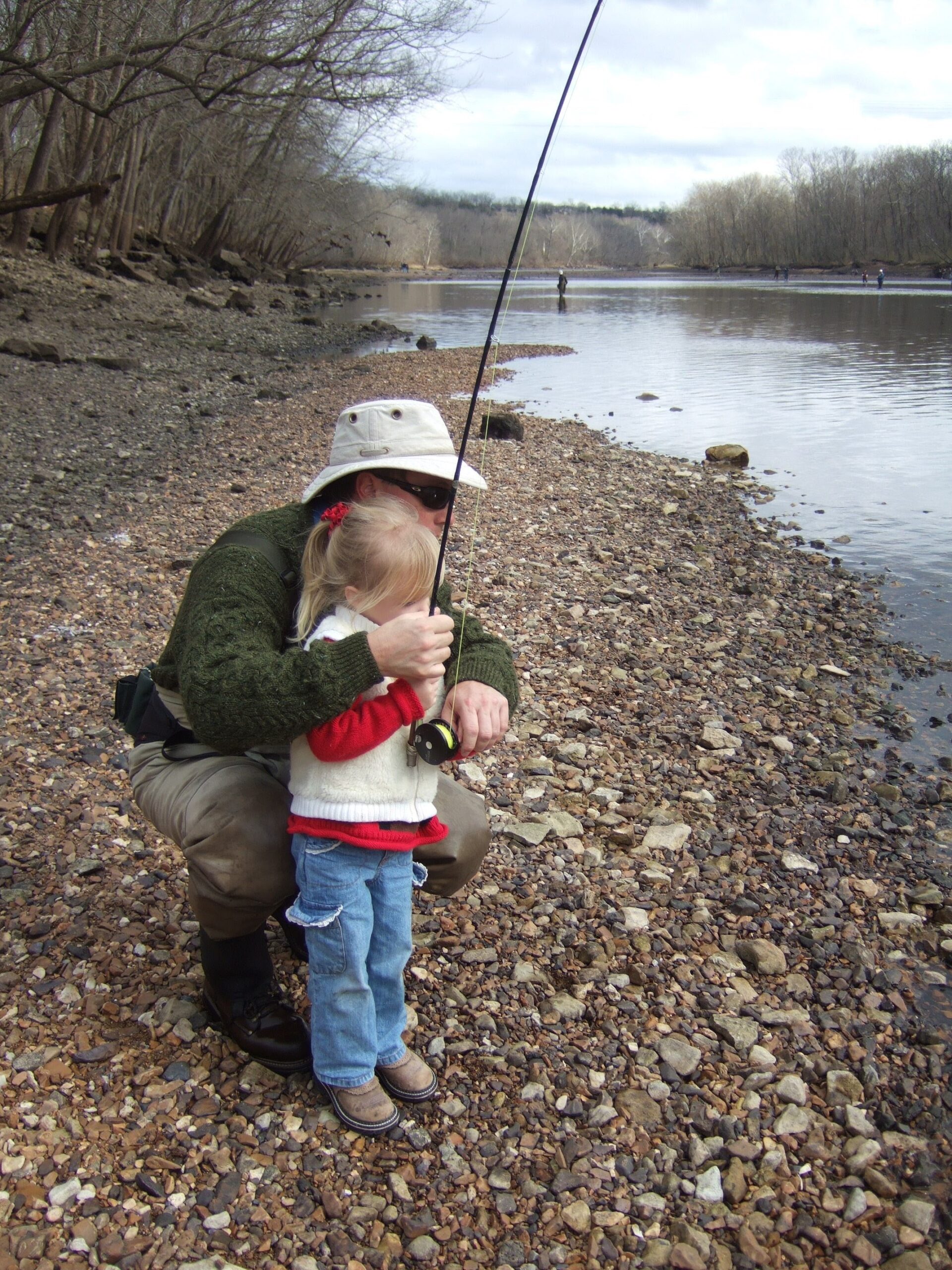
For many people, fishing begins with someone else. A father, grandfather, uncle, or neighbor takes a child to a river, a pond, or a lake. The equipment is often borrowed, the bait is messy, and the patience required is greater than the child possesses. There may not be much fishing at all. There are sandwiches, tangled lines, forgotten tackle, and the occasional fish that seems impossibly large in the telling years later. Yet something takes hold.
Fishing has a way of preserving the small things. The smell of wet grass in the morning, the sound of water moving over rocks, the first cold air of autumn, a thermos sitting between two people who don’t necessarily need to talk. As children, we rarely understand the significance of those moments. We simply experience them. Years later, we discover that some of the most enduring memories of our childhood have very little to do with what we accomplished and everything to do with where we were and who was beside us.
Deer hunting carries a similar memory, although it often comes wrapped in a different sort of ritual. The season itself becomes part of the calendar. There are preparations, clothing laid out the night before, rifles checked, boots dried, and the early morning drive when the world is still dark. A child learns to whisper, to walk quietly, to recognize the movement of a deer through trees, and to sit still when every instinct suggests otherwise. The woods become a place of observation rather than simply a place to pass through.
There is something wonderfully old-fashioned about these experiences. They require time, and they resist being hurried. A morning in the woods cannot be improved by checking a phone every few minutes, and a day on the river is rarely made better by a schedule. The natural world operates on its own terms. The wind changes. The fish don’t cooperate. Deer appear when they please, or not at all. We learn, perhaps without realizing it, that not everything in life is subject to our control.
The stories that emerge from these experiences are rarely just stories about fish or deer. They are stories about the people who taught us, the places we returned to, and the years that passed between one season and the next. A particular creek may remind us of a father who is no longer with us. A hillside may bring back the voice of a grandfather. A hunting camp may hold memories of men who once seemed indestructible but who, over time, became part of the past. The landscape remains, sometimes remarkably unchanged, while the people who occupy it grow older.
Perhaps this is one of the reasons we continue to return. There is a comfort in the familiar, but there is also something more. The woods and water offer an opportunity to reconnect with a version of ourselves that existed before the complications of adulthood. We remember what it was like to be curious, to be patient, to be content with a day whose outcome was uncertain. We remember the anticipation of a morning and the satisfaction of being outside, even when nothing particularly remarkable happened.
Eventually, we may find ourselves taking our own children, or grandchildren, or simply younger friends into those same places. We teach them to cast, to read the wind, to walk quietly, to respect the animal, and to appreciate the land. We may think we are passing along knowledge, but we are also passing along something less tangible. We are giving them the opportunity to build memories that may not reveal their importance until decades later.
And perhaps they will return, as we have, when they are older. They may not remember the fish they caught or the deer they harvested with the precision we hope they will. They may remember the cold, the early morning, the smell of coffee, the sound of leaves underfoot, or the person who sat beside them without saying very much.
I recently read Hunting, the Pursuit that Shaped Humanity by Brian Fagan, who writes:
For early hominins, many opportunities involved kills made by other animals. So how might we define the origins of hunting? There were three significant catalysts. The first was the skill set of the hunt—opportunism, careful observation, stalking, and knowledge of the prey. These skills, combined with cooperation and the growing importance of meat in the ancestral human diet, set off the trend that led to deliberate hunting as a basic constellation of human activity. Second, regular hunts raised issues of butchering and sharing kills, resulting in new forms of social interaction that were most effective if practiced in safe, familiar locations—what are often called home bases. Finally, and most important of all, was the use of simple tool kits used to kill game, butcher it, and share the proceeds. From stone flakes and choppers to repeater rifles, the implements used to kill and process game have evolved into today’s dazzling complexity of weaponry over the past two and a half million years. But the basic skills are the same today as were the earliest hunters’. Stalking expertise can be acquired only by constant practice and long hours spent observing one’s prey. One always moves slowly, taking careful account of the strength and direction of the wind. For instance, it is best to have the light behind you, just as modern-day fighter pilots attack out of the sun. An expert stalker “stretches” his eyes, being careful to maintain a wider view than merely a focus on the prey.
That is the enduring appeal of the woods and water. We go for the fish, for the deer, for the challenge, and for the pleasure of being outdoors. But somewhere along the way, these pursuits become something else. They become a connection to our past, to the people who shaped us, and to a way of life that we hope, in some small measure, will continue.
Sometimes we return to the woods and water to find what we have been looking for. Sometimes we return simply because we already know where it is.