An artist who goes around proclaiming that the art he’s making is art is probably making a serious mistake. And that’s one mistake I try not to make. — Peter Beard
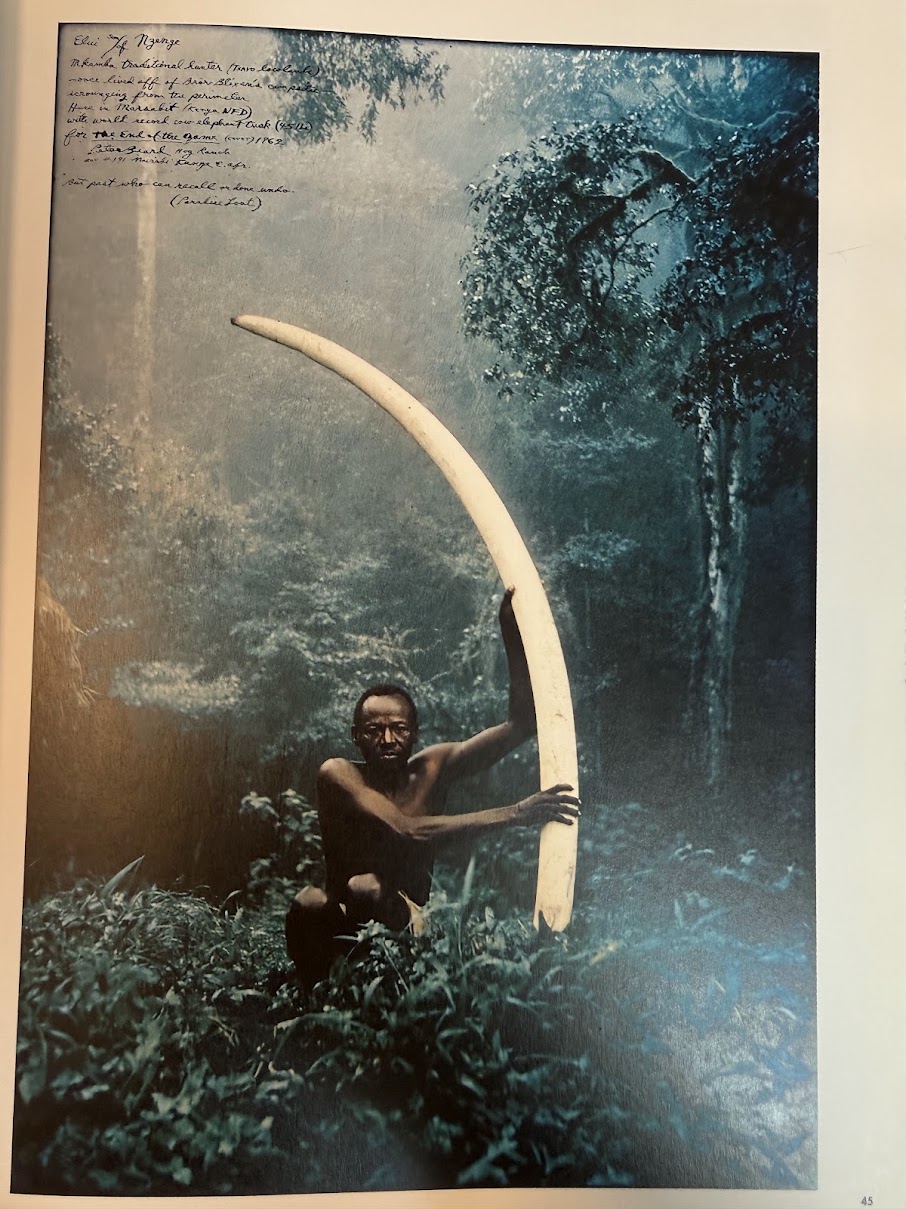
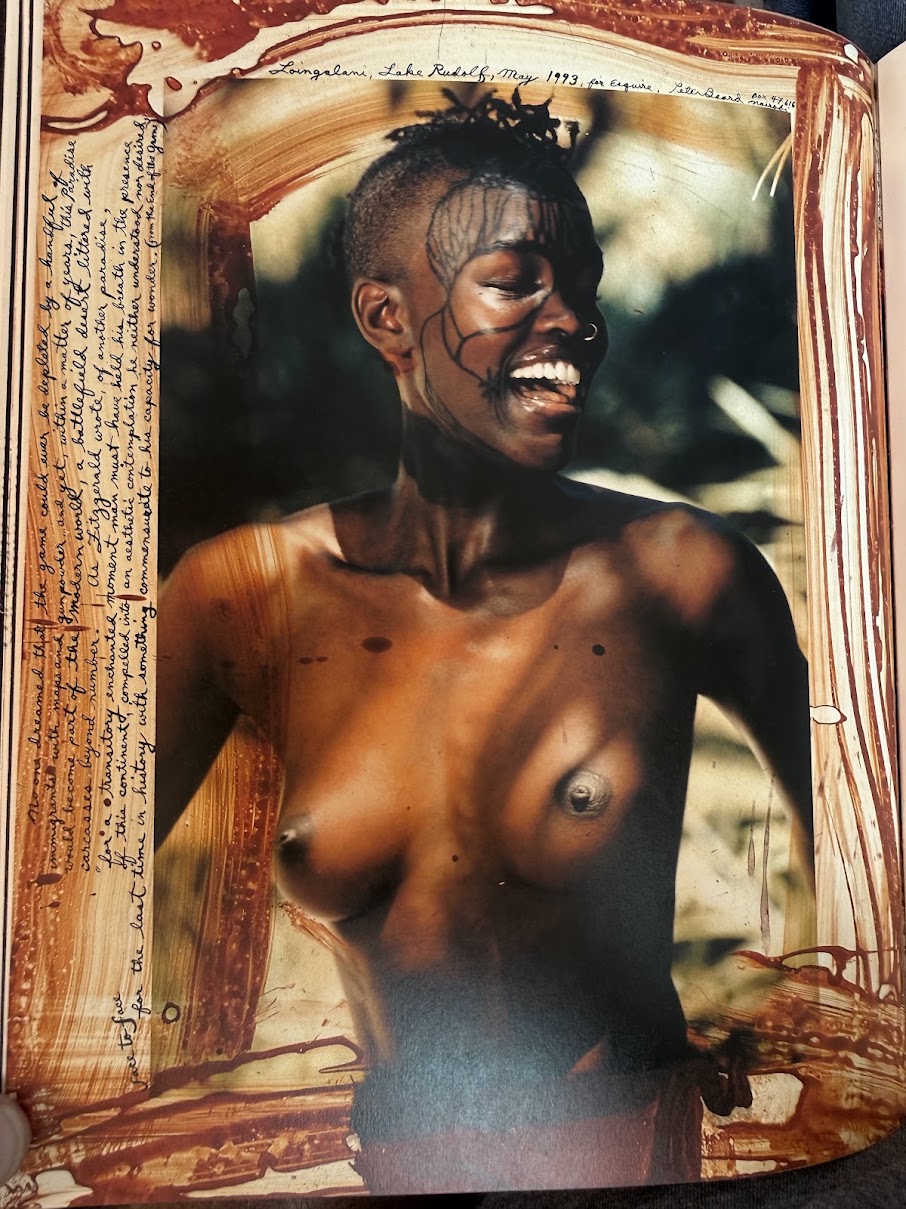
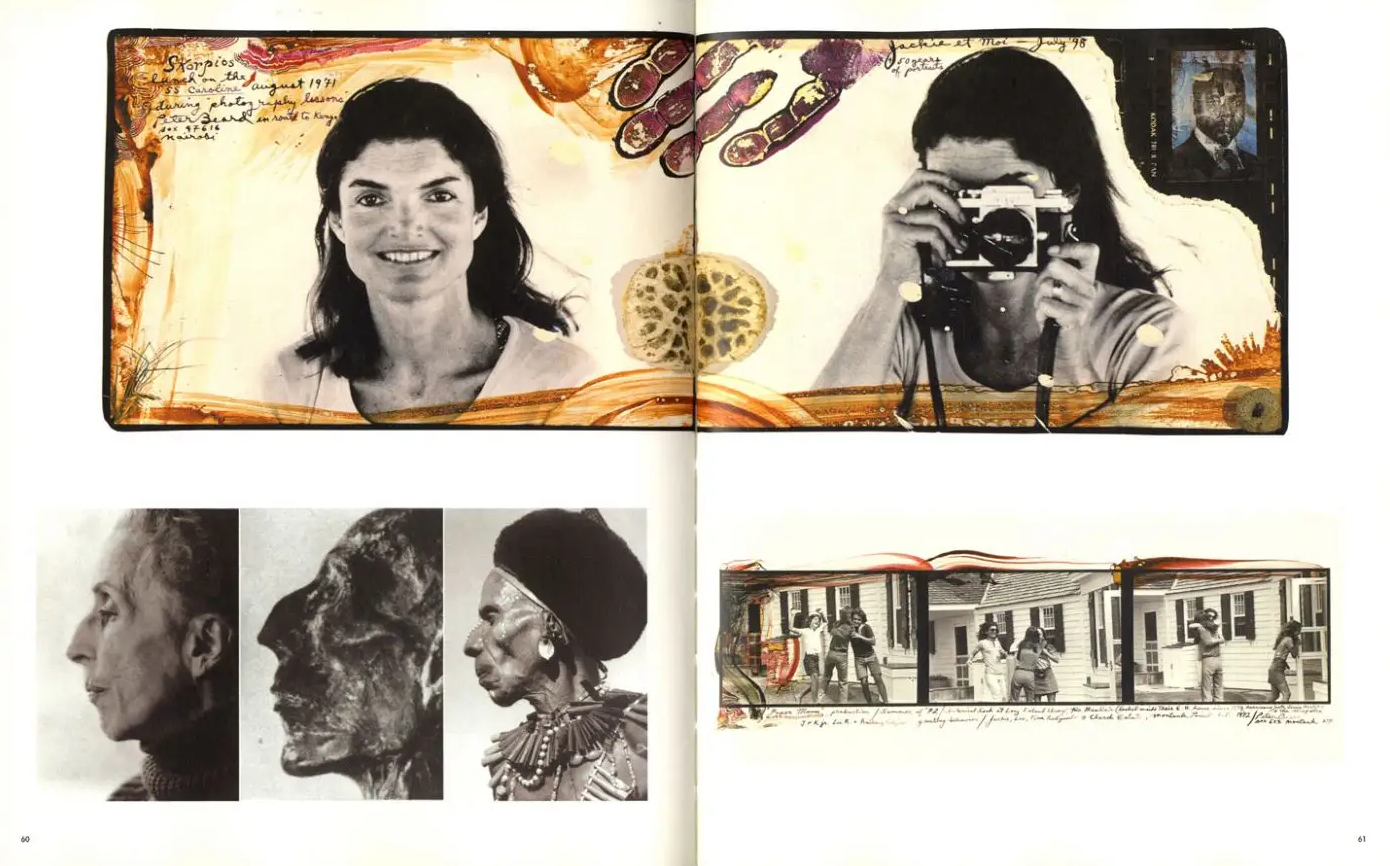
I recently got a copy of Peter Beard : fifty years of portraits / curated by Peter T. Tunney by Beard, Peter H. (Peter Hill), 1938-2020. The whole feeling of his work—photography, handwritten journals, wildlife, travel, found objects, stains, torn paper, memory, sex, danger, and a slightly decadent African-adventurer sensibility—is stirring, an awakening you might say. Trippy is another word that comes to mind.
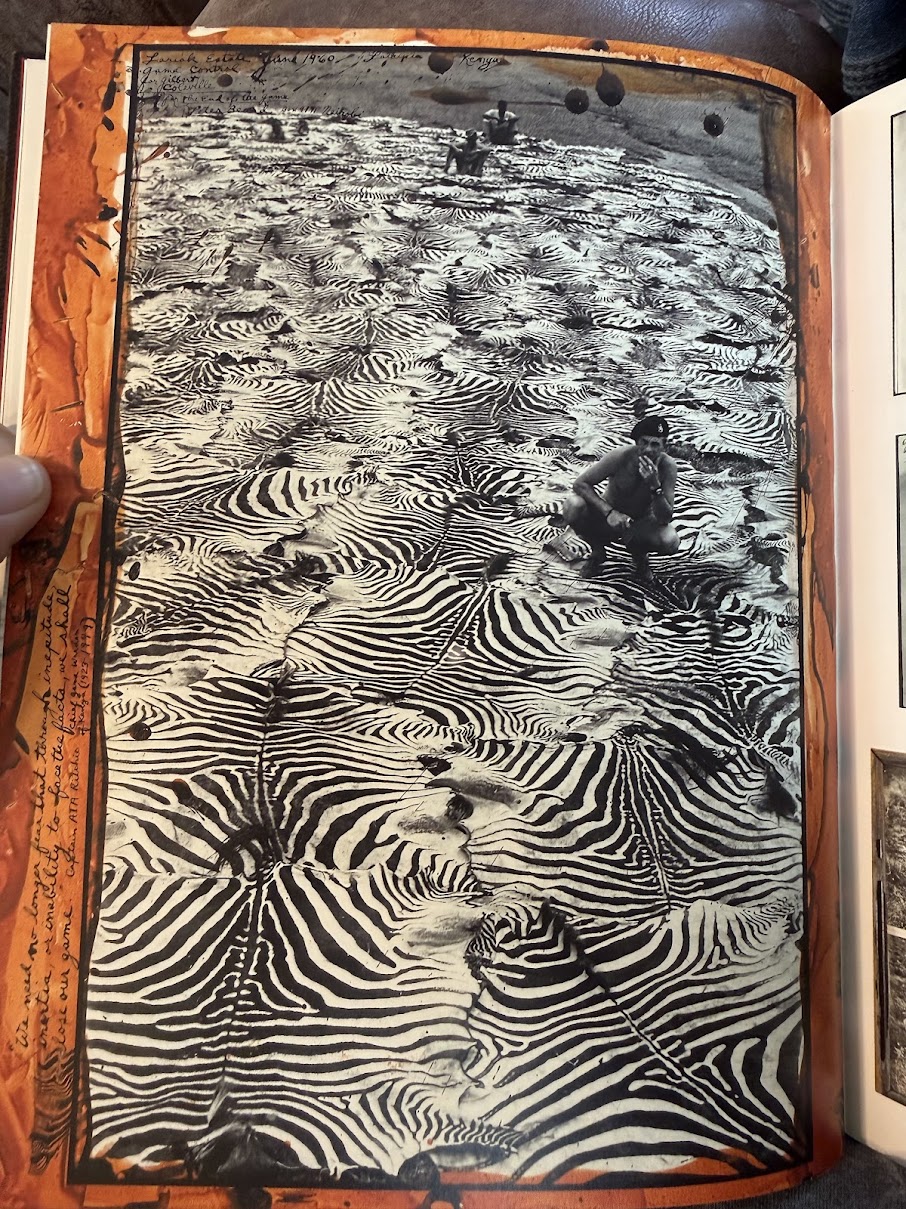
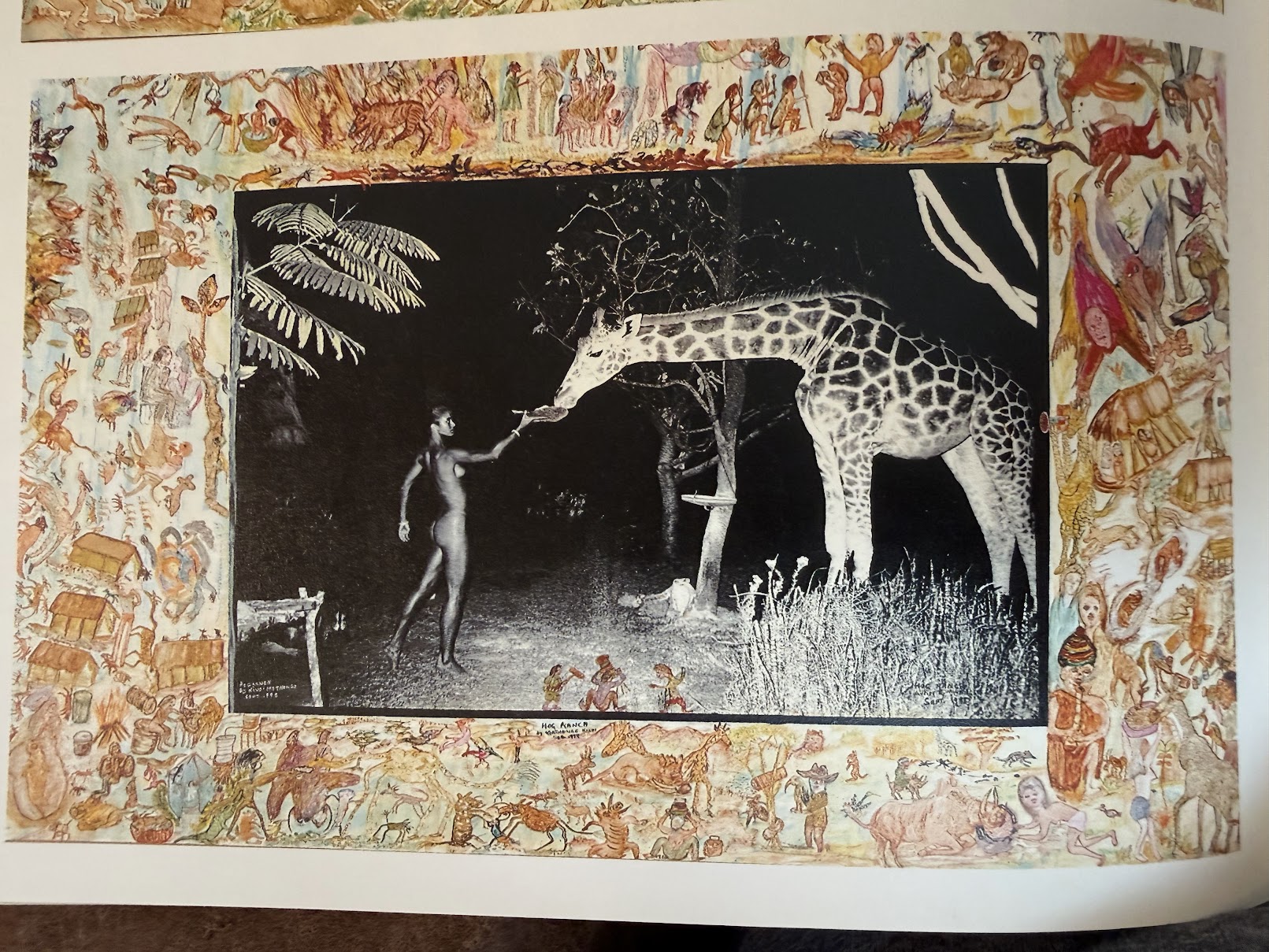
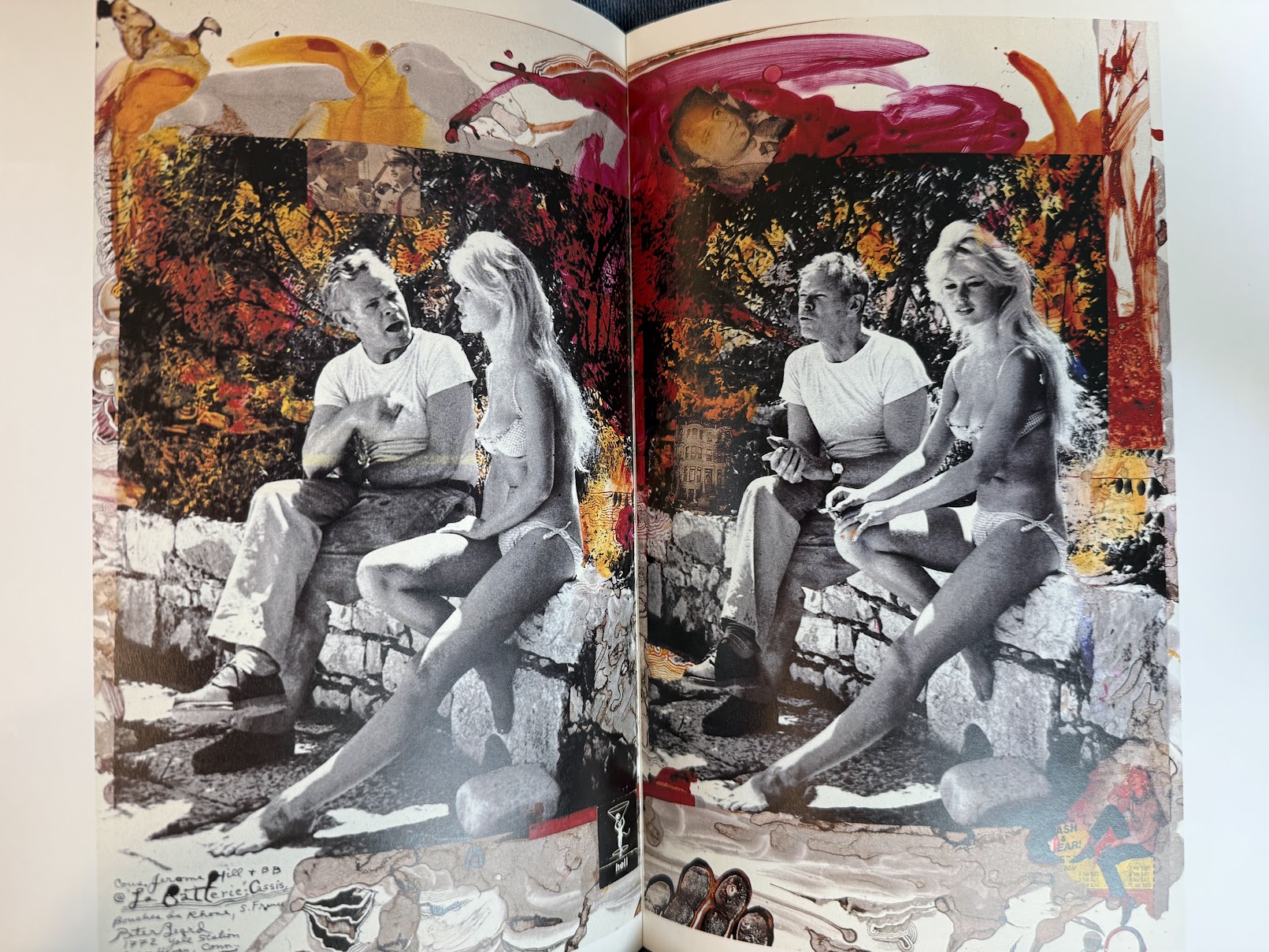
This inspired me to read everything I can find about Beard and to study his photographs more closely. Peter Beard (1938–2020) was a legendary American photographer, artist, and diarist known for his visceral, mixed-media approach to photography. Blending the lines between documentary journalism, fine art, and personal scrapbooking, Beard became famous for chronicling a vanishing Africa, bridging the gap between high-fashion New York culture and the raw realities of environmental collapse. Beard rarely presented a photograph as just a standalone print. He heavily embellished his images with handwritten text, intricate ink drawings of insects or animals, newspaper clippings, and physical artifacts.
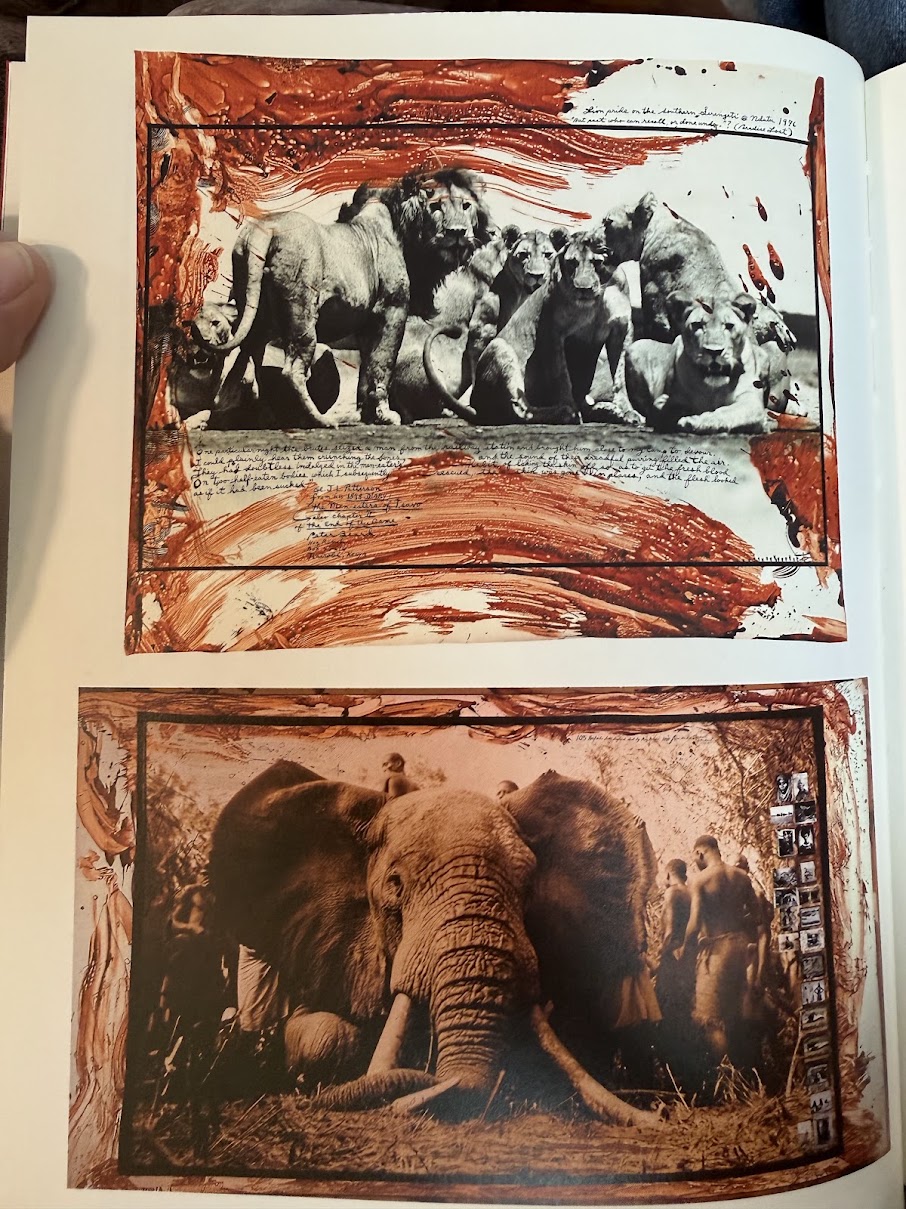
Something we would probably generalize as “collage” nowadays, but it is much deeper than that. For instance, to emphasize the primal nature of life, death, and survival, he frequently used animal blood (and occasionally his own) to paint directly onto the borders and surfaces of his photographs. Beard viewed his entire life as a singular, continuous artwork. His massive personal journals combined daily travel itineraries with contacts, photos of famous figures, dried leaves, and footprints.
Beard’s lifelong romance with Africa began after traveling to Kenya in the early 1960s. He purchased “Hog Ranch,” a property outside Nairobi adjacent to the homestead of Out of Africa author Isak Dinesen (Karen Blixen). His seminal 1965 book, The End of the Game, documented the profound tragedy of man-made starvation and habitat destruction affecting tens of thousands of elephants and rhinos in Kenya’s Tsavo lowlands.
He treated his gelatin silver prints and Polaroid photos as physical canvases. I have never seen anything like it. It looks like my mother’s scrapbooking from the 1980’s on drugs, which is probably more truth than what I initially imagined, having now read a lot more about his adventurous, hedonistic lifestyle. He applied India ink, brushstrokes, and oil paint directly onto his photographic prints, often framing the images with his own handwritten notes and marginalia. He famously incorporated animal blood—and occasionally his own blood in sparing quantities—as a distinct painting and staining medium. And he glued diary entries, newspaper clippings, dried leaves, insects, and even animal skins (like snakeskins) onto the surface of his pieces. Strange stuff? For sure. But somehow it’s mesmerizing the more that you look at it, the more you find.
What camera gear did he use? There’s a site for that, as www.whatcameragear.com writes, in pertinent part:
Camera Gear Used by Peter Beard
Cameras
Nikon F – Peter Beard used Nikon 35mm cameras, particularly the Nikon F system, during much of his early work in Africa. These cameras were widely used by photographers working in demanding environments due to their durability and reliability. The portability of 35mm cameras allowed Beard to move freely while documenting wildlife and life in Kenya.
 |
| Nikon F |
Medium format cameras (Hasselblad and similar systems) – Beard also worked extensively with medium format cameras, which provided higher image quality and larger negatives. These cameras were often used for more composed images, particularly those that would later be incorporated into his large-scale prints and collages.
Polaroid cameras – Instant photography played an important role in Beard’s creative process. He used Polaroid cameras to produce images that could be immediately incorporated into his diaries and mixed-media works. The immediacy of Polaroid allowed him to merge photography with drawing and writing in real time.
Lenses
Standard and short telephoto lenses (50mm–105mm range) – Beard’s work often focused on subjects at a moderate distance, particularly wildlife and portraits. Standard and short telephoto lenses allowed him to capture detail while maintaining a natural perspective. Unlike photographers focused on technical precision, Beard’s lens choices were pragmatic rather than stylistic. The final image was often only the starting point for further artistic intervention.
Film
35mm color and black-and-white film – Beard used both color and black-and-white film throughout his career, depending on the project. Color film was particularly important in his later work, especially when combined with collage elements that emphasized texture and contrast.
Polaroid instant film – A key part of his workflow, Polaroid film allowed Beard to create unique, one-of-a-kind images that could be physically manipulated immediately after exposure.
Technique & Style
Peter Beard’s photography cannot be separated from his broader artistic practice. His images often begin as documentary photographs — wildlife, landscapes, portraits — but are later transformed through collage. He would draw directly onto prints, add handwritten notes, incorporate found objects and even use unconventional materials such as blood to alter the surface of the image. This process turns the photograph into a personal artifact, part diary, part artwork.