
Martin Perez has a new website with a lot of information on fitness for polo. I used to do a fair amount of yoga before and after polo, but this guy is a professional trainer for polo athletes at the highest level and he’s onto an even better stretching regime. He has nuitrition, conditioning, and loads of other information on his site. Check it out. https://www.fitnessforpolo.com
I used to be a sun salute stretcher, incorporating some running and hockey stretches, but I am taking a closer look at Perez’s program because he has a lot of great information on his site. Whatever you do, do some stretching before and after polo and it will help your game and your recovery times.

I like to combine that with some of the things I learned from Tell Me Where It Hurts: The New Science of Pain and How to Heal by Dr. Rachel Zoffness, a pain psychologist, published in 2026. This is particularly relevant to polo and all riding disciplines, as stress, thoughts, and inflammation all go together. Dr. Zoffness lays out some frameworks towards understanding how they all go together:
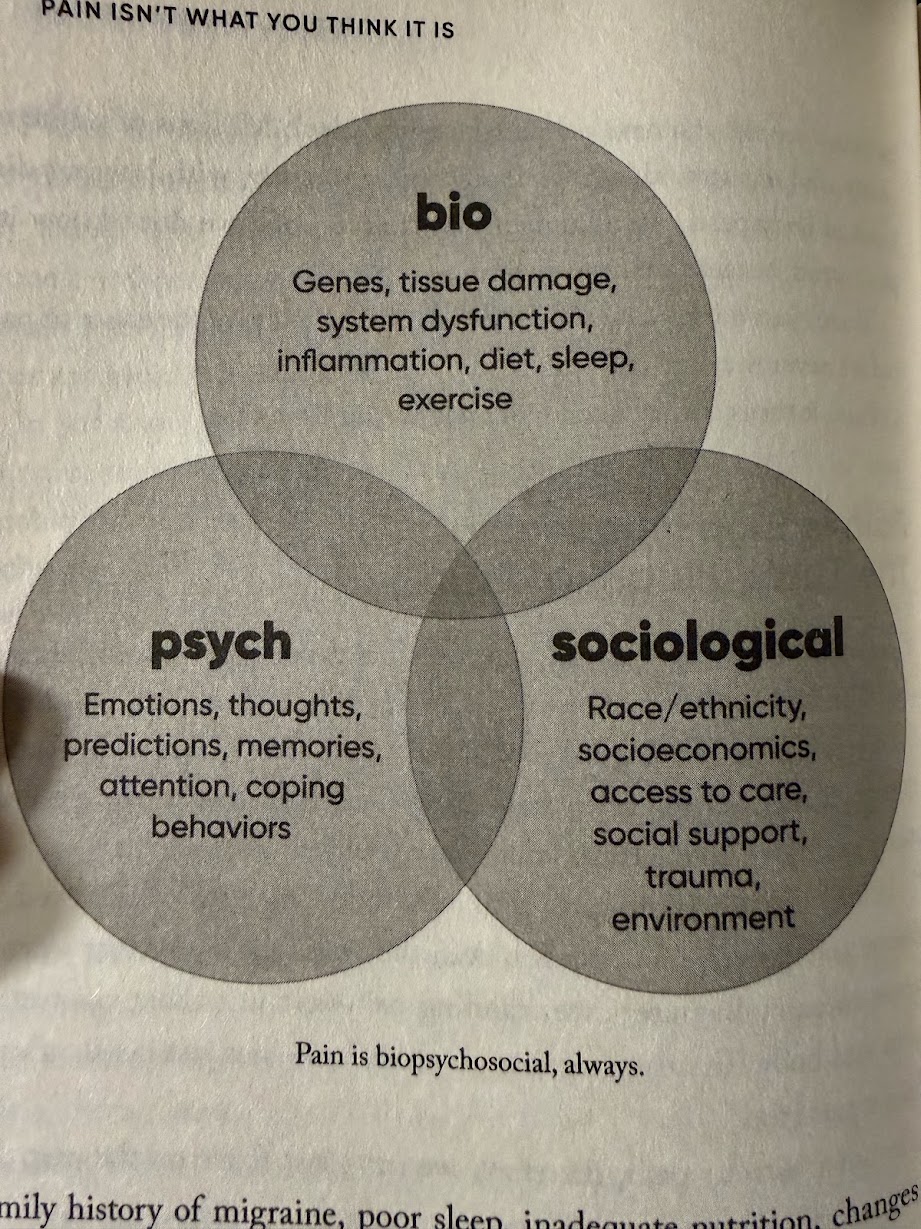
Biopsychosocial Venn diagram (“Pain is biopsychosocial, always”)
Pain comes from three overlapping domains:
- Bio: genes, tissue damage, system dysfunction, inflammation, diet, sleep, exercise
- Psych: emotions, thoughts, predictions, memories, attention, coping behaviors
- Sociological: race/ethnicity, socioeconomic status, access to care, social support, trauma, environment
The overlap shows that these factors interact rather than acting separately.
Pain Menu
This is the same three-category framework laid out as a list of “ingredients” in a high-pain recipe. It adds items such as age and sex, muscle tension, meaning assigned to sensations, mental health, beliefs, culture, gender, and environmental stressors like work or finances. The surrounding text says the high-pain recipe has an opposite, a low-pain recipe, which is the set of ingredients that make up a day with less pain. Some ingredients can’t be changed, like aging or your environment, but many can be tweaked and adjusted, so the recipe works as a “road map for healing.”
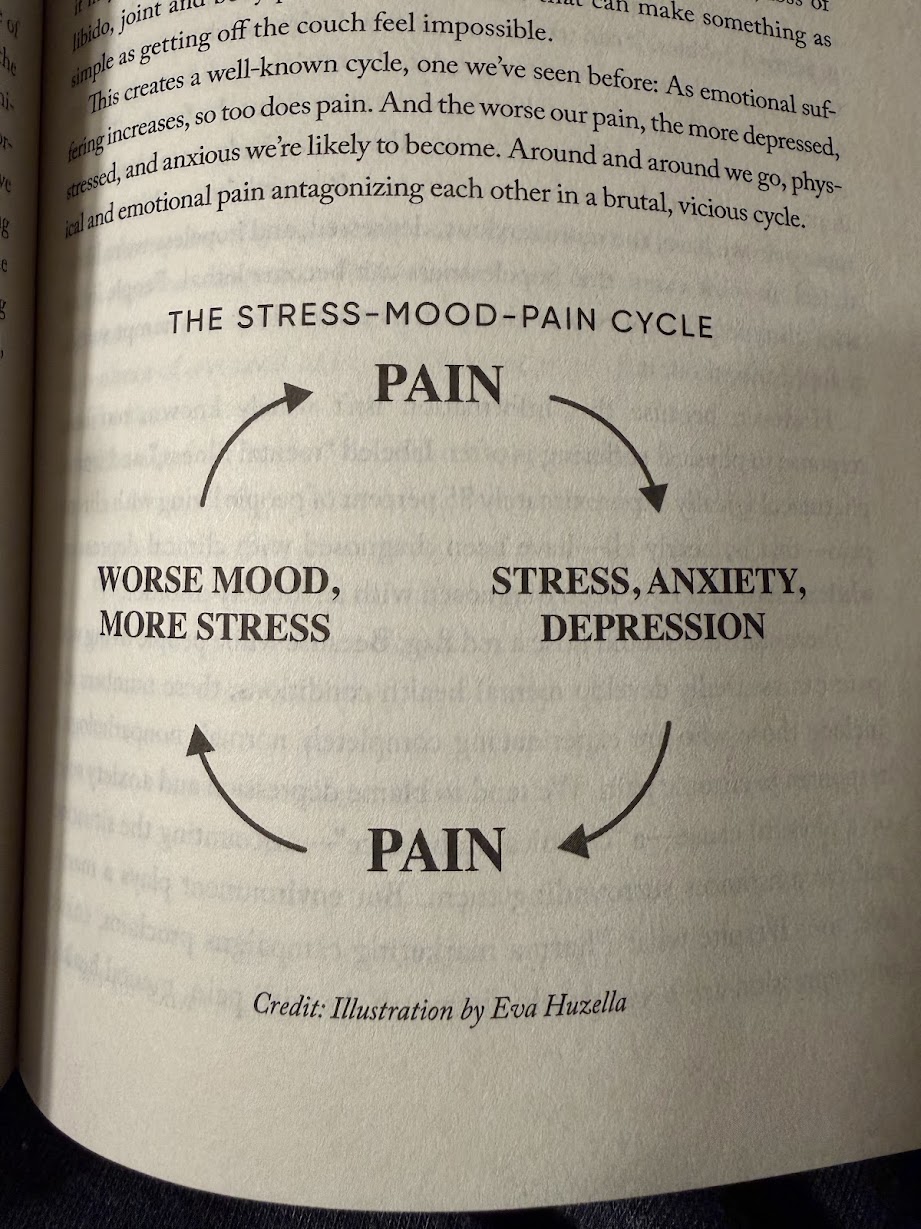
Stress-Mood-Pain Cycle
A self-reinforcing loop: pain leads to stress, anxiety, and depression, which cause worse mood and more stress, which leads back to more pain. The text notes that as emotional suffering rises, so does pain, and as pain worsens, people become more depressed, stressed, and anxious. It calls this a “brutal, vicious cycle.”
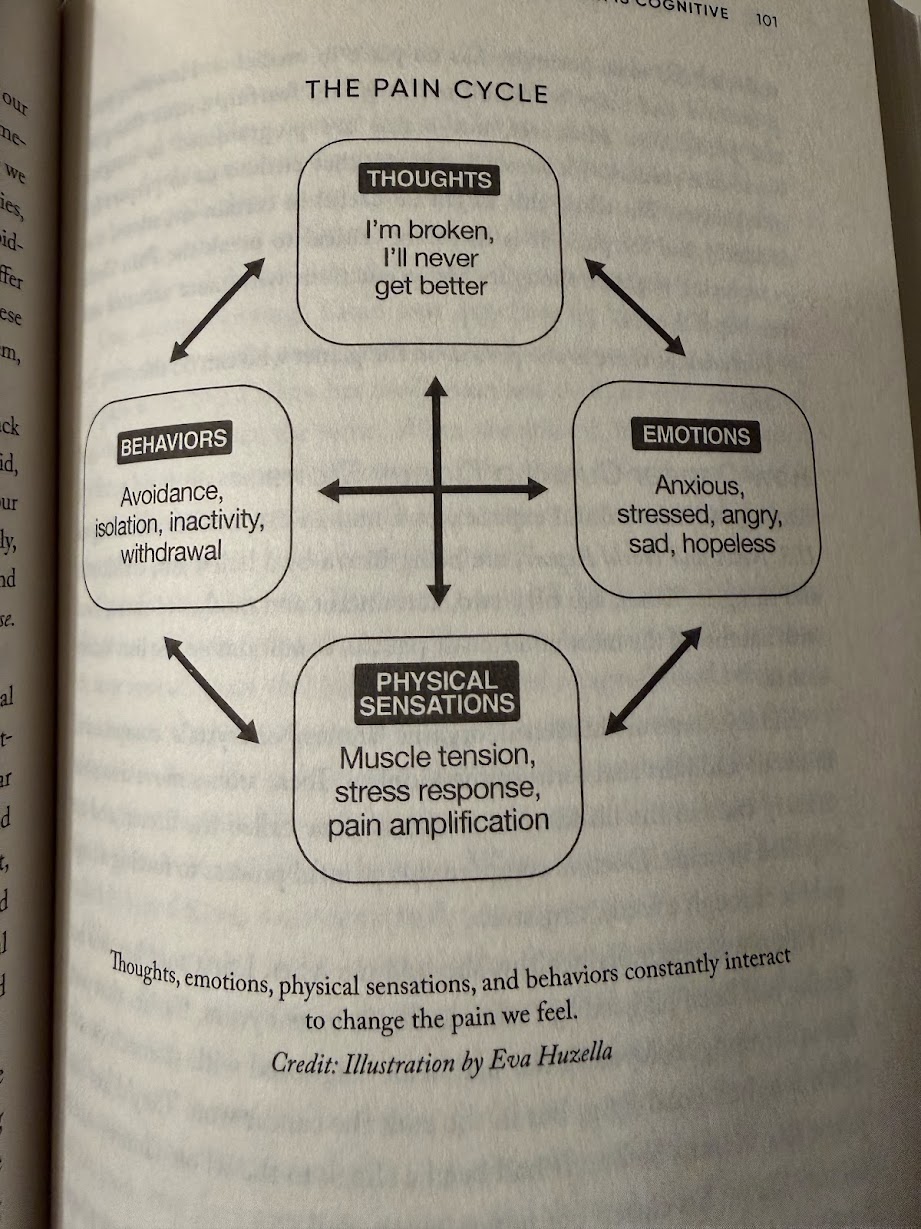
The Pain Cycle
This breaks the loop into four parts that all influence one another:
- Thoughts: “I’m broken, I’ll never get better”
- Emotions: anxious, stressed, angry, sad, hopeless
- Physical sensations: muscle tension, stress response, pain amplification
- Behaviors: avoidance, isolation, inactivity, withdrawal
The caption says these four constantly interact to change the pain we feel.
Overall takeaway: Pain is never purely physical. Biology, psychology, and social context all shape it, and the feedback loops between thoughts, emotions, body, and behavior can amplify it. That also means there are several places to intervene to reduce it.