
Sport of Purebred Dogs

Doberman Working Aptitude Evaluation (WAE)

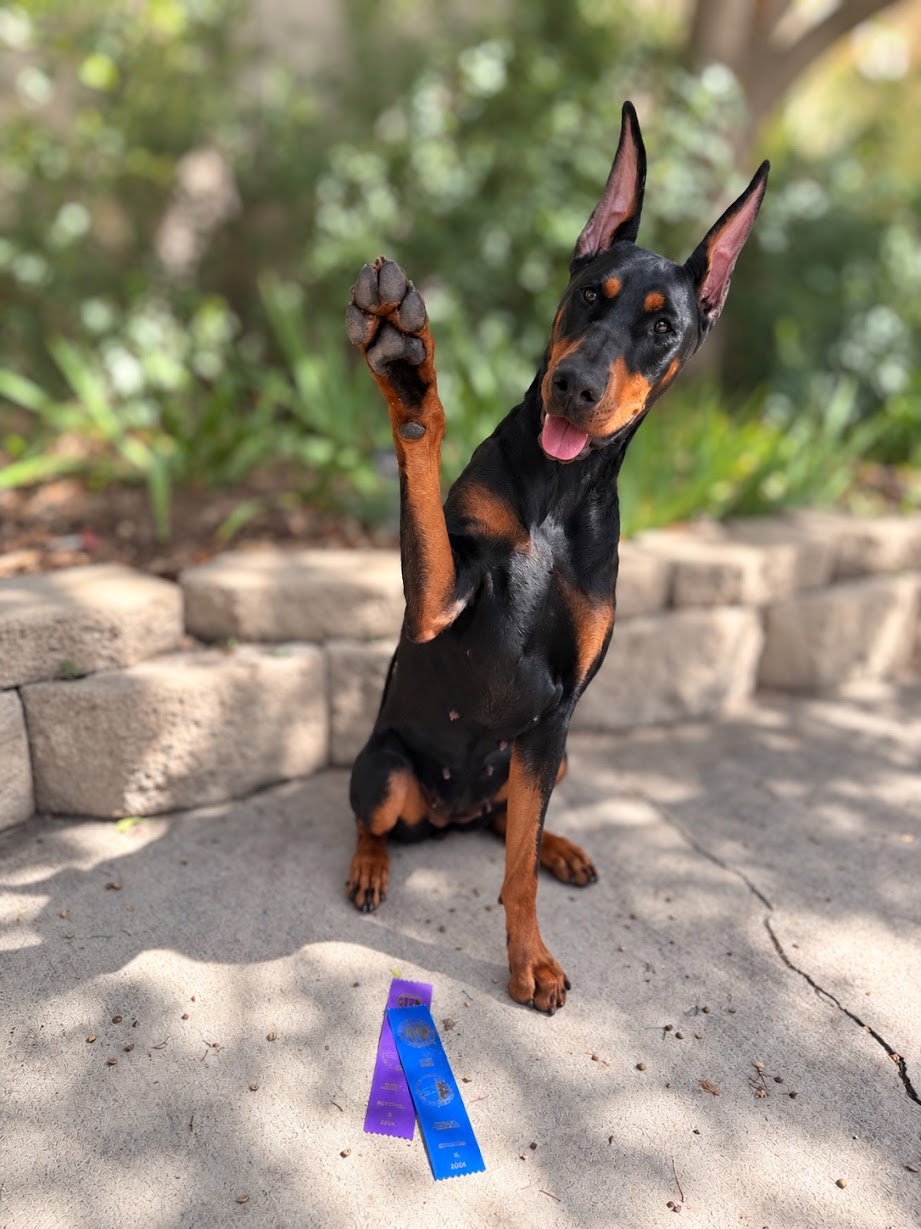
Working Aptitude Evaluation (WAE) In order to earn a Working Aptitude Certificate (WAC), a Doberman must demonstrate the characteristics required of a dog to be a stable companion and resolute.  The Working Aptitude Evaluation (WAE) is a standardized temperament test created by the Doberman Pinscher Club of America (DPCA) to evaluate an untrained dog's natural stability, courage, and judgment. To determine if a dog possesses the natural temperament of a stable companion and resolute protector without relying on flashy obedience or prior training, and dogs that pass earn a Working Aptitude Certificate (WAC). Dogs must be at least 18 months of age. Must be registered or have an Indefinite Listing Privilege (ILP)/PAL number with the American Kennel Club (AKC). No prior training is required or preferred, as the test measures pure instinct and reactions to unexpected stimuli. Core Exercises The evaluation puts the dog through real-world scenarios to test how quickly they assess a situation and recover from surprise: Neutral Stranger: Evaluates how the dog reacts to a calm, unfamiliar person. Friendly Stranger: Tests sociability and welcoming behavior. Hidden Clattering (Alert and Discover / Investigation): Measures curiosity, nervousness, or courage when confronted with unexpected visual and auditory stimuli. Gunshot or Loud Horn: Assesses nerve strength, stability, and recovery time after a sudden loud noise. Threat/Protection Test: Evaluates clear-headedness, courage, and discernment under pressure when a simulated threat is introduced.  
By |September 25th, 2026|Categories: Sport of Purebred Dogs|Comments Off on Doberman Working Aptitude Evaluation (WAE)

When Did Dog Show Handlers Start Dressing Like They Lost a Bet?

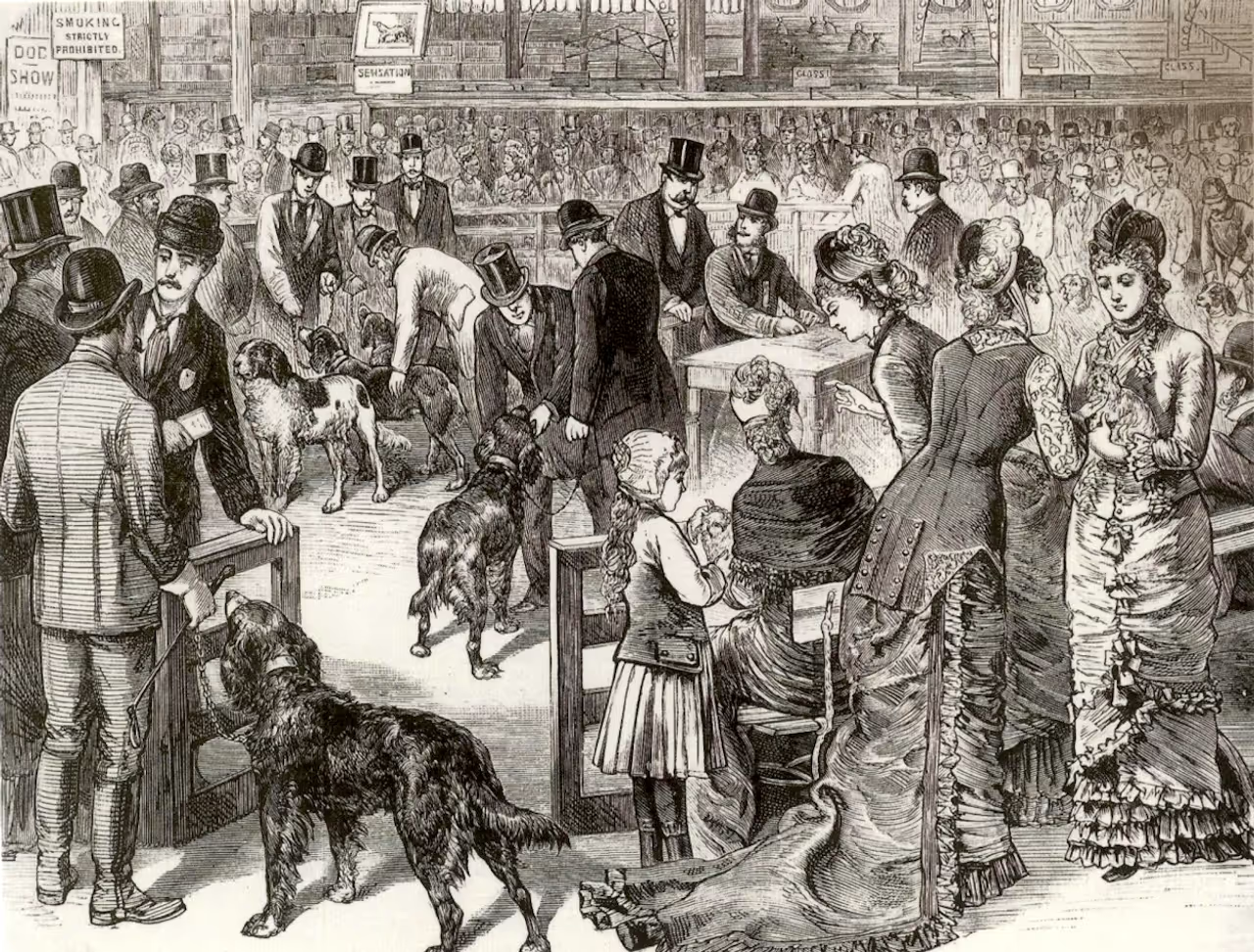
Spend five minutes at a dog show and you'll inevitably ask yourself the same question: Why is that woman wearing a hot pink sequined blazer while sprinting behind a poodle? The answer is surprisingly practical. Back in the beginning, men wore top hats and tails, and women wore their finest gowns and attire to attend Westminster Kennel Club dog shows, and the handlers followed suit---literally.    They were the playgrounds of the elite---people who had time and money in a struggling new world to continue their European traditions of showcasing the finest dogs that time and money could buy, and breed.   They wore their Sunday finest from those humble beginnings into the 1940s and '50s, where dog handlers looked like they were headed to church or a board meeting. Men wore conservative suits. Women wore tasteful dresses and hats. The only thing flashy in the ring was the dog. . Then somewhere along the way, handlers discovered that clothing could actually help showcase the dog. By the 1980s and '90s, business attire gave way to brightly colored jackets, bold prints, and fabrics that could survive a day of jogging, kneeling, bending, and occasionally stuffing liver treats into hidden pockets.  Those electric-blue suits and lime-green skirts aren't fashion statements—they're marketing for the dog. A black Labrador pops against a bright red jacket. A white Maltese stands out against navy. Sequins catch the arena lights. Stretch fabrics let handlers move without looking like they're about to split a seam chasing an excited Golden Retriever. Even the shoes have a purpose. While spectators may wonder why no one is wearing heels, handlers know it's hard to sprint across wet grass while convincing a Saint Bernard that this is

By |July 14th, 2026|Categories: Dog Training, Sport of Purebred Dogs|Comments Off on When Did Dog Show Handlers Start Dressing Like They Lost a Bet?