polo

Polo Tailgates

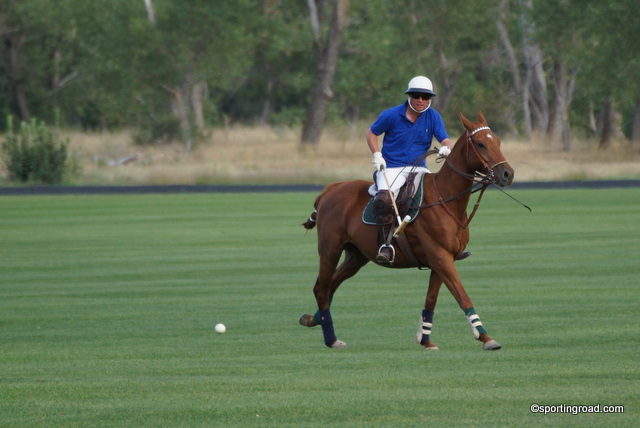
Photos from our friend Carolyn, who makes the best polo tailgate picnics.  Discover the joy of crafting delectable platters with simplicity and elegance. Carolyn uses artistry and mindfulness her creations.  From procuring the perfect ceramic dishes to savoring the seasonal bounty of fresh produce, her tale offers a glimpse into a culinary journey brimming with flavor and intentionality.  Tailgates should embody a quest to slow down, appreciate the nuances of each ingredient, and savor the essence of seasonality—a journey that transcends the confines of the kitchen and enriches every aspect of daily life—one that celebrates simplicity, mindfulness, and the joy of savoring each moment.

By |February 1st, 2023|Categories: polo|Comments Off on Polo Tailgates

Racing speeds of quarter horses, thoroughbreds and Arabians

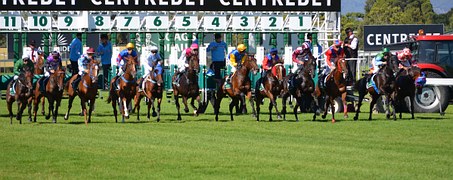
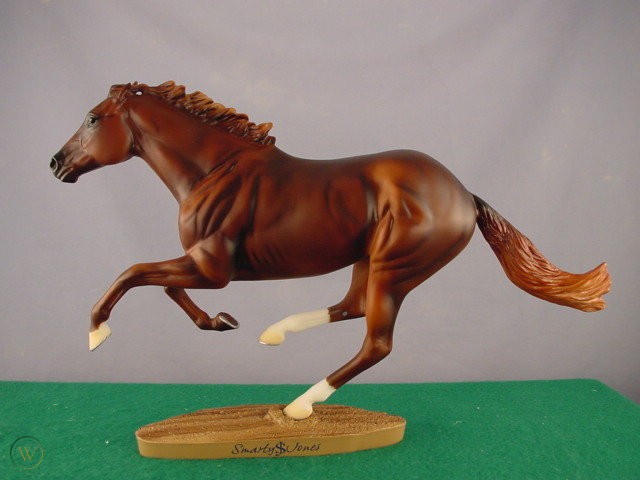
B D Nielsen 1, K K Turner, B A Ventura, A D Woodward, C I O'Connor Affiliations expand PMID: 17402407DOI: 10.1111/j.2042-3306.2006.tb05528.x Abstract Reasons for performing study: While Quarter Horses are recognised as the fastest breed of horse, direct comparisons to race times with other breeds can be misleading. Quarter Horse races begin when the starting gates open. Thoroughbred and Arabian races begin a short distance from the gates after horses have started running. This study compared speeds of these breeds as they accelerate from the starting gates and during the middle and end of races. Objectives: To compare racing speeds of the 3 breeds, and to compare speeds during various segments of the races. Methods: Video tapes of races were obtained from a local track. The various race segments were viewed and the winning horse timed by 5 individuals. Fastest and slowest times were removed and the 3 remaining times averaged. Results: Quarter Horses averaged faster speeds than Thoroughbreds even when Thoroughbreds were raced at a distance (402 m) similar to Quarter Horse races. Both breeds were substantially faster than Arabians. Quarter Horses racing 336 m or less gained speed in each segment of the race while Arabians and Thoroughbreds racing 1006 m ran fastest during the middle of the race and had decreased their speed in the final segment of the race. Conclusions: Despite similar race times reported for 402 m, Quarter Horses averaged faster speeds than Thoroughbreds when timed from a standing start. In short races, both breeds accelerate throughout the race. Arabians, despite being known for endurance, had slowed by the end of the race. Potential relevance: This study demonstrates that Quarter Horses achieve faster racing speeds than do other breeds. It also reveals a potential flaw in race-riding strategy as a more consistent pace throughout
By |August 30th, 2022|Categories: polo|Comments Off on Racing speeds of quarter horses, thoroughbreds and Arabians

Doing Laundry and Washing Whites

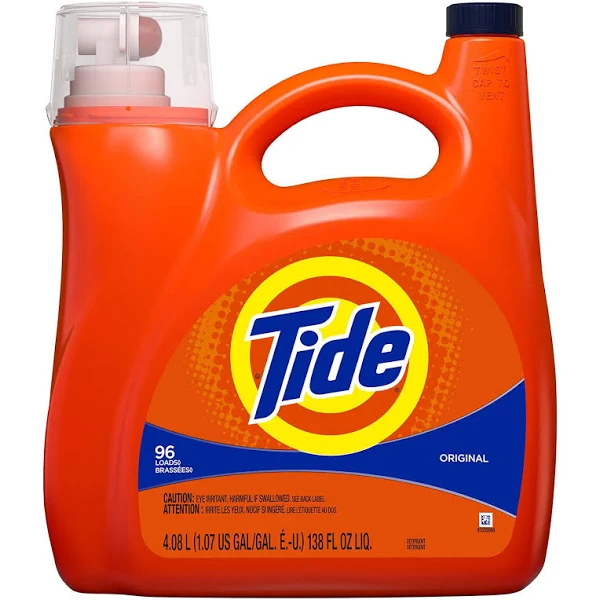
Many people are curious about our close father–daughter relationship. Some have even said it seems more like a sibling dynamic. That isn’t quite accurate, but it gives a sense of what it’s like when you help shape your child into a kind of shared reflection of yourself—close friends who genuinely enjoy each other’s company and the everyday activities we do together. That includes everything from field sports like polo to ordinary chores, including laundry. Advice for my daughter doing laundry in college Doing laundry in college can feel like a challenge at first, but it’s generally easier than it seems. Anyone can learn to do it well. The key is to read labels, sort carefully, and take your time. For detergents, I like Tide for whites along with about 1/4 cup of Clorox bleach. I use Free & Clear for everything else. For stains, OxiClean tends to work better than Spray & Wash for pre-treatment on grass and other marks. Preparation Preparing to wash clothes often takes more time than the washing itself, but it’s a simple process once you learn it. Start by reading clothing labels, especially on anything valuable or delicate. Fancy dresses, button-down shirts, or specialty fabrics often need dry cleaning. Always check tags carefully (usually inside the neck, waist, or side seam) to avoid damage. Anything requiring a specific temperature or special care should be separated from the rest. Next, sort new clothes separately. Freshly purchased items tend to bleed dye, whether they are dark colors like black and navy or bright colors like white and green. Wash new clothes on their own the first time to avoid staining other items. Then separate by color: Darks: blacks, blues, browns, denim

By |June 21st, 2022|Categories: Foxhunting, polo, Ranching, Uncategorized|Comments Off on Doing Laundry and Washing Whites

A Day at the Races, Behind the Scenes

Shesasmartypants by Smarty Jones gets a bucket of oats Racehorses Get A Lot of Exercise They get turned out walking on a hot walker for 20-45 minutes once or twice a day. They get galloped, breezed or worked (each is progressively faster and the work is a timed workout reported to the track which must be completed twice in 60 days if the horse hasn't been raced in 6 months, and every 6 months thereafter for horses actively racing). And they share a lot of useful remedies with other disciplines to keep horses sound, but they have some of their own. Their Bits are All Snaffles Racehorses Eat A Lot Fiber is an energy source that is often overlooked in horse nutrition. Horses have a highly developed hindgut that houses billions of bacteria and protozoa capable of fermenting large quantities of fiber. The end products of fiber fermentation can be used as energy sources throughout the day because fermentation continues long after a meal has been eaten. Racehorses are generally fed unlimited hay, which amounts to a staggering 15-20 lb (a whole small bale) per day of clean grass hay such as timothy or oaten hay. Smaller quantities of alfalfa hay (2-4 lb or 0.9 to 1.8 kg per day) may also be offered. This level of hay intake will meet the racehorse’s maintenance DE requirement and help protect against gastric ulcers and colic. Feeding hay alone would leave the racehorse with an energy deficit of around 15-20 Mcal DE, and this must be supplied from other energy sources. Traditionally, these extra calories needed to fuel the racehorse were supplied by straight cereal grains such as oats, corn, and barley. The main fuel source in

By |October 6th, 2021|Categories: Hunting, polo|Comments Off on A Day at the Races, Behind the Scenes

Why We Hose Off Polo Ponies After Playing

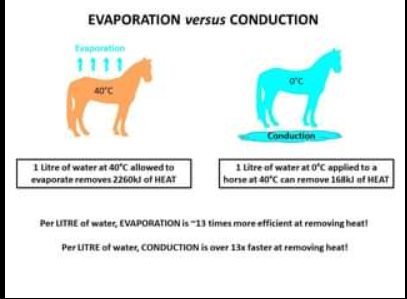
    From Dr. David Marlin HORSES, HEAT, SWEATING, COLD-WATER, COOLING, SCRAPING At the risk of preaching to the converted, as a few people are still sending me articles, often written by lay people, sometimes from vets, and telling me how wrong I am, I thought I'd try a pictorial approach 🙂 Per litre, Ice-Cold water (0-5°C) removes heat faster than evaporation of 1 litre of water or sweat. Per litre, the complete evaporation of 1 litre of sweat or water removes 13x more heat than 1 litre of ice-water BUT evaporation takes 10-15x longer to remove the heat. COLD WATER = QUICK COOLING, BUT WASTEFUL OF WATER (INEFFICIENT) - USE FOR RAPID COOLING EVAPORATION OF WATER OR SWEAT = SLOW, BUT DOESNT WASTE WATER (EFFICIENT) - USE FOR KEEPING HORSES COOL MYTHS Myth 1 - “You should never put cold water on a hot horse"Explanation - Ice-cold water(0-5°C) on hot horses does not cause shock, laminitis, kidney damage, muscle damage, tying-up or heart attacks! Myth 2 - “Water left on a horse will heat up and insulate and make the horse hotter."Explanation - Flawed physics! Water is a better conductor of heat than air. A wet horse will actually cool faster than a dry one, even if humidity is 100%. Myth 3 - “Scraping is essential." Explanation - Scraping just wastes time that could be better used putting more water on to cool by conduction. Scraping also wastes water when water is in short supply. Water which could evaporate on the horse. Water evaporating on the ground doesn't cool horses down. Myth 4 “Concentrate on large veins, arteries inside the back legs, large muscle groups"Explanation - NO. Cooling by evaporation or conduction works by cooling

By |August 17th, 2021|Categories: Hunting, polo|Comments Off on Why We Hose Off Polo Ponies After Playing

Candy Man a/k/a Snickers

She Had Some Horses BY JOY HARJOI. She Had Some Horses She had some horses.She had horses who were bodies of sand.She had horses who were maps drawn of blood.She had horses who were skins of ocean water.She had horses who were the blue air of sky.She had horses who were fur and teeth.She had horses who were clay and would break.She had horses who were splintered red cliff. She had some horses. She had horses with eyes of trains.She had horses with full, brown thighs.She had horses who laughed too much.She had horses who threw rocks at glass houses.She had horses who licked razor blades. She had some horses. She had horses who danced in their mothers' arms.She had horses who thought they were the sun and theirbodies shone and burned like stars.She had horses who waltzed nightly on the moon.She had horses who were much too shy, and kept quietin stalls of their own making. She had some horses. She had horses who liked Creek Stomp Dance songs.She had horses who cried in their beer.She had horses who spit at male queens who madethem afraid of themselves.She had horses who said they weren't afraid.She had horses who lied.She had horses who told the truth, who were strippedbare of their tongues. She had some horses. She had horses who called themselves, "horse."She had horses who called themselves, "spirit," and kepttheir voices secret and to themselves.She had horses who had no names.She had horses who had books of names. She had some horses. She had horses who whispered in the dark, who were afraid to speak.She had horses who screamed out of fear of the silence, whocarried knives to protect themselves from ghosts.She had horses who

By |October 29th, 2020|Categories: Foxhunting, polo, Uncategorized|Comments Off on Candy Man a/k/a Snickers

Do It Yourself Polo Mallet Repairs

Have a minor repair that is needed on your mallet, well here is the brochure on how to do it yourself from a reputable polo mallet manufacturer.HowToDoItYourselfPoloMalletRepairsDownload

By |July 31st, 2019|Categories: polo|Comments Off on Do It Yourself Polo Mallet Repairs

Useful Remedies for Your Horses

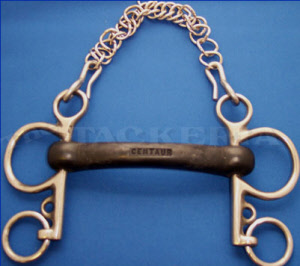
Most of our kit of remedies are based on veterinary advice we have received over the years. Consult your own veterinarian, but here is what works for us and our horses: If a large ring snaffle doesn't work, try a D-ring snaffle. Need more stop, then try a rubber pelham bit. All horses will go well in one or the other. If they don't is probably a teeth issue and not a bit issue. Get your horses teeth floated annually. For polo we start with a large ring gag, then a rubber pelham on most that don't stop well, adding increasingly longer shanks, but if you need the horse to be more straight, then add draw reins. Shapley's Original M-T-G for rain rot, skin infections in the spring, rub on affected areas with your hand and leave in. Bluelite or Morton's lite table salt on game and hunt days for electrolytes. Feed Equine Senior for steady horse feed that won't make them hot, but if you want to add weight then go to Purina Ultrium. Spray Absorbine on sore backs and legs after hosing the area down, if you have issues with soreness. Roach polo pony manes and whiskers, together with trimming the sides of tails monthly. Get a Oster Volt cordless clipper, those are the best, but pricy at $350. Use a 10 wide blade for body clipping. Use Dove dishwashing liquid detergent to clean sheaths (this needs to be done annually on geldings) and just use Dove liquid soap in place of all of your expensive horsey shampoos and conditions. This was recommended by our vet. Use triple antibiotic ointment on small cuts and Scarlet Oil spray on large cuts and scrapes. Bute

By |May 21st, 2019|Categories: polo, Uncategorized|Comments Off on Useful Remedies for Your Horses

Bits-The Snaffle, the Pelham, and the Gag

I just read an article entitled "It's All About the Bit That Works Best For You."  I couldn't disagree more, it's all about the bit that works best for your horse.  Like all things American, we have gone crazy for the latest gadget when it comes to bits.  Wilson Dennehy and Marvin Beeman only used two bits, a snaffle or a pelham, for show jumping, hunting and polo.  Why?  Because "I never found a horse that wouldn't go well in one or the other," they both independently said to me. As for the Snaffle, there are a few kinds worth mentioning. First, the Eggbutt Snaffle: The Eggbutt is a very common multi-discipline style of cheek piece for snaffle bits. The eggbutt snaffle minimizes two problems that can arise with its cousin, the loose ring snaffle, whose rings can pinch the edges of the horse's mouth, and which doesn't provide much lateral stabilization. By flaring out the ends of the mouthpiece and joining the rings with flush swivel joints above and below where the lips contact the edge of the bit, the eggbutt can be a more comfortable alternative for many horses. The edges of the mouthpiece are less likely to pinch the horse's lips, and because the cheek is fixed in relation to the mouthpiece, the bit offers moderate lateral control. When the bit is pulled laterally through the mouth, there is some resistance on the opposite side, which can help encourage the horse to turn with less danger of pulling the bit through the mouth than exists with a loose ring snaffle, though more than with a dee-ring or full cheek snaffle.By having rings fixed to the mouthpiece, the eggbutt does give up some

By |June 15th, 2018|Categories: Foxhunting, polo|Comments Off on Bits-The Snaffle, the Pelham, and the Gag

Whitening Spray for Grey or Paint Horses

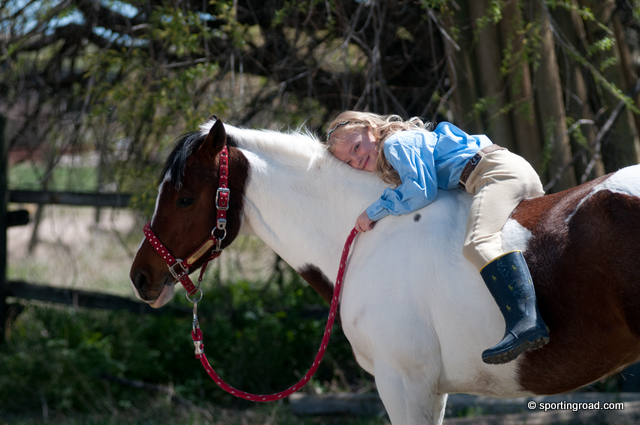
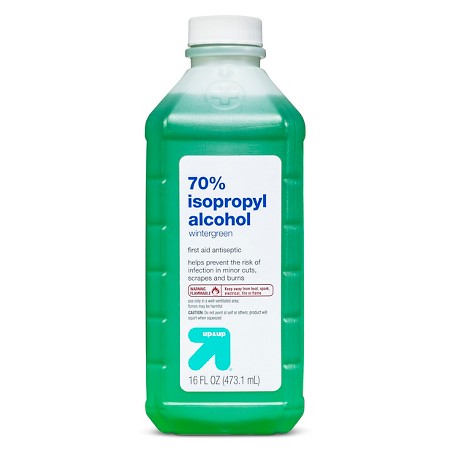
For keeping grey or paint ponies white, some swear by Orvus + blueing + oxyclean in water; rinse; ketchup soak; rinse; leave in conditioner. We like to use 1/3 wintergreen alcohol to 2/3 water in a spray bottle, with a few drops of cowboy magic shampoo into the bottle, is equally as good as any of the green spot removers. It's inexpensive, easy and very effective!

By |October 20th, 2016|Categories: Foxhunting, polo|Comments Off on Whitening Spray for Grey or Paint Horses