Cuisine

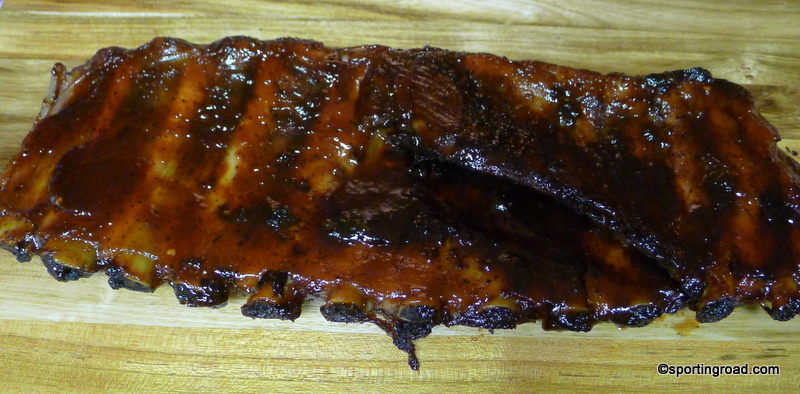
Dry-Rub BBQ Spare Ribs

We went through St. Louis at Christmas time.  Just to make sure these were the best ribs, we stopped at several St. Louis BBQ joints and I can proclaim this rib ribs is still the best.  And you don't need to set up an all day smoker box, nor a hillbilly hot tub (but a hilly billy hot tub helps to hold the beer once you have soaked and drained it), to make them at home.  You can make these ribs completely in the oven!  I know, heresy in many places, but true. We have tried a bunch of rib recipes including the famous Willingham’s World Championship Ribs and making my own BBQ sauce, but I keep coming back to this favorite recipe, which comes from my Uncle Tom.  The recipe and technique are simple and still tastes best for all the homemade ribs that we have found.  But we were given some Tender Belly Berkshire pork ribs which make this recipe complete, as it can now be proclaimed the best! In a cooking bag add: a rack of pork ribs 12 oz. of Coca-Cola 1 T. vinegar Marinate all ingredients overnight with meat side down (the ribs curving upwards) in a Reynolds oven bag. Take out of bag and season with salt, pepper, and 1/4 c. of Emeril's Bayou Blast (see my spices and seasonings page for the recipe). Heat a grill to hot and put on the grill for a total of 6-8 minutes turning once.  Then 335°F in the oven for two hours to two and one-half hours on a foil lined baking sheet, covered with another sheet of foil.  Remove the top sheet of foil for the last 10 minutes 20
By |March 24th, 2013|Categories: Cuisine, Recipes|Comments Off on Dry-Rub BBQ Spare Ribs

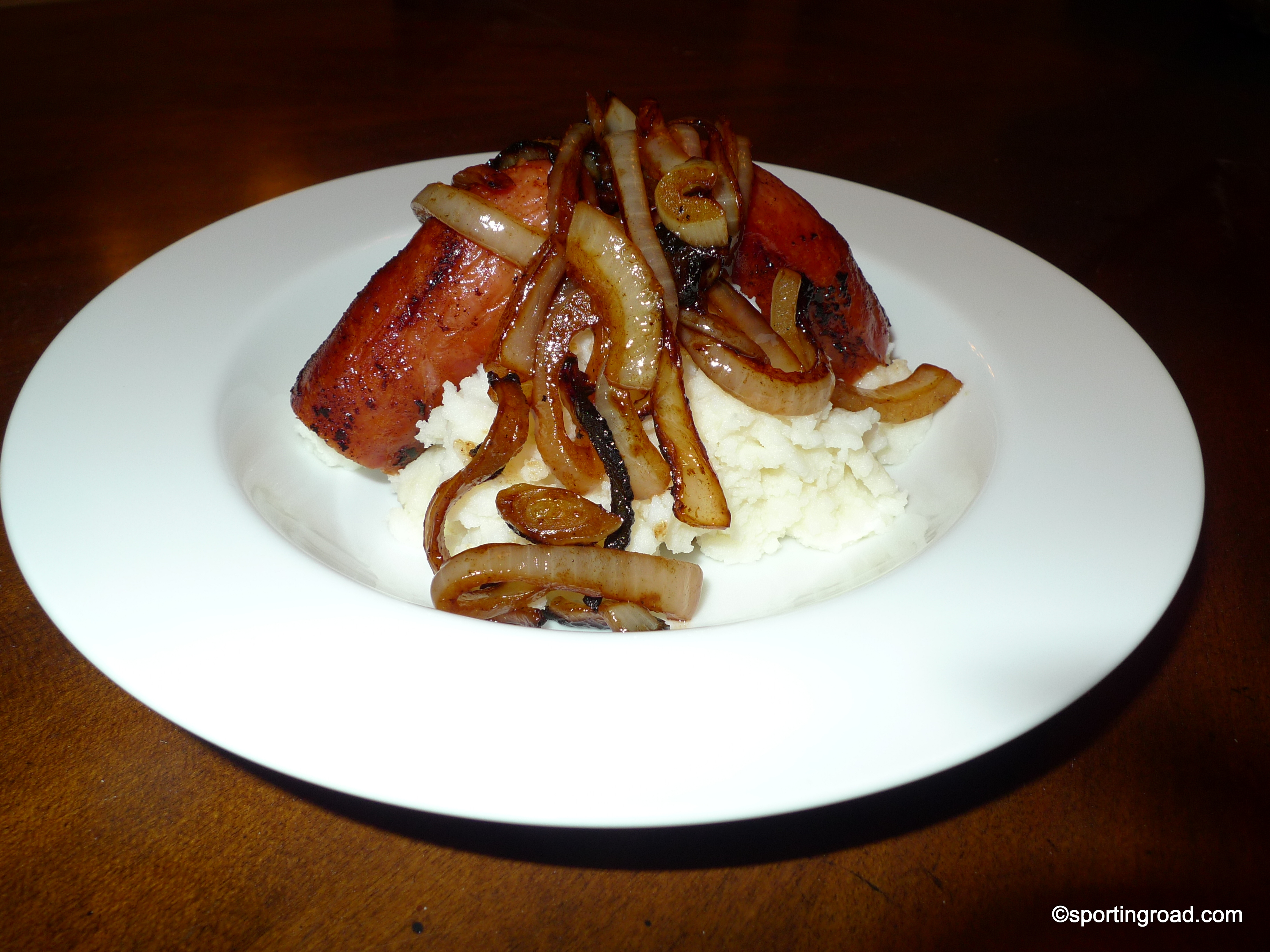
Tender Belly Berkshire Pork Bangers and Mash

Our friend and new-found pork purveyor, Steven Wiskow, gave us some Tender Belly Franks to try out here at the château.  I’ll be honest, as always here at the Sporting Road, as we aren’t selling anything and turn down all requests for advertising—I looked at them and said, “What in the hell are we going to do with these?”  They are uncured Berkshire pork franks, and they say that they “call them franks because of the extra effort we put into them. They are uncured and 100% Berkshire pork from the hind leg, coarse-ground like wonderful Old World sausage. They are applewood-smoked and have a subtly sweet and delightfully salty taste. The snap our frank makes when you bite into it is exactly what you would expect….Perfection.” Alright, so we have a package of uncured Berkshire pork franks.  I thought of calling Gordon Ramsay, but it was too late in England to ring him up, and after a day of fox-hunting, dinner time here in the U.S. was quickly approaching with two girls waiting for my creation.  Having spent many days putting food on the table hunting, my family knows that I can whip about anything up into a quick dish thanks to my mother.  And, since County Berkshire is home to Britain’s oldest breed of pig, I had the revelation that they must have made the traditionally English bangers and mash from these links, probably since the beginning of time, and since I couldn’t find Gordon on the speed dial, I put down the phone and picked up the skillet. In a large skillet over medium heat, I cooked the sausages until well browned.  And, since they said they were “uncured” but they looked

By |March 24th, 2013|Categories: Cuisine, Recipes|Comments Off on Tender Belly Berkshire Pork Bangers and Mash

Pork Chops

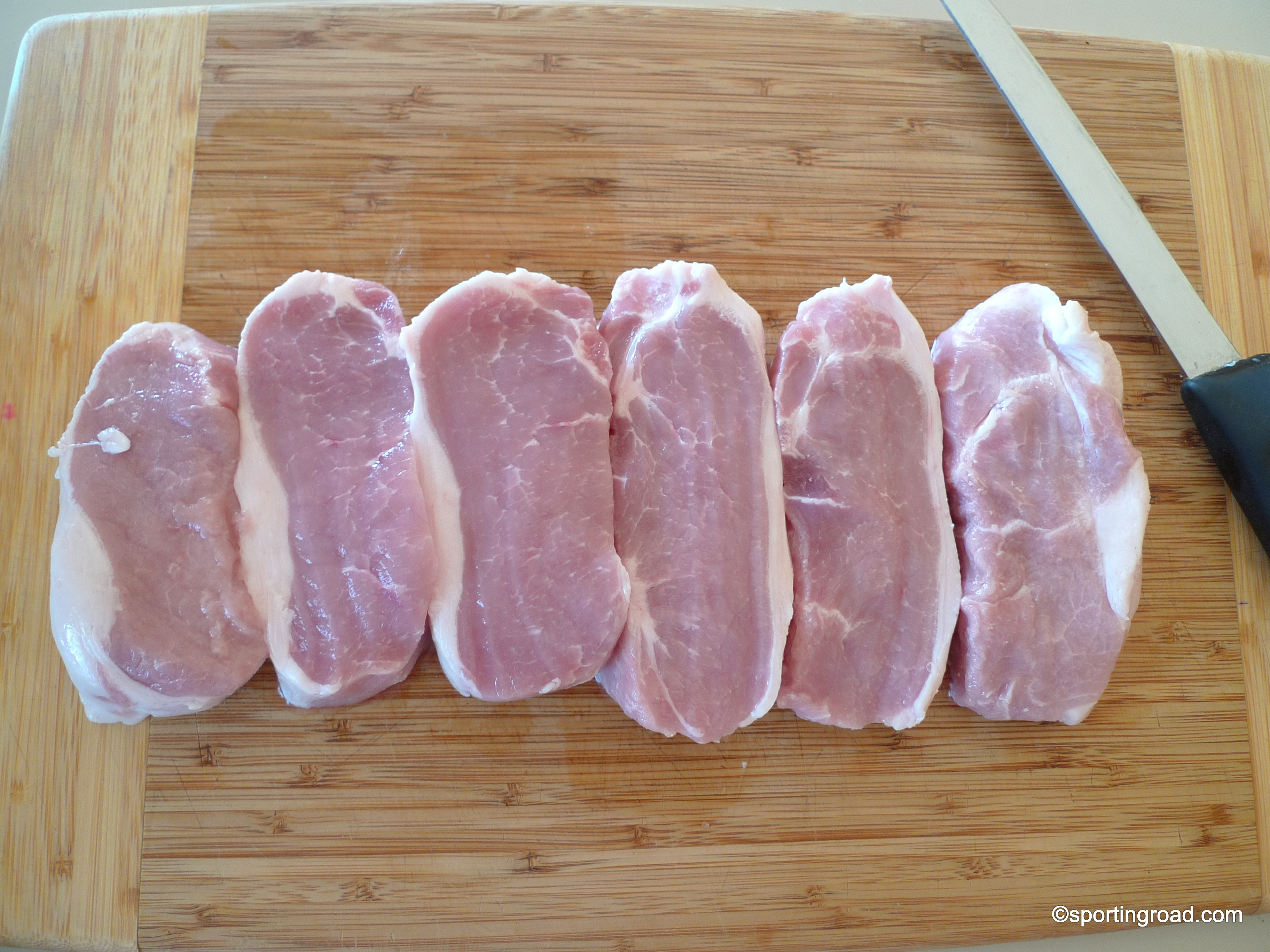
If you are a fan of The F-Word, you know your Berkshire pork from Gordan Ramsay's infamous backyard Berkshire's, Trinny and Susannah.  The flavor and texture of Berkshire pork sets it apart from other breeds. It has a distinctive, rich, buttery taste with unparalleled juiciness, tenderness and depth of flavor. When you cut into Berkshire pork you see dark red, rich color with exquisite intramuscular marbling. Enough hype, on to the recipe... INGREDIENTS AND INSTRUCTIONS: Get one 8-ounce boneless pork chop per person (you can also French bone the chops which makes for a nicer presentation) and soak in 2 c. water, after having mixed the water with 2 T. salt.   Brine for 5 minutes.  Take out and pat dry.  Season liberally, both sides, with Creole Seasoning, coarse French sea salt, and pepper.  Prepare the grill.  Grill the chops for five minutes over a very hot grill.  Turn and brush the tops with BBQ sauce.  Grill another five minutes, turn and coat the other side with BBQ.  Grill one more minute each side for the BBQ to stick. We like to serve with coleslaw or Brussel sprouts.  Also goes great with mashed potatoes, apple chutney and cider mustard glaze.

By |March 24th, 2013|Categories: Cuisine, Recipes|Comments Off on Pork Chops

A Valentine’s Day Feast at the Château

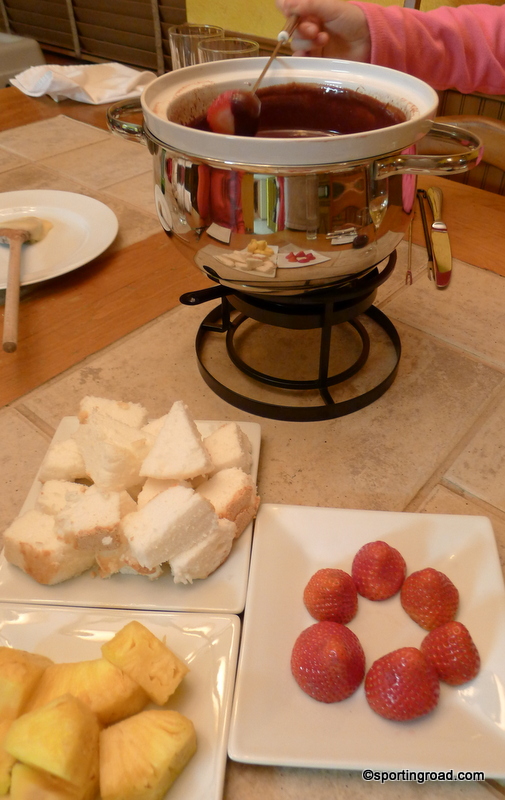
For an interesting article on the tradition of Saint Valentine's Day (there are actually three such saints and the legends are old and varied) visit http://www.history.com/topics/valentines-day.  After sending your loved ones a handwritten card and bringing them some flowers, how about serving them a meal at home.  At the château, we serve this Valentine's Day favorite five-course French meal: Steamed Crab Legs Salade Cheese Fondue Steamed Lobster Brussels Sprouts Chocolate Fondue Café and Brandies

By |February 16th, 2013|Categories: Cuisine, Recipes|Comments Off on A Valentine’s Day Feast at the Château

Fleur De Sel de Camargue

Our favorite salt for cooking or for seasoning is the French Fleur De Sel de Camargue.  Fleur De Sel de Camargue is hand raked and harvested in the Brittany salt flats of France. The name Fleur De Sel comes from the aroma of violets that develops as the salt dries. Only the premium, top layer of the salt bed is used. Each signature container is sealed with a cork top and signed by the Salt Raker who harvested it. We keep a salt pig or small jar of this by the stove, for use in cooking.  And, after allowing to dry out of the tin for a few days, it is perfect to add to our salt grinder, for seasoning as well.  We use it on everything.  As it is very salty tasting, a little bit goes a long way, which also reduces your sodium intake, as you need less to add a "salty" flavor to any dish. It is readily sourced from Salt Works or gourmet grocers.

By |October 26th, 2012|Categories: Cuisine|Comments Off on Fleur De Sel de Camargue

Tapas

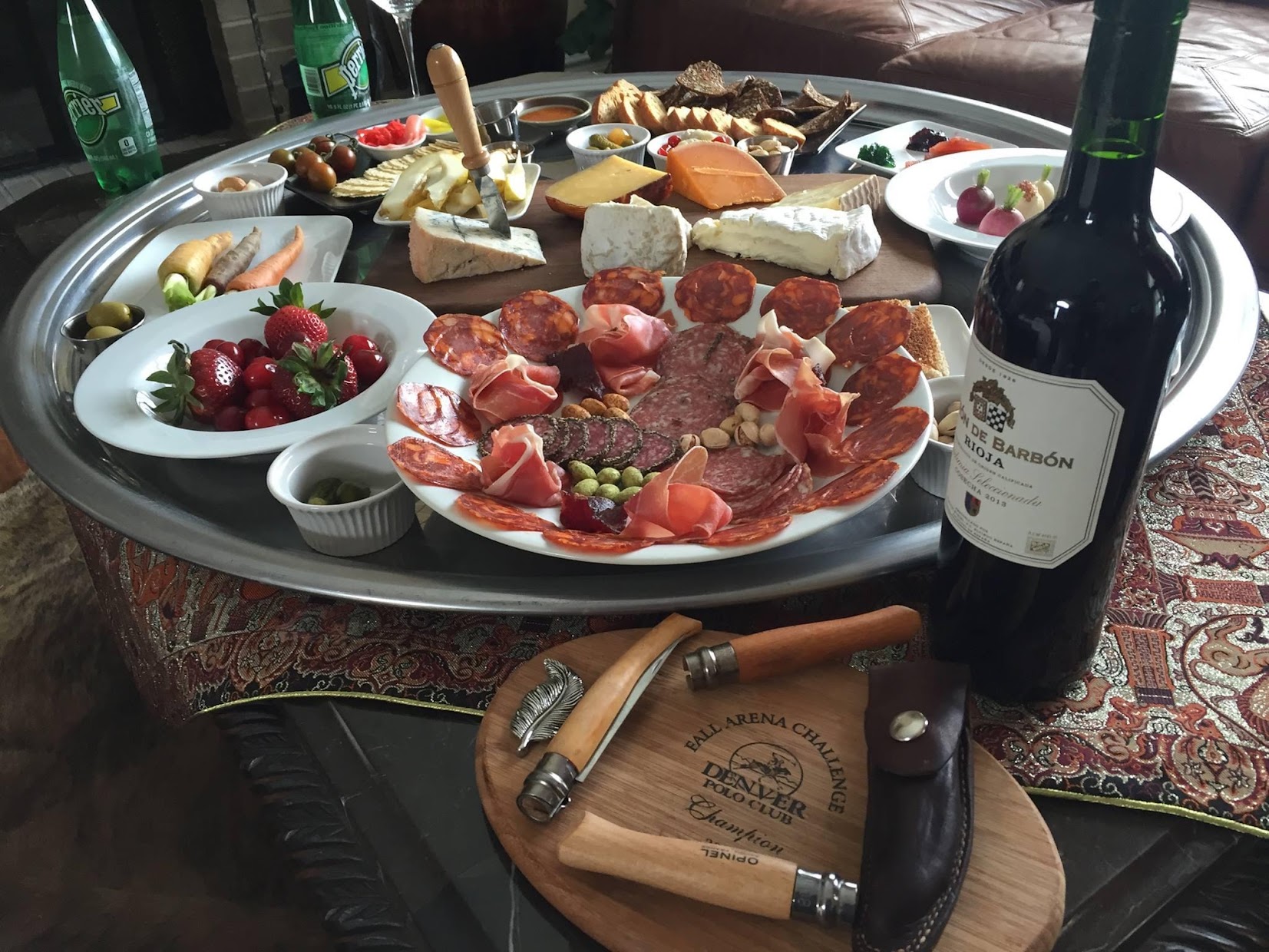
The word tapa means "cover" or "lid" and was said to referred in the early days to the slice of serrano ham or cheese laid across the tops of narrow sherry glasses handed by innkeepers to coach drivers, to keep insects out and to keep them from spilling.  Fortified sherry wines are produced in the so-called Sherry Triangle of southern Spain.  Fino produced around the port of Sanlucar de Barrameda is called manzanilla.  A culinary highlight of Spain is sitting in a legendary tapa bar with a glass of manzanilla and a few plates of tapas. Membrillo and manchego are one of our favorite tapas.  Membrillo is a Spanish-style quince jelly and can be ordered from www.latienda.com, if you cannot source locally, which is increasingly easy to do. You can buy it in blocks, which you slice thinly, or in softer pastes like jelly, but the blocks are traditional. This is traditional tapas food, all on its own, but some tapas bars ("tabernas or tascas) jazz it up with jamon and piquillo peppers, or marinated anchovies and sliced manzanilla olives. See all of our tapas recipes to serve after an afternoon of park drag coaching: Caracoles ("snails") Chorizo and charcuterie Esparragos blancos ("white asparagus") Gambas al ajillo ("shrimp with garlic") Olives Membrillo and manchego Pan tomate Roasted almonds Pimentos con Anchoas ("roasted red peppers and anchovies") Roasted Almonds Roasted Tomatoes

By |May 28th, 2012|Categories: Cuisine, Travel|Comments Off on Tapas

Where does that cut come from?

Wikipedia has some great new diagrams showing where the cuts of meat come from, which every home cook should endeavor to learn the difference in where various parts come from on the animals, so as to use them to their full advantage and to save costs where possible: Beef and veal Veal and mutton Pork and bacon A note about cooking meat, always allow the meat to come to room temperature for an hour or so before cooking.  This is an important step, regardless of whether you are sauteing or grilling, as it allows the outside to sear and brown, without the inside still being at a much colder temperature from the refrigerator. Always season meat before and during cooking, as salt has water extraction properties, bringing "sweat" to the surface.  You want the meat to seal quickly, keeping in its juiciest flavors.  If you overcrowd a pan, it loses heat and the meat steams versus sears.  The same is true for the grill.  Resting after cooking, especially with larger pieces of meats or birds, is very important, at is allows the meat to relax again and absorb the juices rather than having them cut from the pores onto the plate.  Rest birds with the breast down, or meat cuts with the fat up, to allow the juices to flow back into the meat.  Tenting with aluminum foil is common, but often unnecessary.

By |May 20th, 2012|Categories: Cuisine|Comments Off on Where does that cut come from?

Table Etiqutte in France vs. USA

Letitia Baldridge, author of over a dozen books, has just ruined my world, though I spent a weekend in etiquette lessons with her in 1992, which apparently didn't fully take. She apparently is very clear on the rule of passing foods counter-clockwise at the table, although I grew up with a rule of clockwise at our house.  Could the French rule be different or was I just mistaken? I made the mistake of assuming that my table manners would come with me across the pond as naturally as my BBC accent did. The years of my mother’s training in the home were followed by etiquette classes in college, and I felt quite at ease in a formal dining environment. Apparently, we were wrong all these years, as I see no support for a French deviation from the US rule.  It turns out Letitia Baldridge is right on both sides of the pond. I knew the first French rule, “Keep your hands on the table.”  Even occasional elbows were permitted in France, contrary to etiquette rules in the Southern states. The next rule in the US is false in France:  You should place your napkin in your lap immediately after being seated.  Once the lady of the house places her napkin in her lap, other guests should follow suit.  A few other distinctions are worth noting. Your bread should go in the upper left edge of your plate. False. Bread is placed directly on the table or tablecloth, unless it is a formal meal in which bread plates are used. When the aperitif is served, you wait for the host to give the toast before drinking.  You should wait for the host to lead the way,

By |May 19th, 2012|Categories: Cuisine|Comments Off on Table Etiqutte in France vs. USA

The Polo Player’s Annual Foxhunting Braai

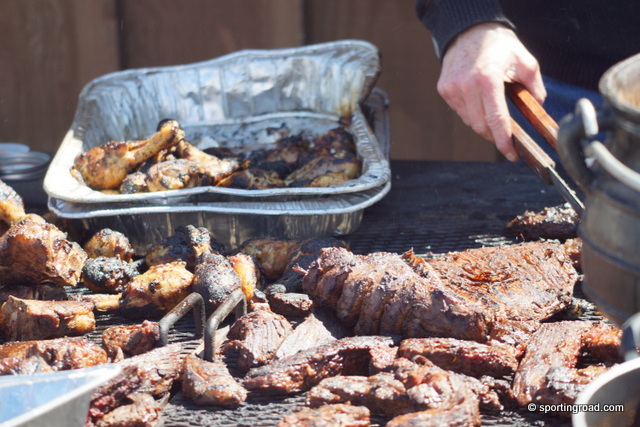
While polo is played in South Africa, they have no mounted foxhunting there, so why we have a South African braai after foxhunting, put on by the polo players in the hunt, is a bit hard to explain.  In any event, it's become the best "hunt breakfast"of the year, and since none of our hunt "breakfasts" are served before lunch time, this is also hard to explain why we call them such.  This description adapted from Wikipedia: A braai is imilar to a potluck party, this is a social event which is casual and laid-back, where family and friends converge on a picnic spot or someone's home (normally the garden or verandah) with their own meat, salad, or side dish in hand. Meats are the star of the South African braai. They typically include boerewors, sosaties, kebabs, marinated chicken, pork and lamb chops, steaks, sausages of different flavors and thickness, and possibly even a rack or two of spareribs. Fish and rock lobster commonly called "crayfish" or kreef in Afrikaans, are also popular in coastal areas to add to the braai. The other main part of the meal in some regions of the country is pap (/ˈpɑːp/, meaning porridge), actually a thickened porridge, or the krummelpap ("crumb porridge"), traditionally eaten with the meat. Made from finely ground corn/maize (similar to polenta), it is a staple of local African communities and may be eaten with a tomato and onion sauce, monkeygland sauce or the more spicy chakalaka (a/k/a trainsmash) at a braai.  The pap is cooked in a potjie pot, which is a cast iron kettle, typically with three legs made to sit on or near the fire side. Biltong is also popular, which is cured

By |May 2nd, 2012|Categories: Cuisine, Foxhunting, polo|Comments Off on The Polo Player’s Annual Foxhunting Braai

Not all Chickens are Alike!

In France and most of Europe, poussin are very popular and have been regularly available since the domesticated wild red jungle fowl. Poussin is the first stage of a chicken’s life (think veal).  Next is the poulet.  Then, mature females or hens are poules, and the mature males are coqs.  Typically, a European goes to market with a specific type of chicken in mind depending upon the recipe.  For instance, cooking an old rooster in wine for a long time, coq au vin.  Poule au pot, hen in the pot, requires a mature female to mature in the broth and vegetables.  Here the coq’s pronounced flavor would be a bit overwhelming.  In America, a capon is a reasonable substitute.  A capon is gelded male fed milk until 6 months.  The flesh is very white and, in France, the capon is traditionally served at Christmas.  For everyday roasting or other dry cooking, get a poulet, or pullet, for a bird that will be juicy and tender.  A poussin is the most tender, as they are only a month old and purely grain fed. In the United States, fryers are birds of either sex up to 3 ½ pounds, then come roasters up to 5 pounds, and capons which range from 6-10 pounds.  Poussin can be ordered in the US from D’Artagnans. I encourage you to buy your chickens whole, rather than in parts (as it is generally far less expensive and you'll be rewarded with all those sauce-building pieces such as the wing tips, back neck and giblets.  It's easy to learn how to spatchcock a chicken, all you need are kitchen shears and a sharp knife. We through any extra meat such as the wing tips and back

By |November 27th, 2011|Categories: Cuisine, Fur and Feather, Recipes|Comments Off on Not all Chickens are Alike!