Sporting Road

Home/Sporting Road

About Sporting Road

This author has not yet filled in any details.
So far Sporting Road has created 490 blog entries.

Girl Hunter: Revolutionizing the Way We Eat, One Hunt at a Time

Girl Hunter:  Revolutionizing the Way We Eat, One Hunt at a Time is an admirably catchy title.  The recipes for Braised Pheasant Legs with Cabbage and Grapes, Chukar Pie, Quail en Papillote, Pheasant Tagine, Duck Confit, Fireplace Venison Tenderloin, Chorizo Sausage, Jugged Hare, Game Bird Stock to Everyday Dry Rub and tips on aging game, should have been all right up my alley.  But, somehow I couldn't get that into the book, nor the recipes beyond the initial appearances which are good.  Maybe I was just in bad mood, as it has all the right elements, including the author being a classically trained chef and devoted hunter.  Maybe it was the lack of pictures of the recipes.  Maybe it was the lack of wild, edible foods.  But, we can agree that, "Whatever your journey, wherever you find it, may it be a wild one." And the  on a Moveable Hunt, harkens to Hemingway and I particularly like the Waiting for Pate in the Floatant chapter.  And, who can't appreciate the Jose Ortega y Gasset quotes, such as "One does not hunt in order to kill, on the contrary, one kills in order to have hunted."  I wanted to love this book from the cover and the title, but maybe it just requires catching me on a better night, so I am avoiding any star-based review, as I like the concept of it and hope to hear from others who really enjoyed it, as I really want to like it.
By |June 22nd, 2012|Categories: Book Reviews, Recipes, Wingshooting|Comments Off on Girl Hunter: Revolutionizing the Way We Eat, One Hunt at a Time

The Frugal Fly Fisherman

The Frugal Fly Fisherman by Patrick Straub is a title that I would love just from the cover.  But, in getting into the merits of the work, it is bit long on theory and short on content.  It recommends saving money where possible with brands such as Redington, but at the same time recommending you invest as much as you can afford in a quality rod.  This doesn't seem to help the newbie angler with actual recommendations.  I understand the concept of not promoting brands over concepts, but it still leaves the angler with the dilemma of "what to buy?" I liked the quotes, particularly of Norman Maclean from A River Runs Through It, such as, "My father was very sure about certain matters pertaining to the universe.   To him, all good things--trout as well as eternal salvation--come by grace and grace comes by art and art does not come easy." From mentions of silk lines and split cane to Gore-tex and carbon-fibers, the book covers it all.  There is certainly an art to getting the most for your dollar.  The reccomendations to avoid The 5-Weight Shootout and lists and focusing on disk drag versus click and prawl, among others are well on point.  As well as the fact that tying your own flies and making do it yourself trips will save money in the long run, but it doesn't overcome the standard advice of 5-weight rods for everything and what flies are most effective, which misses the mark of a died in the wool frugal fisherman who benefits from other's experiences.

By |June 22nd, 2012|Categories: Uncategorized|Comments Off on The Frugal Fly Fisherman

Riding for Ladies and Ladies on Horseback

Two great free online books from the Project Gutenberg. Riding for Ladies - 1891 http://www.gutenberg.org/files/39610/39610-h/39610-h.htm#IV Complete with fetching illustrations of appropriate habits. Ladies on Horseback, 1881  This one includes chapters on hunting: http://www.gutenberg.org/files/39501/39501-h/39501-h.htm  

By |June 20th, 2012|Categories: Book Reviews, Foxhunting|Comments Off on Riding for Ladies and Ladies on Horseback

Tapas

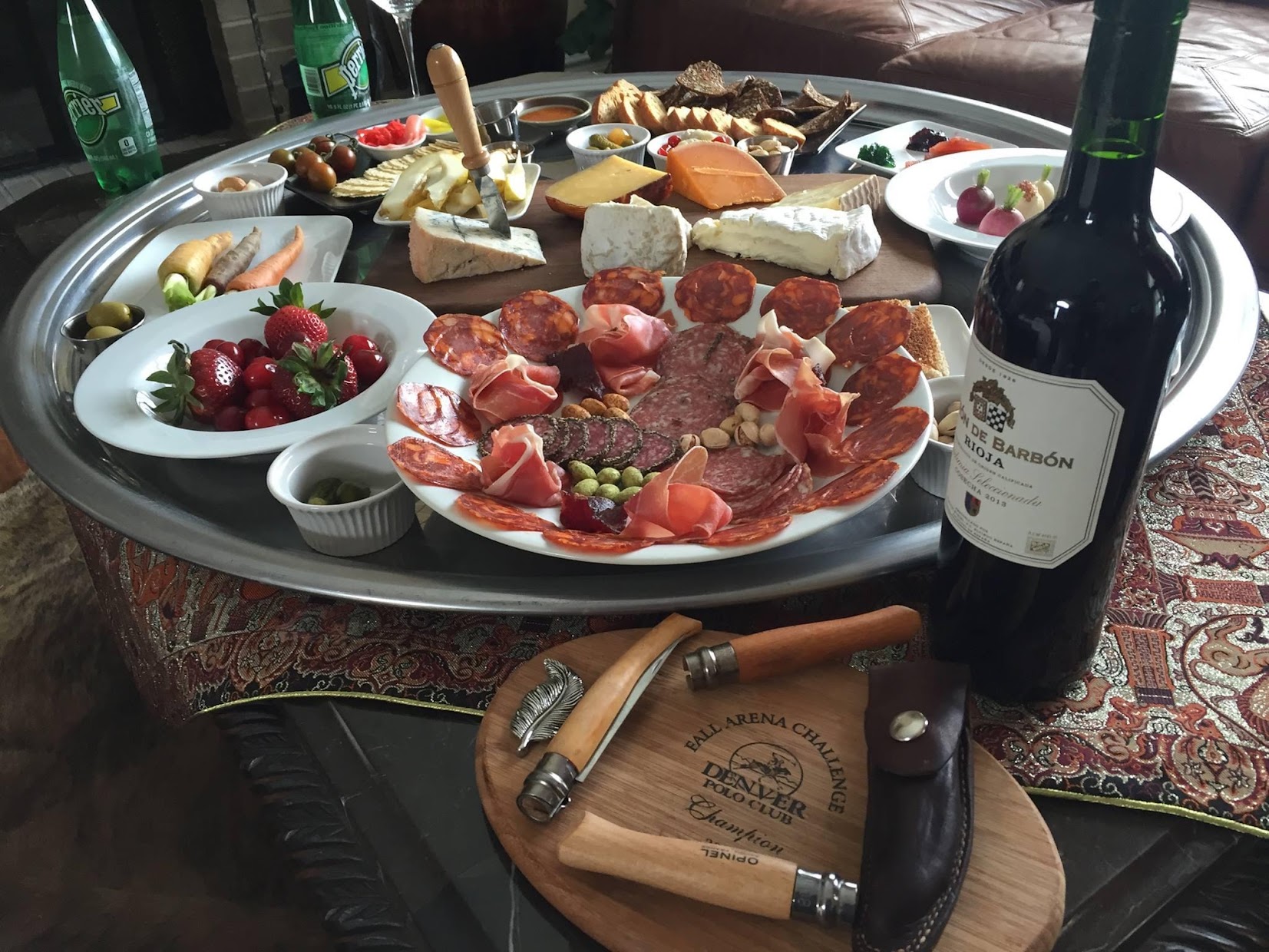
The word tapa means "cover" or "lid" and was said to referred in the early days to the slice of serrano ham or cheese laid across the tops of narrow sherry glasses handed by innkeepers to coach drivers, to keep insects out and to keep them from spilling.  Fortified sherry wines are produced in the so-called Sherry Triangle of southern Spain.  Fino produced around the port of Sanlucar de Barrameda is called manzanilla.  A culinary highlight of Spain is sitting in a legendary tapa bar with a glass of manzanilla and a few plates of tapas. Membrillo and manchego are one of our favorite tapas.  Membrillo is a Spanish-style quince jelly and can be ordered from www.latienda.com, if you cannot source locally, which is increasingly easy to do. You can buy it in blocks, which you slice thinly, or in softer pastes like jelly, but the blocks are traditional. This is traditional tapas food, all on its own, but some tapas bars ("tabernas or tascas) jazz it up with jamon and piquillo peppers, or marinated anchovies and sliced manzanilla olives. See all of our tapas recipes to serve after an afternoon of park drag coaching: Caracoles ("snails") Chorizo and charcuterie Esparragos blancos ("white asparagus") Gambas al ajillo ("shrimp with garlic") Olives Membrillo and manchego Pan tomate Roasted almonds Pimentos con Anchoas ("roasted red peppers and anchovies") Roasted Almonds Roasted Tomatoes

By |May 28th, 2012|Categories: Cuisine, Travel|Comments Off on Tapas

Where does that cut come from?

Wikipedia has some great new diagrams showing where the cuts of meat come from, which every home cook should endeavor to learn the difference in where various parts come from on the animals, so as to use them to their full advantage and to save costs where possible: Beef and veal Veal and mutton Pork and bacon A note about cooking meat, always allow the meat to come to room temperature for an hour or so before cooking.  This is an important step, regardless of whether you are sauteing or grilling, as it allows the outside to sear and brown, without the inside still being at a much colder temperature from the refrigerator. Always season meat before and during cooking, as salt has water extraction properties, bringing "sweat" to the surface.  You want the meat to seal quickly, keeping in its juiciest flavors.  If you overcrowd a pan, it loses heat and the meat steams versus sears.  The same is true for the grill.  Resting after cooking, especially with larger pieces of meats or birds, is very important, at is allows the meat to relax again and absorb the juices rather than having them cut from the pores onto the plate.  Rest birds with the breast down, or meat cuts with the fat up, to allow the juices to flow back into the meat.  Tenting with aluminum foil is common, but often unnecessary.

By |May 20th, 2012|Categories: Cuisine|Comments Off on Where does that cut come from?

Table Etiqutte in France vs. USA

Letitia Baldridge, author of over a dozen books, has just ruined my world, though I spent a weekend in etiquette lessons with her in 1992, which apparently didn't fully take. She apparently is very clear on the rule of passing foods counter-clockwise at the table, although I grew up with a rule of clockwise at our house.  Could the French rule be different or was I just mistaken? I made the mistake of assuming that my table manners would come with me across the pond as naturally as my BBC accent did. The years of my mother’s training in the home were followed by etiquette classes in college, and I felt quite at ease in a formal dining environment. Apparently, we were wrong all these years, as I see no support for a French deviation from the US rule.  It turns out Letitia Baldridge is right on both sides of the pond. I knew the first French rule, “Keep your hands on the table.”  Even occasional elbows were permitted in France, contrary to etiquette rules in the Southern states. The next rule in the US is false in France:  You should place your napkin in your lap immediately after being seated.  Once the lady of the house places her napkin in her lap, other guests should follow suit.  A few other distinctions are worth noting. Your bread should go in the upper left edge of your plate. False. Bread is placed directly on the table or tablecloth, unless it is a formal meal in which bread plates are used. When the aperitif is served, you wait for the host to give the toast before drinking.  You should wait for the host to lead the way,

By |May 19th, 2012|Categories: Cuisine|Comments Off on Table Etiqutte in France vs. USA

The Polo Player’s Annual Foxhunting Braai

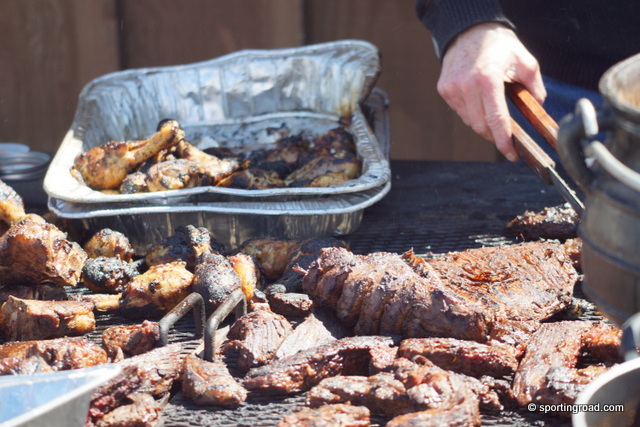
While polo is played in South Africa, they have no mounted foxhunting there, so why we have a South African braai after foxhunting, put on by the polo players in the hunt, is a bit hard to explain.  In any event, it's become the best "hunt breakfast"of the year, and since none of our hunt "breakfasts" are served before lunch time, this is also hard to explain why we call them such.  This description adapted from Wikipedia: A braai is imilar to a potluck party, this is a social event which is casual and laid-back, where family and friends converge on a picnic spot or someone's home (normally the garden or verandah) with their own meat, salad, or side dish in hand. Meats are the star of the South African braai. They typically include boerewors, sosaties, kebabs, marinated chicken, pork and lamb chops, steaks, sausages of different flavors and thickness, and possibly even a rack or two of spareribs. Fish and rock lobster commonly called "crayfish" or kreef in Afrikaans, are also popular in coastal areas to add to the braai. The other main part of the meal in some regions of the country is pap (/ˈpɑːp/, meaning porridge), actually a thickened porridge, or the krummelpap ("crumb porridge"), traditionally eaten with the meat. Made from finely ground corn/maize (similar to polenta), it is a staple of local African communities and may be eaten with a tomato and onion sauce, monkeygland sauce or the more spicy chakalaka (a/k/a trainsmash) at a braai.  The pap is cooked in a potjie pot, which is a cast iron kettle, typically with three legs made to sit on or near the fire side. Biltong is also popular, which is cured

By |May 2nd, 2012|Categories: Cuisine, Foxhunting, polo|Comments Off on The Polo Player’s Annual Foxhunting Braai

Magical Leek Soup

This is a prescription for a nutritional detox called "Magic Leek Soup" as featured in Mireille Guiliano's best-selling book French Women Don't Get Fat.  While we don't follow this diet, I think the soup is wonderful as a started to any meal, or a quick lunch, and we indulge by add some French sea salt.  The author writes: Dr. Miracle, the family physician who helped me wake up and recover from my weight gain, was something of a gourmand. He gave me a number of recipes, but none more important than the one he gave me for the first, and only, “tough” weekend. On reflection, it wasn’t so tough at all, because of his “magical leek soup,” a trick used by many of the local women for generations. He had prescribed it to both my mother and grandmother at one point or another. Leeks are a mild diuretic, and 48 hours or so of leek soup would provide immediate results to jump-start the recasting. For me, it was the start of a lifelong commitment to wellness as well as the beginning of my appreciation, my love, of leeks, about which there is much more to say. It is a trick I still use from time to time; do try it the first weekend. Recipe for Magical Leek Soup Serves one for the weekend 2 lbs. leeksWater to cover in a large pot 1. Clean leeks and rinse well to get rid of sand and soil. Cut end of green parts leaving all the white parts plus a suggestion of green. (Reserve the extra greens for soup stock.)2. Put leeks in large pot and cover with water. Bring to boil and simmer with no lid for

By |March 29th, 2012|Categories: Soups Salads and Sides|Comments Off on Magical Leek Soup

The 10 Famous Chinese Teas

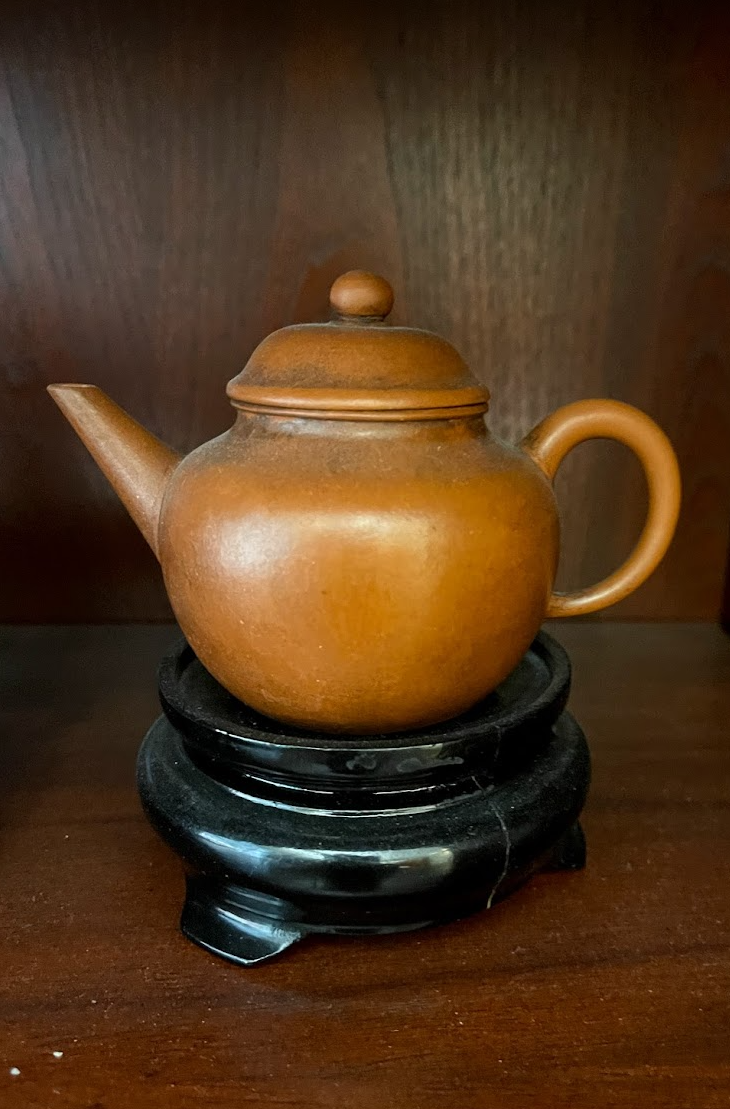
While Ireland (my favorite tea from there is Barry's) and England (some of the best come from Harrod's) are known for their breakfast teas, I prefer the rich depth of choices in Chinese teas. There is an infamous list of the ten most famous Chinese teas, which varies a bit, depending on who you ask.  Having spent some time in the tea cafes of Hong Kong, it is something you will treasure once you have tried the best Chinese teas.   These teas we try to enjoy, along with some of the lessor known teas, on a daily basis.  For serving and more on Chinese tea pots click here. 1) Junshan Yinzhen Tea Of all the famous Chinese Teas, this tea has received a lot of attention lately due to its health benefits. The Silver Needle Tea is Junshan Yinzhen. It comes from Yueyang in Hunan Province. This white or yellow tea is among the rarest and it is my personal favorite. But I love all white teas and the pick of the leaves determines the type of white tea. There are two principal types of white tea: 'bud' and 'bud and leaf'. These are classified further into four main grades: Silver Needle, White Peony, Gong Mei and Shou Mei. Top grade: Silver Needle made solely from buds Second grade: White Peony made from buds, leaves and stems Third Grade: Gong Mei, being a 'looser' pick using buds, leaves and stems from non-premium cultivars.   It is aged for 7 years before it is sold.  Comes pressed or loose.   This is one of my favorites and it keeps forever, if stored in a dry place. Fourth grade: Shou Mei. Lower grade than Gong Mei. Both Gong Mei

By |February 5th, 2012|Categories: Travel, Uncategorized|Comments Off on The 10 Famous Chinese Teas