Sporting Road

Home/Sporting Road

About Sporting Road

This author has not yet filled in any details.
So far Sporting Road has created 490 blog entries.

Anchovies and Capers

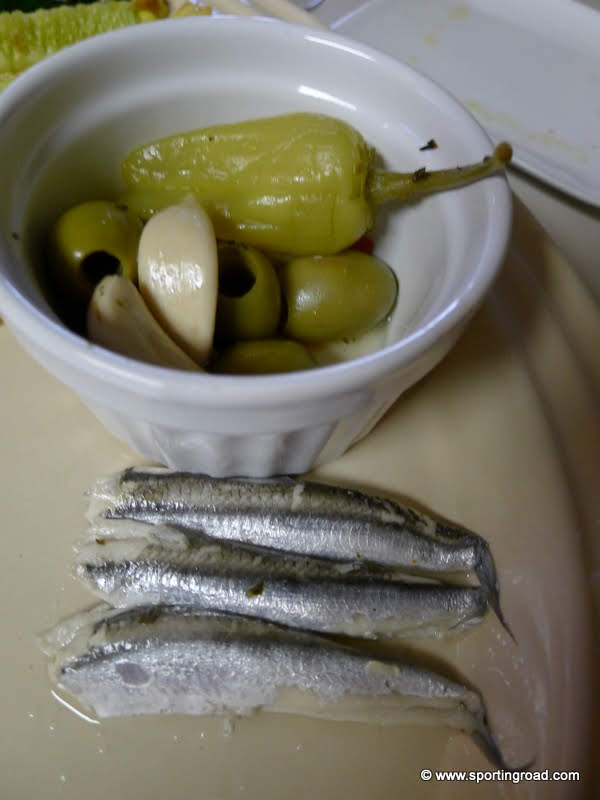
Anchovies are best when they are cured in salt, compared to oil (which often turns rancid quite easily and they are often packed in so tight that they are broken).  I find the Spanish ones to be of the highest quality.  You have to soak them in water to get rid of the excess salt, then take out the bones, and pat dry.  Then you can either marinate in a good olive oil, a little vinegar, and some chopped herbs, serving as a part of a antipasto or whatever dish you have at hand. Capers add a unique and pungent flavor to dishes.  We use them in the traditional pastas and antipasti, but also meat and fish.  The best capers hail from the islands of Salina and Pantelleria off Sicilia, with volcanic soil and a hot climate.  Capers are tiny tight flower buds of a shrub, Capparis spinosa, and they grow in trenches dug to hold them firm and protect them from the strong winds.  Like saffron, capers are harvested by hand in the late spring, before they begin to open.  Like olives, they must be cured, as they are too bitter to eat as they are.  They are usually sun dried a few days and then layered in salt or oil.  Again, the salt cured ones are best.  Look for them in specialty markets.
By |February 3rd, 2026|Categories: Cuisine, Recipes, Uncategorized|Comments Off on Anchovies and Capers

Seven Fires

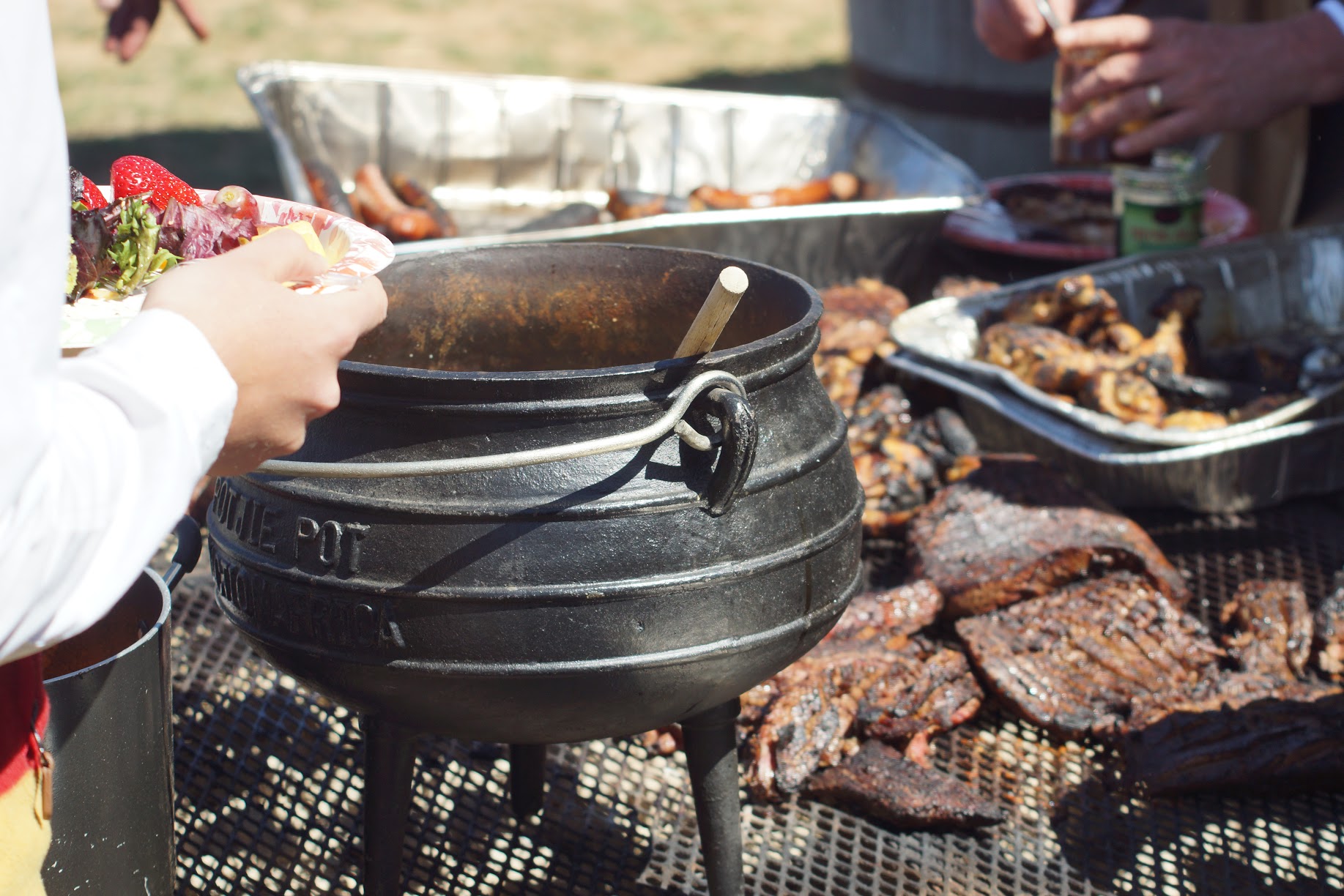
Seven Fires recipes to try: Skirt Steak and Fry Bread http://books.google.com/books?id=7pVMEdjh_ZcC&pg=PA89&lpg=PA89&dq=skirt+steak+and+fry+bread+seven+fires&source=bl&ots=SGDB6jbjmx&sig=iWI0dqRjWuBGfbEMpCoRMYydH4U&hl=en&sa=X&ei=Doi_T-35Ao-62gXAh4ScCg&ved=0CEcQ6AEwAA#v=onepage&q&f=false Beef and Potato Pie http://books.google.com/books?id=7pVMEdjh_ZcC&pg=PA94&dq=beef+and+potato+pie+seven+fires&hl=en&sa=X&ei=a4y_T7_5JuPW2gWOzLmOCg&ved=0CD0Q6AEwAA#v=onepage&q&f=false My new favorite cookbook is Seven Fires, which has gorgeous photos and great techniques. The author is a famous US/Argentinian chef named Francis Mallmann and he writes, “I believe that the ability to cook meat over a wood fire is inborn in all of us.” Another favorite is Canal House Cooking, written by Christopher Hirsheimer and Melissa Hamilton, who own a food studio called Canal House, in Lambertville, New Jersey. This is as unassuming as Seven Fires is overreaching.  I loved this book and recommend you add it to your collection.  It is filled with great Argentine recipes and photographs.  I liked it even more after watching a cooking show, which featured Mallmann in his rustic home/restaurant in Argentina, cooking these recipes for friends, neighbors and a very few paying guests, from the likes of the extremely small town he lives in.  This book is the real deal and is endorsed by our Argentine friends who even commented that it is the "only true book on the Argentine asado style of cooking" and it features it is a very simple, yet romantic and tasty way.  We love it! Mallmann describes la parrilla, the cast iron barbecue grate, and the la chapa which is a flat piece of cast iron over a fire, but a cast iron skillet will also do in a pinch.  Asador is a method for cooking whole animals, pig, lamb or goat, which are butterflied and hooked to an iron cross.  Every estancia has a caldero, a big iron pot, for feeding large groups on the ranch, including the gauchos out on the vast pampas. Mallmann

By |February 3rd, 2026|Categories: Uncategorized|Comments Off on Seven Fires

Bonefishing Maui

Equipped with a 9' 8-weight Sage Motive fly rod, a WF8F Rio Bonefish fly line, 10' 16-lb Rio Saltwater Leaders, Rio Fluroflex Saltwater Tippet 25Y16 lb. and the usual assortment of bone fishing flies, I have fished the Maui flats. More to come...

By |February 3rd, 2026|Categories: Uncategorized|Comments Off on Bonefishing Maui

Sterling Silver, Coin Silver and Otherwise

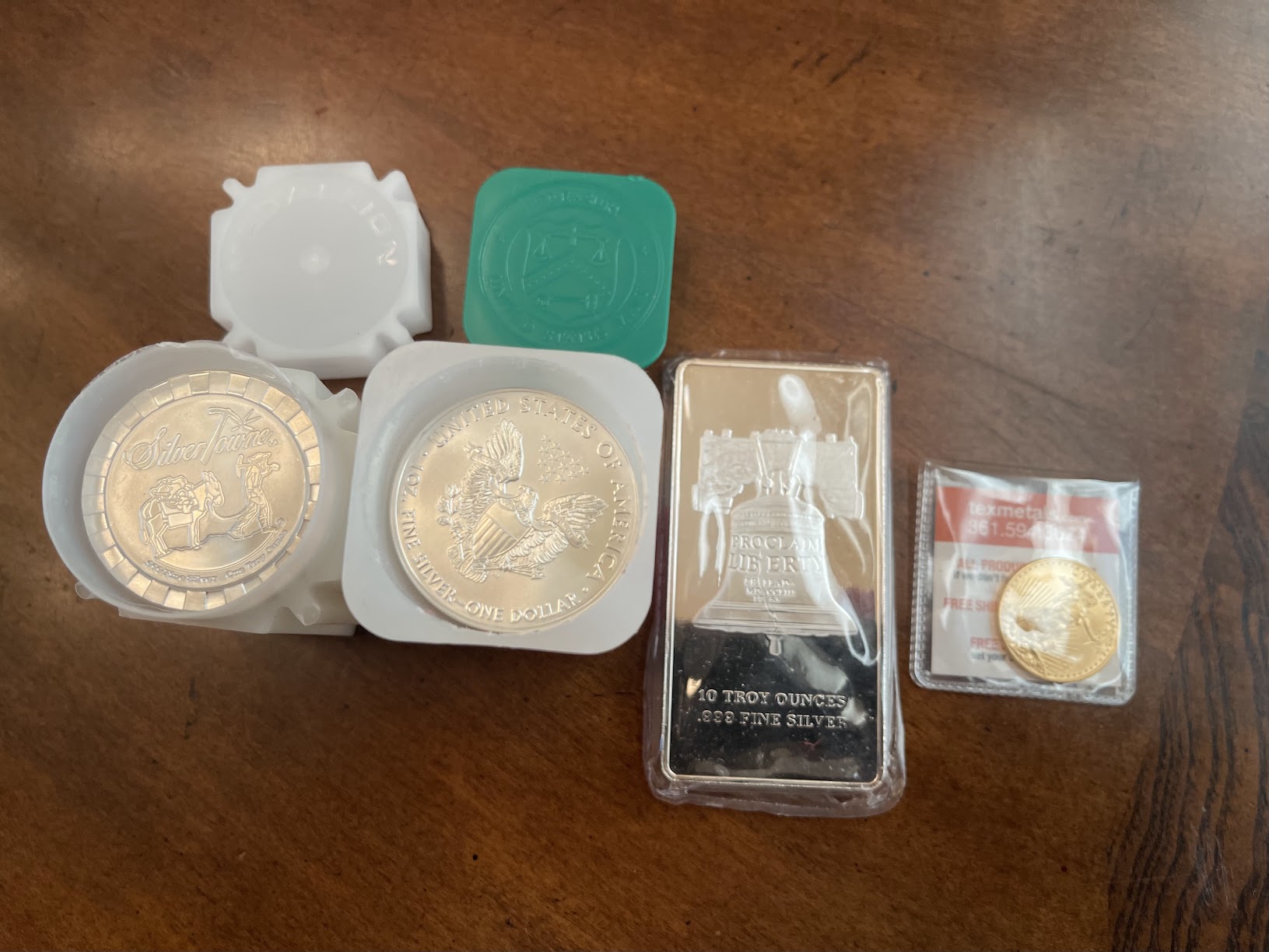
The Difference between Pure Silver, Sterling Silver, Coin Silver, Junk Silver, and Silver Plating Technically, silver is a metallic chemical element whose chemical symbol is Ag (Argentum) and whose atomic number is 47.  It is a precious metal that is used to make jewelry, tableware (silverware), and coins, among other things.  It also has many other uses which we will discuss in future posts. The millesimal fineness system is used to show the purity of silver, gold, and platinum alloys by parts per thousand of pure metal by mass in the alloy.  For example, if an alloy contains 92.5% silver, it is referred to as “925.”  [NOTE: An alloy is a mixture of two or more metals to obtain desirable qualities such as hardness, lightness, and strength.] Fine silver (99.9% pure) is too soft to use in jewelry or almost anything else because it bends, breaks, and stretches too much. For this reason, manufacturing jewelers and silversmiths mix copper with it to give it some strength without discoloring it.  Copper is the industry standard.  However, some countries use other alloys as well. When you see “.999 fine silver” or “999” stamped on an item, it is considered pure silver.  It is softer and more malleable than sterling silver.  It is used in bullion bars, and is also known as three nines fine. Sterling silver (also known as standard silver) is what jewelry and silverware are traditionally made from, which is 92.5% silver and 7.5% copper.  That is why you sometimes see .925 stamped on your jewelry.  In the U.S., only a minimum of 92.5% fine silver can be marketed as “silver.” Sterling silver jewelry is often plated with a thin coat of .999 fine silver to give the item a shiny finish (called

By |February 3rd, 2026|Categories: Uncategorized|Comments Off on Sterling Silver, Coin Silver and Otherwise

Bodhi’s Eulogy

His last day was the sort of day that every bird dog would choose for his last day. A day in which I don’t think Bodhi could have been one of a million of bird dogs to experience. He only experienced it, because he had good friends, in good places. Most couldn’t arrange such a day, no matter their means. While some of us like to tell of how we would like to have our final day, our final meal, and where we would like to be laid to rest, Bodhi got to live his life to the fullest and met his final day fulfilling the dream that all bird dogs would like to live: his favorite place – blue grouse mountain; his final meal a trilogy of his favorites - corned beef, hot dogs, and whipped cream; his final day - hunting grouse and running in front of his three favorite humans. Bodhi hunted his favorite grouse covert and then was laid to his final rest in the spot in the very spot where he found his very first wild bird, some 12 years earlier – a dusky grouse. He was surrounded by his master, hunting friends, and favorite veterinarian. While my other dogs always shied from the vet, Bodhi sought him out, as his vet was his hunting buddy. Bodhi's full and registered AKC name, as a Brittany from field trial lines, was Bodhisattva. Bodhisattva is Sanskrit. A Bodhisattva does not seek “bodhi” (awakening or liberation from our worldly suffering) solely for himself (as a “yogi” does), but chiefly a Bodhi foregoes the path of enlightenment in order to assist in the freeing all other beings and aiding them into the bliss of

By |February 3rd, 2026|Categories: Uncategorized|Comments Off on Bodhi’s Eulogy

Tying Flies Like a Pro by Marty Bartholomew 5/5 *****

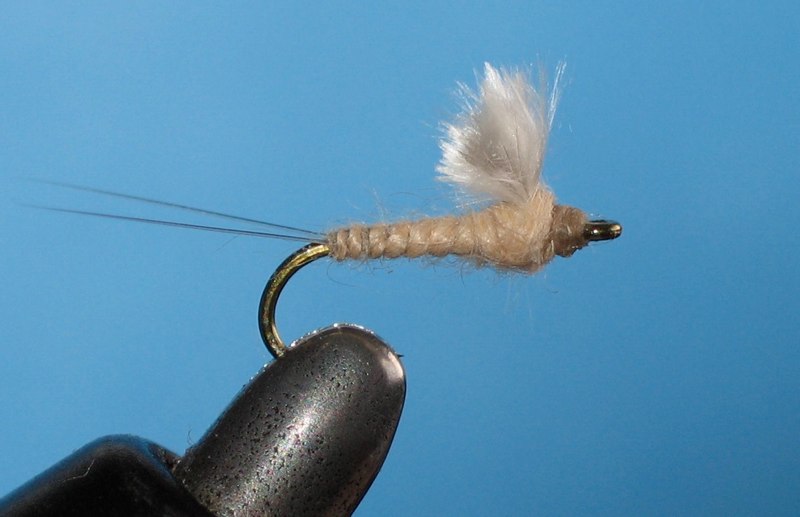
This book features many tiers, including my friends, John Hagen and Rim Chung.  John is a native of South Dakota and is professional duck and goose hunting guide, as well as fly fishing guide and professional fly tier.  John's passion is in dry flies, while Rim Chung's is in nymphs, specifically the RS2 and his new Avatar fly. John lives at Boxwood Gulch, in Shawnee, Colorado.  The book feature's John's Exploding Caddis and Prince Nymph, together with Pat Dorsey's version of the RS2, which he calls the PMD RS2, where it is written that "His fly boxes are loaded with tiny patterns on these streams (in the Denver area), and just about every other row is some type of RS2. "My clients bring a lot of flies to net using this fly, so I maintain an ample supply of them."  The RS-2 is a very simple fly to put together and I recommend that you tie a few for yourself, writes the author.  He says, "Take them to your local water and see for yourself how productive this pattern can be."   The RS-2 is also featured starting on page 104.

By |February 3rd, 2026|Categories: Fishing, Fly Tying, Rim Chung, RS2, Uncategorized|Comments Off on Tying Flies Like a Pro by Marty Bartholomew 5/5 *****

French Kids Eat Everything

My favorite quotes from the book are: It's hard to change the way our families eat.  Although we know what we should be eating--more fruits and vegetables and as little processed food as possible--we don't do it.  or, even if we prepare healthy food, our children won't eat it. Ask my children what their favorte foods are, and the answer might surprise you (ours likes asparagus, sunny-side up eggs, and stinky blue cheese). French adults spend twice as much time as Americans eating, and they consume foods like butter, pork, and cheese in apparently uninhibited quantities, yet are less overweight (and very rarely obeses) and have lower rates of heart disease... French parents gently compel their children to eat healthy food.  They expect their kids to eat everything they are served, uncomplainingly. "Sophie is just like me... I hated vegetables when I was young."  "Mais non!", I was told, "she just hasn't tried them enought times yet.  When she's really hungry try them again.  Then she'll eat anything and everything." The word "education" covers a lot of ground in French... the goal is to procue a child... who is well spoken, well mannered and well behaved. The cantine [at schoo is the same for everyone, no choice].  "But what if the kids don't like what is being served that day?"  "They go hungry!"  "School is about learning lots of things." The French think that lunch should be the biggest and most important meal of the day... (by government decree) the hcildren spent a minimum of thirty minutes at the table.  The French system is a highly perfected peer-pressure-driven food diversification program. Parents schedule meals and menus.  Kids eat what adults eat:  no substitutes and no

By |February 3rd, 2026|Categories: Uncategorized|Comments Off on French Kids Eat Everything

Parker Brothers

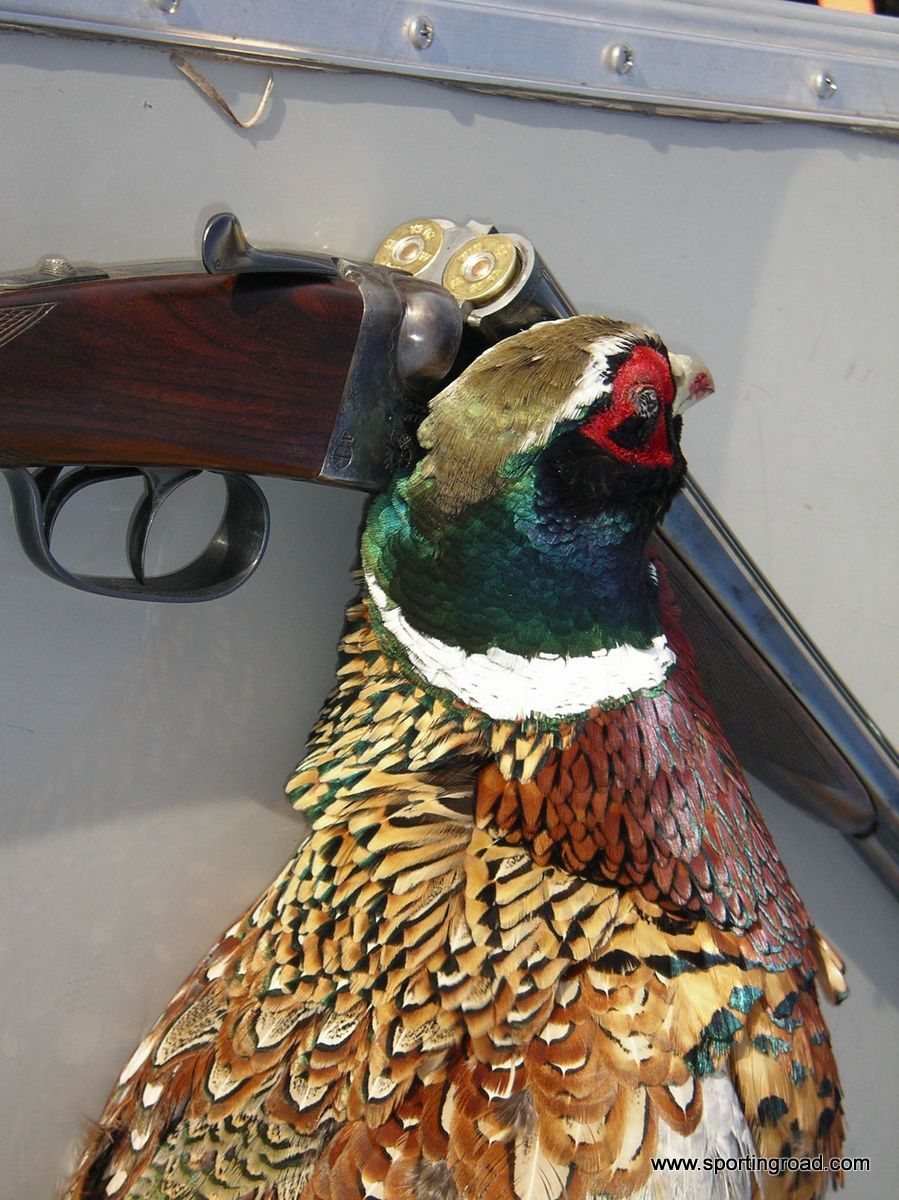
The Americans A.H. Fox Gun Company: Founded by Ansley Herman Fox in 1906, this company built doubles until it was bought by Savage Arms in 1929. Savage continued to build guns under the A.H. Fox name into the 1940s. A.H. Fox guns came in 12-gauge, 16-gauge, and 20-gauge. Their total production was around 180,000 guns.Ithaca Gun Company: One of America’s most successful gun makers. Ithaca opened in 1883 and built a number of different boxlock-style side-by-sides, including the Crass, Lewis, Flues, and NID. The company stopped making side-by-sides in 1948. They built over 300,000 of them in all—more than any other US maker.L.C. Smith: This is the maker of America’s only mass-produced sidelock shotgun. L.C. Smith started in 1881. Side-by-side shotguns were built under the L.C. Smith name until 1950. There were probably over 150,000 L.C. Smiths made.Lefever Arms Co: Introduced in 1883, these side-by-sides are part boxlock, part sidelock, and the first commercially successful hammerless shotguns made in the United States. Shotguns bearing the Lefever Arms Co. name were made until 1919. In all, around 73,000 were built.Parker Brothers: Parker Brothers is America’s most famous side-by-side maker. Founded in 1868 in Meriden, Connecticut, Parker Brothers was sold to Remington Arms in 1934. From 1868 to 1947, just over 242,000 Parker shotguns were made. The British Westley Richards: Founded in 1812 and still in business today, Westley patented two of the most famous shotgun designs of all time: the Anson & Deeley boxlock shotgun and the “detachable lock” action. So far, they’ve made over 25,000 doubles.W.W. Greener: Famous for their side safeties and crossbolt action, Greener used to have one of the largest gunmaking factories in the United Kingdom. The company has been around since 1829. Today, they’re making some of the finest

By |February 3rd, 2026|Categories: Uncategorized|Comments Off on Parker Brothers

The Ethics of Hunting

The ethical questions surrounding the pursuit and consumption of game can be complex, but there is no denying the excitement of the flavors and textures found in wild animals. Something about the untamed nature of their habitats is reflected in their taste—a distinct “gaminess” that sets them apart. Diet plays a role, whether the animal feeds on wild grains, grasses, grubs, insects, or berries, but so does the physical reality of life in the wild. Game animals must constantly expend energy avoiding predators, resulting in leaner, denser muscles, particularly in the breasts and wings. Exercise may, in fact, be the defining factor in what we describe as gaminess. “Game” refers to birds and mammals hunted both for sport and for the table. Only a small proportion of this meat is truly wild, and these animals are generally regarded as the most sporting. Managed shoots and reared birds are secondary to truly wild species—such as ducks, geese, and upland grouse—that largely resist raise-and-release efforts. This is not a judgment on their value in the kitchen, where game, wild or managed, offers something wholly distinct from the ordinary. Ultimately, the consumer must answer two questions: do I want to participate in the sport known as hunting, and do I want to support it by purchasing its end product? In this respect, hunters are not so different from those who choose only organically sourced foods at places like Whole Foods. The goal is the same: organic, free-range vegetables and meats. I eat game with pleasure not because it is a God-given right, but because it represents good husbandry. Through our engagement with the wild—or semi-wild—we remain connected to the land. Our lives are intertwined with the lives of

By |February 3rd, 2026|Categories: Uncategorized|Comments Off on The Ethics of Hunting

Book Review – Bringing Up Bebe: One American Mother Discovers the Wisdom of French Parenting (5/5 *****)

The secret behind France's astonishingly well-behaved children. By Pamela Druckerman We found this book a great read and very accurate to our experiences with both American parents and French ones.  It has been criticized as the French version of "Tiger Mother" which I think is a great analogy and while they are both perhaps a bit overgeneralizing, they are for the most part, right on!  I never realized how much the French way is a part of our parenting methods, nor why our daughter always picks the blue cheese from the others on the platter or in the refrigerator! The introduction to the book on Amazon reads: When American journalist Pamela Druckerman has a baby in Paris, she doesn't aspire to become a "French parent." French parenting isn't a known thing, like French fashion or French cheese. Even French parents themselves insist they aren't doing anything special. Yet, the French children Druckerman knows sleep through the night at two or three months old while those of her American friends take a year or more. French kids eat well-rounded meals that are more likely to include braised leeks than chicken nuggets. And while her American friends spend their visits resolving spats between their kids, her French friends sip coffee while the kids play. Motherhood itself is a whole different experience in France. There's no role model, as there is in America, for the harried new mom with no life of her own. French mothers assume that even good parents aren't at the constant service of their children and that there's no need to feel guilty about this. They have an easy, calm authority with their kids that Druckerman can only envy. Of course, French parenting wouldn't

By |February 3rd, 2026|Categories: Book Reviews|Comments Off on Book Review – Bringing Up Bebe: One American Mother Discovers the Wisdom of French Parenting (5/5 *****)