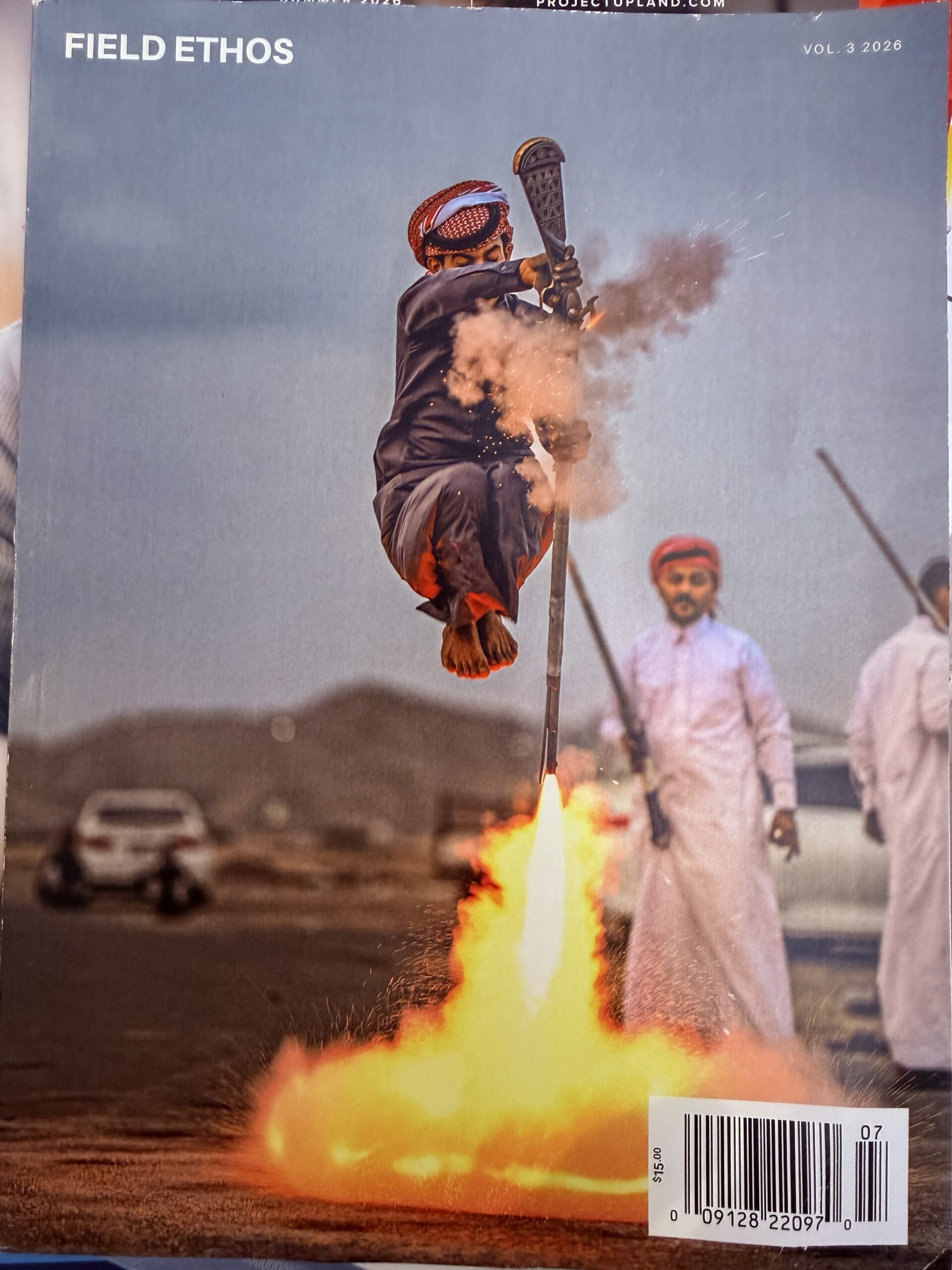
Field Ethos magazine was co-founded and is co-owned by Donald Trump Jr. and outdoor media veteran Jason Vincent, who serves as the CEO. I just recently started subscribing and, wow, I love it. I have written and photographed for a number of sporting magazines, and I have a lot of friends who do so professionally or semi-professionally. Just when you thought that no one reads anymore, here’s the magazine that will prove why it is still worth it.
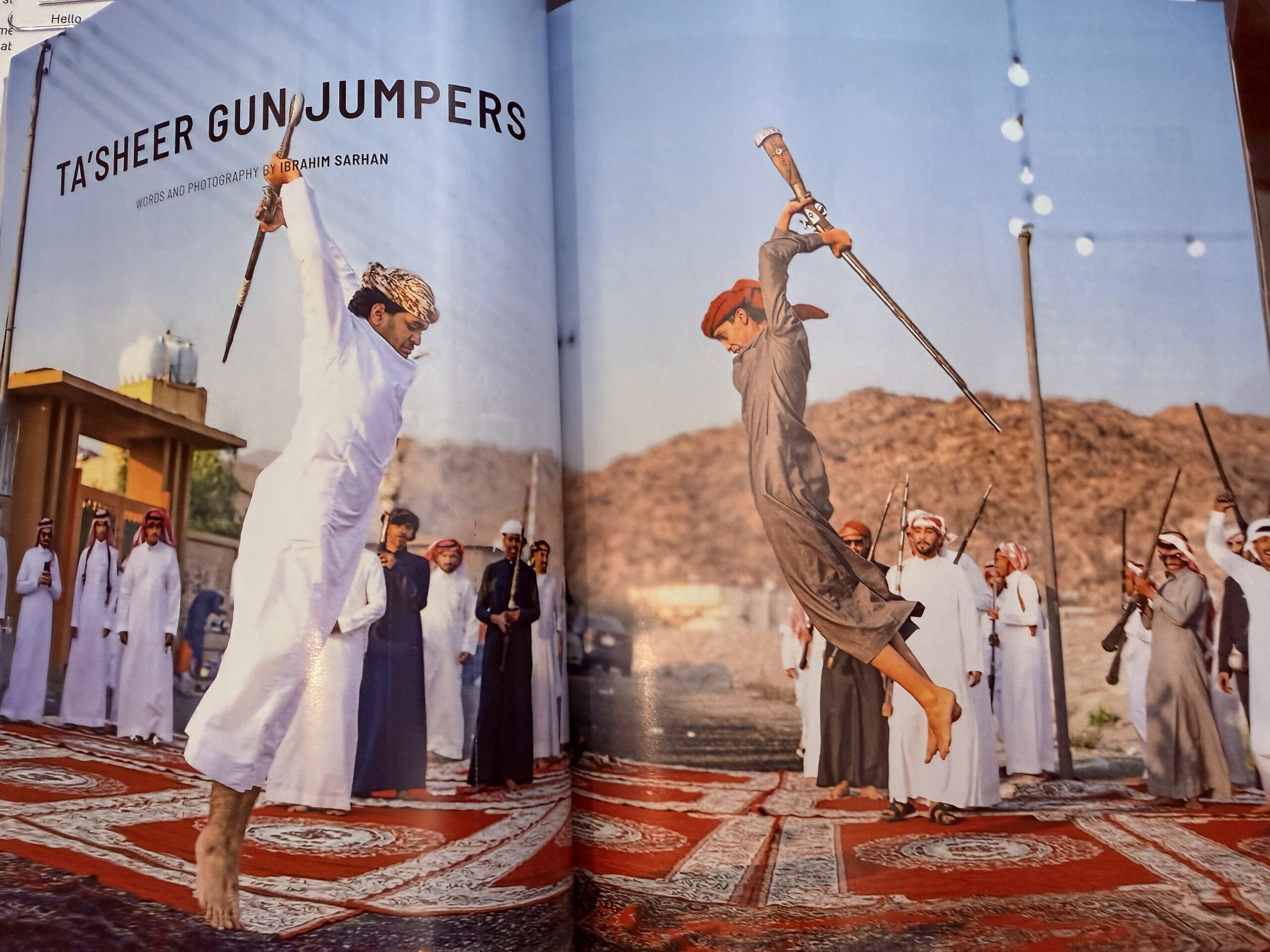
This month’s featurs is on the Ta’sheer (also known as the “fire dance” or “gun-jumping”) is a centuries-old traditional Bedouin war dance native to the Taif and Mecca regions of western Saudi Arabia. Historically performed by tribal warriors to build morale before battle and intimidate enemies, it is now a celebrated heritage ritual performed during major holidays like Eid al-Fitr, as well as at weddings and festivals. The dance is a highly synchronized feat of athleticism and precise timing. Performers use traditional muzzle-loading rifles called Al-Maqmanad are loaded with blank gunpowder—they contain no actual bullets or projectiles. Performers dance barefoot in traditional attire, executing a tight, vertical bounce with their knees held close together. As the rhythm of traditional war drums builds, the dancer leaps high into the air. At the absolute peak of the jump, the performer twists, aims the rifle straight down, and fires directly into the ground. This creates an instantaneous, gravity-defying explosion of sparks, flames, and thick white smoke directly beneath their feet.
In case you were wondering like I was, yes it’s the same Bedouin as in Star Wars. George Lucas designed the Tusken Raiders (or Sand People) in Star Wars based directly on the Bedouin, nomadic Arab peoples of the desert. Their desert survival tactics, tribal organization, and heavily wrapped, flowing robes all mirror real-world desert adaptations.
Great stuff. And, I finally have a reason to go to Saudi Arabia now. I’d love to see this and do some falconry over there. Falconry is an ancient, thousands-years-old tradition where nomadic tribes of the Arabian Peninsula trained wild falcons as elite hunting partners to catch desert game like hares and bustards for survival. Today, it is a revered cultural sport and a UNESCO intangible heritage symbol of pride and prestige. My late bird hunting friend and foremost authority on falconry here in the Western states if not the world, Hal Webster, raved about the falconry and pageantry he experienced there and I had already had it on my bucket list.