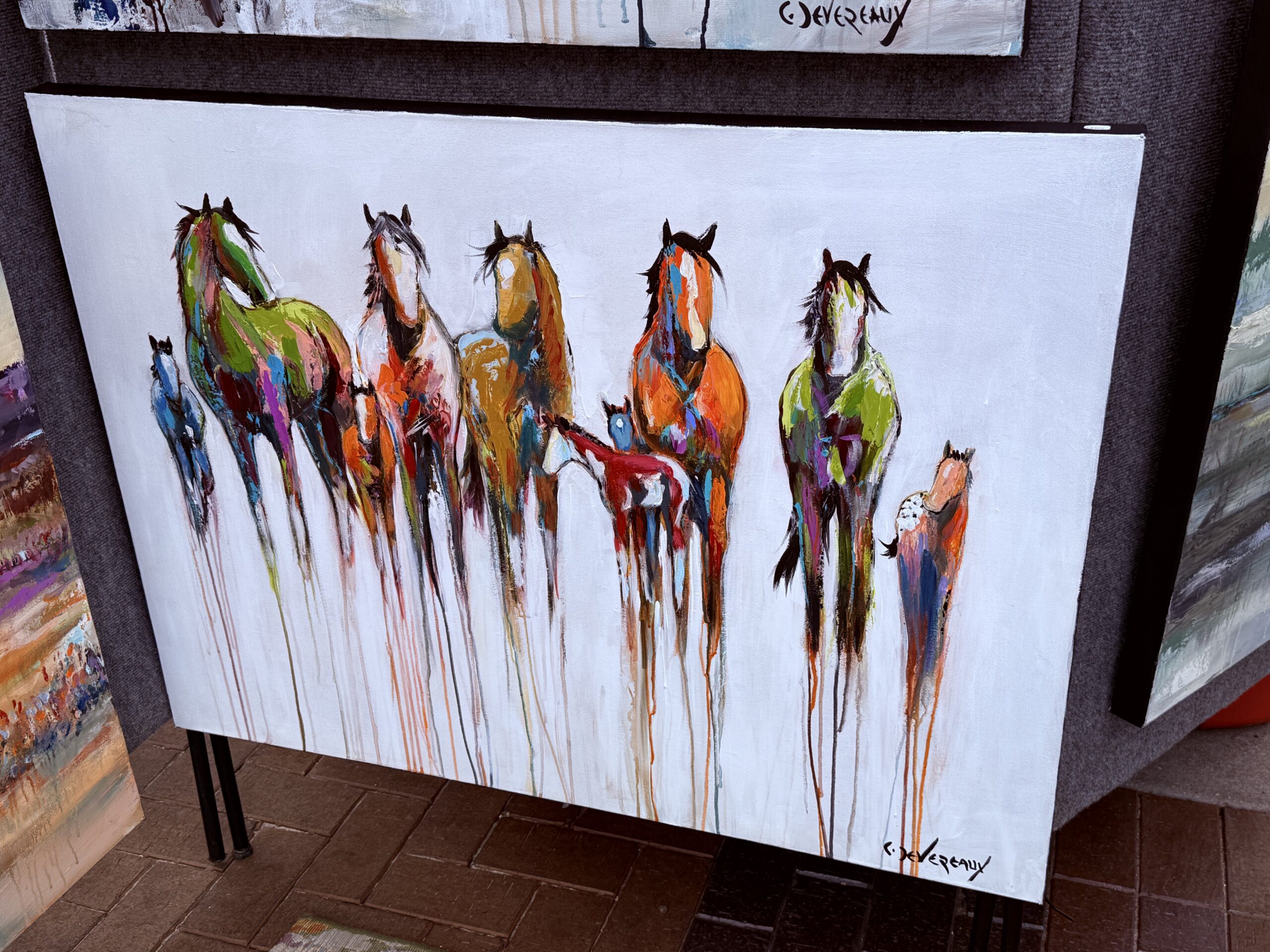
Horses teach us a lot. Very little of it has to do with horses.
What Horses Teach Us About How to Live
Horses teach us a lot. Very little of it has to do with horses.
Spend enough time around them and eventually you realize that the horse is rarely the most interesting thing happening.
The lesson is usually about you.
A horse has a remarkable way of exposing the difference between what we think we are doing and what we are actually doing. You can tell yourself you’re calm, confident, patient, or in control. The horse will quietly provide a second opinion.
And horses are not particularly diplomatic.
Be Present
Horses live almost entirely in the present.
They don’t care what happened yesterday, and they have no interest in your plans for next Thursday. They respond to what is happening now: the sound in the distance, the movement beside them, the pressure of your leg, the tension in your hands.
That makes them remarkably good at reminding us how rarely human beings do the same.
We spend an astonishing amount of time replaying the past or rehearsing the future. Meanwhile, the actual day is happening right in front of us.
A horse brings you back.
Pay attention.
You Cannot Fake Calm
Horses are extraordinarily sensitive to tension.
You can tell yourself you’re relaxed. You can even announce that you’re relaxed, which is generally a reliable indication that you are not. The horse will notice the clenched hand, the stiff back, the shallow breathing.
They respond to what you are, not what you claim to be.
There is something useful in that.
The people around us often do the same thing, although they are usually too polite to mention it. Children notice. Dogs notice. Friends notice. Spouses certainly notice.
Calm is not something you announce. It is something you carry.
Leadership Is Not Force
One of the great misunderstandings about horses is that controlling one is primarily about strength.
It isn’t.
The strongest person in the arena does not necessarily have the best relationship with the horse. Good horsemanship is about communication, timing, confidence, consistency, and trust.
You ask. The horse responds. You listen. You adjust.
That is leadership in almost every meaningful part of life.
The best leaders rarely need to remind everyone that they are in charge. They create enough clarity and confidence that people want to follow.
Horses understand this instinctively.
Human beings have managed to turn it into several thousand management books.
Patience Is a Form of Strength
A horse cannot be hurried into understanding.
Sometimes the right thing is to wait.
Sometimes you need to repeat yourself. Sometimes you need to back up and try again. Sometimes the horse simply needs a minute.
That can be an irritating lesson for people accustomed to instant results.
We live in a world where almost everything is designed to eliminate waiting. Food arrives at the door. Messages cross the planet in seconds. Movies begin immediately. Information appears before we’ve finished asking for it.
And yet some of the best things in life remain stubbornly resistant to acceleration.
Trust takes time.
Skill takes time.
Relationships take time.
A good life takes time.
The horse knows this.
Confidence Is Quiet
A good rider does not have to be aggressive.
Confidence is often remarkably quiet.
It is the ability to make a decision and remain steady when the situation changes. It is knowing what you want without becoming frantic when you don’t get it immediately.
Horses respond to that kind of confidence.
There is a useful lesson here for the rest of us: you don’t have to make yourself bigger to be strong.
Sometimes strength looks like a steady hand, a clear decision, and no need to explain yourself.
Pay Attention to Small Things
Experienced horsemen notice things that other people miss.
A change in the horse’s ears.
A different rhythm in its movement.
A hesitation.
A change in breathing.
A little tension where there wasn’t any yesterday.
These small signals matter because small signals eventually become large ones.
Life works the same way.
The marriage rarely falls apart in one afternoon. The body rarely changes overnight. A friendship rarely disappears without warning. Careers rarely go off course in a single dramatic moment.
There are usually signs.
The trick is noticing them while they are still small.
Know When to Push
Horses teach another important lesson: effort matters, but so does knowing when enough is enough.
There are moments when you need to ask for more.
And there are moments when you need to stop.
That distinction is harder than it sounds.
Modern life tends to reward relentless effort. Work harder. Do more. Get up earlier. Optimize everything. Turn your hobbies into side businesses and your weekends into productivity seminars.
A horse offers a rather different philosophy.
Work when the work needs to be done.
Then walk.
Rest.
Eat.
Look around.
There is a difference between discipline and obsession.
Trust Is Earned in Small Moments
A horse doesn’t give you its trust because you want it.
You earn it.
You show up. You behave consistently. You don’t punish it for being afraid. You learn its language. You become predictable in the best possible sense.
Eventually, something changes.
The horse begins to believe that you are safe.
That is one of the most profound things any living creature can give another.
And it applies far beyond the barn.
The people we trust most are rarely the most impressive people we know. They are the people who have demonstrated, over time, that their word means something.
They show up.
They remain steady.
They don’t make everything about themselves.
Trust is built quietly, one small interaction at a time.
You Are Not Always in Control
Perhaps the most useful lesson of all is that you are never quite as much in control as you think.
A horse can spook.
Weather changes.
The trail disappears.
Something unexpected happens.
You adapt.
That is life.
We spend enormous amounts of energy trying to eliminate uncertainty, when uncertainty is simply part of the deal. The goal isn’t to control everything. The goal is to become capable enough to respond when things don’t go according to plan.
A good rider doesn’t need a perfectly predictable horse.
A good rider needs to know what to do when the horse isn’t predictable.
There is a difference.
Keep Moving
There is also something wonderfully uncomplicated about being on a horse.
You have somewhere to go.
You go there.
The landscape changes. The weather changes. The light changes. The horse settles into a rhythm.
And for a while, there is no inbox.
No notification.
No meeting.
No algorithm trying to sell you something.
Just movement.
Perhaps that is one reason people keep returning to horses. Not because they need another hobby, but because horses reconnect us with something increasingly rare: a physical experience that demands our complete attention.
You cannot half-ride a horse.
You cannot scroll through your phone and be fully present.
You have to be there.
The Horse Is the Teacher
Eventually, the lesson becomes less about riding and more about living.
Be patient.
Pay attention.
Stay calm.
Be trustworthy.
Know when to push and when to rest.
Lead without forcing.
Notice the small things.
Accept that you cannot control everything.
And keep moving.
The horse doesn’t explain any of this.
It doesn’t need to.
It simply stands there, waiting for you to figure it out.
Which may be the most useful lesson of all.
Horses teach us a lot. Very little of it has to do with horses.
e