These objects, known as amulets, talismans, or charms, were thought to confer special protections or abilities on the wearer. Their perceived power might lie in a particular shape, material, or color. The word amulet comes from the Latin amuletum, meaning a means of defense. Every culture has its own tradition of protective objects, suggesting that the impulse to find meaning and security in the things we wear is deeply rooted in human nature. The desire to influence our fortunes, ward off danger, and make sense of the unseen world has long been intertwined with the history of jewelry. It is also part of what gives jewelry its enduring power as a form of communication.
That belief persists today. Across cultures, many people continue to fear the evil eye, a malevolent force thought to bring illness, misfortune, or suffering. Traditionally, it is believed to be cast through another person’s envious or hostile gaze, often without the recipient’s knowledge. The idea that a look alone might carry harmful intent has endured across centuries, shaping the symbols people wear for protection and the jewelry they pass from one generation to the next.
The featured photo from the Library of Congress shows Indian women at the Laguna, New Mexico, train depot c. 1902. Santa Fe Railroad officials encouraged the sale of Pueblo jewelry, crafts, and art at rail depots throughout the Southwest in an effort to attract tourists to the region.
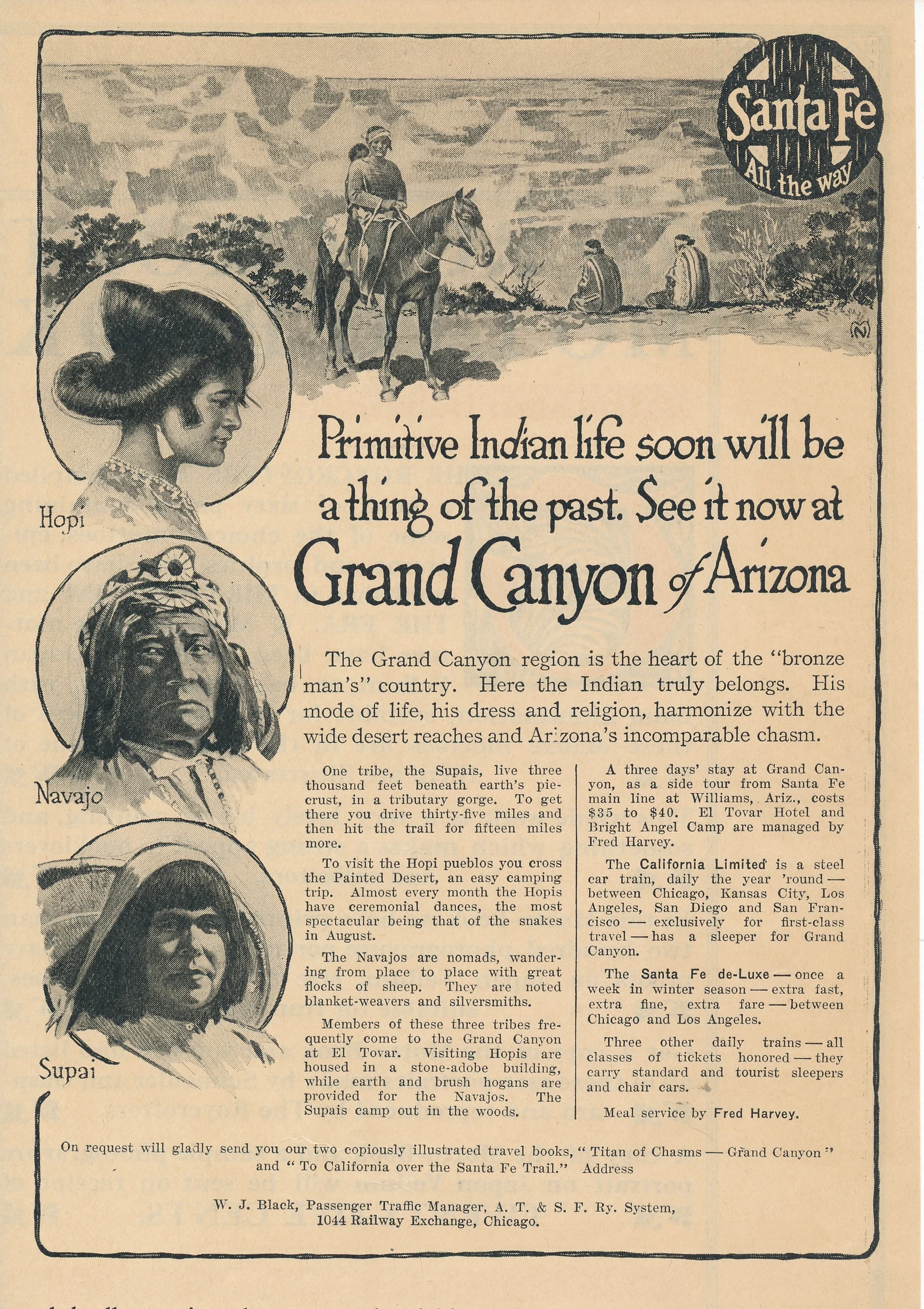
Native American imagery became a powerful force in American advertising during the late 19th century and has remained a familiar marketing symbol ever since. Thousands of posters, signs, brochures, and promotional booklets portrayed Indigenous people as symbols of strength, courage, speed, fierce independence, and a deep connection to nature.
Railroads heading west, particularly those crossing the Southwest to California, embraced this imagery to sell the romance of travel. Their advertisements promised an unforgettable journey through dramatic landscapes inhabited by ancient cultures, transforming a train trip into an adventure. One example from my collection is this 1917 brochure, distributed aboard Santa Fe Railway trains to encourage travelers to visit Los Angeles.
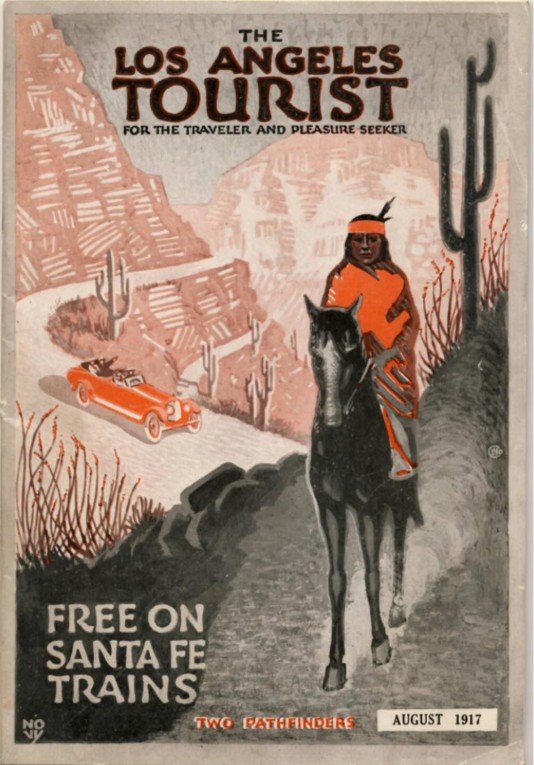
This version flows more naturally while preserving the historical context without endorsing the stereotypes used in the original advertising. If you’re writing for a history or vintage advertising audience, it also reflects that these were marketing portrayals rather than factual representations.
This is the story of how the Land of Enchantment was formed.
https://mytext.cnm.edu/lesson/creating-the-land-of-enchantment/