
Adapted from Veracruz All Natural-Fresh Mexican Recipes From Our American Home by Vazquez, Reyna, 2026.
If you want a dish that looks far more complicated than it actually is, this is the one. The tart, fruity character of the hibiscus salsa cuts beautifully through the richness of a thick, bone-in pork chop, while the chile blend adds smoke, heat, and depth. Your guests may assume you spent all afternoon on it. There is no need to correct them.
If you cook meat more than once a year, invest in a meat thermometer. Good ones are inexpensive, and guessing whether pork is done is a particularly pointless way to spend dinner.
Ingredients
- 4 bone-in pork chops, at least 1 inch thick
- 2 tablespoons kosher salt
- a couple pats of butter
- Hibiscus Salsa, for serving
Method
- Dry-brine the pork. Season the pork chops evenly with the salt. Arrange them in a single layer on a wire rack set over a rimmed baking sheet and refrigerate, uncovered, for at least 4 hours or up to 24 hours. This gives the salt time to season the meat deeply while drying the surface, which helps develop a better crust.Or wet brine: Prick it all over with a fork, just as you would a potato before baking. This simple step gives the brine a way to work deeper into the meat, seasoning it from the inside out. Next comes the brine. Don’t let the word intimidate you. It’s nothing more than water, brown sugar, and salt. Place the pork chops in a zip-top bag, add the brine, seal it up, and refrigerate for at least 30 minutes. The salt seasons the meat throughout, while the brown sugar encourages the deep, caramelized crust we’re after.
- Sear the chops. Heat a large cast-iron skillet or grill pan over medium-high heat until almost smoking. Add the pork chop and sear for one minute. Then flip it. Keep flipping the chop every minute until it’s cooked through. Unlike a steak, which benefits from being left alone to develop a crust, pork chops can dry out quickly. Frequent flipping helps the meat cook more evenly, reducing the chance of a beautifully browned exterior wrapped around a piece of culinary cardboard. Then comes the best part: butter. Add a few pats to the skillet and baste the pork chop repeatedly with the foaming butter. Add thyme or another favorite herb if you like. The butter enriches the meat while helping build an even deeper, more flavorful crust. Remove and rest.
- Warm the salsa. While the pork rests, warm the Hibiscus Salsa gently over low heat. Do not let it boil. You want it warm and loose, not cooked into something resembling jam.
- Serve. Spoon the warm Hibiscus Salsa onto serving plates, smeared in a decorative fashion, and place a pork chop on top (a small amount smeared along the side will do—this stuff is hot). Serve immediately.
Serves: 4
Total cooking time: About 20 minutes, plus 4 to 24 hours for dry-brining
______________________________________
Hibiscus Salsa (Salsa de Jamaica)
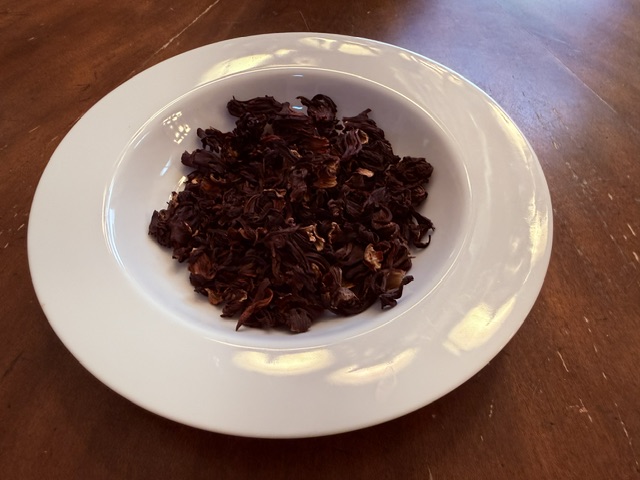
Flor de Jamaica, or dried hibiscus flowers, is best known for its bright, tart flavor in agua fresca. But that same citrusy acidity makes it surprisingly versatile in savory cooking. In Mexico, it is commonly called simply Jamaica, pronounced ha-MY-ka. You can find dried hibiscus at most Mexican markets or online.
In this salsa, Jamaica is combined with several varieties of dried chile, creating a sauce with layers of tartness, smokiness, fruitiness, and heat. The result is an unusually complex table salsa that is especially good alongside simply grilled meats. Because apparently hibiscus flowers needed another career.
Ingredients
- 2½ cups flor de Jamaica (dried hibiscus flowers), divided
- 2 tablespoons extra-virgin olive oil
- 6 morita chiles, sometimes labeled dried chipotles, stemmed and seeded
- 2 guajillo chiles, stemmed and seeded
- 5 chiles de árbol, stemmed and seeded
- 4 garlic cloves, peeled
- 2 teaspoons kosher salt
- 1½ cups water
Method
- Brew the Jamaica. Place ½ cup of the Jamaica and 1½ cups water in a medium saucepan. Bring to a boil over high heat, then cook for 10 minutes. Strain the liquid into a bowl and reserve. Discard the cooked flowers.
- Toast the chiles. Heat the olive oil in a large skillet over medium heat. Fry each variety of chile separately, cooking just until fragrant and lightly toasted, less than a minute per batch. Be careful not to burn them, because burnt chiles have a remarkable ability to dominate everything else in the pan. Transfer the toasted chiles to a plate, leaving the oil in the skillet. Add the garlic and cook until golden brown, then transfer it to the plate with the chiles.
- Cook the remaining Jamaica.
Add the remaining 2 cups of Jamaica to the skillet and cook, stirring, just until heated through, about 45 to 60 seconds. Blend the salsa. Transfer the toasted chiles, garlic, and cooked Jamaica to a blender. Add 1 cup of the reserved Jamaica liquid and blend until completely smooth. This may take 2 minutes or longer, since both the dried chiles and hibiscus need time to break down. If the mixture is too thick, add more of the reserved Jamaica liquid a little at a time until you reach the desired consistency. Season with the kosher salt. - Serve. Serve the salsa immediately, or transfer it to a tightly sealed container and refrigerate for up to 3 days.
Makes: About 2 cups
Total cooking time: About 45 minutes
_______________________________________________________
A Note on Chiles
Yes. Hibiscus salsa is especially forgiving about the chile combination. The morita, guajillo, and árbol combination gives you smoke, fruity depth, and heat, but you can change the lineup depending on what you want the salsa to do.


Good substitutions
| Chile | What it adds | How I’d use it |
|---|---|---|
| Ancho | Raisiny, sweet, mild, earthy | Replace some or all of the guajillo |
| Pasilla | Dark, earthy, lightly fruity | Excellent with hibiscus, especially for a deeper salsa |
| Mulato | Rich, chocolatey, raisin-like | Wonderful if you want a darker, more sophisticated salsa |
| Chipotle | Smoke and moderate heat | Replace the morita for a smokier version |
| Cascabel | Nutty, woody, mild heat | Adds depth without making the salsa much hotter |
| New Mexico chile | Fruity, earthy, relatively mild | Good if you want the hibiscus to remain the star |
| Chile de árbol | Sharp, clean heat | Keep these if you like noticeable heat |
| Puya | Fruity, slightly smoky, hotter than guajillo | Great substitute for árbol or part of the guajillo |
My favorite combination for pork
For pork chops with hibiscus salsa, I’d actually tweak the original recipe slightly:
- 3 ancho chiles
- 2 guajillo chiles
- 2 morita chiles
- 3 chiles de árbol
That gives you sweetness from the ancho, fruitiness from the guajillo, smoke from the morita, and a clean hit of heat from the árbol. The hibiscus stays prominent instead of getting buried beneath the chiles.
If you want something darker and more restaurant-y, I’d go:
- 2 ancho
- 2 pasilla
- 2 morita
- 3 árbol
That combination would be particularly good with grilled pork. The tart hibiscus against the rich, slightly smoky pork is the part that makes the dish work. Humanity occasionally gets something right.