
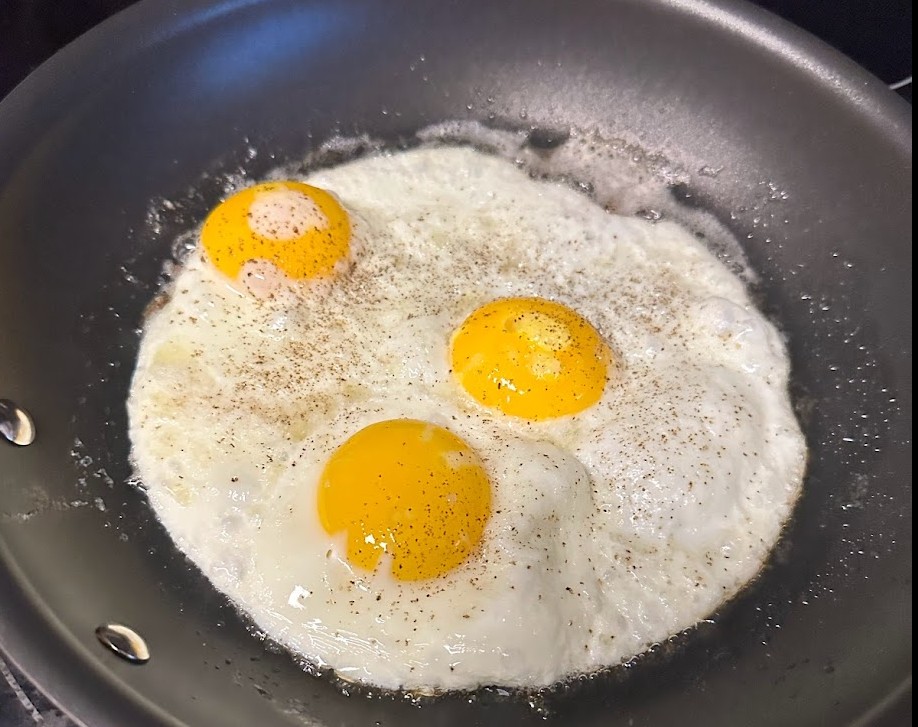
We usually make fried eggs the French way, which is called a mirror egg, but in case you want a regular fried egg, American style, here’s the best way to go:
How Gordon Ramsay Makes Fried Eggs
It’s no surprise that Gordon Ramsay knows his way around the kitchen. His approach to fried eggs is built on two simple techniques: generous use of butter and constant movement of the pan.
To start, add oil and a hefty pat of butter to a skillet. Ramsay prefers a carbon-steel pan, but a good nonstick works just as well. Once the butter begins to bubble vigorously, crack the eggs into the pan and season them. Ramsay opts for salt, pepper, and chili flakes. I usually stick to salt and plenty of pepper, saving the heat for a spoonful of chili crisp later.
As the butter foams, expect some splattering—this is not a mess-free method. This is also where the magic happens. Take the pan off the heat and use a gentle circular wrist motion to swirl the eggs around continuously.
It’s a bit of an arm workout, but the effort pays off. The hot butter washes over the whites, cooking them evenly into bubbly perfection while glazing the yolks with rich flavor. Because the fat coats the entire egg, every bite tastes luxuriously buttery.
Once the whites are fully set, return the pan to the burner. Ramsay finishes his eggs with a splash of sriracha and Worcestershire sauce. They’re excellent over buttered toast—savory with just a hint of spice. I tend to finish mine with chili crisp for extra crunch and umami.
However you choose to top them, Ramsay’s butter-swirl method is well worth trying. It might just change how you make fried eggs forever.
_____________________________________________
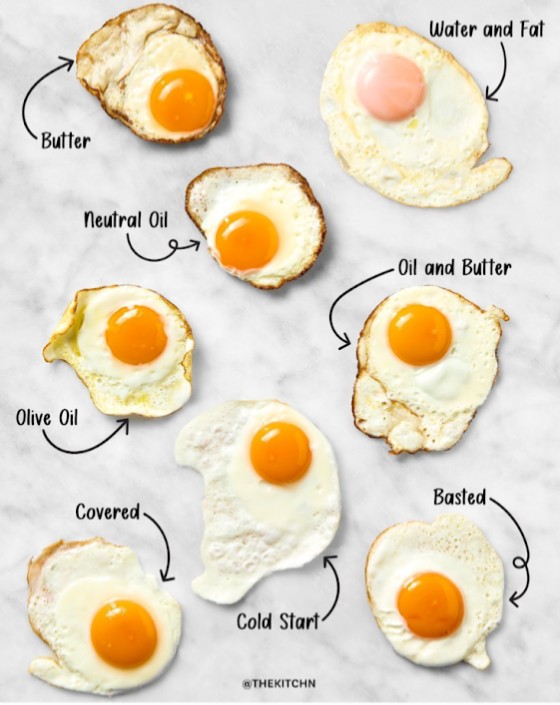
How to Fry an Egg in a Cast Iron Skillet from Garden & Gun
Prep step: If necessary, rub a small amount of seasoning oil onto the surface and inner sides of the pan.
Skip this step if your skillet is well seasoned. But if the metal is looking a bit matte (hey, it happens), pour a drop of avocado, canola, or other high-smoke-point oil into the pan and spread it around with a paper towel, rubbing it in thoroughly so that the surface is glossy but there’s no residual oil. “I’m a product of the eighties, so I like the Mr. Miyagi ‘wax on, wax off’ approach,” Stubblefield says. “You’re basically wiping the whole thing with oil and then trying to wipe it all the way off.”
1. Set the pan on low or medium-low heat for three to five minutes.
“There are skillets out there that are beautifully seasoned, but if you don’t have proper heat control you’re probably going to stick your egg,” Stubblefield says. The exact setting and duration will vary by stove—“medium-low is about as high as you’re ever going to get” —but the idea is to bring the skillet to a gradual, even heat over a few minutes. (This is a great time to pull out and prep any fixings you plan to serve with your eggs.)
2. Add oil of choice, enough to fully coat the pan when you swirl it around.
Aim to coat the surface and just a little bit of the inner sides. You’ll know it’s go-time when the butter has melted and started to foam or the olive oil has thinned out and started to shimmer. If there’s smoke, pull the pan off the flame and let it cool a beat. And don’t hesitate to lower the heat; if you’ve followed step one, the skillet will stay plenty hot for the job.
3. Crack your egg into the pan (or for scrambled eggs, pour in your whisked mixture)—and let it sit.
For the unenlightened, this step may seem heavens-opening-up revelatory. Prevent sticking by…leaving it alone? The proteins need time to coagulate, so resist the urge to disturb the egg for a full minute. “Just be patient and let the skillet do the work,” Stubblefield says. “It will release that egg when it’s ready.”
When the edges start to solidify and lift a little bit, gently prod them with your spatula (Stubblefield likes a fish spatula), which should slide easily beneath the entire egg. If it doesn’t, back off and let the egg keep cooking, checking intermittently for up to three minutes.