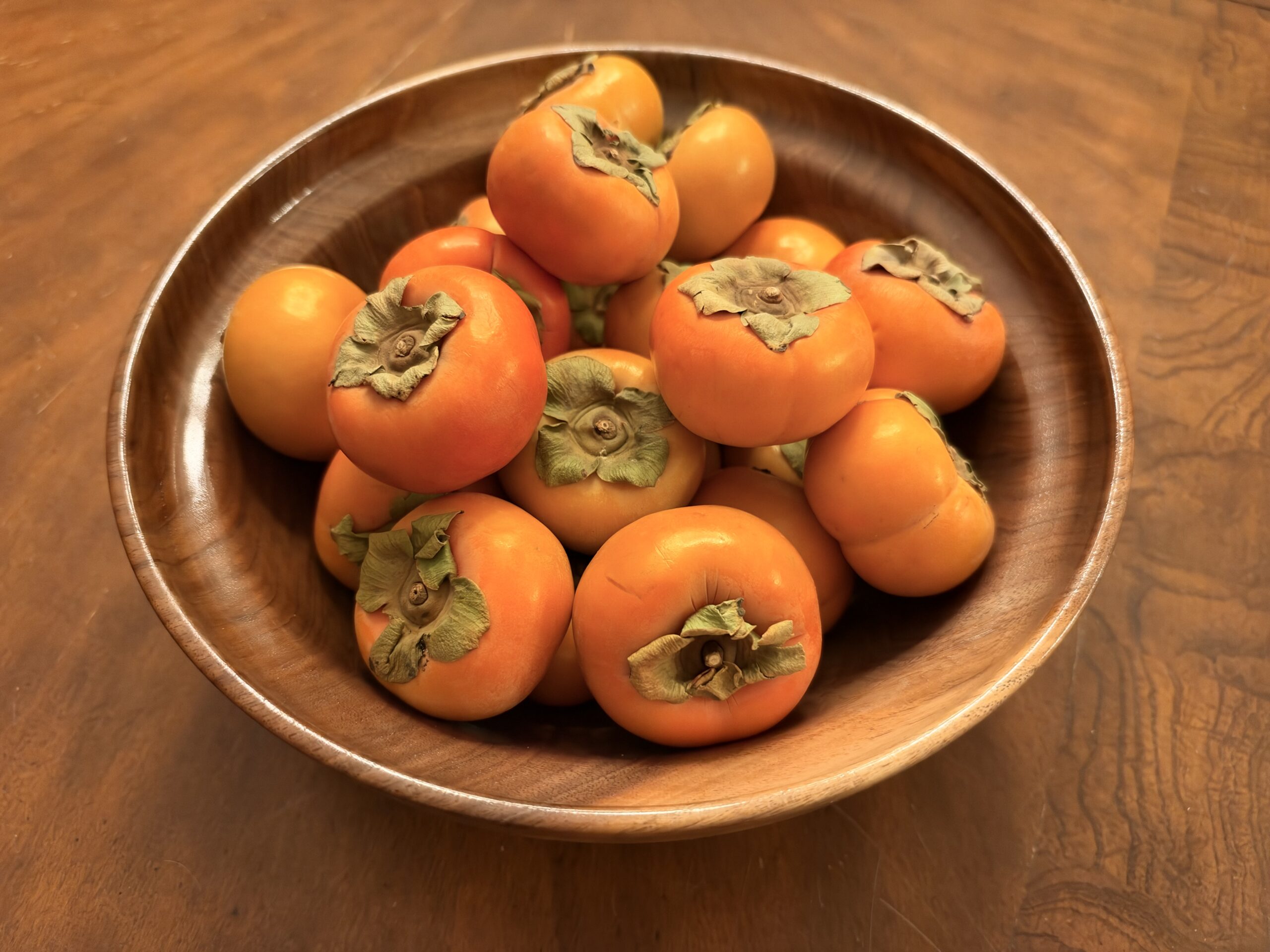
There are certain foods that carry a little more meaning than their flavor alone, like apple pie is to America or pumpkin pie is to a Thanksgiving feast. In China, Japan, and Korea, the persimmon is one of them. Sweet, richly colored, and arriving just as autumn gives way to winter, it has been part of East Asian food culture for centuries.
Persimmons are particularly associated with autumn, family gatherings, good fortune, and the changing seasons. In Chinese culture, the fruit is considered auspicious, with its name, shìzi, associated with expressions of good wishes and prosperity. It is often enjoyed fresh, given as a gift, or preserved for the colder months. There are two familiar varieties. The Fuyu is squat, firm, and sweet, with a texture similar to an apple. The Hachiya is larger and more elongated, but must be allowed to ripen until exceptionally soft before eating. When fully ripe, its flesh becomes almost custard-like, with a honeyed sweetness reminiscent of apricots and dates.
Perhaps the most interesting tradition is the practice of drying persimmons. In Japan, they are known as hoshigaki. Fresh persimmons are peeled, hung to dry, and carefully massaged by hand over several weeks. The process concentrates their natural sugars, producing a soft, chewy delicacy with an almost candy-like sweetness. Similar traditions exist in China and Korea, where dried persimmons are enjoyed with tea and served during winter celebrations. In Hong Kong, dried persimmons are particularly familiar around the winter and Lunar New Year seasons. They are part of a broader tradition of seasonal fruits, preserved foods, and gifts that carry wishes for prosperity and good health.
It is easy to understand why the fruit has endured. Beyond its flavor, the persimmon represents something that is increasingly easy to overlook: the pleasure of eating with the seasons, preserving what nature provides, and sharing familiar foods with family. Sometimes a fruit is more than a fruit. It is a connection to a place, a childhood, and a tradition that has been passed down through generations. And that may be the sweetest thing about the persimmon.
The Sporting Road
Field. Kitchen. Adventure. The Sporting Life.
We usually just eat them cut up and raw, but here’s a particularly good autumn or winter dinner dish. You can also chop them up and use in place of celery or apple for Thanksgiving stuffing.
Duck Breast with Persimmon and Orange Sauce
Ingredients
- 2 duck breasts
- 2 ripe Fuyu persimmons, diced
- Juice of 1 orange
- 1 tbsp honey
- 1 tbsp red wine vinegar
- ½ cup chicken or duck stock
- 1 tbsp butterThyme,
- salt and pepper
Preparation: Score duck skin and cook skin-side down until crisp and much of the fat renders. Turn and finish cooking to desired doneness. Rest. Simmer orange juice, stock, vinegar, honey, persimmons, and thyme until slightly reduced. Finish with butter and spoon over sliced duck.