Excepted from an Interview with Nick de Toldi at www.gourmetfly.com
There is only the need to buy the most prime and expensive cut of lamb for the sort of dishes such as Rack of Lamb or the famous “Baron d’agneau de Pauillac”, a roast including the 2 legs and the “saddle” typically served at the prestige dinners of the wine chateaux beatween Margaux and Pauillac.
But, I explained to Nick that in Colorado, we frequently encounter Basque sheepherders while hunting Dusky Grouse and Sharptailed Grouse here in September. And, their sheep are eating nearly a pure diet of sage brush, which is very strong-tasting. The mule deer that come from the mountains are very strong and gamey as a result of this same sage brush diet, as compared to our white-tailed deer which feed off of the farmer’s grains of the plains.
I compared this to our farrier who raises a special breed of lamb for the table and sells them by the whole or half. They are pricey, around $300 to have a whole one butchered and packed. He feeds them a special diet to have them fattened and the best tasting, and they are harvested while they are very young. 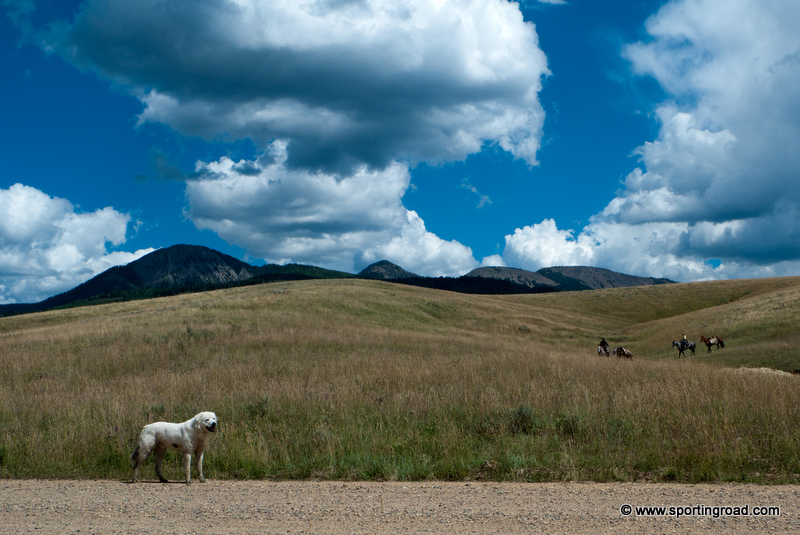
He reiterated that for the slow braised dishes, you want the heartier and older lambs, while for the quickly cooked chops, you want the young corn-fed or grass-fed varieties.
______________________________________________________________
- Background: Often called the “French Merino,” this is a robust, dual-purpose breed known for producing both high-quality meat and fine wool.
- Role in CO: Making up a massive portion of the sheep on Western US ranges, they were perfect for Basque herders. They possess a strong herding instinct, bunching together at night for protection.
- Details: You can explore the significance of their fleece in the American West through the American Rambouillet Sheep Breeders Association. [11]
- Background: Originating in Spain, these sheep are historically famous for producing the finest, softest luxury wool in the world.
- Role in CO: Early Spanish, Mexican, and Basque sheepmen utilized the Merino (and its crosses) for its adaptability to the semi-arid, mountainous climate. [12, 13, 14, 15, 16]
- Background: While Basque herders themselves are associated with European sheep, many Basques who migrated to southern Colorado (like the San Luis Valley) integrated with Hispano herders and the native Navajo-Churro.
- Role in CO: This resilient heritage breed was initially brought to the American Southwest by Spanish conquistadors. [17, 18, 19, 20]


The Navajo-Churro sheep is one of North America’s oldest sheep breeds and is closely tied to the culture and history of the Diné (Navajo) people. Descended from Spanish Churra Iberian sheep brought to the Southwest in the 1500s, the breed was shaped over centuries to thrive in the harsh desert and mountain environments of the American Southwest. Weaving wool can seem simple to those who are not dyed in the wool, but it’s more than a process it’s a lifestyle—from raising the sheet, shearing the wool, skirting, dyeing, carding the wool, and finally spinning the woold before the weaving can even begin. There are no templates or patterns for the design, which is a complex learned aspect.
Distinctive Characteristics
- Long-legged, narrow-bodied, and highly athletic.
- Extremely hardy and able to survive on sparse forage.
- Known for strong maternal instincts and good lamb survival.
- May be horned, polled (hornless), or occasionally have four horns.
- Produces a dual-coated fleece with a soft undercoat and longer outer fibers. (navajosheepproject)
Wool
Navajo-Churro wool is prized by traditional Navajo weavers. The fleece comes in many natural colors, including white, black, brown, gray, and spotted patterns. The wool is strong, durable, and ideal for rugs and tapestries rather than fine garments. (Wikipedia)
Meat
The breed also produces lean, flavorful meat with relatively low fat content. Many small farmers value Navajo-Churros as a dual-purpose or even triple-purpose breed (wool, meat, and milk). (Wikipedia)
Near Extinction and Recovery
The breed’s numbers collapsed during the late 1800s and again during federal livestock reduction programs in the 1930s. By the 1970s, only a few hundred animals remained. Conservation efforts by breeders and organizations helped restore the population, though it is still considered a rare heritage breed. (Wikipedia)
Why People Raise Them Today
- Heritage conservation
- Exceptional weaving wool
- Hardiness in dry climates
- Low-input management
- Unique appearance, especially the multi-horned animals (navajosheepproject)
If you’re interested in raising them in Colorado, Navajo-Churros are particularly well-suited to the semi-arid conditions of the Southwest and Rocky Mountain regions.